Meaning of This Ritual
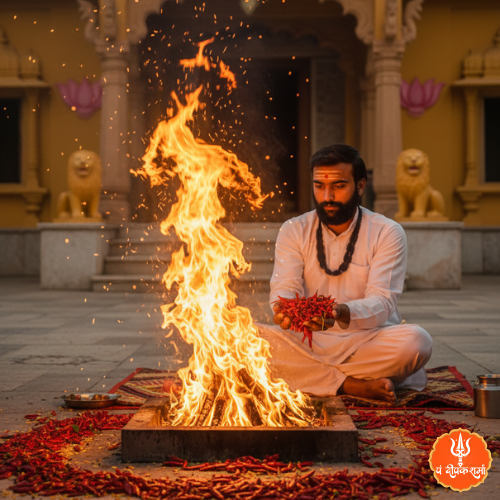
Shatrunashak Havan, a sacred ritual dedicated to Devi Baglamukhi, holds profound significance in the realm of Vedic traditions. The term ‘Shatrunashak’ translates to ‘enemy removal’, indicating the primary purpose of this havan. It is performed to seek the blessings of the divine mother, who is revered for her ability to vanquish adversaries and provide protection from malevolent forces. This havan is not merely a ritual but a heartfelt invocation for peace, strength, and victory over challenges posed by enemies.
The essence of Shatrunashak Havan lies in its ability to purify the atmosphere and create a protective shield around the devotee. By offering sacred oblations into the fire, the devotee seeks to eliminate negativity and obstacles that hinder personal and professional growth. The flames of the havan symbolize the transformative power of divine energy, which is believed to consume all that is harmful and unwholesome.
In essence, this ritual embodies the spirit of devotion and surrender to the divine will. It is a call for divine intervention in times of distress, enabling the devotee to navigate through life’s challenges with grace and resilience. The Shatrunashak Havan serves as a reminder that with faith and dedication, one can overcome any adversary, both external and internal.
How This Ritual Helps
The Shatrunashak Havan is designed to provide multifaceted benefits to the devotee. Primarily, it aids in the removal of obstacles created by enemies, whether they manifest as personal conflicts, professional rivalries, or even spiritual hindrances. By invoking the blessings of Devi Baglamukhi, the devotee seeks to neutralize the negative influences that may be affecting their life.
Moreover, this havan instills a sense of confidence and empowerment in the devotee. As the sacred fire consumes the offerings, it symbolizes the destruction of fear and doubt, allowing the individual to face challenges with renewed vigor. The ritual also promotes mental clarity, enabling the devotee to make sound decisions in the face of adversity.
In addition to personal benefits, the Shatrunashak Havan is believed to create a positive ripple effect in the devotee’s surroundings. It purifies the environment, fostering harmony and peace within the family and community. This collective upliftment is essential, as it not only aids the individual but also contributes to the overall well-being of those around them.
Mythological Background
The roots of Shatrunashak Havan are deeply embedded in Hindu mythology, particularly in the narratives surrounding Devi Baglamukhi. She is one of the ten Mahavidyas, embodying the power of speech and the ability to silence adversaries. According to ancient texts, Devi Baglamukhi is often depicted as a fierce goddess who can immobilize enemies and protect her devotees from harm.
One of the most revered stories associated with Baglamukhi recounts how she helped the gods defeat the demon Madhu-Kaitabh. When the demons threatened the cosmic order, the gods turned to Baglamukhi for assistance. With her divine intervention, she was able to subdue the demons, showcasing her unparalleled power in overcoming evil forces. This mythological episode highlights the goddess’s role as a protector and a source of strength for her devotees.
Furthermore, the practice of Shatrunashak Havan is rooted in the belief that invoking the goddess through fire offerings can channel her energy into the physical realm. The flames of the havan serve as a medium through which devotees can connect with the divine, seeking her blessings for protection and victory over adversaries.
Who Should Perform This
The Shatrunashak Havan is particularly beneficial for individuals facing challenges posed by enemies or adversarial situations. It is recommended for those who are experiencing conflicts in personal relationships, workplace rivalries, or legal disputes. Anyone feeling overwhelmed by negativity or hostility from others can find solace and strength through this ritual.
Moreover, this havan is suitable for individuals seeking to enhance their protective energies. Those who are involved in competitive fields, such as business or politics, may find this ritual especially advantageous. It serves as a spiritual armor, empowering the devotee to navigate through challenges with confidence and clarity.
Additionally, the Shatrunashak Havan can be performed on behalf of loved ones who may be facing difficulties. Family members or friends can seek the blessings of Devi Baglamukhi for the protection and well-being of those they care about, reinforcing the communal aspect of devotion.
Step-by-Step Vidhi (Very Detailed)
The Shatrunashak Havan follows a meticulous Vedic process that ensures the ritual is conducted with utmost reverence and precision. Here is a detailed step-by-step guide to performing this sacred ritual:
Preparation
Begin by selecting an auspicious day and time for the havan, preferably on a Tuesday or Saturday, which are considered favorable for invoking the energies of Devi Baglamukhi. Cleanse the space where the havan will be performed, ensuring it is free from any clutter or negativity. Set up a havan kund (fire pit) made of clay or metal, which will serve as the focal point for the ritual.
Gather all necessary materials, including ghee (clarified butter), samagri (a mixture of sacred herbs and grains), flowers, and incense. It is also essential to have a picture or idol of Devi Baglamukhi placed near the havan kund, as this will serve as the divine focus during the ritual.
Invoking the Deity
Once the preparation is complete, begin the ritual by performing a Sankalp (resolution) where you express your intentions for the havan. Light a lamp and offer prayers to Lord Ganesha, seeking his blessings for the successful completion of the ritual. After this, invoke Devi Baglamukhi by chanting her sacred mantras, inviting her presence into the havan.
As you chant the mantras, offer flowers and incense to the deity, creating a sacred atmosphere filled with devotion. This step is crucial, as it establishes a connection between the devotee and the divine, setting the tone for the rest of the ritual.
Performing the Havan
Once the deity has been invoked, light the fire in the havan kund using dry wood and ghee. As the flames rise, begin to offer the samagri into the fire while chanting the specific mantras dedicated to Devi Baglamukhi. Each offering should be accompanied by a heartfelt prayer, expressing your desires for protection and the removal of enemies.
Continue to feed the fire with offerings, maintaining a steady flow of energy and devotion. It is essential to remain focused and present during this time, allowing the divine energies to permeate the space. The havan should ideally last for at least one hour, during which the devotee can meditate on the goddess and visualize her blessings manifesting in their life.
Concluding the Ritual
After the havan is complete, perform aarti (waving of light) in front of the deity, expressing gratitude for her blessings. Distribute the prasad (blessed offerings) among family and friends, sharing the divine energy and love that has been cultivated during the ritual. Finally, conclude the ceremony with a heartfelt prayer, reaffirming your faith and devotion to Devi Baglamukhi.
Mantra for This Ritual
The primary mantra associated with the Shatrunashak Havan is:
ॐ ह्लीं बगलामुखि सर्व शत्रुस्तम्भनाय स्वाहा
Transliteration: Om Hleem Baglamukhi Sarva Shatrusambhanaya Swaha
This powerful mantra invokes the protective energies of Devi Baglamukhi, specifically targeting the removal of enemies and negative influences. The syllable ‘Hleem’ is a seed sound that resonates with the goddess’s energy, while ‘Sarva Shatrusambhanaya’ translates to ‘for the immobilization of all enemies’. The concluding ‘Swaha’ signifies the offering made to the divine, completing the cycle of devotion.
Chanting this mantra during the havan creates a powerful vibrational frequency that aligns the devotee with the protective energies of the goddess. It is recommended to chant this mantra with sincerity and focus, allowing the divine presence to envelop the devotee and their surroundings. Regular recitation of this mantra can further enhance the protective shield around the individual, fostering a sense of safety and empowerment.
Do’s & Don’ts
To ensure the effectiveness of the Shatrunashak Havan, it is essential to adhere to certain do’s and don’ts during the ritual. Firstly, it is crucial to maintain a pure and positive mindset throughout the process. Approach the havan with sincerity, focusing on your intentions and desires for protection and enemy removal.
Do ensure that all materials used in the havan are pure and of high quality. This includes the ghee, samagri, and offerings. Avoid using any items that may be impure or contaminated, as this can affect the energy of the ritual. Additionally, it is advisable to perform the havan in a clean and serene environment, free from distractions and negativity.
On the other hand, avoid engaging in negative thoughts or actions during the ritual. It is essential to refrain from any form of conflict or hostility, as this can counteract the positive energies being cultivated. Also, do not rush through the ritual; take your time to connect with the divine and allow the energies to flow naturally.
When to Perform
The Shatrunashak Havan can be performed at any time when one feels the need for protection from enemies or negative influences. However, certain auspicious days are particularly favorable for this ritual. Tuesdays and Saturdays are considered ideal, as they align with the energies of Mars and Saturn, both of which are associated with strength and protection.
Additionally, performing the havan during the waxing phase of the moon is believed to enhance its effectiveness. This is a time when energies are on the rise, making it conducive for invoking blessings and protection. It is also beneficial to perform the ritual during significant festivals dedicated to Devi Baglamukhi, such as Navratri, when her energies are believed to be at their peak.
Ultimately, the best time to perform the Shatrunashak Havan is when the devotee feels a strong calling or need for divine intervention. Trusting one’s intuition and aligning the ritual with personal circumstances can amplify the benefits of the havan.
How Pandit Deepak Sharma can help
Pandit Deepak Sharma, an experienced Vedic practitioner, offers his expertise in conducting the Shatrunashak Havan with utmost devotion and adherence to traditional rituals. His profound knowledge of Vedic scriptures and rituals ensures that each ceremony is performed with precision and sincerity, allowing devotees to connect deeply with the divine energies of Devi Baglamukhi.
By seeking the guidance of Pandit Deepak Sharma, devotees can benefit from personalized attention and spiritual insights tailored to their unique situations. He provides a nurturing environment for the havan, ensuring that all necessary materials are prepared and that the ritual is conducted in a sacred atmosphere. This enhances the overall experience, allowing devotees to fully immerse themselves in the spiritual process.
Moreover, Pandit Deepak Sharma’s compassionate approach fosters a sense of trust and reassurance among devotees. His commitment to preserving the sanctity of Vedic traditions ensures that the Shatrunashak Havan is not just a ritual, but a transformative experience that empowers individuals to overcome adversities and embrace their true potential.
Nalkheda Temple Connection
The Nalkheda Temple, dedicated to Devi Baglamukhi, serves as a sacred space for devotees seeking spiritual solace and guidance. This temple, nestled in the serene surroundings of Agar Malwa, Madhya Pradesh, is a significant pilgrimage site for those wishing to perform the Shatrunashak Havan. The temple’s sanctity and the divine presence of the goddess create an atmosphere conducive to spiritual growth and healing.
Visiting the Nalkheda Temple for the Shatrunashak Havan allows devotees to immerse themselves in the divine energies of the goddess. The temple is known for its vibrant rituals and the collective devotion of pilgrims, which enhances the spiritual experience. Participating in the havan at the temple not only strengthens the connection with Devi Baglamukhi but also fosters a sense of community among devotees.
Furthermore, the Nalkheda Temple is steeped in rich history and mythology, adding depth to the experience of performing the Shatrunashak Havan. The temple’s ambiance, combined with the sacred rituals conducted by experienced priests like Pandit Deepak Sharma, ensures that devotees receive the full benefits of their spiritual endeavors.
FAQ
What is the significance of Shatrunashak Havan?
Shatrunashak Havan is a powerful ritual aimed at removing enemies and negative influences from one’s life. It is performed to seek the blessings of Devi Baglamukhi, who is revered for her ability to protect her devotees from adversaries. The havan not only aids in overcoming external challenges but also instills confidence and mental clarity in the devotee, enabling them to face life’s obstacles with strength.
This ritual is rooted in ancient Vedic traditions and is believed to purify the environment, creating a protective shield around the individual. The flames of the havan symbolize the transformative power of divine energy, which consumes negativity and fosters a sense of peace and empowerment.
Can anyone perform the Shatrunashak Havan?
Yes, anyone can perform the Shatrunashak Havan, especially those facing challenges posed by enemies or adversarial situations. It is particularly beneficial for individuals experiencing conflicts in personal relationships, workplace rivalries, or legal disputes. Additionally, family members can perform the havan on behalf of loved ones who may be in need of protection and support.
The ritual is designed to be inclusive, allowing anyone seeking divine intervention to connect with the energies of Devi Baglamukhi. It is essential, however, to approach the ritual with sincerity and a pure heart, as this enhances the effectiveness of the havan.
What materials are needed for the Shatrunashak Havan?
To perform the Shatrunashak Havan, certain materials are essential. These include ghee (clarified butter), samagri (a mixture of sacred herbs and grains), flowers, incense, and a picture or idol of Devi Baglamukhi. The havan kund (fire pit) is also a crucial element, as it serves as the focal point for the ritual.
It is important to ensure that all materials used are pure and of high quality, as this affects the energy of the ritual. The preparation of these materials should be done with reverence, as they play a significant role in invoking the divine energies during the havan.
How long does the Shatrunashak Havan take?
The duration of the Shatrunashak Havan can vary, but it is generally recommended to last for at least one hour. This allows sufficient time for the devotee to connect with the divine energies and for the offerings to be made into the fire. The longer the havan is performed, the more potent the energies can become, as it creates a sustained atmosphere of devotion and focus.
During this time, the devotee can meditate on the goddess and visualize her blessings manifesting in their life. It is essential to remain present and engaged throughout the ritual, as this enhances the overall experience and effectiveness of the havan.
Is there a specific time to perform the Shatrunashak Havan?
The Shatrunashak Havan can be performed at any time when one feels the need for protection from enemies or negative influences. However, auspicious days such as Tuesdays and Saturdays are considered particularly favorable for this ritual. Additionally, performing the havan during the waxing phase of the moon is believed to enhance its effectiveness.
Ultimately, the best time to perform the havan is when the devotee feels a strong calling or need for divine intervention. Trusting one’s intuition and aligning the ritual with personal circumstances can amplify the benefits of the havan.