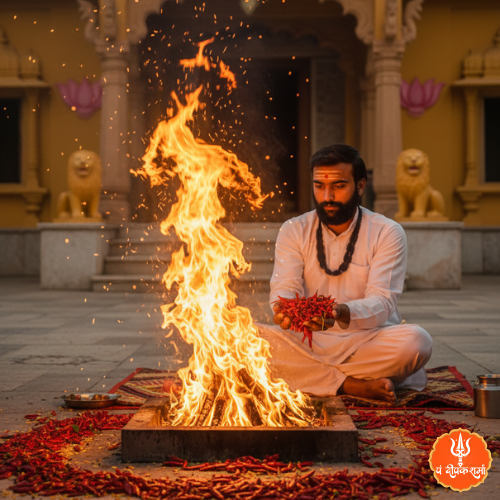
Meaning of This Ritual
The baglamukhi shatrunashakl havan is a sacred ritual dedicated to Goddess Baglamukhi, one of the ten Mahavidyas, who is revered for her power to conquer enemies and remove obstacles. The term ‘Shatrunashakl’ translates to the destruction of enemies, and this havan is performed to invoke divine blessings for protection against adversaries and to ensure success in challenging situations. The havan involves the offering of specific items into the sacred fire, accompanied by mantras that resonate with the energy of the goddess.
In essence, this ritual serves as a spiritual shield, helping devotees to overcome fears and confrontations in their lives. It is not merely a ceremonial act but a profound spiritual engagement that connects the devotee with the divine energy of Baglamukhi. The havan is believed to purify the mind and soul, aligning the devotee’s intentions with the cosmic forces that govern success and protection.
Understanding the meaning behind this ritual is crucial for its successful execution. Each element of the havan, from the materials used to the mantras chanted, plays a significant role in harnessing the goddess’s blessings. Therefore, it is essential to approach this ritual with devotion, respect, and a clear intention.
How This Ritual Helps
The Baglamukhi Shatrunashakl Havan is a powerful tool for those facing challenges from rivals, whether in personal, professional, or legal matters. By performing this havan, devotees seek the blessings of Goddess Baglamukhi to gain strength and clarity in overcoming obstacles. The ritual is particularly beneficial for individuals involved in court cases, job-related conflicts, or any situation where they feel threatened or undermined by others.
Moreover, this havan is not just about removing enemies; it also promotes inner peace and confidence. As the devotee engages in the ritual, they are encouraged to focus on their intentions, which helps in cultivating a positive mindset. This mental clarity is vital for making informed decisions and taking appropriate actions against adversities.
Additionally, the spiritual vibrations generated during the havan create an environment conducive to healing and protection. The sacred fire acts as a medium through which the devotee’s prayers are carried to the divine, ensuring that their requests are heard and answered. Thus, the havan serves as a comprehensive remedy for both external conflicts and internal struggles.
Mythological Background
The roots of the Baglamukhi Shatrunashakl Havan are deeply embedded in Hindu mythology. Goddess Baglamukhi is often depicted as a powerful figure who embodies the strength to silence and conquer adversaries. According to ancient texts, she is known to have defeated demons and enemies through her divine will, making her a formidable protector for her devotees.
One of the most famous legends associated with Baglamukhi involves her battle against the demon Madan, who threatened the balance of the universe. With her divine power, she subdued him, demonstrating her ability to control and eliminate negativity. This mythological narrative reinforces the belief that invoking her through rituals like the Shatrunashakl Havan can lead to the removal of obstacles and adversaries in one’s life.
Furthermore, the havan is often performed during auspicious times, as prescribed in the scriptures, to enhance its effectiveness. The rituals are steeped in tradition, and each step is designed to honor the goddess and invoke her blessings. Understanding this mythological context enriches the devotee’s experience and connection to the ritual, making it more meaningful.
Who Should Perform This
The Baglamukhi Shatrunashakl Havan is recommended for anyone facing challenges posed by enemies or obstacles in their lives. This includes individuals involved in legal disputes, job-related conflicts, or personal rivalries. It is particularly beneficial for those who feel overwhelmed by negative energies or who seek to gain an upper hand in competitive situations.
Moreover, this ritual is suitable for individuals who are looking to enhance their spiritual strength and confidence. By performing the havan, devotees can connect with the divine energy of Goddess Baglamukhi, which empowers them to face their fears and challenges head-on. It is also advisable for those who wish to cleanse their surroundings of negativity and create a protective aura around themselves.
Additionally, families facing collective challenges, such as financial difficulties or health issues, may also benefit from this havan. The collective energy generated during the ritual can help in uniting the family against adversities, fostering a sense of togetherness and strength.
Step-by-Step Vidhi (Very Detailed)
To perform the Baglamukhi Shatrunashakl Havan, it is essential to follow a detailed and authentic Vedic procedure. Here is a comprehensive step-by-step guide:
Preparation
Begin by selecting an auspicious date and time for the havan, preferably on a Tuesday or Saturday, as these days are considered favorable for invoking Goddess Baglamukhi. Cleanse the space where the havan will be performed, ensuring it is free from any negativity. Set up a sacred altar with an image or idol of Goddess Baglamukhi, along with necessary offerings like ghee, grains, and specific herbs.
Gathering Materials
Collect all the materials needed for the havan, including:
- Havan kund (sacred fire pit)
- Ghee (clarified butter)
- Samagri (a mixture of herbs and grains)
- Flowers and fruits for offerings
- Incense sticks
- Water for purification
Ensure that all items are pure and have been blessed before use. This preparation is vital for the success of the ritual.
Performing the Havan
Light the sacred fire in the havan kund using dry wood and ghee. As the flames rise, chant the following mantra:
ॐ ह्लीं बगलामुखि सर्व शत्रुस्तम्भनाय स्वाहा
Transliteration: Om Hleem Baglamukhi Sarva Shatrustambhanaya Swaha
This mantra invokes the protective energy of Goddess Baglamukhi, requesting her to bind and eliminate all enemies. Offer samagri into the fire while continuing to chant the mantra. It is essential to maintain focus and devotion during this process, visualizing the removal of obstacles and the protection of oneself.
Continue the havan for a duration of at least 30 to 45 minutes, ensuring that offerings are made consistently. After the havan, perform aarti and offer gratitude to the goddess for her blessings. Conclude the ritual by distributing prasad (blessed food) to all participants, fostering a sense of community and shared devotion.
Mantra for This Ritual
The primary mantra for the Baglamukhi Shatrunashakl Havan is:
ॐ ह्लीं बगलामुखि सर्व शत्रुस्तम्भनाय स्वाहा
Transliteration: Om Hleem Baglamukhi Sarva Shatrustambhanaya Swaha
This mantra holds immense significance in the ritual. The syllable ‘ॐ’ (Om) represents the primordial sound of the universe, connecting the devotee with the divine. ‘ह्लीं’ (Hleem) is a powerful seed mantra associated with Goddess Baglamukhi, symbolizing her strength and ability to control enemies.
The phrase ‘सर्व शत्रुस्तम्भनाय’ (Sarva Shatrustambhanaya) translates to ‘for binding all enemies,’ emphasizing the protective aspect of the mantra. By chanting this mantra with sincerity and devotion, devotees can invoke the goddess’s blessings to shield themselves from adversaries and negative influences.
Chanting this mantra during the havan creates a sacred vibration that permeates the environment, enhancing the effectiveness of the ritual. It is recommended to repeat the mantra at least 108 times during the havan for optimal results. The collective energy generated through this repetition amplifies the devotee’s intentions and strengthens their connection with the divine.
Do’s & Don’ts
When performing the Baglamukhi Shatrunashakl Havan, it is essential to adhere to certain guidelines to ensure its effectiveness. Here are some do’s and don’ts:
Do’s
- Perform the havan with a pure heart and clear intentions.
- Use only fresh and pure materials for offerings.
- Maintain a calm and focused mindset throughout the ritual.
- Invite family members or close friends to participate, fostering a sense of community.
- Offer gratitude to Goddess Baglamukhi after the havan.
Don’ts
- Avoid performing the havan in a cluttered or impure environment.
- Do not rush through the rituals; take your time to connect with the divine.
- Refrain from using stale or impure offerings.
- Do not engage in negative thoughts or distractions during the ritual.
- Avoid discussing any negative experiences or adversities during the havan.
By following these guidelines, devotees can enhance the spiritual energy of the havan and ensure a more profound connection with Goddess Baglamukhi.
When to Perform
The timing of the Baglamukhi Shatrunashakl Havan plays a crucial role in its effectiveness. It is best performed during auspicious days, particularly on Tuesdays and Saturdays, which are considered favorable for rituals associated with Goddess Baglamukhi. Additionally, performing the havan during the waxing phase of the moon can amplify its effects, as this is a time associated with growth and positivity.
Furthermore, devotees may choose to perform the havan during significant personal events, such as before starting a new job, entering a legal battle, or facing challenges with rivals. It is also beneficial to conduct the havan during the change of seasons or during festivals dedicated to Goddess Baglamukhi, as these times are imbued with heightened spiritual energy.
Ultimately, the best time to perform the havan is when the devotee feels a strong calling to seek the goddess’s blessings. Listening to one’s intuition and aligning the ritual with personal circumstances can lead to a more meaningful and impactful experience.
How Pandit Deepak Sharma can help
Pandit Deepak Sharma, an experienced Vedic practitioner, specializes in performing Baglamukhi rituals, including the Shatrunashakl Havan. With over 25 years of experience, he possesses a deep understanding of the Vedic scriptures and the intricacies of various rituals. His expertise ensures that the havan is conducted with utmost precision and devotion, following authentic Vedic traditions.
By seeking guidance from Pandit Deepak Sharma, devotees can benefit from personalized advice on the best practices for performing the havan. He provides insights into the appropriate materials, timings, and mantras to be used, ensuring that the ritual is tailored to the individual’s specific needs and circumstances. His compassionate approach fosters a supportive environment for devotees, helping them to connect more deeply with Goddess Baglamukhi.
Furthermore, Pandit Deepak Sharma conducts the havan at the sacred Nalkheda Baglamukhi Temple, where the energy of the divine is palpable. Participating in a havan led by an experienced pandit enhances the spiritual experience, allowing devotees to immerse themselves fully in the ritual and receive the blessings of the goddess.
Nalkheda Temple Connection
The Nalkheda Baglamukhi Temple, located in the Agar Malwa district of Madhya Pradesh, is a revered site for devotees seeking the blessings of Goddess Baglamukhi. The temple is known for its rich history and spiritual significance, attracting pilgrims from far and wide. Performing the Baglamukhi Shatrunashakl Havan at this sacred site amplifies the ritual’s effectiveness, as the energy of the temple enhances the connection between the devotee and the goddess.
At the Nalkheda Temple, devotees can participate in various rituals and anushthans dedicated to Goddess Baglamukhi, including the Shatrunashakl Havan. The temple’s serene environment provides a perfect backdrop for spiritual reflection and connection, allowing devotees to immerse themselves in the divine presence.
Additionally, the temple is a hub for spiritual guidance, where Pandit Deepak Sharma and other experienced priests offer their services to help devotees navigate their spiritual journeys. By visiting the Nalkheda Temple, devotees can deepen their understanding of the rituals and receive blessings that extend beyond the havan, fostering a holistic spiritual experience.
FAQ
What is the significance of the Baglamukhi Shatrunashakl Havan?
The Baglamukhi Shatrunashakl Havan holds immense significance for devotees seeking protection from enemies and obstacles. It is a ritual that invokes the divine energy of Goddess Baglamukhi, who is revered for her ability to conquer adversaries. By performing this havan, devotees aim to create a spiritual shield that protects them from negative influences and empowers them to face challenges with confidence.
Moreover, the havan serves as a means of purifying the mind and spirit, aligning the devotee’s intentions with the cosmic forces that govern success and protection. The ritual is not only about removing external threats but also about fostering inner peace and clarity, which are essential for overcoming life’s challenges.
How often should one perform the Baglamukhi Shatrunashakl Havan?
The frequency of performing the Baglamukhi Shatrunashakl Havan can vary based on individual circumstances and needs. For those facing ongoing challenges or adversities, it may be beneficial to conduct the havan regularly, especially during auspicious times such as festivals dedicated to Goddess Baglamukhi or on favorable days like Tuesdays and Saturdays.
However, it is essential to approach the ritual with sincerity and devotion. Performing the havan too frequently without genuine intent may dilute its effectiveness. It is advisable to consult with an experienced pandit, such as Pandit Deepak Sharma, to determine the appropriate frequency based on personal situations and spiritual needs.
Can the havan be performed at home?
Yes, the Baglamukhi Shatrunashakl Havan can be performed at home, provided that the environment is conducive to spiritual practices. It is essential to create a clean and sacred space, free from distractions and negativity. Devotees should gather all necessary materials and follow the prescribed Vedic procedures to ensure the ritual’s authenticity.
However, for those who may feel uncertain about performing the havan alone, seeking the guidance of an experienced pandit is recommended. Performing the havan under the supervision of a knowledgeable priest can enhance the spiritual experience and ensure that the ritual is conducted correctly.
What materials are needed for the havan?
The materials required for the Baglamukhi Shatrunashakl Havan include a havan kund (sacred fire pit), ghee (clarified butter), samagri (a mixture of herbs and grains), flowers, fruits, and incense sticks. It is crucial to use fresh and pure materials to maintain the sanctity of the ritual.
Additionally, having an image or idol of Goddess Baglamukhi present during the havan can enhance the connection with the divine. Devotees should ensure that all items are blessed and prepared with devotion before the ritual.
What should one do after the havan?
After completing the Baglamukhi Shatrunashakl Havan, it is essential to express gratitude to Goddess Baglamukhi for her blessings. This can be done through aarti and offering prasad (blessed food) to all participants. Sharing prasad fosters a sense of community and reinforces the spiritual bond created during the ritual.
It is also advisable to reflect on the intentions set during the havan and to maintain a positive mindset moving forward. Devotees may choose to continue chanting the mantra associated with the havan as a means of sustaining the protective energy invoked during the ritual.