Introduction
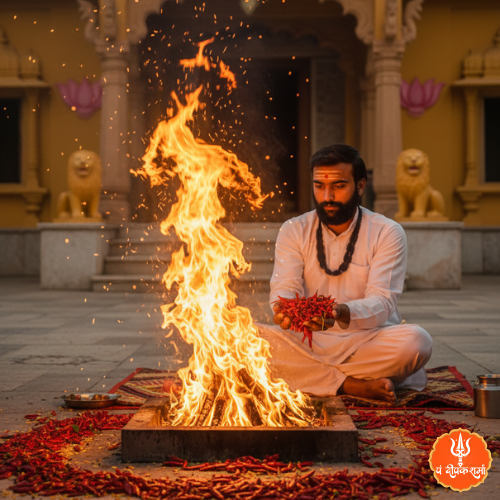
Baglamukhi Havan is a revered Vedic ritual dedicated to Goddess Baglamukhi, known for her power to remove obstacles and provide protection. This ritual is not merely a ceremonial act but a profound spiritual practice that invokes the divine energy of the goddess to guide devotees in overcoming challenges in their lives. In this article, we will explore the meaning, significance, and detailed procedure of Baglamukhi Havan.
Meaning of This Ritual
The term ‘Havan’ refers to the sacred fire ritual where offerings are made into the fire, symbolizing the surrender of one’s challenges to the divine. Baglamukhi, one of the ten Mahavidyas, represents knowledge and power, and her Havan is believed to transform negative energies into positive vibrations. This ritual is particularly sought after by those facing difficulties in their personal, professional, or spiritual journeys.
How This Ritual Helps
Baglamukhi Havan is considered effective in various aspects, including:
- Overcoming Obstacles: It is believed that performing this Havan can help in removing barriers that hinder one’s progress.
- Gaining Clarity: The ritual promotes mental clarity, aiding individuals in making better decisions.
- Protection: Devotees seek this ritual for spiritual protection against negativity and ill intentions.
- Success: It is often performed to attract success in endeavors, be it career-related or personal.
Mythological Background
The roots of Baglamukhi Havan are deeply embedded in Hindu mythology. According to ancient texts, Goddess Baglamukhi is depicted as a powerful force who can paralyze enemies and protect her devotees. She is often shown with a tongue tied, symbolizing the control over speech and the power to silence negativity.
Devotees believe that by invoking her through Havan, they can gain her blessings to overcome adversities. The story of her emergence from the cosmic ocean during the churning of the ocean is a reminder of her divine strength. Many legends narrate how she aided her worshippers by dispelling their fears and providing them with strength and wisdom.
Another significant tale involves the demon Madan, who was subdued by Baglamukhi, thus restoring peace and order. This illustrates her role as a protector and guide against malevolent forces.
Furthermore, the Havan is said to be beneficial during times of distress, especially when individuals face legal issues or conflicts with enemies. The rituals performed invoke her protection, ensuring that her devotees are shielded from harm.
In essence, Baglamukhi Havan is a spiritual practice aimed at invoking the divine energies of Goddess Baglamukhi, believed to provide strength, protection, and success in various aspects of life.
Who Should Perform This
Baglamukhi Havan is ideally performed by individuals who:
- Are facing obstacles in their personal or professional lives.
- Seek protection from negative energies and ill intentions.
- Desire clarity and guidance in decision-making.
- Wish to overcome adversities, especially in legal matters or conflicts with enemies.
It is advisable for those interested to consult with an experienced priest or Pandit, such as Pandit Deepak Sharma, who can guide them through the proper Vedic procedures and ensure the authenticity of the ritual.
Step-by-Step Vidhi (Very Detailed)
Performing Baglamukhi Havan requires careful preparation and adherence to traditional Vedic rituals. Below is a detailed step-by-step guide:
1. Preparation of the Havan Kund:
The first step involves constructing a sacred fire pit known as the Havan Kund. This is typically square or rectangular, filled with specific materials like sand or clay. Ensure that the Kund is clean and pure, as it is considered the abode of the goddess during the ritual.
2. Gathering of Samagri:
Gather the necessary items for the Havan, which may include:
- Ghee (clarified butter)
- Rice
- Havan sticks
- Various herbs and medicinal plants
- Flowers and fruits for offerings
- Betel leaves and nuts
These materials symbolize purity and devotion and are essential for the ritual.
3. Invocation of the Deities:
Before starting the Havan, invoke the presence of Goddess Baglamukhi and other Vedic deities. This is done through chanting specific mantras and offering flowers and fruits to the deities. The right intention and devotion are crucial at this stage.
4. Lighting the Havan Fire:
The next step is to light the sacred fire using a pure source of fire. It is essential to maintain focus and intent while lighting the fire, as it represents the divine energy of the goddess.
5. Offering into the Fire:
Once the fire is lit, begin offering the prepared samagri into the fire while reciting the appropriate mantras. For Baglamukhi Havan, the following mantra is typically chanted:
“ॐ ह्लीं बगलामुखि सर्वविघ्न नाशाय ह्लीं स्वाहा”
This mantra translates to invoking Baglamukhi to remove all obstacles. Repeat this mantra with devotion while making offerings into the fire.
6. Concluding the Havan:
After completing the offerings, conclude the Havan by thanking Goddess Baglamukhi and other deities. Chant concluding mantras and perform an Aarti (a ceremonial worship with light) to complete the ritual.
7. Distribution of Prasad:
Finally, distribute the Prasad (blessed offerings) among participants, symbolizing the blessings received from the goddess.
Mantra for This Ritual
The mantra for the Baglamukhi Havan is:
“ॐ ह्लीं बगलामुखि सर्वविघ्न नाशाय ह्लीं स्वाहा”
This powerful mantra is essential for invoking the blessings of Goddess Baglamukhi during the Havan.
Transliteration: Om Hleem Baglamukhi Sarva Vighna Nashaya Hleem Swaha.
Meaning: This mantra calls upon Goddess Baglamukhi to remove all obstacles and difficulties from the devotee’s life. The energy of this mantra is believed to purify the surroundings and invoke divine blessings.
Do’s & Don’ts
To ensure the effectiveness of the Havan, consider the following:
- Do: Perform the ritual with a pure heart and sincere intentions.
- Do: Ensure that all materials used are pure and of good quality.
- Do: Maintain cleanliness in the space where the Havan is being performed.
- Don’t: Engage in negative thoughts or distractions during the ritual.
- Don’t: Use impure or contaminated materials for the Havan.
- Don’t: Rush through the ritual; it should be performed with devotion and patience.
When to Perform
Baglamukhi Havan can be performed at any auspicious time, especially during:
- Full Moon or New Moon days
- Auspicious Hindu festivals
- Personal milestones or before significant events
Consulting with a knowledgeable Pandit can help determine the most favorable time for conducting this ritual.
Nalkheda Temple Connection
The Baglamukhi Temple in Nalkheda is a revered site for devotees seeking blessings from the goddess. This temple is known for its spiritual ambiance and the powerful presence of Goddess Baglamukhi. Many devotees visit to perform the Havan under the guidance of experienced priests like Pandit Deepak Sharma, who ensures that the rituals are performed according to Vedic traditions.
FAQ
- What is the significance of Baglamukhi Havan?
Baglamukhi Havan is significant for removing obstacles and providing spiritual protection. It is believed to invoke the blessings of Goddess Baglamukhi for success and overcoming challenges.
- Who can perform this Havan?
Anyone facing difficulties or seeking protection from negativity can perform this Havan. It is also beneficial for those involved in legal matters or conflicts.
- What offerings are required for the Havan?
The offerings typically include ghee, rice, herbs, flowers, and fruits. It is essential to use pure materials for the ritual.
- Can I perform this Havan at home?
Yes, Baglamukhi Havan can be performed at home, but it is advisable to seek guidance from a knowledgeable Pandit for proper execution.
- How long does the Havan take to complete?
The duration of the Havan can vary depending on the rituals involved, but it typically takes around 1 to 2 hours.
- What is the best time to perform Baglamukhi Havan?
The best time is during auspicious lunar phases, such as full moon or new moon days, or during significant Hindu festivals.
Agar aap is pooja ko proper Vedic vidhi ke saath karwana chahte hain, toh Nalkheda ke experienced pandit Pandit Deepak Sharma se margdarshan le sakte hain. Woh traditional Baglamukhi pooja aur havan ko shuddh vidhi se karte hain.