Introduction
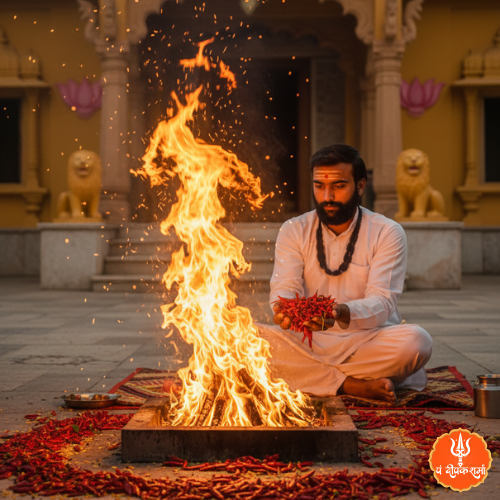
In the realm of Vedic rituals, the Baglamukhi Havan holds a significant place, especially for those seeking relief from legal challenges. This sacred ritual, dedicated to Devi Baglamukhi, one of the ten Mahavidyas, is performed with the intent to seek her blessings for overcoming adversities related to court cases. For centuries, devotees have turned to this divine practice to invoke protection and success in their legal matters. The process is not merely ceremonial; it embodies deep spiritual significance rooted in ancient Hindu traditions.
Meaning of This Ritual
The term ‘Havan’ refers to a fire ritual where offerings are made into a sacred fire while chanting specific mantras. The Baglamukhi Havan specifically aims to invoke the goddess’s protection against enemies and obstacles that hinder justice. This ritual symbolizes the triumph of truth over falsehood, ensuring that the devotee receives favorable outcomes in legal battles. The flames represent purification, and the offerings are a means of surrendering one’s desires to the divine, seeking her grace in resolving conflicts.
How This Ritual Helps
Participating in the Baglamukhi Havan for court case relief is believed to bring several benefits. Firstly, it may help in alleviating the stress and anxiety associated with ongoing legal proceedings. Devotees often report a sense of calm and assurance after performing this ritual, as they feel a connection to the divine. Furthermore, the invocation of Baglamukhi is said to empower individuals to overcome their adversaries and navigate through legal complexities with greater ease. It is a spiritual approach to seeking justice, where faith and devotion intersect with the power of ritual.
Mythological Background
The mythology surrounding Devi Baglamukhi is rich and profound. She is depicted as a goddess who possesses the power to silence opponents and protect her devotees from harm. According to various texts, Baglamukhi is often portrayed sitting on a throne, adorned with a golden crown, symbolizing her royal authority. The legend narrates that she was born to combat the forces of evil and to restore dharma on earth. Her devotees believe that invoking her through rituals like the Havan can lead to the neutralization of negative energies and adversaries.
In one famous tale, it is said that Baglamukhi, upon being invoked, transformed the very fabric of reality to aid her devotee in overcoming a tumultuous battle. The ritualistic offerings made during the Havan are considered to be a direct appeal to her divine consciousness, demonstrating the devotee’s faith and dedication. Thus, performing Baglamukhi Havan isn’t just a ritual; it is a profound act of surrender and devotion.
Moreover, the goddess is also associated with the mantra “ॐ ह्लीं वाद-विजयाय ह्लीं फट्”, which translates to invoking victory in arguments and disputes. This mantra is chanted during the Havan to enhance its efficacy in legal matters, further illustrating the deep connection between the ritual and its intended outcomes.
Who Should Perform This
The Baglamukhi Havan is particularly beneficial for individuals facing legal challenges, whether they are involved in court cases, legal disputes, or any form of litigation. It is advisable for those who feel overwhelmed by their circumstances and seek divine intervention. Moreover, practitioners of law, advocates, and anyone involved in negotiations can also perform this Havan to ensure that their arguments are compelling and victorious.
Step-by-Step Vidhi (Very Detailed)
The following is a detailed guide to performing the Baglamukhi Havan for court case relief:
- Preparation: Begin by selecting an auspicious day to perform the Havan. Ideally, choose a day that aligns with your personal astrology for maximum benefit. Gather all necessary materials, including samagri (ritual items), ghee, and a Havan kund (fire pit).
- Purification: Before starting the ritual, purify yourself and the space. This can be done by sprinkling holy water and lighting incense to create a sacred atmosphere.
- Setting Up the Havan Kund: Place the Havan kund in the northeast direction of your home or temple. Ensure it is clean and free from any obstacles. Fill the kund with wood pieces, cow dung cakes, and other samagri.
- Invoking the Divine: Begin the Havan by invoking the presence of Devi Baglamukhi. Light the fire using the ghee and chant the mantra “ॐ ह्लीं वाद-विजयाय ह्लीं फट्” as you do so. This step symbolizes the awakening of the goddess.
- Offerings: As the fire burns, make offerings of ghee, grains, and specific herbs into the fire while continuously chanting the Baglamukhi mantra. Each offering should be made with intention, asking for her blessings in your legal matters.
- Prayers: After the offerings, recite prayers dedicated to Devi Baglamukhi, expressing gratitude and seeking her protection. This is a personal moment where you can ask for specific outcomes in your court cases.
- Concluding the Havan: After completing the offerings, conclude the ritual by thanking the goddess and extinguishing the fire respectfully. Collect the remnants of the Havan, as they are considered sacred, and can be disposed of respectfully or used as prasad (blessed food).
Mantra for This Ritual
The primary mantra used during the Baglamukhi Havan for court case relief is:
“ॐ ह्लीं वाद-विजयाय ह्लीं फट्”
**Transliteration:** Om Hleem Vaad-Vijayaaya Hleem Phat
Meaning: This mantra is a powerful invocation for victory in legal matters. It acts as a shield against any opposition and enhances the devotee’s ability to articulate their arguments effectively. By chanting this mantra during the Havan, devotees align their intentions with the divine will of Baglamukhi, seeking her blessings for success in their endeavors.
Do’s & Don’ts
Do’s:
- Perform the Havan with a pure heart and sincere intentions.
- Ensure that all ingredients used in the Havan are pure and of high quality.
- Maintain a calm and respectful environment during the ritual.
- Invite family members or close friends to participate, as collective energy can enhance the ritual’s efficacy.
Don’ts:
- Avoid performing the Havan in a hurry; it requires time and focus.
- Do not use any impure or non-vegetarian items in the offerings.
- Refrain from distractions during the ritual, such as using mobile phones or engaging in conversations unrelated to the Havan.
- Do not discard the remnants of the Havan carelessly; treat them with respect.
When to Perform
The Baglamukhi Havan can be performed at any time when one feels the need for divine intervention in legal matters. However, auspicious days such as Tuesdays and Fridays are considered particularly favorable for invoking the goddess’s blessings. Additionally, performing the Havan during a full moon or on significant Hindu festivals may amplify its effects.
Nalkheda Temple Connection
The Nalkheda Baglamukhi Temple, located in Madhya Pradesh, is a revered site for devotees seeking the blessings of Devi Baglamukhi. The temple is known for its rich history and spiritual energy, making it a perfect place for conducting the Baglamukhi Havan. Many devotees travel to the temple to perform this ritual under the guidance of experienced priests, ensuring that it is conducted according to Vedic traditions.
Visitors to the temple often report profound experiences and a sense of calm after participating in the Havan, reinforcing their faith and connection to the goddess.
FAQ
- What is the significance of the Baglamukhi Havan? The Baglamukhi Havan is significant for seeking divine intervention in legal matters, ensuring protection and success in court cases.
- Can anyone perform the Havan? Yes, anyone facing legal challenges or seeking victory in disputes can perform the Havan.
- What materials are needed for the Havan? The materials required include ghee, wood, samagri, and specific offerings as per the Vedic guidelines.
- How long does the Havan take? The duration of the Havan can vary, but it typically takes around 1 to 2 hours, depending on the rituals being performed.
- Is it necessary to perform the Havan at a temple? While it is beneficial to perform the Havan at a temple, it can also be effectively conducted at home with the right setup and intentions.
- What should I do with the remnants after the Havan? The remnants should be treated with respect and can be disposed of in a sacred manner, or they may be used as prasad.
Agar aap is pooja ko proper Vedic vidhi ke saath karwana chahte hain, toh Nalkheda ke experienced pandit Pandit Deepak Sharma se margdarshan le sakte hain. Woh traditional Baglamukhi pooja aur havan ko shuddh vidhi se karte hain.