Introduction
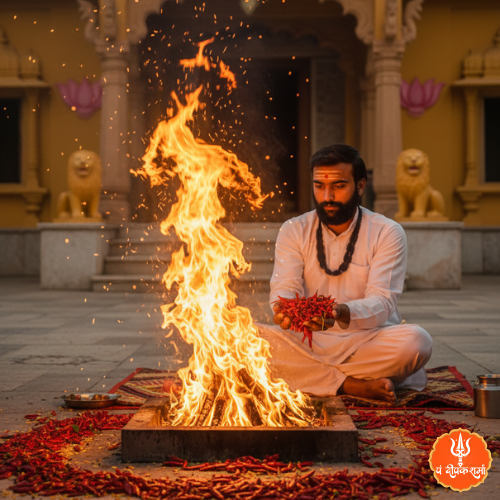
Baglamukhi Havan is a sacred ritual dedicated to Devi Baglamukhi, one of the ten Mahavidyas in Hinduism. This powerful havan is performed to seek blessings for career advancement and success in various professional endeavors. The essence of Baglamukhi Havan lies in its ability to remove obstacles, enhance intellect, and provide the devotee with the strength to overcome challenges. In today’s competitive world, many individuals seek this divine intervention to achieve their career goals and aspirations.
Meaning of This Ritual
The term ‘havan’ refers to a fire ritual in which offerings are made to deities through the sacred fire. In the context of Baglamukhi Havan, the fire is a symbol of purity and transformation, representing the removal of negativity and obstacles in one’s career path. Devi Baglamukhi is revered as the goddess of speech, knowledge, and wisdom. Therefore, performing the Baglamukhi Havan is believed to invoke her blessings for clarity of thought, effective communication, and success in professional pursuits.
How This Ritual Helps
Engaging in Baglamukhi Havan is thought to bestow numerous benefits upon the devotee:
- Removal of Obstacles: The ritual is designed to eliminate hindrances that may block career growth, such as negative influences or lack of opportunities.
- Enhanced Decision-Making: By seeking the blessings of Devi Baglamukhi, participants may experience improved clarity and confidence in their career-related decisions.
- Increased Focus: The havan is believed to sharpen the mind, leading to better concentration and productivity.
- Divine Protection: Engaging in this ritual is considered a means of receiving protection from adversities and challenges faced in the professional realm.
Mythological Background
The mythology surrounding Baglamukhi is rich and profound. According to Hindu texts, she is often depicted as a beautiful woman adorned with a golden crown and wielding a club. She symbolizes the power of speech and holds the ability to silence and control enemies. Devi Baglamukhi is revered for her capacity to transform negative forces into positive outcomes.
In one famous legend, it is said that a king was plagued by a fierce enemy who threatened his kingdom. In desperation, he turned to Devi Baglamukhi and performed a havan in her honor. The goddess, pleased with his devotion, granted him the strength and wisdom to overcome his adversary. This story exemplifies how the divine intervention of Baglamukhi can turn the tides in favor of the devotee.
Another myth speaks of a sage who, after facing numerous challenges in his quest for knowledge, prayed to Devi Baglamukhi. He performed a detailed havan, and as a result, the goddess appeared before him and blessed him with unparalleled wisdom. This demonstrates her role as a guardian of knowledge and intellectual pursuits.
These mythological narratives highlight the transformative power of Baglamukhi Havan, and its significance in seeking divine assistance for career advancement.
Who Should Perform This
Baglamukhi Havan is particularly beneficial for:
- Individuals seeking career growth or facing professional stagnation.
- Students preparing for competitive exams who require enhanced focus and clarity.
- Professionals facing workplace challenges or conflicts with colleagues.
- Anyone looking to remove negative influences that may hinder their success.
Step-by-Step Vidhi (Very Detailed)
The following is the detailed procedure for performing Baglamukhi Havan:
Preparation
1. Select an Auspicious Day: It is essential to choose a favorable day for the havan, preferably on a Tuesday or Saturday, as these days are considered auspicious for invoking the blessings of Devi Baglamukhi.
2. Gather Required Materials: The materials needed for the havan include:
- Havan kund (fire pit)
- Wood for the fire (preferably mango or neem)
- Ghee (clarified butter)
- Havan samagri (a mixture of herbs and spices specific for the ritual)
- Flowers and fruits for offerings
- Incense sticks and camphor
- Red or yellow cloth for covering the havan kund
Setting Up the Havan Kund
3. Cleanse the Area: The area designated for the havan should be purified with sacred water or cow dung, and a fresh cloth should be spread on the ground.
4. Position the Havan Kund: Place the havan kund at the center, ensuring it is stable and secure.
Ritual Invocation
5. Perform Sankalp: Sit facing east and recite your intentions clearly, focusing on the outcomes you wish to achieve through the havan.
6. Light the Fire: Light the fire in the havan kund using natural fire starters. Once the fire is stable, offer ghee and havan samagri while chanting the appropriate mantras.
Chanting Mantras
7. Recite the Mantras: The primary mantra for Baglamukhi Havan is:
“ॐ ह्लीं बगलामुखि सर्वविघ्न नाशाय ह्लीं स्वाहा”
Transliteration: Om Hleem Baglamukhi Sarvavighna Nashaya Hleem Swaha.
Meaning: This mantra is a powerful invocation to remove all obstacles through the blessings of Devi Baglamukhi.
Repeat this mantra 108 times while offering ghee and samagri into the fire.
Concluding the Havan
8. Offer Fruits and Flowers: After the chanting, offer fresh fruits and flowers to the fire as a symbol of gratitude.
9. Pradakshina: Perform circumambulation around the havan kund three times, seeking blessings from Devi Baglamukhi.
10. Complete the Ritual: Finally, close the havan by thanking the goddess and distributing prasad to all participants.
Mantra for This Ritual
The central mantra for Baglamukhi Havan is:
“ॐ ह्लीं बगलामुखि सर्वविघ्न नाशाय ह्लीं स्वाहा”
Transliteration: Om Hleem Baglamukhi Sarvavighna Nashaya Hleem Swaha.
This mantra is not only a call for assistance in overcoming obstacles but also a means of invoking the protective energies of Devi Baglamukhi. Each repetition is believed to enhance the effectiveness of the ritual, aligning the devotee with the divine energies necessary for success.
Do’s & Don’ts
When performing Baglamukhi Havan, consider the following:
- Do: Perform the havan with a pure heart and focused mind.
- Do: Use organic and natural items for the havan.
- Don’t: Engage in negative thoughts or actions during the ritual.
- Don’t: Perform the havan in a contaminated or unclean environment.
When to Perform
Baglamukhi Havan can be performed at any time, but it is particularly auspicious on:
- Tuesday
- Saturday
- During the waxing moon phase
These times are believed to amplify the benefits of the ritual, making it more effective in achieving desired outcomes.
Nalkheda Temple Connection
The Nalkheda Baglamukhi Temple, located in Madhya Pradesh, is a significant pilgrimage site for devotees seeking the blessings of Devi Baglamukhi. Visitors are encouraged to perform the Baglamukhi Havan at the temple, where experienced pandits like Pandit Deepak Sharma conduct the rituals with utmost precision and devotion. The temple’s serene environment provides a perfect backdrop for spiritual practices and enhances the overall experience of the devotees.
FAQ
What is the purpose of Baglamukhi Havan?
Baglamukhi Havan is performed to seek blessings for career advancement, remove obstacles, and enhance focus and clarity in decision-making.
How many times should the mantra be chanted during the havan?
The mantra should ideally be chanted 108 times during the havan for maximum effectiveness.
Can anyone perform Baglamukhi Havan?
Yes, anyone seeking career growth or facing challenges can perform this havan, regardless of their background.
What items are required for Baglamukhi Havan?
Essential items include a havan kund, wood, ghee, havan samagri, flowers, and fruits for offerings.
When is the best time to perform this ritual?
It is considered auspicious to perform the havan on Tuesdays or Saturdays, especially during the waxing moon phase.
Is it necessary to visit the Nalkheda Temple for this ritual?
While it is not mandatory, performing the havan at the Nalkheda Temple is highly recommended as it enhances the spiritual experience and allows devotees to seek guidance from experienced pandits.