Introduction
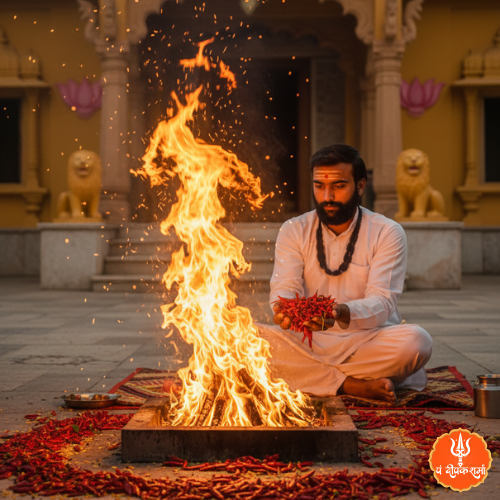
Baglamukhi Havan is a revered ritual dedicated to Goddess Baglamukhi, one of the ten Mahavidyas in Hindu tradition. This sacred havan is performed to seek divine protection against adversaries and to eliminate obstacles that may hinder one’s progress in life. The ritual not only invokes the blessings of the goddess but also empowers devotees to confront challenges with courage and confidence.
Meaning of This Ritual
The term ‘havan’ refers to the Vedic fire ritual, where offerings are made into a sacred fire while chanting specific mantras. Baglamukhi, whose name translates to ‘the one who speaks badly’, symbolizes the power to silence enemies and protect devotees from harm. This havan is believed to invoke the goddess’s grace, ensuring that all negative energies and adversaries are subdued.
How This Ritual Helps
Performing Baglamukhi Havan is said to provide multiple benefits, including:
- Enemy Removal: The primary purpose of this ritual is to eliminate the influence of enemies, both visible and invisible.
- Protection: It offers spiritual protection, helping devotees navigate through difficult situations with ease.
- Confidence Boost: The havan instills a sense of confidence and empowerment, allowing individuals to face challenges head-on.
- Spiritual Growth: Engaging in this sacred practice fosters spiritual growth and deepens one’s connection with the divine.
Mythological Background
The mythology surrounding Goddess Baglamukhi is rich and profound. According to ancient texts, she is considered a fierce protector who aids her devotees in overcoming difficulties. Legends narrate how she emerged from the collective energy of the gods to combat evil forces threatening the cosmos. Her divine intervention has been sought by many, leading to miraculous transformations in their lives.
One of the most notable stories involves the demon named Madhu and Kaitabh, who were causing chaos in the universe. The gods prayed to Baglamukhi, who, with her immense power, defeated the demons, restoring peace. This victory symbolizes the triumph of good over evil, making her a beloved deity among devotees seeking protection from malevolence.
Furthermore, in the context of the Mahavidyas, Baglamukhi represents the mastery of knowledge and speech, ensuring that her devotees can express themselves without fear. This aspect of her divinity is crucial when confronting adversaries, as it empowers individuals to articulate their thoughts clearly and effectively.
The significance of Baglamukhi Havan, therefore, extends beyond mere rituals; it embodies the essence of spiritual warfare against negativity and harm. Devotees perform this havan with utmost sincerity, believing in the transformative power of the goddess.
Who Should Perform This
Baglamukhi Havan is particularly beneficial for individuals facing challenges related to:
- Legal disputes and court cases.
- Professional rivalries or workplace conflicts.
- Personal relationships fraught with negativity.
- Those seeking to enhance their communication skills in confrontational situations.
Anyone who feels overwhelmed by adversaries or negativity in their life may find solace and empowerment through this sacred ritual.
Step-by-Step Vidhi (Very Detailed)
The following is a detailed procedure for performing Baglamukhi Havan:
- Preparation: Clean the space where the havan will be conducted. Gather all necessary materials, including:
- Havan kund (fire pit)
- Wood and ghee for the fire
- Offerings such as grains, fruits, and flowers
- Incense sticks and a bell
- Mantras and a picture or idol of Goddess Baglamukhi
- Setting the Havan Kund: Place the havan kund in an auspicious direction, preferably facing east or north. Ensure it is clean and decorated with flowers.
- Invoking the Deities: Begin the ritual by invoking the presence of Lord Ganesha to remove obstacles. Light the fire in the havan kund, using wood and ghee. As the flames rise, chant the following mantra:
- Chanting the Baglamukhi Mantras: Once the fire is established, focus on the purpose of the havan. Offer the materials into the fire while chanting the Baglamukhi mantra:
- Offering Prasad: After the havan is complete, offer the prasad (blessed food) to the goddess. This can include sweets, fruits, or any favorite offering of yours.
- Concluding the Ritual: Close the ritual by thanking the goddess for her blessings. Distribute the prasad among family and friends, sharing the divine energy received from the ritual.
“ॐ गं गणपतये नमः”
“ॐ ह्लीं बगलामुखि सर्व शत्रुस्तम्भनाय स्वाहा”
This mantra should be repeated multiple times as offerings are made, symbolizing the removal of enemies and obstacles.
Mantra for This Ritual
The primary mantra for Baglamukhi Havan is:
“ॐ ह्लीं बगलामुखि सर्व शत्रुस्तम्भनाय स्वाहा”
Transliteration: Om Hleem Baglamukhi Sarva Shatrustambhanaya Swaha
Meaning: This mantra invokes Goddess Baglamukhi to silence and protect against all enemies. By reciting it during the havan, devotees seek her divine intervention to overcome adversaries and obstacles.
Do’s & Don’ts
When performing Baglamukhi Havan, consider the following:
- Do: Approach the ritual with sincerity and a pure heart.
- Do: Maintain a calm and focused mindset throughout the process.
- Do: Share the prasad with family and friends to spread the blessings.
- Don’t: Engage in negative thoughts or actions during the ritual.
- Don’t: Rush the process; take your time to connect with the divine.
When to Perform
Baglamukhi Havan can be performed at any time, but certain auspicious days enhance its effectiveness. Consider conducting the ritual on:
- Fridays, which are dedicated to Goddess Baglamukhi.
- During the Navratri festival, especially on the eighth day (Ashtami).
- On days when you feel particularly challenged by adversaries.
Nalkheda Temple Connection
The Nalkheda Baglamukhi Temple in Madhya Pradesh is a significant pilgrimage site for devotees seeking the goddess’s blessings. Visiting the temple and performing the havan there can amplify the spiritual effects of the ritual. The temple is known for its serene atmosphere, making it an ideal place for prayer and meditation.
FAQ
- What is Baglamukhi Havan? Baglamukhi Havan is a Vedic ritual dedicated to Goddess Baglamukhi, aimed at removing adversaries and obstacles.
- Who can perform this havan? Anyone facing challenges from enemies or negativity can perform Baglamukhi Havan.
- What materials are needed for the havan? Essential materials include a havan kund, wood, ghee, offerings like grains and flowers, and the Baglamukhi mantra.
- When is the best time to perform the havan? The havan is most effective when performed on Fridays or during the Navratri festival.
- How does the havan help? It helps in removing enemies, providing protection, and boosting confidence.
- Is there a specific mantra for this ritual? Yes, the primary mantra is “ॐ ह्लीं बगलामुखि सर्व शत्रुस्तम्भनाय स्वाहा”.
Agar aap is pooja ko proper Vedic vidhi ke saath karwana chahte hain, toh Nalkheda ke experienced pandit Pandit Deepak Sharma se margdarshan le sakte hain. Woh traditional Baglamukhi pooja aur havan ko shuddh vidhi se karte hain.