Introduction to Baglamukhi Havan
Baglamukhi Havan is a sacred ritual dedicated to Devi Baglamukhi, one of the ten Mahavidyas in Hindu tradition. It is performed to seek blessings for overcoming challenges, gaining wisdom, and achieving success in various endeavors. Baglamukhi, known for her ability to control and silence enemies, plays a vital role in helping devotees navigate through life’s obstacles. This havan is not merely a ritual; it is a spiritual journey that purifies the mind, body, and soul.
Understanding the Ritual of Baglamukhi Havan
The process of performing Baglamukhi Havan requires meticulous adherence to Vedic principles. The havan typically involves the following steps:
Preparation for Havan
- Selecting the Right Time: Choosing an auspicious date and time for the havan is crucial. It is recommended to perform the havan on a Wednesday, as it is considered favorable for invoking the blessings of Baglamukhi.
- Gathering the Required Materials: The materials needed for the havan include ghee, specific herbs, and the sacred havan kund. Each item has its significance and should be procured with devotion.
- Cleansing the Space: The area where the havan will be performed should be cleaned and sanctified. This includes chanting mantras to purify the surroundings.
Performing the Havan
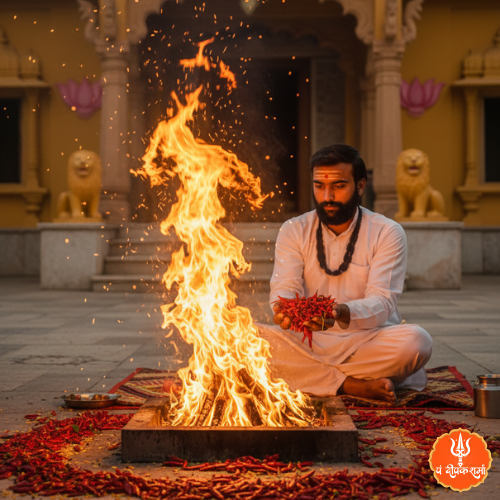
- Establishing the Kund: The havan kund should be set up in a clean and sacred space. The kund is a symbolic representation of the universe where the offerings are made to the fire.
- Invoking the Deity: The ritual begins with invoking the presence of Devi Baglamukhi. The priest (Pandit Deepak Sharma) would chant specific mantras to invite divine energy into the havan.
- Offering to the Fire: Devotees offer ghee and sacred herbs into the fire while chanting the Baglamukhi mantra: “ॐ ह्लीं बगलामुखि सर्वविघ्न नाशाय ह्लीं” (Om Hleem Baglamukhi Sarvavighna Nashaya Hleem). This mantra is believed to remove obstacles and grant victory.
Concluding the Havan
- Pradakshina: After the offerings, devotees perform pradakshina (circumambulation) around the havan kund, expressing their gratitude and devotion.
- Distribution of Prasad: The havan concludes with the distribution of prasad, which symbolizes blessings received from the goddess.
Mythological Background of Baglamukhi
According to Hindu mythology, Devi Baglamukhi is known as the goddess of speech and knowledge. She is worshipped for her ability to grant clarity of thought and protect devotees from negative influences. The stories of her divine interventions highlight her power to overcome adversities, making her worship essential for those facing challenges in life.
Do’s and Don’ts for Baglamukhi Havan
Do’s
- Maintain a clean environment for the havan.
- Dress in simple, respectful clothing during the ritual.
- Offer pure ghee and fresh herbs during the havan.
- Chant the Baglamukhi mantra with devotion and focus.
Don’ts
- Avoid consuming non-vegetarian food before the havan.
- Refrain from using impure or stale offerings.
- Do not engage in distractions or negative talk during the ritual.
Nalkheda Temple Connection
The Baglamukhi Temple in Nalkheda is a significant spiritual center for devotees. It is believed that performing the havan under the guidance of an experienced priest like Pandit Deepak Sharma amplifies the blessings received from Devi Baglamukhi. This temple is a hub for devotees seeking relief from various life challenges through the divine grace of the goddess.
When to Perform Baglamukhi Havan
Baglamukhi Havan can be performed during various life situations, such as:
- When facing obstacles in career or personal life.
- Before important exams or competitive endeavors.
- During legal matters or court cases to seek victory.
- When feeling the presence of negative energies or enemies.
FAQ
- What is the significance of Baglamukhi Havan? Baglamukhi Havan is performed to seek blessings for overcoming obstacles, gaining wisdom, and achieving success. It purifies the mental and spiritual state of the devotee, fostering clarity and protection.
- Can I perform Baglamukhi Havan at home? Yes, Baglamukhi Havan can be performed at home with the right materials and guidance. It is advisable to consult with an experienced priest to ensure proper Vedic procedures are followed.
- What are the materials required for the havan? Essential materials include ghee, sacred herbs, a havan kund, and specific offerings. Each material has its significance and should be procured with devotion.
- Is there a specific time for performing this havan? While Baglamukhi Havan can be performed at any time, it is most auspicious on Wednesdays, a day dedicated to the goddess.
- What mantra is chanted during the havan? The primary mantra used during Baglamukhi Havan is “ॐ ह्लीं बगलामुखि सर्वविघ्न नाशाय ह्लीं”, which translates to seeking the removal of all obstacles.
- How can I reach Nalkheda Temple? Nalkheda Temple can be reached via road, and it is located in the Agar Malwa district of Madhya Pradesh. Local transport and private vehicles are available for pilgrims.
Agar aap is pooja ko proper Vedic vidhi ke saath karwana chahte hain, toh Nalkheda ke experienced pandit Pandit Deepak Sharma se margdarshan le sakte hain. Woh traditional Baglamukhi pooja aur havan ko shuddh vidhi se karte hain.