Advanced Concepts of Shatrunashak Havan (Explained Clearly)
Meaning of This Ritual The Shatrunashak Havan, a sacred ritual dedicated to Devi Baglamukhi, holds immense significance in Vedic traditions. The term ‘Shatrunashak’ translates to ‘enemy remover,’ and this ritual is performed to seek divine intervention in overcoming adversities caused by enemies. It is believed that through this havan, one can invoke the blessings of Baglamukhi Mata, who is revered for her power to silence and defeat foes. The essence of this ritual lies in its ability to create a protective shield around the devotee, ensuring safety from negative influences and malicious intentions. In the context of spiritual practices, the Shatrunashak Havan serves as a powerful tool for those facing challenges from rivals, whether in personal, professional, or legal matters. This havan not only aims to eliminate external threats but also fosters inner strength and resilience, allowing devotees to navigate their lives with confidence and clarity. The flames of the havan symbolize the destruction of negativity, while the offerings made during the ritual are believed to appease the divine energies, inviting their grace into the devotee’s life. Moreover, the Shatrunashak Havan is often performed during times of distress or when one feels overwhelmed by the presence of adversaries. It is a call for divine support, a way to align oneself with the cosmic energies that govern justice and protection. The ritual is steeped in tradition, and its performance is guided by the principles of Vedic scriptures, ensuring that every aspect is conducted with reverence and devotion. How This Ritual Helps The Shatrunashak Havan is not merely a ceremonial act; it is a profound spiritual practice that brings about tangible changes in the devotee’s life. By invoking the blessings of Baglamukhi Mata, devotees seek to dissolve obstacles and confrontations posed by enemies. The havan acts as a catalyst for transformation, allowing individuals to regain their power and agency in challenging situations. It is said that the energy generated during the ritual creates a protective aura, safeguarding the devotee from harm. Additionally, this havan is believed to enhance the devotee’s mental clarity and decision-making abilities. As the flames consume the offerings, they symbolize the burning away of confusion and fear, replacing them with courage and wisdom. This clarity is essential, especially when facing adversaries, as it empowers individuals to respond effectively rather than react impulsively. The Shatrunashak Havan thus serves as a spiritual anchor, helping devotees maintain their composure and focus amidst turmoil. Furthermore, the ritual fosters a sense of community and support among participants. When performed collectively, the energy of the group amplifies the intentions behind the havan, creating a collective shield against negativity. This communal aspect reinforces the belief that one is not alone in their struggles, and the shared prayers and offerings strengthen the bond between devotees and the divine. Mythological Background The roots of the Shatrunashak Havan are deeply embedded in Hindu mythology, particularly in the narratives surrounding Devi Baglamukhi. She is one of the ten Mahavidyas, a group of powerful goddesses who embody various aspects of the divine feminine. Baglamukhi is often depicted as a fierce protector, wielding a club and a noose, symbolizing her ability to subdue enemies and protect her devotees from harm. According to ancient texts, Baglamukhi is known for her ability to silence adversaries and bring justice to those who are wronged. Her devotees believe that by performing the Shatrunashak Havan, they can invoke her divine presence and seek her assistance in overcoming challenges posed by enemies. The mythology surrounding her emphasizes the importance of faith and devotion, as it is through sincere worship that one can experience her transformative power. The stories of Baglamukhi’s victories over demons and adversaries serve as inspiration for devotees. They illustrate the principle that righteousness ultimately prevails over evil, and that with the right intentions and actions, one can overcome any obstacle. This mythological backdrop enriches the significance of the Shatrunashak Havan, making it a potent ritual for those seeking protection and empowerment. Who Should Perform This The Shatrunashak Havan is particularly beneficial for individuals who find themselves in situations where they are facing opposition or hostility. This includes those involved in legal disputes, competitive environments, or personal conflicts. Anyone who feels threatened by the actions of others or is experiencing undue stress due to adversarial relationships can greatly benefit from this ritual. Moreover, the havan is suitable for individuals seeking to enhance their personal strength and resilience. It is not limited to specific circumstances; rather, it serves as a proactive measure to fortify oneself against potential challenges. Those who wish to cultivate a sense of inner peace and confidence in their dealings with others may also find this ritual to be of great assistance. Additionally, families and communities facing collective challenges can come together to perform the Shatrunashak Havan. By uniting their intentions and prayers, they can create a powerful force against negativity and adversity. This communal approach not only strengthens the bonds among participants but also amplifies the effectiveness of the ritual. Step-by-Step Vidhi (Very Detailed) The performance of the Shatrunashak Havan follows a meticulous Vedic process, ensuring that every aspect is conducted with reverence and precision. Below is a detailed step-by-step guide to the vidhi: Preparation Before the havan, it is essential to prepare the space and gather all necessary materials. The havan kund (fire pit) should be constructed with proper dimensions, ideally made of clay or metal. Cleanse the area with sacred water and sprinkle it with rice and flowers to invite positive energies. Gather offerings such as ghee, grains, and specific herbs associated with the ritual. Invocation of Deities Begin the ritual by invoking the presence of Devi Baglamukhi and other deities associated with protection and justice. This is done through the chanting of specific mantras and offerings of flowers and fruits. Light a lamp and place it in front of the havan kund, symbolizing the illumination of divine guidance. Performing the Havan Once the deities are invoked, the actual havan can begin. Pour ghee into the fire while chanting the
Mirchi Havan: Beginner to Pro in One Detailed Guide
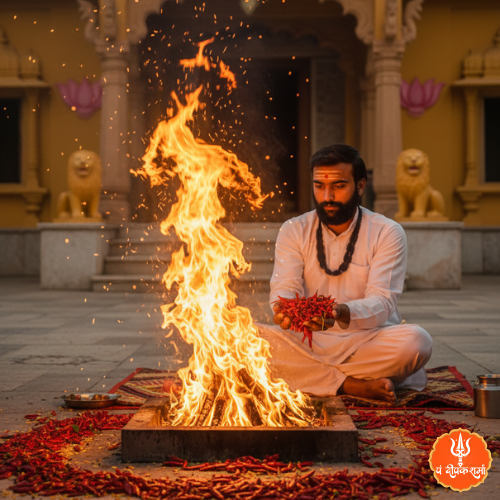
Meaning of This Ritual Mirchi havan, a sacred fire ritual dedicated to Devi Baglamukhi, holds immense significance in Vedic traditions. The term ‘Mirchi’ translates to ‘chili’, symbolizing the burning away of negativity and obstacles in one’s life. This ritual is particularly revered for its power to remove enemies and adversities, making it a crucial practice for devotees seeking relief from conflicts and challenges. The essence of this havan lies in invoking the divine energies of Baglamukhi Mata, who is known for her ability to control and subdue adversaries. In the context of spiritual practices, the Mirchi Havan serves as a medium to channel the devotee’s intentions and prayers into the universe. The offerings made during the havan, including the symbolic use of mirchi, represent the burning away of all that hinders one’s progress. It is a purification process that not only seeks to eliminate external threats but also internal fears and doubts, allowing the devotee to emerge stronger and more focused. This ritual is performed with utmost devotion and precision, adhering to the Vedic guidelines that have been passed down through generations. Each element of the havan, from the materials used to the mantras chanted, is carefully chosen to align with the spiritual goals of the devotee. Thus, the Mirchi Havan is not merely a ritual but a profound spiritual journey towards empowerment and liberation. How This Ritual Helps The Mirchi Havan is believed to bestow numerous benefits upon the devotee, primarily focusing on the removal of enemies and obstacles. By performing this ritual, one seeks the blessings of Baglamukhi Mata, who is revered as the goddess of speech and power. Her divine intervention is sought to silence adversaries and bring peace to the devotee’s life. The flames of the havan symbolize the destruction of negativity, allowing positive energies to flow in. Moreover, this havan is instrumental in enhancing the devotee’s confidence and mental clarity. As the ritual progresses, the devotee is encouraged to meditate on their intentions, fostering a sense of inner strength and resolve. The chanting of specific mantras during the havan amplifies the spiritual vibrations, creating a protective shield around the devotee. This shield not only wards off negative influences but also attracts auspicious energies that promote success and harmony. In addition to enemy removal, the Mirchi Havan is also beneficial for those facing legal challenges or disputes. The divine blessings invoked during the ritual are believed to aid in achieving favorable outcomes in court cases, making it a sought-after practice for individuals in legal predicaments. Thus, the Mirchi Havan serves as a holistic remedy, addressing both external conflicts and internal struggles, guiding the devotee towards a path of peace and prosperity. Mythological Background The roots of Mirchi Havan can be traced back to ancient Hindu scriptures that extol the virtues of Devi Baglamukhi. She is one of the ten Mahavidyas, embodying the power to control and subdue. According to mythology, Baglamukhi is depicted as a fierce goddess who can silence enemies and protect her devotees from harm. Her divine form is often associated with the color yellow, symbolizing knowledge and wisdom. One of the most popular legends surrounding Baglamukhi speaks of her intervention during a battle between the gods and demons. The gods, overwhelmed by the demons’ strength, sought the help of Baglamukhi. In response, she manifested her power, using her divine speech to immobilize the demons, thus ensuring victory for the gods. This story highlights her role as a protector and a force against evil, making her worship essential for those seeking protection from adversaries. The Mirchi Havan, therefore, is not just a ritual but a reenactment of this divine intervention. By invoking Baglamukhi’s blessings, devotees aim to replicate the victory over negativity and obstacles in their lives. The use of mirchi in the havan symbolizes the burning away of all that is harmful, echoing the goddess’s ability to eradicate evil and bring forth peace and prosperity. Who Should Perform This The Mirchi Havan is particularly beneficial for individuals facing challenges from enemies, whether in personal or professional realms. Those who feel threatened by adversaries, whether through rivalry, competition, or legal disputes, are encouraged to partake in this ritual. It serves as a powerful tool for anyone seeking to regain control over their circumstances and eliminate negativity from their lives. Moreover, this havan is suitable for individuals who are experiencing prolonged periods of struggle or conflict. If one finds themselves in a cycle of misfortune or facing repeated obstacles, the Mirchi Havan can provide the necessary spiritual support to break free from these patterns. It is also recommended for those who feel a lack of confidence or clarity in their decision-making, as the ritual helps in enhancing mental strength and focus. In essence, anyone who seeks the blessings of Devi Baglamukhi for protection, empowerment, and resolution of conflicts can benefit from performing the Mirchi Havan. It is a sacred practice that aligns the devotee’s intentions with divine will, fostering a sense of security and peace. Step-by-Step Vidhi (Very Detailed) To perform the Mirchi Havan, one must follow a detailed Vedic procedure that ensures the ritual is conducted with reverence and precision. The preparation begins with the selection of an auspicious date and time, preferably during a Shubh Muhurat, which can be determined by consulting a knowledgeable pandit. This ensures that the energies are favorable for the ritual. Once the date is set, the devotee should gather all necessary materials, including: Mirchi (green or red chilies) Havan samagri (sacred offerings such as ghee, rice, and herbs) A havan kund (fire pit) Flowers and fruits for offerings Incense sticks and diya for lighting The next step involves purifying the space where the havan will be performed. This can be done by sprinkling holy water and chanting mantras to invoke positive energies. The havan kund should be placed in a clean and sacred area, preferably facing east or north. As the ritual begins, the devotee should sit in front of the havan kund with a calm and
Mirchi Hawan: Everything You Need to Know
Meaning of This Ritual Mirchi Hawan, a sacred ritual dedicated to Devi Baglamukhi, is performed with the intention of removing obstacles and enemies from one’s life. The term ‘Mirchi’ refers to chili, which symbolizes the burning away of negativity and adversities. In Vedic tradition, fire is considered a purifying element, and through this hawan, devotees seek the blessings of Baglamukhi Mata to overcome challenges posed by rivals or negative influences. This hawan involves the offering of specific materials into the sacred fire, which is believed to carry the prayers and intentions of the devotee to the divine. The act of performing Mirchi Hawan is not just a ritual; it is a heartfelt plea for protection and strength, allowing the devotee to rise above their troubles with the grace of the goddess. Furthermore, the ritual is steeped in deep spiritual significance, as it aligns the devotee’s energies with the divine frequencies of Baglamukhi Mata. It is a means of invoking her powerful blessings, which are essential for overcoming adversities and achieving peace and success in life. How This Ritual Helps The Mirchi Hawan serves multiple purposes, primarily focusing on enemy removal and protection. When performed with sincerity and devotion, it is believed to shield the devotee from negative energies and harmful influences. The hawan acts as a spiritual barrier, ensuring that the devotee remains safe from the machinations of adversaries. Additionally, this ritual is known to enhance the devotee’s confidence and strength. By invoking the blessings of Baglamukhi Mata, individuals often find themselves empowered to confront their challenges head-on. The hawan not only clears the path of obstacles but also instills a sense of courage and determination in the devotee. Moreover, Mirchi Hawan is also beneficial for those facing legal troubles or conflicts. The energy generated during the hawan is believed to create a favorable environment, aiding in resolving disputes and ensuring justice. Thus, it becomes a holistic approach to overcoming various life challenges. Mythological Background In Hindu mythology, Devi Baglamukhi is one of the ten Mahavidyas, representing the power of speech and the ability to control enemies. She is often depicted as a goddess who can silence adversaries and protect her devotees from harm. The stories surrounding her are rich with lessons of devotion, strength, and the triumph of good over evil. One popular legend tells of how Baglamukhi subdued a powerful demon who threatened the balance of the universe. Through her divine intervention, she not only defeated the demon but also taught the world the importance of using one’s words wisely. This aspect of her mythology is particularly relevant to the Mirchi Hawan, as it emphasizes the power of intention and the spoken word in manifesting one’s desires. The hawan itself is a way to connect with this divine energy, allowing devotees to channel their prayers and intentions effectively. By understanding the mythological context, devotees can deepen their connection with the ritual, enhancing its spiritual efficacy. Who Should Perform This Mirchi Hawan is particularly beneficial for individuals facing conflicts, whether in personal relationships, professional settings, or legal matters. Anyone who feels threatened by adversaries or is experiencing negativity in their life can benefit from this powerful ritual. It is also recommended for those who seek to enhance their protective energies and cultivate a sense of inner strength. Moreover, individuals who are in positions of leadership or authority may find this hawan especially useful. The blessings of Baglamukhi Mata can help them navigate challenges more effectively, ensuring that they remain steadfast in their decisions and actions. It is important to approach this ritual with a pure heart and sincere intentions. Those who are genuinely seeking to remove obstacles and cultivate a peaceful environment are the ideal candidates for performing the Mirchi Hawan. Step-by-Step Vidhi (Very Detailed) The Vidhi for Mirchi Hawan is a sacred process that must be followed meticulously to ensure its effectiveness. Begin by preparing a clean and sacred space for the hawan. This can be done by purifying the area with Ganga Jal or any holy water. Set up a hawan kund, which is a fire pit made of clay or metal, and ensure that it is placed in a direction that is auspicious, preferably facing east. Gather the necessary materials for the hawan, which typically include dried red chilies, ghee, rice, and specific herbs. Each of these items holds significance in the ritual, contributing to the overall energy and intention of the hawan. Once everything is in place, invoke the presence of Baglamukhi Mata by chanting her mantras and offering flowers at the altar. As the fire is lit, begin the hawan by offering the dried red chilies into the flames along with ghee and rice. Each offering should be accompanied by specific mantras, which further amplify the energy of the ritual. It is essential to maintain focus and devotion throughout the process, visualizing the removal of obstacles and the protection of the goddess surrounding you. Mantra for This Ritual The primary mantra for the Mirchi Hawan is: ॐ ह्लीं बगलामुखि सर्व शत्रुस्तम्भनाय स्वाहा Transliteration: Om Hleem Baglamukhi Sarva Shatrusambhanaya Swaha This powerful mantra is a call to Devi Baglamukhi to subdue all enemies and obstacles in the devotee’s life. The syllable ‘Hleem’ is a seed sound that resonates with the energies of protection and strength. When chanted with devotion, it invokes the goddess’s blessings, ensuring that the devotee is shielded from harm. Chanting this mantra during the hawan amplifies its effectiveness, as it aligns the devotee’s intentions with the divine will of Baglamukhi Mata. It is recommended to chant this mantra a specific number of times, ideally 108, to fully harness its power. The repetition of the mantra not only enhances concentration but also creates a sacred atmosphere conducive to spiritual growth. Do’s & Don’ts When performing the Mirchi Hawan, there are certain do’s and don’ts that should be observed to ensure the ritual’s success. Do approach the hawan with a pure heart and sincere intentions. It is essential to maintain a positive mindset
Enemy Removal Havan: Everything You Need to Know
Meaning of This Ritual The Enemy Removal Havan, or Shatrunashak Havan, is a sacred Vedic ritual dedicated to Devi Baglamukhi, one of the ten Mahavidyas. This powerful havan is performed to eliminate negative influences and adversities caused by enemies. In the spiritual realm, enemies can manifest as obstacles in one’s career, personal life, or spiritual journey. By invoking the divine energy of Baglamukhi Mata, devotees seek protection and the removal of these hindrances. The havan involves the chanting of specific mantras and the offering of sacred items into the fire, creating a purifying atmosphere that drives away negativity. In essence, this ritual serves as a spiritual shield, empowering devotees to overcome challenges posed by adversaries. The flames of the havan symbolize the transformation of negative energies into positive vibrations, fostering peace and harmony in the devotee’s life. It is a profound act of devotion that not only seeks to remove enemies but also instills strength and courage in the devotee to face life’s challenges. How This Ritual Helps The Enemy Removal Havan is believed to bring about significant changes in the lives of those who participate in it with faith and devotion. By performing this ritual, devotees can experience a sense of relief from the burdens caused by their enemies. The havan helps in neutralizing the ill effects of negative energies, ensuring that the devotee is shielded from harm. This is particularly beneficial for individuals facing legal battles, workplace conflicts, or personal disputes. Moreover, the ritual enhances the devotee’s inner strength, enabling them to confront challenges with confidence. The sacred fire acts as a medium through which the devotee communicates with the divine, seeking blessings for protection and victory over adversaries. The chanting of mantras during the havan creates a powerful vibrational field that resonates with the energies of the universe, attracting positivity and repelling negativity. Mythological Background The roots of the Enemy Removal Havan lie deep within Hindu mythology, particularly in the tales surrounding Devi Baglamukhi. She is revered as the goddess who grants victory over enemies and is often depicted with a fierce demeanor, symbolizing her power to silence adversaries. According to ancient texts, Baglamukhi is known to have vanquished demons and malevolent forces, establishing her as a protector of her devotees. One of the most significant legends associated with Baglamukhi involves her confrontation with the demon Madan. The demon had created chaos and fear among the gods and humans alike. In response to their pleas, Baglamukhi manifested her divine form and subdued Madan, restoring peace. This act of valor is celebrated through various rituals, including the Enemy Removal Havan, where devotees seek her blessings to overcome their own enemies. Furthermore, the havan is rooted in the belief that fire is a purifying element. The offerings made during the ritual are believed to reach the divine realm, where Baglamukhi accepts them and bestows her blessings upon the devotee. This connection between the devotee and the goddess is strengthened through the performance of the havan, making it a vital aspect of spiritual practice for those seeking relief from adversities. Who Should Perform This The Enemy Removal Havan is particularly beneficial for individuals who feel threatened by adversaries in various aspects of life. Those facing legal issues, workplace rivalry, or personal conflicts can greatly benefit from this ritual. It is also recommended for individuals who sense negative energies around them or those who have been subjected to malicious intentions from others. Moreover, anyone seeking to enhance their spiritual protection and inner strength can participate in this havan. It is not limited to specific individuals; rather, it welcomes all devotees who wish to seek the blessings of Baglamukhi Mata. The ritual can be performed on behalf of others as well, making it a communal act of faith and devotion. Step-by-Step Vidhi (Very Detailed) The Enemy Removal Havan is performed with utmost devotion and adherence to Vedic traditions. Here is a detailed step-by-step guide to conducting this sacred ritual: Preparation of the Havan Kund The first step involves the preparation of the Havan Kund, a sacred fire pit where the havan will be performed. It should be made of mud or metal, shaped in a square or rectangular form. The Kund should be placed in a clean and auspicious location, preferably facing the east direction. Once the Kund is ready, it is sanctified with Ganga Jal (holy water) and covered with fresh grass. Gathering of Materials Next, gather all the necessary materials for the havan. This includes ghee (clarified butter), samagri (a mixture of sacred items like grains, herbs, and spices), and specific offerings such as yellow flowers, fruits, and sweets. Each item holds significance in the ritual, symbolizing devotion and gratitude towards the goddess. Invocation of Deities Before starting the havan, the pandit performs a puja to invoke the presence of Devi Baglamukhi. This involves lighting a lamp, offering flowers, and chanting specific mantras to invite the goddess into the Kund. The atmosphere is filled with sacred vibrations, setting the tone for the ritual. Performing the Havan Once the invocation is complete, the havan begins. The pandit lights the fire in the Kund using dry grass and wood, ensuring it burns brightly. As the flames rise, offerings of ghee and samagri are made into the fire while chanting the powerful mantra: ॐ ह्लीं बगलामुखि सर्व शत्रुस्तम्भनाय स्वाहा. This mantra is repeated multiple times, creating a strong connection with the divine. Concluding the Ritual After the offerings are made, the pandit concludes the havan with aarti (a ritual of worship) and distributes prasad (blessed food) to all participants. It is essential to express gratitude to Devi Baglamukhi for her blessings and protection. The participants should also reflect on their intentions and the positive changes they wish to manifest in their lives. Mantra for This Ritual The mantra used during the Enemy Removal Havan is ॐ ह्लीं बगलामुखि सर्व शत्रुस्तम्भनाय स्वाहा. This powerful invocation is dedicated to Devi Baglamukhi, seeking her blessings to immobilize enemies and protect the devotee from harm. In
Common Mistakes in Chaitra navratri havan and How to Fix Them
Meaning of This Ritual Chaitra Navratri is a sacred period dedicated to the worship of Goddess Durga, celebrated with great fervor across India. During this time, devotees perform various rituals, including the Chaitra navratri havan, to invoke divine blessings and seek the protection and guidance of the Goddess. The havan, a fire ritual, symbolizes the purification of the environment and the devotee’s spirit, making it an essential part of the worship during this auspicious festival. The Chaitra Navratri Havan specifically focuses on the worship of Devi baglamukhi, one of the ten Mahavidyas, who is revered for her power to remove obstacles and grant victory over adversaries. This ritual is not just a ceremonial act; it is a profound spiritual practice that connects the devotee with the divine energy of the Goddess, fostering a sense of peace, protection, and empowerment. Understanding the meaning behind this ritual is crucial for its successful execution. Each element of the havan, from the offerings to the mantras chanted, holds deep significance. The fire represents the divine presence, while the offerings symbolize our devotion and surrender to the Goddess. By performing the Chaitra Navratri Havan with sincerity and faith, devotees can align themselves with the divine energies and invite blessings into their lives. How This Ritual Helps The Chaitra Navratri Havan serves multiple purposes, each designed to enhance the devotee’s spiritual journey and address specific life challenges. Primarily, it is a means of seeking the blessings of Goddess Baglamukhi for overcoming obstacles, whether they be in personal, professional, or spiritual realms. The havan acts as a conduit for divine energy, helping to clear negative influences and promote a positive environment. Moreover, this ritual is particularly beneficial for those facing legal issues or conflicts. The powerful mantras recited during the havan are believed to invoke the Goddess’s protection and guidance, leading to favorable outcomes in court cases or disputes. Devotees often report a sense of relief and clarity after performing the havan, as it helps them navigate challenging situations with confidence and faith. Additionally, the Chaitra Navratri Havan fosters a sense of community and collective spirituality. When performed in a group, the energy generated amplifies the intentions of all participants, creating a powerful atmosphere of devotion and positivity. This communal aspect not only strengthens individual faith but also enhances the overall spiritual experience, making it a cherished tradition among devotees. Mythological Background The worship of Goddess Baglamukhi is steeped in rich mythology, with numerous stories highlighting her divine powers and significance. According to ancient texts, she is one of the ten Mahavidyas, representing the ultimate knowledge and wisdom. Her name, ‘Baglamukhi,’ translates to ‘the one who is powerful in speech,’ symbolizing her ability to control and silence enemies, making her a formidable force against negativity and obstacles. One popular legend narrates how Baglamukhi emerged from the collective consciousness of the gods to combat the demon Madhu and Kaitabh, who threatened the cosmic order. With her divine grace, she defeated these formidable foes, restoring balance and harmony to the universe. This victory not only established her as a protector of dharma but also as a source of strength for her devotees, who seek her blessings for overcoming adversities. Furthermore, the significance of Chaitra Navratri is deeply rooted in the celebration of the Goddess’s victory over evil. Each day of Navratri is dedicated to a different form of the Goddess, culminating in the worship of Durga, who embodies the triumph of good over evil. The Chaitra Navratri Havan, therefore, becomes a powerful expression of devotion, allowing devotees to connect with the divine energy of Baglamukhi and seek her blessings for victory in their own lives. Who Should Perform This The Chaitra Navratri Havan is open to all devotees seeking the blessings of Goddess Baglamukhi. It is particularly beneficial for individuals facing challenges in their personal or professional lives, such as legal disputes, career obstacles, or interpersonal conflicts. Those who feel overwhelmed by negativity or adversities may find solace and strength through this ritual. Additionally, individuals involved in competitive fields, such as academics or business, can greatly benefit from the havan. The divine energy invoked during the ritual is believed to enhance focus, clarity, and determination, aiding in the pursuit of success. Furthermore, those seeking spiritual growth and a deeper connection with the divine are encouraged to participate in the Chaitra Navratri Havan, as it fosters a sense of devotion and alignment with higher energies. Families and communities can also come together to perform the havan, creating a collective energy that amplifies the intentions of all participants. This communal aspect not only strengthens bonds among individuals but also enhances the overall spiritual experience, making it a cherished tradition during the Navratri festival. Step-by-Step Vidhi (Very Detailed) Performing the Chaitra Navratri Havan requires careful preparation and adherence to Vedic rituals. Here is a detailed step-by-step guide to ensure the havan is conducted properly: Preparation Begin by selecting an auspicious date and time for the havan, preferably during the Chaitra Navratri period. Clean the space where the havan will take place, ensuring it is free from impurities. Set up a havan kund (fire pit) made of metal or clay, and place it in a clean and sacred area. Gather all necessary materials, including ghee (clarified butter), wood, samagri (offerings), and the specific mantras to be recited. Invoking the Deity Once the havan kund is prepared, invoke the presence of Goddess Baglamukhi by chanting her mantras. Light the fire in the havan kund using dry wood and ghee, offering a small amount of ghee into the flames while reciting the mantra: ॐ ह्लीं बगलामुखि सर्वविघ्न नाशाय ह्लीं (Om Hleem Baglamukhi Sarvavighna Nashaya Hleem). This mantra is specifically aimed at removing obstacles and inviting the Goddess’s blessings. Offering Samagri As the fire burns, begin offering samagri into the flames. This can include items like grains, flowers, and other sacred offerings. Each offering should be accompanied by the recitation of specific mantras dedicated to the Goddess. It is essential to maintain a focused and
Chaitra navratri havan for Small Businesses: Practical Implementation
Meaning of This Ritual Chaitra Navratri is a sacred time when devotees honor the divine feminine energy through various rituals and prayers. Among these, the Chaitra navratri havan holds a special significance, particularly for small businesses seeking blessings for prosperity and success. This ritual involves invoking the blessings of Devi baglamukhi, who is revered for her power to bestow wisdom, strength, and financial stability. The havan, or fire ritual, serves as a medium to connect with the divine and seek her guidance in overcoming obstacles and achieving growth. The essence of this ritual lies in its ability to purify the environment and create a positive energy field that attracts abundance. Small business owners often face numerous challenges, and performing the Chaitra Navratri Havan can be a powerful way to align their intentions with the divine will. It is a time to reflect on one’s goals, seek clarity, and invite prosperity into their ventures. Through the sacred flames of the havan, offerings are made to the goddess, symbolizing the surrender of one’s desires and the request for her blessings. This act of devotion not only strengthens the bond between the devotee and the divine but also instills a sense of faith and hope for a brighter future. How This Ritual Helps The Chaitra Navratri Havan is a profound spiritual practice that can significantly benefit small businesses. By performing this ritual, business owners can invoke the blessings of Devi Baglamukhi, who is known for her ability to remove obstacles and grant success. The havan creates a sacred atmosphere that fosters positivity, allowing the energies of abundance and prosperity to flow freely. One of the primary benefits of this ritual is the removal of negative energies that may be hindering business growth. The fire in the havan symbolizes transformation and purification, helping to cleanse the environment of any adverse influences. This purification process is essential for creating a conducive atmosphere for success, as it allows new opportunities to emerge. Moreover, the Chaitra Navratri Havan encourages focus and clarity of thought. As business owners engage in the ritual, they are reminded of their goals and aspirations. This heightened awareness can lead to better decision-making and strategic planning, ultimately contributing to the growth and success of their enterprises. Mythological Background The significance of the Chaitra Navratri Havan is deeply rooted in Hindu mythology. Devi Baglamukhi is one of the ten Mahavidyas, representing the power of speech and the ability to overcome adversities. According to ancient texts, she is known to grant her devotees the strength to face challenges and emerge victorious. Her divine energy is particularly potent during the Navratri festival, making it an auspicious time for performing rituals in her honor. Legend has it that Devi Baglamukhi once fought against the forces of negativity and ignorance, using her wisdom and strength to restore balance in the universe. This mythological backdrop serves as a reminder for devotees that through devotion and surrender, they too can overcome their struggles. The havan acts as a conduit for channeling this divine energy, allowing devotees to connect with the goddess and seek her blessings. Furthermore, the practice of performing havans during Navratri is steeped in tradition, symbolizing the victory of good over evil. It is believed that by engaging in these rituals, devotees can invoke divine protection and guidance, ensuring that their endeavors are met with success. The Chaitra Navratri Havan, therefore, is not just a ritual; it is a celebration of faith, resilience, and the unwavering support of the divine. Who Should Perform This The Chaitra Navratri Havan is particularly beneficial for small business owners, entrepreneurs, and anyone seeking to enhance their financial stability and success. Individuals who feel overwhelmed by challenges in their business journey or those who seek clarity in their decision-making can greatly benefit from this ritual. It is a time to seek divine intervention and guidance, making it an ideal practice for those in need of support. Moreover, this havan is suitable for anyone looking to remove obstacles in their professional life. Whether you are facing competition, financial difficulties, or uncertainty in your business decisions, the blessings of Devi Baglamukhi can provide the strength and wisdom needed to navigate these challenges. The ritual serves as a reminder that with faith and devotion, one can overcome any hurdle. Additionally, the Chaitra Navratri Havan can be performed by individuals seeking to enhance their overall well-being and prosperity. It is a time to reflect on one’s goals and aspirations, making it a valuable practice for anyone looking to align their intentions with the divine will. Step-by-Step Vidhi (Very Detailed) Performing the Chaitra Navratri Havan involves a series of sacred steps that must be followed with devotion and reverence. The process begins with the selection of an auspicious date during the Navratri festival, preferably on the first day of Chaitra month. It is essential to create a clean and sacred space for the havan, free from any distractions. 1. **Preparation of the Havan Kund**: The first step is to prepare the havan kund, a sacred fire pit where the offerings will be made. It should be made of clay or metal and placed in a clean area. The size of the kund can vary based on the number of participants. Ensure that it is well-constructed and ready for the fire. 2. **Gathering Materials**: Collect all necessary materials for the havan, including ghee (clarified butter), samagri (a mixture of herbs and grains), and specific offerings such as flowers, fruits, and sweets. Each item holds significance and should be chosen with care. Prepare a clean cloth to cover the havan kund and a bell to ring during the ritual. 3. **Purification Ritual**: Before starting the havan, perform a purification ritual by sprinkling holy water around the area and chanting mantras to invoke divine blessings. This step is crucial for creating a sacred atmosphere and inviting positive energies into the space. 4. **Lighting the Fire**: Once the preparations are complete, light the fire in the havan kund with the help
Advanced Concepts of Chaitra navratri havan (Explained Clearly)
Meaning of This Ritual Chaitra Navratri is a sacred time when devotees honor the divine feminine energy embodied by the goddess Durga. Among the many forms of the goddess, baglamukhi Mata holds a special place, revered for her power to bestow wisdom and victory over adversities. The Chaitra Navratri Havan dedicated to Baglamukhi is a profound ritual that symbolizes the removal of obstacles and the attainment of success in various endeavors. It is a time when devotees seek the blessings of the goddess to overcome challenges, particularly in legal matters and personal conflicts. The havan, or fire ritual, involves offerings made to the sacred fire, which is considered a purifying element. The flames represent the goddess’s divine energy, consuming negativity and transforming it into positive outcomes. Through this ritual, devotees express their devotion and seek the goddess’s grace, believing that their sincere prayers will be heard and answered. The Chaitra Navratri Baglamukhi Havan is not merely a ritual; it is a heartfelt plea for divine intervention in one’s life. Performing this havan during the auspicious days of Chaitra Navratri enhances its potency, as the energies of the goddess are believed to be particularly strong during this period. Devotees engage in this ritual with a pure heart and unwavering faith, hoping to align themselves with the divine will of Baglamukhi Mata. How This Ritual Helps The Chaitra Navratri Havan dedicated to Baglamukhi Mata serves multiple purposes, primarily focusing on the removal of obstacles and the attainment of success. One of the key benefits of this ritual is its ability to provide relief from legal troubles. Many devotees turn to Baglamukhi for assistance in court cases, believing that her blessings can lead to favorable outcomes. The havan acts as a spiritual shield, protecting individuals from negative influences and adversaries. Moreover, this ritual is known for enhancing one’s intellect and decision-making abilities. By invoking the goddess, devotees seek clarity and wisdom, which are essential in navigating complex situations. The energy generated during the havan is believed to sharpen the mind, enabling individuals to make informed choices and act decisively in their personal and professional lives. Additionally, the Chaitra Navratri Havan fosters a sense of inner peace and confidence. As devotees engage in the ritual, they often experience a profound connection with the divine, which instills a sense of reassurance and strength. This spiritual empowerment encourages individuals to face challenges head-on, knowing that they are supported by the grace of Baglamukhi Mata. Mythological Background The mythology surrounding Baglamukhi Mata is rich and deeply rooted in Hindu tradition. She is one of the ten Mahavidyas, a group of powerful goddesses who embody various aspects of the divine feminine. Baglamukhi is often depicted as a fierce warrior, wielding a club and seated on a throne, symbolizing her authority over ignorance and negativity. Her name translates to ‘the one who stuns,’ reflecting her ability to immobilize enemies and obstacles. According to ancient texts, Baglamukhi emerged during the churning of the ocean (Samudra Manthan), where she played a crucial role in restoring balance and order. Her divine intervention is said to have quelled the forces of chaos, showcasing her power to protect her devotees from harm. This mythological narrative reinforces the belief that invoking Baglamukhi during the Chaitra Navratri Havan can lead to victory over adversaries and challenges. Furthermore, the goddess is associated with the element of speech and communication. She is revered for her ability to grant eloquence and persuasive power, making her a favored deity for those seeking success in legal matters and negotiations. The stories of her divine exploits serve as a source of inspiration for devotees, encouraging them to seek her blessings during times of difficulty. Who Should Perform This The Chaitra Navratri Havan dedicated to Baglamukhi Mata is suitable for anyone facing challenges in their life, particularly in legal matters, career, or personal conflicts. Individuals involved in court cases, disputes, or negotiations can greatly benefit from this ritual, as it is believed to invoke the goddess’s blessings for victory and resolution. Those seeking clarity and wisdom in decision-making are also encouraged to participate in this havan, as it enhances mental acuity and confidence. Moreover, this ritual is ideal for devotees who wish to strengthen their connection with the divine feminine energy. It is a time for spiritual growth and self-reflection, making it an excellent opportunity for individuals to engage in practices that promote inner peace and resilience. Whether one is facing immediate challenges or seeking long-term spiritual benefits, the Chaitra Navratri Havan offers a pathway to divine support. Families and communities may also come together to perform this havan, fostering a sense of unity and collective strength. By invoking Baglamukhi Mata as a group, devotees can amplify the energy of the ritual, creating a powerful atmosphere of devotion and faith. Step-by-Step Vidhi (Very Detailed) The Chaitra Navratri Havan is a sacred ritual that requires careful preparation and adherence to Vedic traditions. Here is a detailed step-by-step guide to performing this havan: Preparation Begin by selecting an auspicious date during Chaitra Navratri for the havan. Cleanse the space where the ritual will be performed, ensuring it is free from any negativity. Gather all necessary materials, including a havan kund (fire pit), ghee, samagri (offerings), and the appropriate mantras for invocation. It is essential to wear clean, traditional attire while performing the havan. Devotees should also take a bath and purify themselves before engaging in the ritual. Setting a positive intention for the havan is crucial, as it aligns the devotee’s energy with the divine purpose of the ritual. Invocation of the Goddess Once the preparations are complete, begin the ritual by invoking Baglamukhi Mata. Light a diya (lamp) and offer flowers at the altar. Recite the following mantra to invite the goddess’s presence: “ॐ ह्लीं बगलामुखि सर्वविघ्न नाशाय ह्लीं” (Om Hleem Baglamukhi Sarva Vighna Nashaya Hleem) As you chant this mantra, visualize the goddess enveloping you in her divine light, granting you protection and guidance. This invocation sets the tone for the entire
Real-World Use Cases of Chaitra navratri havan
Meaning of This Ritual Chaitra Navratri is a sacred time for devotees, a period dedicated to the worship of Goddess Durga in her various forms. Among these forms, baglamukhi Mata holds a significant position, revered for her power to grant wisdom and victory over adversities. The Chaitra Navratri Havan dedicated to Baglamukhi is a profound ritual that embodies devotion and spiritual purification. This havan not only seeks blessings for personal growth but also aims to remove obstacles and enemies, aligning the devotee with divine energies. The essence of this ritual lies in its ability to invoke the blessings of Baglamukhi Mata, who is known for her ability to silence enemies and grant victory in legal matters. By performing the Chaitra Navratri Baglamukhi Havan, devotees express their faith and seek the divine intervention needed to overcome challenges in their lives. It is a time of introspection, prayer, and spiritual renewal, allowing individuals to connect deeply with the divine feminine energy. In essence, this ritual serves as a bridge between the devotee and the divine, facilitating a sacred dialogue that fosters spiritual growth and material success. The havan is performed with utmost devotion, following traditional Vedic practices, ensuring that the energy generated is pure and focused on the intentions of the participants. How This Ritual Helps The Chaitra Navratri Havan dedicated to Baglamukhi Mata serves multiple purposes, each aimed at enhancing the devotee’s life. Primarily, it is a powerful means of seeking protection from adversaries and negative influences. The havan creates a protective shield around the devotee, ensuring that they are safeguarded from harm and ill intentions. This is particularly beneficial for those facing legal battles or conflicts, as it invokes the divine energy of Baglamukhi to grant victory and justice. Moreover, the ritual aids in mental clarity and focus. As devotees chant the mantras and offer oblations into the sacred fire, they are enveloped in a meditative state that allows them to connect with their inner selves. This connection fosters a sense of peace and tranquility, enabling individuals to approach their challenges with a clear mind and renewed strength. The blessings of Baglamukhi Mata help in dispelling confusion and guiding the devotee towards the right path. Additionally, the Chaitra Navratri Havan is a means of spiritual purification. The act of performing the havan itself is a cleansing process, where the devotee lets go of past grievances and negative emotions. This purification is essential for personal growth and spiritual evolution, allowing individuals to embrace positivity and divine grace in their lives. Mythological Background The mythology surrounding Baglamukhi Mata is rich and profound, deeply rooted in Hindu tradition. Baglamukhi is one of the ten Mahavidyas, a group of powerful goddesses who embody different aspects of the divine feminine. According to ancient texts, Baglamukhi is revered as the goddess of speech and knowledge, known for her ability to control and silence enemies. Her name translates to ‘the one who is the essence of the universe,’ symbolizing her omnipresence and power. One of the most significant myths associated with Baglamukhi is her role in the battle between the gods and demons. When the demons threatened to disrupt the cosmic order, the gods turned to Baglamukhi for assistance. In response, she manifested her divine form and used her powers to subdue the demons, restoring balance and harmony to the universe. This myth highlights her strength and the importance of seeking her blessings during times of conflict. Furthermore, Baglamukhi is often depicted holding a tongue in her hand, symbolizing her control over speech and communication. This imagery serves as a reminder of the power of words and the importance of using them wisely. Devotees believe that by worshipping Baglamukhi, they can gain mastery over their speech, ensuring that their words are impactful and beneficial. The Chaitra Navratri Havan, therefore, becomes a means of invoking this divine energy, allowing devotees to harness the power of speech in their lives. Who Should Perform This The Chaitra Navratri Havan is particularly beneficial for individuals facing challenges in their personal or professional lives. Those who are experiencing conflicts, whether in relationships, workplaces, or legal matters, are encouraged to participate in this ritual. The divine blessings of Baglamukhi Mata can provide the necessary strength and guidance to navigate these challenges successfully. Additionally, students preparing for competitive exams or individuals seeking career advancements can greatly benefit from this havan. The ritual enhances focus, clarity, and confidence, enabling participants to perform to the best of their abilities. It is also recommended for those who feel overwhelmed by negative energies or adversaries, as the havan serves as a protective shield against such influences. Moreover, anyone seeking spiritual growth and purification can partake in this ritual. The Chaitra Navratri Havan is not limited to specific individuals; it is open to all who wish to connect with Baglamukhi Mata and seek her blessings. The collective energy generated during the havan amplifies the intentions of each participant, making it a powerful communal experience. Step-by-Step Vidhi (Very Detailed) The Chaitra Navratri Havan is performed with great reverence and adherence to Vedic traditions. The following is a detailed step-by-step procedure for conducting this sacred ritual: Preparation Before the havan begins, it is essential to prepare the space. Clean the area where the havan will be performed, ensuring it is free from any clutter. Set up a sacred altar with images or idols of Baglamukhi Mata, along with offerings such as flowers, fruits, and sweets. Gather all necessary materials, including the havan kund (sacred fire pit), ghee, samagri (havan materials), and the appropriate mantras. Achaman (Purification) Start the ritual with Achaman, a purification process where the participants sip water three times while reciting specific mantras. This act cleanses the mind and body, preparing the devotee for the sacred ritual ahead. It is a moment of introspection, allowing individuals to focus their intentions on the havan. Invocation of Deities Once purified, invoke the presence of Baglamukhi Mata by chanting her mantras. Offer flowers and light a diya (lamp) as a symbol
Complete Guide to Chaitra navratri havan
Meaning of This Ritual Chaitra Navratri is a sacred time dedicated to the worship of the divine feminine energy, where devotees seek blessings for strength, wisdom, and protection. The Chaitra navratri havan, particularly focused on baglamukhi Mata, is a profound ritual that symbolizes the removal of obstacles and the attainment of victory over adversities. This ritual is performed with utmost devotion and precision, aligning with the Vedic traditions that have been passed down through generations. It is believed that through this Havan, devotees can invoke the blessings of Baglamukhi Mata, who is revered for her power to silence enemies and grant success in challenging situations. The essence of this ritual lies in its ability to purify the environment and the devotee’s mind, creating a sacred space for divine energy to flow. The Havan involves the offering of specific materials into the sacred fire, accompanied by mantras that resonate with the energies of Baglamukhi Mata. This process not only helps in spiritual upliftment but also serves as a means to manifest one’s desires and intentions into reality. As devotees gather to perform the Chaitra Navratri Havan, they collectively channel their energies towards a common goal, fostering a sense of community and shared devotion. The ritual is not merely a personal endeavor but a collective invocation of divine blessings, making it a powerful spiritual experience. How This Ritual Helps The Chaitra Navratri Havan dedicated to Baglamukhi Mata serves multiple purposes for devotees. Primarily, it is aimed at overcoming obstacles and adversities in life. Many individuals face challenges in various aspects, be it personal, professional, or spiritual. The blessings of Baglamukhi Mata, through this Havan, are believed to provide the necessary strength and guidance to navigate through these challenges effectively. Additionally, this ritual is particularly beneficial for those involved in legal matters or facing conflicts. The mantra associated with Baglamukhi Mata is known for its potency in ensuring victory in court cases and legal disputes. Devotees often report a sense of relief and clarity after performing the Havan, as it helps in aligning their energies with the divine will, thus facilitating favorable outcomes. Moreover, the Chaitra Navratri Havan is also a time for spiritual rejuvenation. It allows devotees to connect deeply with their spiritual selves, fostering a sense of peace and tranquility. The act of performing the Havan, with its intricate rituals and offerings, encourages mindfulness and devotion, leading to a more profound spiritual awakening. Mythological Background The significance of Baglamukhi Mata in Hindu mythology is profound. She is one of the ten Mahavidyas, representing the power of knowledge and the ability to control speech and communication. According to ancient texts, Baglamukhi Mata is known to have subdued the demons of ignorance and falsehood, thus establishing truth and righteousness in the world. Her divine form is often depicted as a goddess who holds a tongue in her hand, symbolizing her power to silence adversaries and grant victory to her devotees. The stories of Baglamukhi Mata’s victories over evil forces are numerous, each illustrating her unwavering strength and compassion towards her devotees. One notable legend recounts how she helped a devotee who was wrongfully accused in a court case. By invoking her blessings through a Havan, the devotee was able to turn the tides in their favor, showcasing the goddess’s ability to influence justice and fairness. Furthermore, the Chaitra Navratri period is particularly auspicious for worshipping Baglamukhi Mata. It is believed that during this time, the energies of the goddess are heightened, making it an ideal moment for devotees to seek her blessings. The rituals performed during this period are steeped in tradition, ensuring that the essence of the worship remains intact and powerful. Who Should Perform This The Chaitra Navratri Havan is suitable for anyone seeking the blessings of Baglamukhi Mata, particularly those facing challenges in their lives. Individuals involved in legal disputes, career obstacles, or personal conflicts can greatly benefit from this ritual. It is also recommended for those who wish to enhance their spiritual practice and deepen their connection with the divine. Moreover, families seeking harmony and protection from negative influences are encouraged to participate in the Havan. The collective energy generated during the ritual can foster unity and strength, helping to dispel any discord or misunderstandings within the household. Lastly, individuals who are on a spiritual journey, looking to gain clarity and wisdom, will find this ritual immensely beneficial. By invoking the blessings of Baglamukhi Mata, they can receive guidance and support in their endeavors, paving the way for personal growth and enlightenment. Step-by-Step Vidhi (Very Detailed) The Vidhi for performing the Chaitra Navratri Havan is a sacred process that requires devotion and adherence to Vedic traditions. Below is a detailed step-by-step guide: Preparation Begin by selecting an auspicious date during Chaitra Navratri, preferably on the first day of the festival. Clean the space where the Havan will be performed, ensuring it is free from any impurities. Set up a Havan Kund (sacred fire pit) at the center of the space, surrounded by flowers and sacred items. Gather all necessary materials for the Havan, including ghee (clarified butter), samagri (a mixture of sacred offerings), and specific herbs that resonate with Baglamukhi Mata. It is essential to have a clean cloth and a bell to ring during the ritual. Invocation Once the space is prepared, the priest or the head of the family should invoke the presence of Baglamukhi Mata. This can be done by chanting her mantras and lighting the sacred fire in the Havan Kund. The fire symbolizes the divine energy that will carry the offerings to the goddess. As the fire ignites, offer ghee and samagri into the flames while chanting the appropriate mantras. This act of offering is a way to express gratitude and seek blessings from the goddess. It is crucial to maintain focus and devotion during this process, as it enhances the effectiveness of the ritual. Offerings and Prayers After the initial offerings, continue to add samagri and ghee into the fire while reciting
How to Use Chaitra navratri havan for Better Results
Meaning of This Ritual The Chaitra navratri havan is a sacred ritual dedicated to Devi baglamukhi, one of the ten Mahavidyas, who embodies knowledge, power, and wisdom. This period is considered highly auspicious for spiritual practices, especially for invoking the blessings of the Divine Mother. The havan, or fire ritual, serves as a medium to connect with the divine energies, purifying the surroundings and the devotee’s mind. It is believed that performing the Chaitra Navratri Havan with devotion can lead to the removal of obstacles and the attainment of success in various aspects of life. During this nine-night festival, devotees engage in various forms of worship, including chanting mantras, performing pujas, and conducting havans. Each day is dedicated to a different form of the Goddess, culminating in a powerful spiritual experience that rejuvenates the soul. The havan is not just a ritual; it is a profound expression of devotion, where offerings are made to the sacred fire, symbolizing the surrender of one’s ego and desires to the Divine. In essence, the Chaitra Navratri Havan is a celebration of the divine feminine energy, a time to seek blessings for prosperity, health, and spiritual growth. It is an opportunity for devotees to cleanse their hearts and minds, aligning themselves with the higher vibrations of the universe. How This Ritual Helps The Chaitra Navratri Havan is known to bring numerous benefits to those who participate in it sincerely. Firstly, it is believed to purify the environment and the participants, creating a sacred space that fosters positivity and spiritual growth. The fire in the havan represents the divine light that dispels darkness and ignorance, allowing devotees to connect with their higher selves and the divine presence of Baglamukhi Mata. Moreover, this ritual is particularly effective for removing obstacles in one’s life. Whether facing challenges in personal relationships, career, or health, the blessings of Baglamukhi Mata can provide the strength and clarity needed to overcome these hurdles. The havan acts as a catalyst for change, helping devotees to manifest their desires and intentions through focused prayers and offerings. Additionally, the Chaitra Navratri Havan is a powerful tool for spiritual awakening. It encourages devotees to reflect on their lives, fostering a deeper understanding of their purpose and path. By engaging in this ritual, individuals can cultivate a sense of inner peace and harmony, which is essential for personal and spiritual development. Mythological Background The significance of the Chaitra Navratri Havan is deeply rooted in Hindu mythology. Devi Baglamukhi is revered as the goddess of speech, knowledge, and power. According to ancient texts, she is known to have subdued the demons of ignorance and negativity, empowering her devotees to speak their truth and overcome adversities. This aspect of the goddess is particularly relevant during Navratri, a time when devotees seek her blessings for strength and wisdom. One of the most famous legends associated with Baglamukhi is her battle against the demon Madan. It is said that Madan, who represented ignorance and chaos, was defeated by the goddess through her divine powers. This victory symbolizes the triumph of knowledge over ignorance, making the Chaitra Navratri Havan an ideal time to invoke her blessings for clarity and guidance. Furthermore, the nine nights of Navratri correspond to the nine forms of the goddess, each embodying different virtues and powers. By performing the havan during this sacred period, devotees honor the divine feminine energy and seek blessings for various aspects of their lives, including health, wealth, and spiritual enlightenment. Who Should Perform This The Chaitra Navratri Havan is open to all devotees seeking the blessings of Baglamukhi Mata. It is particularly beneficial for those who are facing challenges in their lives, whether they be related to career, relationships, or personal growth. Individuals who wish to enhance their spiritual practice or seek clarity in their life decisions can also greatly benefit from this ritual. This havan is especially recommended for students preparing for competitive exams, professionals seeking career advancement, and anyone involved in legal matters. The blessings of Baglamukhi Mata can provide the necessary support and guidance to navigate these challenges successfully. Moreover, those who have a strong inclination towards spiritual practices and wish to deepen their connection with the divine are encouraged to participate in the Chaitra Navratri Havan. It is a time for self-reflection, devotion, and seeking the grace of the goddess to manifest one’s highest potential. Step-by-Step Vidhi (Very Detailed) To perform the Chaitra Navratri Havan, one must follow a detailed Vedic procedure that ensures the ritual is conducted with utmost devotion and respect. The following steps outline the traditional vidhi: Preparation Before the havan, it is essential to prepare the space. Clean the area where the havan will take place, ensuring it is free from any distractions. Set up a sacred altar with images or idols of Devi Baglamukhi, along with necessary items such as ghee, samagri (havan materials), and a havan kund (fire pit). It is advisable to wear clean and traditional attire to maintain the sanctity of the ritual. Invoking the Deity Begin the ritual by invoking the presence of Devi Baglamukhi. Light a diya (lamp) and offer flowers to the goddess while chanting her sacred names. This step is crucial as it establishes a connection between the devotee and the divine. Offerings of fruits and sweets can also be made to please the goddess and invite her blessings into the space. Performing the Havan Once the deity is invoked, light the fire in the havan kund using dry wood and ghee. As the flames rise, begin the havan by offering samagri into the fire while chanting the prescribed mantras. The mantras should be recited with devotion, focusing on the intention behind the ritual. It is important to maintain a calm and focused mind during this process, allowing the energy of the havan to manifest. Concluding the Ritual After completing the offerings, conclude the havan by performing aarti (waving of light) in front of the goddess. Offer your gratitude for the blessings received and seek