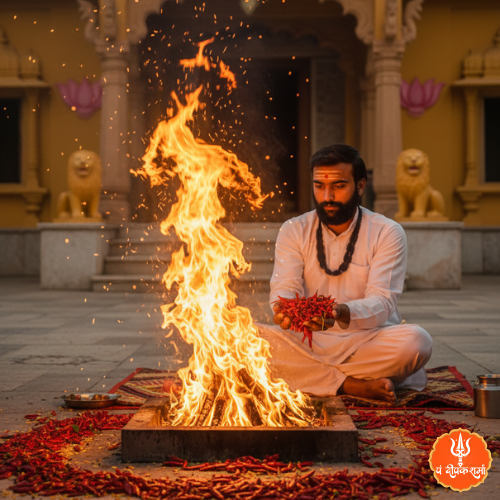
Advanced Concepts of Baglamukhi Havan for court case (Explained Clearly)
Introduction Baglamukhi Havan is a revered ritual dedicated to Devi Baglamukhi, one of the ten Mahavidyas in Hinduism, known for her power to control and subdue enemies. This sacred havan is particularly significant for individuals facing legal challenges or court cases. The essence of this ritual lies in invoking the divine energy of Baglamukhi to ensure victory in legal matters, making it a powerful tool for those seeking justice and resolution in their disputes. The practice of Baglamukhi Havan is not merely a ceremonial act; it is a profound spiritual journey that connects the devotee to the divine. In the face of adversities, especially in court cases, this ritual serves as a beacon of hope, guiding the devotee towards favorable outcomes. The havan is performed with specific mantras, offerings, and intentions, aligning the devotee’s energy with that of the goddess. Meaning of This Ritual The term ‘Havan’ refers to a fire ritual where offerings are made into the sacred fire, symbolizing the purification of the devotee’s intentions and the invocation of divine blessings. In the context of Baglamukhi Havan, the ritual is imbued with deep meaning, as it represents the surrender of one’s fears and the seeking of divine intervention in overcoming obstacles, particularly in legal matters. Baglamukhi, as a deity, embodies the qualities of wisdom, strength, and protection. The havan is a means to channel these divine attributes, allowing the devotee to gain clarity, confidence, and the ability to navigate through the complexities of the legal system. The offerings made during the havan, including ghee, grains, and herbs, are symbolic of the devotee’s dedication and faith in the goddess’s power to grant justice. How This Ritual Helps Baglamukhi Havan is believed to have profound effects on the outcomes of court cases. By performing this ritual, devotees seek the goddess’s blessings to overcome legal hurdles, ensuring that justice prevails. The energy generated during the havan is thought to create a protective shield around the devotee, warding off negative influences and enhancing their chances of success. Moreover, the ritual aids in clarifying the devotee’s mind, allowing them to approach their legal challenges with a calm and composed demeanor. The chanting of specific mantras during the havan serves to focus the devotee’s intentions, aligning their desires with the divine will. This spiritual alignment is crucial in manifesting positive results in court cases. Mythological Background The mythology surrounding Devi Baglamukhi is rich and profound. She is often depicted as a fierce goddess, wielding a club and seated on a tiger, symbolizing her power to control and subdue negativity. According to ancient texts, Baglamukhi is said to have emerged from the collective energy of the other Mahavidyas to combat the forces of evil and ignorance. One of the most significant legends associated with Baglamukhi involves her battle against the demon Madan. The demon, who was wreaking havoc in the celestial realms, was subdued by Baglamukhi’s divine intervention. This victory not only restored order but also established her as a protector of truth and justice. The essence of this myth is deeply intertwined with the practice of Baglamukhi Havan, as devotees invoke her strength to overcome their own adversities. Furthermore, the goddess is revered for her ability to grant victory in debates and legal matters. It is said that those who seek her blessings with a pure heart and unwavering faith will find success in their endeavors. This belief has led to the widespread practice of Baglamukhi Havan among individuals facing court cases, as they seek her divine assistance in navigating the complexities of the legal system. In various scriptures, Baglamukhi is also associated with the concept of ‘Vachana Shakti’ or the power of speech. This aspect is particularly relevant for those involved in legal disputes, as effective communication and persuasion are key elements in the courtroom. By performing the havan, devotees aim to enhance their eloquence and clarity, ensuring that their arguments resonate with the judges and juries. Who Should Perform This Baglamukhi Havan is recommended for individuals who are currently facing legal challenges, including court cases, disputes, or any form of litigation. It is particularly beneficial for those who feel overwhelmed by the complexities of the legal system and seek divine intervention to ensure justice prevails. Additionally, this ritual can be performed by lawyers, advocates, and legal professionals who wish to enhance their persuasive abilities and gain favorable outcomes for their clients. The havan serves as a source of strength and guidance, allowing them to approach their cases with confidence and clarity. Step-by-Step Vidhi (Very Detailed) The performance of Baglamukhi Havan requires adherence to specific rituals and procedures to ensure its effectiveness. Below is a detailed step-by-step guide to conducting this sacred ritual: Preparation 1. **Select an Auspicious Date:** Choose a day that aligns with the lunar calendar, preferably during the waxing moon phase, as it is considered more favorable for spiritual practices. 2. **Gather Materials:** Collect all necessary items, including: Havan kund (sacred fire pit) Wood (preferably mango or other sacred wood) Ghee (clarified butter) Grains (such as rice or barley) Herbs and flowers (for offerings) Incense sticks and camphor Mantra book or printed mantras Setting Up the Havan 3. **Create a Sacred Space:** Clean the area where the havan will be performed. Decorate the space with flowers and set up the havan kund at the center. 4. **Purification Ritual:** Begin with a purification ritual by sprinkling holy water around the space and chanting the mantra “ॐ गंगायै नमः” to invoke purity. Performing the Havan 5. **Light the Sacred Fire:** Use dry wood and ghee to ignite the fire in the havan kund. Ensure that the flames are steady and bright, symbolizing the presence of divine energy. 6. **Offerings:** Begin making offerings into the fire while chanting the mantra “ॐ ह्लीं वाद-विजयाय ह्लीं फट्” repeatedly. Each offering should be made with devotion, visualizing the goddess accepting your prayers. 7. **Chanting Mantras:** Continue chanting the mantra for a specified duration, ideally for one hour, while focusing on your intentions and the desired