Meaning of This Ritual
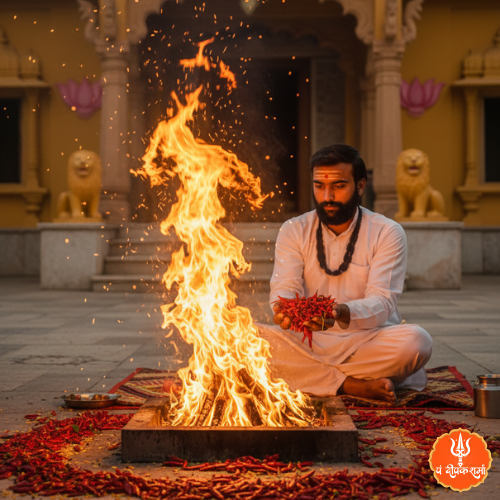
The Mirchi Hawan, a sacred ritual dedicated to Devi Baglamukhi, holds profound significance in the realm of Vedic practices. This ritual involves the offering of red chilies, symbolizing the removal of negativity and obstacles posed by enemies. The act of performing this hawan is believed to invoke the divine blessings of Baglamukhi Mata, who is revered for her power to silence adversaries and protect her devotees from harm. The essence of this ritual lies in its ability to transform the energies surrounding an individual, providing them with strength and resilience against adversities.
In the context of spiritual practices, Mirchi Hawan serves as a powerful tool for devotees seeking relief from the troubles caused by enemies or ill-wishers. The offerings made during the hawan, particularly the red chilies, are not merely symbolic but are believed to carry the weight of the devotee’s prayers and intentions. As the hawan is performed, the flames consume the offerings, carrying the devotee’s desires and requests to the divine realm, ensuring that they are heard and acknowledged by Baglamukhi Mata.
Thus, the Mirchi Hawan is not just a ritual but a heartfelt plea for protection and empowerment. It embodies the essence of surrendering one’s fears and anxieties to the divine, trusting that Baglamukhi Mata will intervene and provide the necessary support. This hawan is particularly recommended for those facing challenges from adversaries, whether in personal or professional spheres, as it aims to restore peace and harmony in the devotee’s life.
How This Ritual Helps
The Mirchi Hawan is instrumental in alleviating the burdens of enmity and negativity that may surround an individual. By invoking the blessings of Devi Baglamukhi, devotees seek to neutralize the harmful influences of their enemies. The ritual not only serves as a protective measure but also empowers the devotee to stand strong against adversities. It is believed that through this hawan, the devotee can gain clarity and strength, enabling them to confront challenges with confidence.
Moreover, the Mirchi Hawan is known to enhance the devotee’s spiritual aura, creating a shield of protection against negative energies. The offerings of red chilies symbolize the burning away of these negative influences, allowing for a fresh start. This purification process is essential for those who feel overwhelmed by external pressures or conflicts, as it helps in restoring balance and tranquility in their lives.
Additionally, the ritual fosters a sense of community and collective strength among participants. When performed in a group setting, the Mirchi Hawan amplifies the energy of the prayers and intentions, creating a powerful atmosphere of devotion and faith. This collective energy not only benefits the individual but also resonates with the surrounding community, promoting a sense of unity and shared purpose.
Mythological Background
The origins of the Mirchi Hawan are deeply rooted in Hindu mythology, particularly in the tales surrounding Devi Baglamukhi. As one of the ten Mahavidyas, Baglamukhi is revered as the goddess of speech, power, and wisdom. Her divine intervention is sought to overcome adversities and silencing the voices of opposition. The mythological narratives depict her as a fierce protector of her devotees, wielding immense power to thwart the plans of enemies and restore peace.
One of the most significant stories associated with Baglamukhi involves her confrontation with the demon, Madan. In this tale, Madan sought to disrupt the harmony of the world, causing chaos and suffering. In response, Baglamukhi manifested her divine form to combat this evil. Through her unwavering strength and wisdom, she was able to silence Madan, restoring balance and order. This narrative serves as a reminder of the goddess’s ability to protect her devotees from harm and the importance of invoking her blessings through rituals like the Mirchi Hawan.
Furthermore, the use of red chilies in this hawan is symbolic of the goddess’s fiery nature and her capacity to burn away negativity. The act of offering these chilies during the hawan is a representation of surrendering one’s fears and adversities to Baglamukhi, trusting in her divine power to alleviate suffering. This mythological backdrop enriches the significance of the Mirchi Hawan, making it a profound spiritual practice for those seeking protection and empowerment.
Who Should Perform This
The Mirchi Hawan is particularly beneficial for individuals who find themselves facing challenges from adversaries or negative influences in their lives. Those who feel overwhelmed by conflicts, whether in personal relationships, workplace dynamics, or legal matters, are encouraged to participate in this hawan. It serves as a means to seek divine intervention and protection from the goddess, allowing the devotee to regain their strength and confidence.
Moreover, this hawan is suitable for individuals who are experiencing a sense of stagnation or blockages in their lives. If one feels that external forces are hindering their progress or success, the Mirchi Hawan can help in clearing these obstacles. It is also recommended for those who wish to enhance their spiritual aura and create a protective shield around themselves, fostering a sense of security and peace.
In essence, anyone who seeks to remove negativity and gain empowerment can benefit from the Mirchi Hawan. It is a universal ritual that transcends specific circumstances, offering solace and strength to all who approach it with faith and devotion. The key is to approach the hawan with a pure heart and sincere intentions, trusting in the divine guidance of Baglamukhi Mata.
Step-by-Step Vidhi (Very Detailed)
The performance of the Mirchi Hawan follows a traditional Vedic procedure that ensures the ritual is conducted with utmost reverence and devotion. The first step involves the selection of an auspicious date and time for the hawan, preferably during a phase of the moon that is conducive to spiritual practices. It is essential to prepare the space where the hawan will be conducted, ensuring it is clean and free from distractions.
Next, the devotee should gather the necessary materials for the hawan, which include red chilies, ghee (clarified butter), samagri (a mixture of sacred offerings), and a hawan kund (fire pit). The hawan kund should be placed in a clean and sacred area, preferably facing east, as this direction is considered auspicious. The devotee should then purify themselves through a ritual bath and don clean clothes, symbolizing the purity of intention.
Once the preparations are complete, the hawan can begin with the invocation of the deities. The devotee should chant specific mantras to invite the presence of Baglamukhi Mata and seek her blessings. As the fire is lit in the hawan kund, offerings of red chilies and samagri are made into the flames, accompanied by the chanting of mantras. This process should be repeated for a specific number of times, each time focusing on the intention of removing negativity and empowering oneself against adversaries. The hawan concludes with a prayer of gratitude, thanking Baglamukhi Mata for her divine intervention.
Mantra for This Ritual
The mantra associated with the Mirchi Hawan is:
ॐ ह्लीं बगलामुखि सर्व शत्रुस्तम्भनाय स्वाहा
Transliteration: Om Hleem Baglamukhi Sarva Shatrustambhanaya Swaha
This powerful mantra is specifically designed to invoke the protective energies of Devi Baglamukhi, seeking her assistance in silencing enemies and overcoming adversities. The syllable ‘Hleem’ is considered a seed mantra that embodies the essence of the goddess, while ‘Sarva Shatrustambhanaya’ translates to ‘for the silencing of all enemies.’ The concluding ‘Swaha’ signifies the offering made to the fire, completing the cycle of devotion and surrender.
Chanting this mantra during the Mirchi Hawan amplifies the devotee’s intentions, creating a direct connection with the divine. As the mantra is repeated, it is essential to focus on the desired outcome, visualizing the removal of obstacles and the empowerment to face challenges. The repetition of this mantra not only enhances the effectiveness of the hawan but also instills a sense of peace and confidence in the devotee.
Do’s & Don’ts
When performing the Mirchi Hawan, it is crucial to adhere to certain guidelines to ensure the ritual’s effectiveness. Among the do’s, it is essential to approach the hawan with a pure heart and sincere intentions. Devotees should prepare themselves mentally and spiritually, creating a conducive atmosphere for the ritual. Additionally, maintaining cleanliness in the space and using fresh offerings is vital for the sanctity of the hawan.
Moreover, it is advisable to involve family members or close friends in the hawan, as collective energy can amplify the effectiveness of the ritual. Engaging in the chanting of mantras together fosters a sense of unity and shared purpose, enhancing the spiritual experience. It is also beneficial to offer prayers of gratitude at the end of the hawan, acknowledging the divine blessings received.
On the other hand, there are certain practices to avoid during the Mirchi Hawan. It is important not to engage in negative thoughts or distractions while performing the ritual, as this can hinder the flow of positive energy. Additionally, using stale or impure offerings is discouraged, as it can diminish the effectiveness of the hawan. Lastly, it is crucial to refrain from any form of impatience or doubt regarding the outcome, as faith and trust in Baglamukhi Mata are essential components of the ritual.
When to Perform
The timing of the Mirchi Hawan plays a significant role in its effectiveness. It is best performed during auspicious periods, such as during the waxing phase of the moon or on specific festival days dedicated to Devi Baglamukhi. These times are believed to enhance the spiritual energies surrounding the hawan, making it more potent in addressing the devotee’s concerns.
Additionally, the Mirchi Hawan can be performed when one feels overwhelmed by adversities or when facing challenges from enemies. It is particularly beneficial during times of conflict or when one is about to embark on a new venture that may attract opposition. The key is to choose a time when the devotee can fully dedicate themselves to the ritual, free from distractions and with a focused mind.
Ultimately, the best time to perform the Mirchi Hawan is when the devotee feels a deep calling to seek the blessings of Baglamukhi Mata. Trusting one’s intuition and aligning with the divine energies can guide the devotee in selecting the most auspicious moment for this sacred ritual.
How Pandit Deepak Sharma can help
Pandit Deepak Sharma, with his extensive experience in performing Baglamukhi rituals, offers invaluable guidance for those seeking to conduct the Mirchi Hawan. His deep understanding of Vedic traditions ensures that the hawan is performed with the utmost reverence and adherence to authentic practices. By consulting with him, devotees can gain insights into the specific requirements and preparations needed for the hawan, ensuring a smooth and spiritually enriching experience.
Moreover, Pandit Deepak Sharma can assist in selecting the most auspicious date and time for the hawan, aligning the ritual with the cosmic energies to maximize its effectiveness. His presence during the hawan serves as a source of strength and support, as he invokes the blessings of Baglamukhi Mata on behalf of the devotees. This personal touch enhances the spiritual atmosphere, creating a powerful connection between the devotee and the divine.
For those who may feel uncertain about conducting the hawan themselves, Pandit Deepak Sharma offers the option of performing the Mirchi Hawan on behalf of the devotees. This ensures that the ritual is conducted with the highest level of devotion and authenticity, allowing the devotees to focus on their intentions and prayers without any distractions.
Nalkheda Temple Connection
The Nalkheda Temple, dedicated to Devi Baglamukhi, serves as a sacred space for devotees seeking her blessings through rituals like the Mirchi Hawan. This temple, located in the Agar Malwa district of Madhya Pradesh, is renowned for its spiritual significance and the transformative power of the rituals performed there. The temple attracts devotees from far and wide, all seeking the divine intervention of Baglamukhi Mata in their lives.
At the Nalkheda Temple, the atmosphere is charged with devotion and reverence, making it an ideal setting for performing the Mirchi Hawan. The presence of the goddess is palpable, and devotees often report profound experiences during their visits. The temple’s sanctity enhances the effectiveness of the hawan, as the energies of the space align with the intentions of the devotees, creating a powerful synergy.
Furthermore, the temple provides a sense of community among devotees, fostering a shared experience of faith and devotion. Participating in the Mirchi Hawan at the Nalkheda Temple not only offers individual benefits but also contributes to the collective spiritual energy of the space. This connection to the temple and its sacred rituals deepens the devotee’s relationship with Baglamukhi Mata, enriching their spiritual journey.
FAQ
What is the significance of the Mirchi Hawan?
The Mirchi Hawan is a sacred ritual dedicated to Devi Baglamukhi, aimed at removing negativity and empowering devotees against adversaries. It symbolizes the surrender of fears to the goddess, seeking her divine intervention for protection and strength. The offerings of red chilies represent the burning away of obstacles, making it a powerful practice for those facing challenges from enemies.
Who can perform the Mirchi Hawan?
Anyone facing challenges from adversaries or seeking to remove negativity can perform the Mirchi Hawan. It is particularly beneficial for individuals feeling overwhelmed by conflicts or blockages in their lives. The key is to approach the ritual with sincere intentions and a pure heart, trusting in the divine guidance of Baglamukhi Mata.
What materials are needed for the Mirchi Hawan?
To perform the Mirchi Hawan, devotees need red chilies, ghee, samagri, and a hawan kund. The space should be clean and free from distractions, creating an auspicious environment for the ritual. Additionally, it is essential to gather these materials with reverence, as they play a crucial role in the effectiveness of the hawan.
When is the best time to perform the Mirchi Hawan?
The Mirchi Hawan is best performed during auspicious periods, such as the waxing phase of the moon or specific festival days dedicated to Devi Baglamukhi. It can also be conducted when facing challenges or conflicts, allowing devotees to seek divine intervention at critical moments in their lives. The key is to choose a time when one can fully dedicate themselves to the ritual.
How can Pandit Deepak Sharma assist with the Mirchi Hawan?
Pandit Deepak Sharma offers invaluable guidance for conducting the Mirchi Hawan, ensuring it is performed with authenticity and reverence. He can assist in selecting auspicious dates, preparing for the ritual, and even performing the hawan on behalf of devotees. His presence enhances the spiritual atmosphere, creating a powerful connection between the devotee and Baglamukhi Mata.
What are the expected outcomes of the Mirchi Hawan?
While specific outcomes cannot be guaranteed, the Mirchi Hawan is believed to help alleviate the burdens of enmity and negativity. Devotees often report feelings of empowerment, clarity, and protection after performing the hawan. The ritual serves as a means of surrendering one’s fears to Baglamukhi Mata, trusting in her divine intervention to restore peace and harmony in their lives.