Meaning of This Ritual
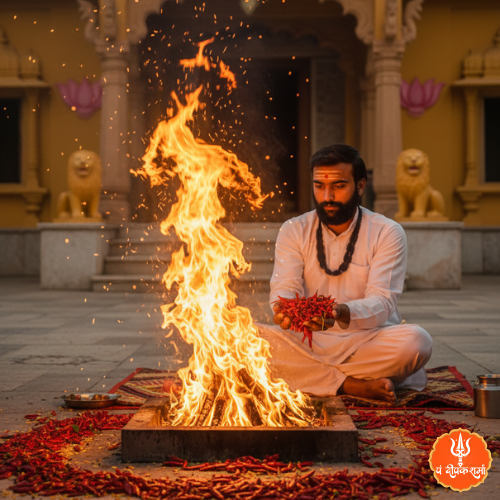
The Chaitra Navratri baglamukhi Havan is a sacred ritual dedicated to Devi Baglamukhi, one of the ten Mahavidyas in Hinduism. This havan is performed during the auspicious days of Chaitra Navratri, a time when devotees seek the blessings of the divine mother for strength, wisdom, and protection. The ritual involves the chanting of mantras, offerings to the sacred fire, and deep devotion, creating a powerful spiritual atmosphere that helps in overcoming obstacles and achieving success in various aspects of life.
Baglamukhi, known for her ability to control and subdue enemies, is revered by those facing challenges, especially in legal matters and conflicts. The havan symbolizes the purification of the mind and soul, allowing devotees to connect with the divine energy of the goddess. Through this ritual, practitioners aim to invoke the blessings of Baglamukhi for victory over adversities and to gain clarity in their endeavors.
In essence, the Chaitra Navratri Baglamukhi Havan serves as a means for devotees to express their devotion and seek divine intervention in their lives. It is a time for introspection, spiritual growth, and the reaffirmation of faith in the goddess’s protective and guiding presence.
How This Ritual Helps
The Chaitra Navratri Baglamukhi Havan is not merely a ritual; it is a profound spiritual practice that brings numerous benefits to the devotees. Firstly, it serves as a powerful remedy for those facing legal issues or conflicts. The invocation of Baglamukhi’s energy helps in overcoming obstacles and achieving favorable outcomes in court cases. Many devotees have experienced relief and success after performing this havan, as it aligns their energies with the divine will.
Additionally, this ritual fosters mental clarity and focus. In today’s fast-paced world, distractions abound, and individuals often find themselves overwhelmed. The havan acts as a spiritual cleanse, allowing participants to clear their minds and concentrate on their goals. The chanting of mantras and the sacred fire create an atmosphere conducive to meditation and reflection, enabling devotees to connect deeply with their inner selves.
Moreover, the Chaitra Navratri Baglamukhi Havan is beneficial for personal empowerment. By seeking the blessings of the goddess, devotees gain confidence and strength to face challenges head-on. This ritual instills a sense of courage and determination, encouraging individuals to pursue their aspirations with vigor. Ultimately, the havan serves as a catalyst for positive change, guiding devotees toward success and fulfillment.
Mythological Background
The mythology surrounding Devi Baglamukhi is rich and profound, emphasizing her role as a powerful protector and guide. According to ancient texts, Baglamukhi is believed to have emerged from the collective energy of the goddesses during a cosmic battle against evil forces. Her name, which translates to ‘the one who stuns,’ signifies her ability to paralyze enemies and protect her devotees from harm.
One of the most significant stories associated with Baglamukhi involves her intervention during a fierce battle between the gods and demons. As the demons wreaked havoc, the gods sought Baglamukhi’s help. In response, she manifested in a fierce form, wielding a club and a noose, and swiftly subdued the demons. This act of valor not only restored balance but also established her as a formidable force against negativity and adversity.
Furthermore, Baglamukhi is often depicted sitting on a throne, surrounded by various symbols of power and wisdom. Her yellow attire represents knowledge and prosperity, while her serene expression embodies the calmness that comes from divine protection. Devotees believe that by invoking her name and performing rituals in her honor, they can tap into her immense power and receive her blessings for success and victory.
Who Should Perform This
The Chaitra Navratri Baglamukhi Havan is particularly beneficial for individuals facing legal challenges, conflicts, or obstacles in their personal or professional lives. Those who feel overwhelmed by adversities or are seeking clarity in decision-making can greatly benefit from this ritual. It is also recommended for students preparing for competitive exams, as the havan fosters mental clarity and focus, essential for academic success.
Moreover, anyone seeking protection from negative energies or adversaries can perform this havan. The ritual is open to all devotees who wish to connect with Devi Baglamukhi and seek her blessings for empowerment and guidance. It is a time for individuals to come together in devotion, reinforcing their faith and commitment to overcoming challenges.
Additionally, families facing disputes or tensions can benefit from this ritual, as it promotes harmony and understanding. By performing the havan collectively, family members can strengthen their bonds and invoke the goddess’s blessings for peace and prosperity in their household.
Step-by-Step Vidhi (Very Detailed)
Performing the Chaitra Navratri Baglamukhi Havan involves a series of sacred steps, each imbued with deep spiritual significance. The ritual begins with the selection of an auspicious date during Chaitra Navratri, preferably on the first day of the festival. Devotees should cleanse the space where the havan will take place, ensuring it is free from any distractions.
Next, a sacred altar is prepared, adorned with images or idols of Devi Baglamukhi. Fresh flowers, fruits, and other offerings are placed on the altar, symbolizing devotion and gratitude. The havan kund, a fire pit, is then constructed using specific materials, including wood and ghee, which are essential for the sacred fire. The arrangement of the havan kund should be in accordance with Vedic guidelines, ensuring that it faces the east direction.
Once the preparations are complete, the pandit or ritual performer begins the havan by invoking the presence of Devi Baglamukhi through specific mantras. The fire is lit with the offerings, and the chanting of the Baglamukhi mantras commences. Devotees should participate actively, focusing their intentions on their desires and seeking the goddess’s blessings. The havan continues with various offerings, including grains, herbs, and other sacred items, each accompanied by specific mantras that enhance the energy of the ritual.
Throughout the process, devotees are encouraged to meditate and visualize their intentions, allowing the divine energy to flow through them. The havan concludes with a final prayer, expressing gratitude to Devi Baglamukhi for her blessings and protection. Participants may also distribute prasad, the blessed offerings, among themselves, fostering a sense of community and shared devotion.
Mantra for This Ritual
The primary mantra for the Chaitra Navratri Baglamukhi Havan is:
ॐ ह्लीं बगलामुखि सर्वविघ्न नाशाय ह्लीं
Transliteration: Om Hleem Baglamukhi Sarvavighna Nashaya Hleem
This mantra holds immense significance in the ritual, as it invokes the protective and empowering energies of Devi Baglamukhi. The syllable ‘ॐ’ represents the universal sound, a sacred vibration that connects the devotee with the divine. ‘ह्लीं’ is a powerful seed mantra associated with Baglamukhi, symbolizing her ability to remove obstacles and grant victory over adversities.
The phrase ‘सर्वविघ्न नाशाय’ translates to ‘for the removal of all obstacles,’ emphasizing the mantra’s purpose in seeking the goddess’s blessings for success in various endeavors. By chanting this mantra with devotion and sincerity, devotees align themselves with Baglamukhi’s energy, inviting her presence into their lives.
Chanting this mantra during the havan creates a sacred atmosphere, amplifying the spiritual vibrations and enhancing the effectiveness of the ritual. It is recommended to chant the mantra with focus and intention, allowing the divine energy to manifest in one’s life.
Do’s & Don’ts
When performing the Chaitra Navratri Baglamukhi Havan, certain guidelines should be followed to ensure the ritual’s effectiveness. Among the do’s, it is essential to maintain a pure and focused mind throughout the process. Devotees should approach the ritual with sincerity, setting clear intentions for what they wish to achieve. Offering fresh flowers, fruits, and other pure items is also recommended, as these symbolize devotion and respect toward the goddess.
Additionally, participants should dress in clean, traditional attire, reflecting their reverence for the divine. It is advisable to engage in meditation and mantra chanting before the havan, preparing the mind and spirit for the sacred experience. Devotees are encouraged to create a peaceful environment, free from distractions, allowing them to connect deeply with the energies of the ritual.
On the other hand, certain practices should be avoided during the havan. Engaging in negative thoughts or distractions can hinder the ritual’s effectiveness. It is also important not to interrupt the ritual once it has begun, as this can disrupt the flow of energy. Consuming non-vegetarian food or alcohol before or during the ritual is strictly prohibited, as it contradicts the purity required for such sacred practices.
When to Perform
The Chaitra Navratri Baglamukhi Havan is ideally performed during the nine days of Chaitra Navratri, which typically falls in the months of March or April. Each day of Navratri is dedicated to a different form of the goddess, and performing the havan during this auspicious time enhances its spiritual significance. The first day of Navratri, known as Gudi Padwa, is particularly favorable for initiating the ritual, as it marks the beginning of the festival.
Moreover, devotees can choose to perform the havan on specific days that hold personal significance, such as birthdays, anniversaries, or during times of crisis. The energy of the goddess is believed to be particularly potent during these moments, making it an ideal time for seeking her blessings. It is essential to consult with a knowledgeable pandit to determine the most auspicious timing for the havan, ensuring that it aligns with the devotee’s intentions and circumstances.
Ultimately, the Chaitra Navratri Baglamukhi Havan can be performed whenever one feels the need for divine intervention, guidance, or protection. The goddess’s blessings are always available to those who seek her with a pure heart and sincere devotion.
How Pandit Deepak Sharma can help
Pandit Deepak Sharma, with over 25 years of experience in performing Vedic rituals, is a trusted guide for devotees seeking to perform the Chaitra Navratri Baglamukhi Havan. His deep understanding of the scriptures and traditional practices ensures that the havan is conducted with authenticity and reverence. Pandit ji provides personalized guidance, helping devotees set their intentions and connect deeply with the energies of the ritual.
By engaging Pandit Deepak Sharma for the havan, devotees can rest assured that the ritual will be performed according to the correct Vedic vidhi, enhancing its effectiveness. His expertise in chanting the appropriate mantras and conducting the rituals creates a sacred atmosphere that invites the blessings of Devi Baglamukhi. Furthermore, he offers insights into the significance of the rituals, enriching the spiritual experience for participants.
In addition to the havan, Pandit Deepak Sharma also provides consultation for those facing legal issues or personal challenges. His spiritual guidance helps devotees navigate their difficulties with confidence and clarity, reinforcing their faith in the divine. By choosing to work with Pandit ji, devotees embark on a transformative spiritual journey, empowered by the blessings of Baglamukhi.
Nalkheda Temple Connection
The Nalkheda Temple, dedicated to Devi Baglamukhi, is a significant pilgrimage site for devotees seeking her blessings. Located in the Agar Malwa district of Madhya Pradesh, the temple attracts countless visitors during the Chaitra Navratri festival. The sacred atmosphere of the temple, combined with the presence of the goddess, creates a powerful space for spiritual growth and transformation.
At the Nalkheda Temple, devotees can participate in various rituals, including the Baglamukhi Havan, under the guidance of experienced pandits. The temple serves as a hub for spiritual activities, offering devotees the opportunity to connect with the goddess and seek her blessings in a serene environment. The rituals performed at the temple are steeped in tradition, ensuring that devotees receive the authentic experience they seek.
Visiting the Nalkheda Temple during Chaitra Navratri is a spiritually enriching experience, allowing devotees to immerse themselves in the divine energy of Baglamukhi. The temple’s architecture, adorned with intricate carvings and vibrant decorations, adds to the overall ambiance, making it a must-visit destination for those on a spiritual journey.
FAQ
What is the significance of the Chaitra Navratri Baglamukhi Havan?
The Chaitra Navratri Baglamukhi Havan holds immense significance for devotees seeking the blessings of Devi Baglamukhi. It is performed during the auspicious days of Chaitra Navratri, a time dedicated to honoring the divine feminine. The havan serves as a powerful remedy for overcoming obstacles, particularly in legal matters and conflicts. By invoking the goddess’s energy, devotees aim to achieve success and clarity in their endeavors.
How can I prepare for the Baglamukhi Havan?
Preparation for the Baglamukhi Havan involves creating a sacred space and setting clear intentions. Devotees should cleanse the area where the havan will take place, ensuring it is free from distractions. Preparing an altar with images or idols of Devi Baglamukhi, along with fresh flowers and offerings, is essential. Engaging in meditation and mantra chanting before the ritual helps in focusing the mind and spirit, enhancing the overall experience.
Can anyone perform the Chaitra Navratri Baglamukhi Havan?
Yes, the Chaitra Navratri Baglamukhi Havan is open to all devotees who wish to connect with Devi Baglamukhi and seek her blessings. It is particularly beneficial for individuals facing legal challenges, conflicts, or seeking personal empowerment. Families can also perform the havan collectively to promote harmony and understanding within their household.
What should I do if I cannot perform the havan myself?
If you are unable to perform the havan yourself, you can engage the services of a knowledgeable pandit, such as Pandit Deepak Sharma. He will conduct the ritual according to the correct Vedic vidhi, ensuring that it is performed with authenticity and reverence. This allows you to receive the blessings of Devi Baglamukhi even if you cannot participate directly in the ritual.
When is the best time to perform the Chaitra Navratri Baglamukhi Havan?
The best time to perform the Chaitra Navratri Baglamukhi Havan is during the nine days of Chaitra Navratri, which typically falls in March or April. The first day of Navratri is particularly auspicious for initiating the ritual. However, the havan can also be performed on personal significant dates, such as birthdays or anniversaries, to enhance its spiritual impact.
What are the benefits of performing the Baglamukhi Havan?
The benefits of performing the Baglamukhi Havan are numerous. It serves as a powerful remedy for overcoming legal issues and conflicts, providing clarity and focus to devotees. The ritual fosters personal empowerment, instilling confidence and strength to face challenges. Additionally, it promotes mental clarity and spiritual growth, allowing individuals to connect deeply with their intentions and the divine energy of Devi Baglamukhi.