Meaning of This Ritual
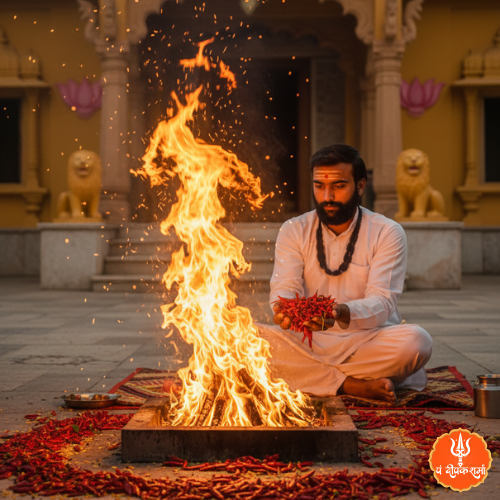
Baglamukhi Hawan is a sacred ritual dedicated to Devi Baglamukhi, one of the ten Mahavidyas in Hindu mythology. This hawan is performed to invoke the divine blessings of the goddess, who is revered for her power to remove obstacles and grant victory over adversaries. The term ‘Hawan’ signifies a fire ritual where offerings are made to the sacred fire, symbolizing the transformation of material offerings into spiritual energy. The essence of this ritual lies in its ability to purify the environment and the devotee’s mind, creating a conducive atmosphere for spiritual growth and divine connection.
The Baglamukhi Hawan is particularly known for its effectiveness in overcoming challenges posed by enemies, whether they be in personal or professional life. It is believed that through this hawan, devotees can seek protection from negative influences and gain strength to face adversities. The ritual is not merely a ceremonial act; it is a profound spiritual practice that aligns the devotee’s energies with the divine will of Baglamukhi Mata.
In essence, this hawan serves as a powerful tool for spiritual empowerment, enabling devotees to harness the goddess’s blessings for success, protection, and inner peace. The sacred chants and offerings made during the hawan resonate with the divine energy, creating a transformative experience for all participants.
How This Ritual Helps
The Baglamukhi Hawan is renowned for its multifaceted benefits, particularly in the realms of protection, success, and overcoming obstacles. One of the primary purposes of this ritual is to seek the goddess’s blessings for the removal of enemies and adversities. Many devotees have experienced relief from ongoing conflicts, whether they are in personal relationships or professional settings, after performing this hawan. The divine energy invoked during the ritual acts as a shield, safeguarding the devotee from negative influences.
Additionally, this hawan is instrumental in enhancing one’s career prospects. By invoking the blessings of Baglamukhi Mata, devotees often find themselves more focused, determined, and capable of navigating through challenges in their professional lives. The hawan instills a sense of confidence and clarity, allowing individuals to make better decisions and seize opportunities that lead to growth and success.
Moreover, the spiritual cleansing that occurs during the hawan helps in alleviating mental stress and anxiety. The serene atmosphere created by the chanting of mantras and the offerings made to the fire fosters a sense of peace and tranquility. This emotional and spiritual upliftment is vital for maintaining a balanced life, enabling devotees to approach their challenges with a calm and composed mindset.
Mythological Background
The mythology surrounding Baglamukhi Mata is rich and deeply rooted in Hindu tradition. She is often depicted as a powerful goddess who has the ability to control speech and silence adversaries. According to ancient texts, Baglamukhi is considered the embodiment of knowledge, wisdom, and power. Her name translates to ‘the one who makes the enemies mute,’ symbolizing her ability to conquer negativity and obstacles.
One of the most famous legends associated with Baglamukhi Mata recounts how she helped the gods defeat the demon king Madhu-Kaitabh, who threatened the cosmic order. The gods, unable to defeat him, sought the help of Baglamukhi. She manifested her divine power and silenced the demon, restoring balance to the universe. This story highlights her role as a protector and a force of righteousness, making her a revered figure among devotees seeking strength and protection.
Furthermore, Baglamukhi is often associated with the color yellow, symbolizing prosperity and abundance. Her worship is believed to bring wealth and success, making the Baglamukhi Hawan a popular choice for those seeking to enhance their financial stability and career growth. The rich tapestry of mythology surrounding Baglamukhi Mata adds depth to the hawan, making it a spiritually significant practice for devotees.
Who Should Perform This
The Baglamukhi Hawan is particularly beneficial for individuals facing challenges from adversaries, whether in personal or professional spheres. Those who feel overwhelmed by negativity, competition, or conflicts in their relationships should consider performing this hawan. It is also highly recommended for individuals involved in legal matters or court cases, as the blessings of Baglamukhi Mata can provide strength and clarity during such challenging times.
Moreover, this hawan is suitable for anyone seeking to enhance their career prospects or achieve success in competitive environments. Students preparing for exams or individuals pursuing new job opportunities can greatly benefit from the divine energy invoked during the hawan. The ritual helps in boosting confidence, focus, and determination, essential qualities for success in any endeavor.
Additionally, those who wish to experience spiritual growth and purification of the mind and body can participate in this hawan. The ritual not only addresses external challenges but also fosters internal peace and clarity, making it a holistic practice for anyone on a spiritual journey.
Step-by-Step Vidhi (Very Detailed)
Performing the Baglamukhi Hawan requires adherence to specific Vedic rituals to ensure its effectiveness. The following steps outline the detailed procedure:
1. Preparation: Begin by selecting an auspicious date and time for the hawan, preferably during a full moon or on a Tuesday, which is considered favorable for Baglamukhi worship. Cleanse the space where the hawan will be performed, ensuring it is free from any clutter. Set up a hawan kund (fire pit) using a clay or metal container, and place it in the center of the worship area.
2. Gathering Materials: Collect all necessary materials for the hawan, including ghee (clarified butter), dried herbs, flowers, and specific offerings like yellow mustard seeds, which are associated with Baglamukhi. Prepare a sacred thread (yajnopavita) to wear during the ritual, symbolizing purity and commitment to the process.
3. Invoking the Deity: Begin the hawan by performing a simple puja to invoke the presence of Baglamukhi Mata. Light a lamp and offer flowers at her idol or picture. Chant the mantra “ॐ ह्लीं बगलामुखि सर्वविघ्न नाशाय ह्लीं” to invite her divine energy into the space. This mantra is a powerful invocation for removing obstacles and gaining her blessings.
4. Performing the Havan: Once the deity is invoked, light the fire in the hawan kund using dry wood or camphor. Begin offering ghee and other materials into the fire while chanting the mantra repeatedly. Focus on your intentions and visualize the removal of obstacles and adversaries. Each offering should be made with devotion and sincerity, as this enhances the effectiveness of the ritual.
5. Concluding the Ritual: After completing the offerings, conclude the hawan by thanking Baglamukhi Mata for her blessings. Perform aarti (a ceremonial light offering) and sing devotional songs in her praise. Finally, distribute the prasad (blessed food) to all participants, symbolizing the sharing of divine blessings.
Mantra for This Ritual
The primary mantra associated with the Baglamukhi Hawan is:
ॐ ह्लीं बगलामुखि सर्वविघ्न नाशाय ह्लीं
Transliteration: Om Hleem Baglamukhi Sarva Vighna Nashaya Hleem
Meaning: This mantra is a powerful invocation to Devi Baglamukhi, seeking her blessings for the removal of all obstacles and adversities. The syllable ‘Hleem’ is considered a seed mantra (beeja mantra) that embodies the energy of the goddess. By chanting this mantra, devotees align themselves with the divine will of Baglamukhi Mata, inviting her protective energy into their lives.
The repetition of this mantra during the hawan serves to amplify its effects, creating a spiritual resonance that attracts the goddess’s blessings. It is essential to chant this mantra with devotion and focus, as the intention behind the chant plays a crucial role in its effectiveness. Engaging in this practice not only aids in overcoming challenges but also fosters a deeper connection with the divine.
Do’s & Don’ts
To ensure the effectiveness of the Baglamukhi Hawan, it is essential to follow certain guidelines. Here are some important do’s and don’ts:
Do’s:
- Perform the hawan with a pure heart and clear intentions.
- Gather all materials in advance to avoid interruptions during the ritual.
- Invite family members or close friends to participate, as collective energy enhances the ritual.
- Maintain a calm and serene atmosphere during the hawan.
- Offer gratitude to Baglamukhi Mata after the ritual, acknowledging her blessings.
Don’ts:
- Avoid performing the hawan in a cluttered or noisy environment.
- Do not engage in negative thoughts or actions during the ritual.
- Refrain from consuming alcohol or non-vegetarian food on the day of the hawan.
- Do not rush through the rituals; take your time to connect with the divine.
- Do not neglect the importance of sincerity and devotion in your offerings.
When to Perform
The Baglamukhi Hawan can be performed at any time, but certain occasions are considered more auspicious. Performing the hawan on a Tuesday or during the waxing phase of the moon is believed to enhance its effectiveness. Additionally, significant life events such as starting a new job, entering into a legal dispute, or facing challenges from adversaries are ideal times to conduct this ritual.
Many devotees also choose to perform the hawan during festivals dedicated to Devi Baglamukhi, such as Navratri, when the goddess is worshipped with great fervor. These occasions amplify the spiritual energy surrounding the ritual, making it a powerful time to seek her blessings.
Ultimately, the best time to perform the Baglamukhi Hawan is when the devotee feels a strong need for divine intervention and support. Trusting one’s intuition and aligning the ritual with personal circumstances can lead to a more meaningful experience.
How Pandit Deepak Sharma can help
Pandit Deepak Sharma, an experienced Vedic practitioner, specializes in performing the Baglamukhi Hawan with authenticity and devotion. His deep understanding of Vedic rituals ensures that each hawan is conducted in accordance with traditional practices, maximizing its spiritual benefits. With over 25 years of experience, he provides personalized guidance to devotees, helping them connect with the divine energy of Baglamukhi Mata.
By consulting with Pandit Deepak Sharma, devotees can gain insights into the most auspicious times for performing the hawan, as well as the specific materials and mantras required for their unique circumstances. His compassionate approach and profound knowledge of the scriptures allow him to tailor the ritual to meet the individual needs of each devotee.
Furthermore, Pandit Deepak Sharma’s presence during the hawan enhances the collective energy of the ritual, creating a powerful spiritual atmosphere. His blessings and guidance can lead to transformative experiences, making the Baglamukhi Hawan a deeply enriching practice for all participants.
Nalkheda Temple Connection
The Nalkheda Temple, dedicated to Devi Baglamukhi, is a sacred site that attracts devotees from far and wide. Located in the Agar Malwa district of Madhya Pradesh, this temple is known for its serene ambiance and divine energy. The temple serves as a focal point for Baglamukhi worship, where devotees come to seek blessings and perform rituals under the guidance of experienced priests like Pandit Deepak Sharma.
Visiting the Nalkheda Temple enhances the experience of performing the Baglamukhi Hawan, as the temple’s sanctity amplifies the spiritual vibrations of the ritual. Many devotees choose to perform the hawan at the temple, allowing them to connect more deeply with the goddess and receive her blessings in a sacred environment.
Additionally, the temple offers a unique opportunity for devotees to participate in collective rituals and festivals, fostering a sense of community and shared devotion. The Nalkheda Temple stands as a testament to the enduring legacy of Baglamukhi worship, providing a space for spiritual growth and divine connection.
FAQ
What is the significance of Baglamukhi Hawan?
The Baglamukhi Hawan holds immense significance in Hindu tradition, primarily for its ability to invoke the blessings of Devi Baglamukhi. This ritual is performed to seek protection from enemies, overcome obstacles, and achieve success in various endeavors. The hawan creates a sacred space where devotees can connect with the divine energy of the goddess, allowing them to experience spiritual upliftment and empowerment.
Many devotees report transformative experiences after participating in the hawan, feeling a renewed sense of strength and clarity in their lives. The ritual not only addresses external challenges but also fosters inner peace, making it a holistic practice for spiritual growth.
Can anyone perform the Baglamukhi Hawan?
Yes, the Baglamukhi Hawan can be performed by anyone seeking the blessings of the goddess. It is particularly beneficial for individuals facing challenges from adversaries, those involved in legal matters, or anyone looking to enhance their career prospects. However, it is essential to approach the ritual with sincerity and devotion, as the effectiveness of the hawan is closely tied to the devotee’s intentions.
While individuals can perform the hawan on their own, seeking the guidance of an experienced priest like Pandit Deepak Sharma can enhance the experience. His expertise ensures that the ritual is conducted according to Vedic traditions, maximizing its spiritual benefits.
What materials are needed for the hawan?
The materials required for the Baglamukhi Hawan include ghee (clarified butter), dried herbs, flowers, and specific offerings like yellow mustard seeds. Additionally, a hawan kund (fire pit) is essential for conducting the ritual. It is advisable to gather all materials in advance to ensure a smooth and uninterrupted hawan.
Each offering made during the hawan should be done with devotion, as this enhances the spiritual energy of the ritual. The specific materials can vary based on individual circumstances, and consulting with a knowledgeable priest can provide further insights into the best offerings for one’s needs.
When is the best time to perform the hawan?
The Baglamukhi Hawan can be performed at any time, but certain occasions are considered more auspicious. Performing the hawan on a Tuesday or during the waxing phase of the moon is believed to enhance its effectiveness. Significant life events, such as starting a new job or facing legal challenges, are also ideal times for conducting this ritual.
Ultimately, the best time to perform the hawan is when the devotee feels a strong need for divine intervention. Trusting one’s intuition and aligning the ritual with personal circumstances can lead to a more meaningful experience.
How can I contact Pandit Deepak Sharma for guidance?
To seek proper Vedic guidance for the Baglamukhi Hawan or any other rituals, you can contact Pandit Deepak Sharma directly. He is available for consultations and can provide personalized guidance to ensure that your rituals are conducted with authenticity and devotion. You can reach him via phone at +91 96690 70816 or chat with him on WhatsApp at Chat on WhatsApp. For more information, you can also visit his website at baglamukhinalkheda.org.