Meaning of This Ritual
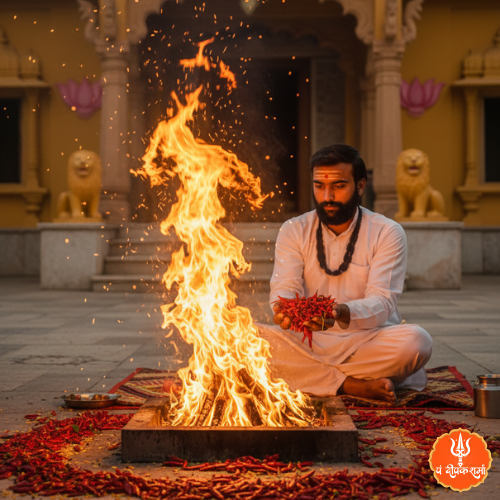
The baglamukhi Havan is a sacred fire ritual dedicated to Devi Baglamukhi, one of the ten Mahavidyas in Hindu tradition. This ritual is performed to invoke the divine blessings of the goddess, who is revered for her power to remove obstacles and grant victory over adversaries. The essence of this havan lies in its ability to purify the environment and the devotee’s mind, creating a conducive atmosphere for spiritual growth and success.
In the context of Vedic traditions, havans are not merely ceremonial acts; they are profound spiritual practices that connect the devotee with the divine. The fire symbolizes the divine presence, and the offerings made into the fire are believed to reach the goddess, carrying the devotee’s prayers and intentions. The Baglamukhi Havan specifically focuses on invoking the goddess’s strength to overcome challenges, especially in legal matters and conflicts.
Through this ritual, devotees seek the goddess’s grace to achieve victory in various aspects of life, including career, relationships, and personal growth. The havan serves as a reminder of the power of faith and devotion, encouraging individuals to surrender their worries to the divine and trust in the process of life.
How This Ritual Helps
The Baglamukhi Havan is known for its transformative effects on the lives of devotees. One of the primary benefits of this ritual is its ability to remove obstacles that hinder personal and professional growth. Many individuals who face challenges in their careers or legal matters find solace in this havan, as it is believed to invoke the goddess’s blessings for success and victory.
Furthermore, the havan acts as a powerful tool for mental and emotional purification. The process of performing the ritual helps devotees release negative energies and thoughts, fostering a sense of peace and clarity. This purification is essential for individuals seeking to make significant changes in their lives, as it prepares the mind and spirit for new beginnings.
Additionally, the Baglamukhi Havan is often performed to seek protection from adversaries. The goddess is known as a protector against enemies, and her blessings are sought to ensure safety and security in various aspects of life. Devotees often report feeling empowered and confident after participating in this ritual, as they believe they have the goddess’s support in overcoming challenges.
Mythological Background
Devi Baglamukhi is one of the ten Mahavidyas, representing the divine feminine energy that embodies knowledge, power, and protection. According to Hindu mythology, she is often depicted as a beautiful woman holding a tongue of a demon, symbolizing her ability to control speech and silence adversaries. This imagery reflects her role as a protector of truth and righteousness.
The origins of Baglamukhi’s worship can be traced back to ancient texts, where she is revered as a goddess who grants wisdom and victory. Legends narrate how she helped her devotees overcome formidable challenges, including battles against evil forces. Her devotees believe that by performing the Baglamukhi Havan, they can tap into her divine energy and receive her blessings for success.
One of the most significant stories associated with Devi Baglamukhi is her intervention in a battle between the gods and demons. When the gods faced defeat, they turned to Baglamukhi for help. In response, she manifested her divine power, leading to the victory of the gods. This mythological background reinforces the belief that invoking her through the havan can lead to triumph over adversities.
Who Should Perform This
The Baglamukhi Havan is particularly beneficial for individuals facing legal issues, conflicts, or challenges in their careers. Those who feel overwhelmed by adversaries or negative influences in their lives may find solace in this ritual. It is also suitable for individuals seeking clarity and direction in their personal and professional journeys.
Moreover, anyone who wishes to enhance their spiritual growth and connect with the divine feminine energy can participate in the Baglamukhi Havan. This ritual is open to all, regardless of their background or beliefs, as it emphasizes the universal principles of faith, devotion, and surrender to the divine.
Families facing disputes or challenges may also consider performing this havan together, as it fosters unity and collective strength. By coming together in devotion, family members can support one another in overcoming obstacles and achieving shared goals.
Step-by-Step Vidhi (Very Detailed)
The procedure for performing the Baglamukhi Havan is steeped in tradition and requires careful adherence to Vedic rituals. Here is a detailed step-by-step guide:
Preparation
Before the havan, it is essential to prepare the sacred space. Clean the area where the havan will be performed, ensuring it is free from any impurities. Set up a havan kund (fire pit) made of clay or metal, and place it in a clean and auspicious location. Gather all necessary materials, including ghee, samagri (a mixture of sacred offerings), and specific herbs associated with the ritual.
Invocation of Deities
Begin the ritual by invoking the presence of Lord Ganesha, the remover of obstacles. Chant the Ganesh Vandana to seek his blessings for a successful havan. After invoking Ganesha, call upon Devi Baglamukhi by reciting her mantras and offering flowers and fruits at her altar. This step is crucial as it establishes a connection with the divine.
Lighting the Fire
Once the deities have been invoked, light the fire in the havan kund using dry wood and ghee. As the flames rise, offer samagri into the fire while chanting the Baglamukhi mantras. This process symbolizes the surrender of your intentions and desires to the goddess, allowing her to accept your offerings and bless you.
Offering and Chanting
Continue to offer samagri and ghee into the fire while reciting the Baglamukhi mantras. The mantra for this ritual is ॐ ह्लीं बगलामुखि सर्वविघ्न नाशाय ह्लीं (Om Hleem Baglamukhi Sarvavighna Nashaya Hleem). This mantra is believed to invoke the goddess’s power to remove all obstacles and grant success. Repeat the mantra with devotion, focusing on your intentions and desires.
Concluding the Ritual
After completing the offerings, conclude the havan by thanking Devi Baglamukhi and other deities for their presence and blessings. Perform aarti (ritual of light) and offer sweets to the goddess as a gesture of gratitude. Finally, distribute the prasad (blessed food) among participants, symbolizing the sharing of divine blessings.
Mantra for This Ritual
The mantra associated with the Baglamukhi Havan is ॐ ह्लीं बगलामुखि सर्वविघ्न नाशाय ह्लीं. In transliteration, it reads as Om Hleem Baglamukhi Sarvavighna Nashaya Hleem. This powerful mantra is chanted during the havan to invoke the goddess’s blessings for the removal of obstacles and the attainment of success.
The meaning of this mantra is profound. The syllable ॐ represents the universal sound, the essence of the ultimate reality. ह्लीं is a bija (seed) mantra associated with Baglamukhi, symbolizing her divine energy and power. The phrase सर्वविघ्न नाशाय translates to “for the removal of all obstacles,” emphasizing the purpose of the chant. By repeating this mantra with devotion, devotees seek the goddess’s intervention in their lives, asking her to clear the path for their success.
Chanting this mantra during the havan creates a powerful vibration that resonates with the energies of the universe. It is believed that the more one chants this mantra with sincerity, the stronger the connection with Devi Baglamukhi becomes. This connection is essential for receiving her blessings and guidance in overcoming life’s challenges.
Do’s & Don’ts
When performing the Baglamukhi Havan, it is essential to follow certain guidelines to ensure the ritual’s effectiveness. Here are some do’s and don’ts to keep in mind:
Do’s
- Perform the havan with a pure heart and sincere intentions.
- Gather all necessary materials in advance to avoid interruptions during the ritual.
- Maintain a calm and focused mind while chanting the mantras.
- Invite family members or friends to join the ritual for collective blessings.
- Offer fresh flowers and fruits as offerings to the goddess.
Don’ts
- Avoid performing the havan in a cluttered or impure environment.
- Do not rush through the rituals; take your time to connect with the divine.
- Refrain from using stale or impure offerings.
- Do not engage in negative thoughts or distractions during the ritual.
- Avoid consuming non-vegetarian food or alcohol before the havan.
When to Perform
The Baglamukhi Havan can be performed at any time, but certain auspicious occasions enhance its effectiveness. Many devotees choose to perform this ritual during the waxing phase of the moon, as it is believed to be a time of growth and positivity. Additionally, performing the havan on specific festivals dedicated to Devi Baglamukhi, such as Navratri, can amplify the blessings received.
It is also advisable to perform the havan when facing significant challenges or obstacles in life. Whether it is a legal issue, career-related stress, or personal conflicts, invoking the goddess’s blessings during such times can provide the necessary strength and guidance to overcome these hurdles.
Ultimately, the best time to perform the Baglamukhi Havan is when the devotee feels a deep calling to connect with the goddess and seek her blessings. The sincerity of intention is what truly matters in this sacred ritual.
How Pandit Deepak Sharma can help
Pandit Deepak Sharma, an experienced Vedic practitioner, specializes in performing the Baglamukhi Havan and other rituals associated with Devi Baglamukhi. With over 25 years of experience, he offers authentic guidance and support to devotees seeking to connect with the divine through traditional Vedic practices.
By consulting with Pandit Deepak Sharma, devotees can ensure that their havan is performed according to the correct Vedic procedures, maximizing its effectiveness. He provides personalized attention to each devotee, understanding their unique challenges and aspirations, and tailoring the ritual to meet their specific needs.
Moreover, Pandit Deepak Sharma’s deep knowledge of the scriptures and rituals allows him to impart wisdom and spiritual guidance, helping devotees navigate their life’s challenges with confidence and faith. His presence during the havan creates a sacred atmosphere, enhancing the overall experience and connection with Devi Baglamukhi.
Nalkheda Temple Connection
The Nalkheda Temple, dedicated to Devi Baglamukhi, is a significant pilgrimage site for devotees seeking her blessings. Located in the Agar Malwa district of Madhya Pradesh, this temple attracts numerous visitors who come to perform rituals and seek divine intervention in their lives.
The temple’s serene environment and spiritual ambiance make it an ideal place for performing the Baglamukhi Havan. Many devotees choose to visit the temple to participate in the havan conducted by Pandit Deepak Sharma, ensuring that their rituals are performed with utmost devotion and adherence to Vedic traditions.
Visiting the Nalkheda Temple not only provides an opportunity to connect with the goddess but also allows devotees to experience the rich cultural heritage and spiritual significance of the site. The temple stands as a beacon of hope and faith, reminding devotees of the power of devotion and the blessings that come from surrendering to the divine.
FAQ
What is the significance of Baglamukhi Havan?
The Baglamukhi Havan holds immense significance in Hindu tradition as it is dedicated to Devi Baglamukhi, who is revered for her ability to remove obstacles and grant victory. This ritual is performed to invoke the goddess’s blessings, seeking her intervention in overcoming challenges in various aspects of life, including legal matters, career growth, and personal conflicts. By participating in this havan, devotees aim to purify their minds and environments, creating a conducive atmosphere for spiritual growth and success.
Many individuals who have faced difficulties in their lives have found solace and empowerment through the Baglamukhi Havan. The ritual serves as a reminder of the power of faith and devotion, encouraging individuals to surrender their worries to the goddess and trust in her divine guidance. The transformative effects of this havan can lead to significant changes in the devotee’s life, fostering a sense of peace and clarity.
Can anyone perform the Baglamukhi Havan?
Yes, the Baglamukhi Havan is open to all individuals, regardless of their background or beliefs. It is a universal ritual that emphasizes the principles of faith, devotion, and surrender to the divine. Anyone facing challenges or seeking spiritual growth can participate in this havan, as it provides an opportunity to connect with the divine feminine energy of Devi Baglamukhi.
Families and groups of friends are also encouraged to perform the havan together, as collective devotion can enhance the blessings received. The ritual fosters unity and support among participants, allowing them to share their intentions and aspirations with the goddess.
What materials are needed for the Baglamukhi Havan?
To perform the Baglamukhi Havan, specific materials are required to ensure the ritual’s effectiveness. Essential items include ghee, samagri (a mixture of sacred offerings), fresh flowers, fruits, and a havan kund (fire pit). These materials symbolize purity and devotion, enhancing the connection with the goddess during the ritual.
It is crucial to gather all necessary materials in advance to avoid interruptions during the havan. Using fresh and pure offerings is essential, as it reflects the devotee’s sincerity and respect towards the goddess. The quality of the offerings can significantly impact the effectiveness of the ritual, making it vital to adhere to these guidelines.
How long does the Baglamukhi Havan take?
The duration of the Baglamukhi Havan can vary depending on the specific rituals performed and the number of participants involved. Typically, the havan may take anywhere from one to two hours to complete. This timeframe allows for the proper invocation of deities, the lighting of the fire, and the chanting of mantras.
It is essential to approach the havan with patience and devotion, as rushing through the rituals can diminish their effectiveness. Taking the time to connect with the divine and focus on intentions is crucial for a meaningful experience. Devotees are encouraged to allocate sufficient time for the havan to ensure a fulfilling spiritual journey.
What should I do after the havan?
After completing the Baglamukhi Havan, it is customary to perform aarti (ritual of light) and offer sweets to the goddess as a gesture of gratitude. This act symbolizes appreciation for the blessings received during the ritual. It is also important to distribute prasad (blessed food) among participants, sharing the divine blessings with others.
Devotees are encouraged to reflect on their intentions and experiences during the havan, allowing the energy of the ritual to resonate within them. Maintaining a positive mindset and continuing to chant the Baglamukhi mantra can further enhance the connection with the goddess and invite her blessings into daily life.
Can I perform the Baglamukhi Havan at home?
Yes, the Baglamukhi Havan can be performed at home, provided that the necessary materials and a clean, sacred space are available. Creating a conducive environment is essential for the effectiveness of the ritual. Devotees are encouraged to follow the step-by-step vidhi outlined for the havan, ensuring adherence to Vedic traditions.
Performing the havan at home allows for a personal and intimate connection with Devi Baglamukhi. It is advisable to invite family members or friends to join in the ritual, as collective devotion can amplify the blessings received. By creating a sacred atmosphere and approaching the havan with sincerity, devotees can experience the transformative effects of this powerful ritual.