Introduction
In the sacred realm of Hindu spirituality, the worship of Devi Baglamukhi holds a significant place. Known as one of the ten Mahavidyas, Baglamukhi Mata is revered for her immense power to remove obstacles and grant victory over adversaries. The Nalkheda Baglamukhi Temple, located in the Agar Malwa district of Madhya Pradesh, is a prominent pilgrimage site for devotees seeking her blessings. This article delves into the step-by-step explanation of the rituals performed by the esteemed Pandit Deepak Sharma, who has dedicated over 25 years to the service of Baglamukhi Mata and her devotees.
Pandit Deepak Sharma is renowned for conducting traditional Vedic rituals, including the Baglamukhi Havan, Mirchi Havan, and various Anushthans that cater to specific needs such as court cases, career growth, and enemy removal. His deep understanding of Vedic scriptures and spiritual guidance has helped countless devotees find solace and success through these sacred practices. In this article, we will explore the meaning, significance, and detailed procedures of these rituals, along with their mythological backgrounds and benefits.
Meaning of This Ritual
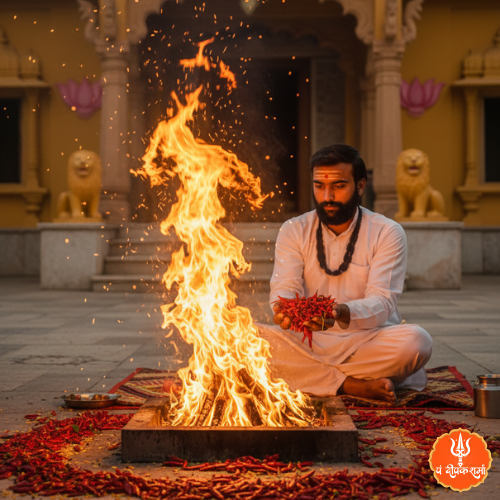
The Baglamukhi Havan, a central ritual dedicated to Devi Baglamukhi, symbolizes the invocation of divine energy to overcome challenges and achieve victory. The term ‘Havan’ refers to a fire ritual, where offerings are made into the sacred fire as a means of connecting with the divine. In the context of Baglamukhi, this ritual is particularly potent for those facing legal battles, career obstacles, or conflicts with enemies.
Each element of the Havan, from the materials used to the mantras chanted, carries profound significance. The offerings, often consisting of ghee, grains, and herbs, are believed to purify the environment and invoke the blessings of the goddess. The flames represent the transformative power of the divine, consuming negativity and fostering positive outcomes.
How This Ritual Helps
The Baglamukhi Havan is not merely a ceremonial act; it is a powerful spiritual tool that aids devotees in various aspects of life. Primarily, it is sought for relief in court cases, where devotees pray for justice and favorable outcomes. The ritual is believed to create a protective shield against adversaries, ensuring that the devotee’s case is strengthened.
Moreover, the Havan is beneficial for career growth and success in competitive exams. By invoking the blessings of Baglamukhi Mata, devotees seek clarity of thought, enhanced intellect, and the removal of obstacles that hinder their progress. This ritual serves as a reminder of the divine support available to those who earnestly seek it.
Mythological Background
The mythology surrounding Devi Baglamukhi is rich and profound, reflecting her status as a goddess of wisdom and power. According to ancient texts, she is depicted as a serene figure, often holding a tongue of a demon, symbolizing her ability to silence negativity and grant victory over foes. Her divine energy is said to be particularly effective in overcoming legal hurdles and conflicts.
One popular legend narrates how Baglamukhi Mata helped the gods defeat the demon king, who was wreaking havoc in the celestial realms. The gods, unable to combat his might, turned to Baglamukhi for assistance. With her unparalleled strength, she subdued the demon, restoring peace and order. This tale illustrates her role as a protector and a source of strength for those in distress.
Another significant aspect of her mythology is the belief that she bestows wisdom upon her devotees. Those who worship her with sincerity are said to gain insight and intelligence, enabling them to navigate life’s challenges effectively. This divine wisdom is particularly sought after by students and professionals alike.
Furthermore, Baglamukhi is associated with the power of speech and communication. Her blessings are believed to enhance one’s ability to articulate thoughts clearly, making her worship essential for those involved in legal matters or public speaking. This connection to communication underscores her multifaceted nature as a goddess who empowers her devotees in various ways.
Who Should Perform This
The Baglamukhi Havan is recommended for individuals facing legal issues, career challenges, or conflicts with enemies. Anyone who feels overwhelmed by obstacles or negativity in their life can benefit from this powerful ritual. It is particularly beneficial for those involved in court cases, as the divine blessings of Baglamukhi Mata can help secure justice and victory.
Moreover, students preparing for competitive exams or professionals seeking career advancement are encouraged to perform this Havan. The ritual not only aids in removing mental blocks but also enhances focus and clarity, essential for success in any endeavor. Those who have been wronged or are facing undue challenges from adversaries may also find solace and strength through this sacred practice.
Step-by-Step Vidhi (Very Detailed)
Preparation for the Havan
The first step in performing the Baglamukhi Havan is to prepare the sacred space. This involves cleaning the area where the Havan will take place, ensuring that it is free from any distractions or impurities. A clean and serene environment is essential for invoking the goddess’s blessings.
Next, gather all the necessary materials for the Havan. This includes the Havan kund (fire pit), ghee (clarified butter), samagri (a mix of offerings), and specific herbs that are traditionally used in Baglamukhi rituals. Each item should be sourced with devotion, as the quality of the offerings reflects the sincerity of the devotee’s intentions.
Invoking the Deity
Once the preparation is complete, the next step is to invoke the presence of Devi Baglamukhi. This is done by performing a small puja with flowers, incense, and offerings. The devotee should chant the appropriate mantras, focusing on the intention behind the ritual. This phase is crucial, as it establishes a connection with the divine.
During this invocation, it is essential to maintain a calm and focused mind. The devotee should express their desires and challenges to the goddess, seeking her guidance and support. This personal connection sets the tone for the Havan.
Performing the Havan
With the deity invoked, the actual Havan can begin. Light the fire in the Havan kund, ensuring that it burns steadily. As the flames rise, the devotee should begin offering the samagri into the fire, accompanied by the chanting of specific mantras. Each offering should be made with reverence, symbolizing the surrender of one’s challenges to the goddess.
The mantra for this ritual, “ॐ ह्लीं बगलामुखि सर्व शत्रुस्तम्भनाय स्वाहा” (Om Hleem Baglamukhi Sarva Shatrusambhanaya Swaha), is particularly powerful for invoking her protection against enemies. The devotee should chant this mantra with sincerity, visualizing the flames consuming all negativity and obstacles.
Concluding the Ritual
After all offerings have been made, the Havan should be concluded with a prayer of gratitude to Devi Baglamukhi. This is a moment to reflect on the ritual’s significance and to express appreciation for the blessings received. The devotee should also seek forgiveness for any inadvertent mistakes made during the ritual.
Finally, the ashes from the Havan can be collected and preserved as a sacred remnant of the ritual. These ashes are often believed to carry the goddess’s energy and can be used in personal pujas or sprinkled around the home for protection.
Mantra for This Ritual
The mantra associated with the Baglamukhi Havan is “ॐ ह्लीं बगलामुखि सर्व शत्रुस्तम्भनाय स्वाहा” (Om Hleem Baglamukhi Sarva Shatrusambhanaya Swaha). This powerful invocation is specifically designed to seek the goddess’s protection against enemies and adversaries.
In transliteration, it reads as follows: Om Hleem Baglamukhi Sarva Shatrusambhanaya Swaha. The meaning of this mantra can be broken down into several components:
- ॐ (Om): The primordial sound, representing the universe and the essence of the divine.
- ह्लीं (Hleem): A bija mantra (seed sound) associated with Baglamukhi, symbolizing her power and strength.
- सर्व (Sarva): Meaning ‘all’, indicating the comprehensive nature of the goddess’s protection.
- शत्रु (Shatru): Referring to enemies or obstacles that one may face.
- स्तम्भनाय (Stambhanaya): To immobilize or subdue, emphasizing the mantra’s purpose of overcoming adversaries.
- स्वाहा (Swaha): A term used to conclude offerings in Havan, symbolizing the surrender of one’s desires to the divine.
Chanting this mantra with devotion and focus is believed to invoke Baglamukhi Mata’s blessings, ensuring protection and victory over challenges. It is recommended to chant this mantra during the Havan, as well as in daily prayers for continued divine support.
Do’s & Don’ts
Do’s
- Perform the Havan with a pure heart and clear intentions.
- Use high-quality materials for offerings to reflect devotion.
- Maintain a calm and focused mind throughout the ritual.
- Chant the mantra with sincerity and concentration.
- Express gratitude to Devi Baglamukhi after the ritual.
Don’ts
- Do not perform the Havan in a cluttered or impure environment.
- Avoid distractions during the ritual; focus solely on the divine.
- Do not rush through the offerings; each should be made with reverence.
- Do not use low-quality materials or offerings.
- Refrain from negative thoughts or intentions during the ritual.
When to Perform
The Baglamukhi Havan can be performed at any time when one feels the need for divine intervention, particularly during challenging situations. However, certain auspicious days are considered more favorable for this ritual. For instance, performing the Havan on Tuesdays or during the Shukla Paksha (waxing phase of the moon) is believed to enhance its effectiveness.
Additionally, devotees often choose to perform this Havan during significant life events, such as starting a new job, before appearing in court, or when facing conflicts with enemies. The intention behind the ritual plays a crucial role in its success, and it is essential to approach it with sincerity and devotion.
Nalkheda Temple Connection
The Nalkheda Baglamukhi Temple is a sacred site where devotees flock to seek the blessings of Devi Baglamukhi. This temple, with its serene ambiance and spiritual significance, serves as a focal point for various rituals, including the Baglamukhi Havan and Mirchi Havan.
Visiting the temple enhances the spiritual experience of performing these rituals, as the energy of the temple amplifies the devotee’s prayers. Many devotees report profound experiences and transformations after participating in rituals conducted by Pandit Deepak Sharma at this temple. The connection to the temple adds a layer of sanctity to the rituals, making them even more impactful.
FAQ
What is the significance of Baglamukhi Havan?
The Baglamukhi Havan is a powerful ritual dedicated to Devi Baglamukhi, aimed at removing obstacles and ensuring victory over adversaries. This Havan is particularly significant for individuals facing legal issues, career challenges, or conflicts with enemies. The offerings made during the ritual symbolize the devotee’s surrender of their difficulties to the goddess, seeking her divine intervention.
Many devotees have experienced positive outcomes after performing this Havan, attributing their success to the blessings of Baglamukhi Mata. The ritual serves as a reminder of the divine support available to those who earnestly seek it, reinforcing the belief in the power of faith and devotion.
Can anyone perform the Baglamukhi Havan?
Yes, the Baglamukhi Havan can be performed by anyone who seeks the blessings of Devi Baglamukhi. It is especially recommended for individuals facing challenges in their lives, such as legal battles, career obstacles, or conflicts with enemies. The sincerity of the devotee’s intentions is what truly matters in this ritual.
While it is beneficial to have guidance from an experienced pandit like Pandit Deepak Sharma, individuals can also perform the Havan at home, provided they follow the correct procedures and maintain a pure heart. The key is to approach the ritual with devotion and focus, as this enhances its effectiveness.
What materials are needed for the Havan?
To perform the Baglamukhi Havan, several materials are required, including ghee (clarified butter), samagri (a mix of offerings), specific herbs, and a Havan kund (fire pit). Each item should be sourced with care, as the quality of the offerings reflects the devotee’s devotion.
Additionally, flowers, incense, and other items for the invocation of the goddess are also needed. It is essential to prepare these materials in advance, ensuring that everything is in place for a smooth and reverent ritual.
How long does the Havan take to perform?
The duration of the Baglamukhi Havan can vary depending on the devotee’s intentions and the specific procedures followed. Generally, the Havan can take anywhere from 30 minutes to a few hours. The key is not to rush through the ritual but to perform it with focus and devotion.
Taking the time to properly invoke the goddess and make offerings with sincerity is crucial for the ritual’s success. Devotees are encouraged to dedicate sufficient time to the Havan, allowing for a meaningful spiritual experience.
What should I do after the Havan?
After completing the Baglamukhi Havan, it is important to express gratitude to Devi Baglamukhi for her blessings. This can be done through a prayer of thanks, acknowledging the divine support received during the ritual. Many devotees also choose to preserve the ashes from the Havan as a sacred remnant, using them in personal pujas or sprinkling them around their home for protection.
Additionally, devotees are encouraged to maintain a positive mindset and continue their efforts in the areas they sought assistance for. The Havan serves as a spiritual boost, but it is essential to combine it with practical actions towards achieving one’s goals.
Closing
Agar aap is pooja ko proper Vedic vidhi ke saath karwana chahte hain, toh Nalkheda ke experienced pandit Pandit Deepak Sharma se margdarshan le sakte hain. Woh traditional Baglamukhi pooja aur havan ko shuddh vidhi se karte hain.