Meaning of This Ritual
Mirchi havan, a sacred fire ritual dedicated to Devi Baglamukhi, holds immense significance in Vedic traditions. The term ‘Mirchi’ translates to ‘chili’, symbolizing the burning away of negativity and obstacles in one’s life. This ritual is particularly revered for its power to remove enemies and adversities, making it a crucial practice for devotees seeking relief from conflicts and challenges. The essence of this havan lies in invoking the divine energies of Baglamukhi Mata, who is known for her ability to control and subdue adversaries.
In the context of spiritual practices, the Mirchi Havan serves as a medium to channel the devotee’s intentions and prayers into the universe. The offerings made during the havan, including the symbolic use of mirchi, represent the burning away of all that hinders one’s progress. It is a purification process that not only seeks to eliminate external threats but also internal fears and doubts, allowing the devotee to emerge stronger and more focused.
This ritual is performed with utmost devotion and precision, adhering to the Vedic guidelines that have been passed down through generations. Each element of the havan, from the materials used to the mantras chanted, is carefully chosen to align with the spiritual goals of the devotee. Thus, the Mirchi Havan is not merely a ritual but a profound spiritual journey towards empowerment and liberation.
How This Ritual Helps
The Mirchi Havan is believed to bestow numerous benefits upon the devotee, primarily focusing on the removal of enemies and obstacles. By performing this ritual, one seeks the blessings of Baglamukhi Mata, who is revered as the goddess of speech and power. Her divine intervention is sought to silence adversaries and bring peace to the devotee’s life. The flames of the havan symbolize the destruction of negativity, allowing positive energies to flow in.
Moreover, this havan is instrumental in enhancing the devotee’s confidence and mental clarity. As the ritual progresses, the devotee is encouraged to meditate on their intentions, fostering a sense of inner strength and resolve. The chanting of specific mantras during the havan amplifies the spiritual vibrations, creating a protective shield around the devotee. This shield not only wards off negative influences but also attracts auspicious energies that promote success and harmony.
In addition to enemy removal, the Mirchi Havan is also beneficial for those facing legal challenges or disputes. The divine blessings invoked during the ritual are believed to aid in achieving favorable outcomes in court cases, making it a sought-after practice for individuals in legal predicaments. Thus, the Mirchi Havan serves as a holistic remedy, addressing both external conflicts and internal struggles, guiding the devotee towards a path of peace and prosperity.
Mythological Background
The roots of Mirchi Havan can be traced back to ancient Hindu scriptures that extol the virtues of Devi Baglamukhi. She is one of the ten Mahavidyas, embodying the power to control and subdue. According to mythology, Baglamukhi is depicted as a fierce goddess who can silence enemies and protect her devotees from harm. Her divine form is often associated with the color yellow, symbolizing knowledge and wisdom.
One of the most popular legends surrounding Baglamukhi speaks of her intervention during a battle between the gods and demons. The gods, overwhelmed by the demons’ strength, sought the help of Baglamukhi. In response, she manifested her power, using her divine speech to immobilize the demons, thus ensuring victory for the gods. This story highlights her role as a protector and a force against evil, making her worship essential for those seeking protection from adversaries.
The Mirchi Havan, therefore, is not just a ritual but a reenactment of this divine intervention. By invoking Baglamukhi’s blessings, devotees aim to replicate the victory over negativity and obstacles in their lives. The use of mirchi in the havan symbolizes the burning away of all that is harmful, echoing the goddess’s ability to eradicate evil and bring forth peace and prosperity.
Who Should Perform This
The Mirchi Havan is particularly beneficial for individuals facing challenges from enemies, whether in personal or professional realms. Those who feel threatened by adversaries, whether through rivalry, competition, or legal disputes, are encouraged to partake in this ritual. It serves as a powerful tool for anyone seeking to regain control over their circumstances and eliminate negativity from their lives.
Moreover, this havan is suitable for individuals who are experiencing prolonged periods of struggle or conflict. If one finds themselves in a cycle of misfortune or facing repeated obstacles, the Mirchi Havan can provide the necessary spiritual support to break free from these patterns. It is also recommended for those who feel a lack of confidence or clarity in their decision-making, as the ritual helps in enhancing mental strength and focus.
In essence, anyone who seeks the blessings of Devi Baglamukhi for protection, empowerment, and resolution of conflicts can benefit from performing the Mirchi Havan. It is a sacred practice that aligns the devotee’s intentions with divine will, fostering a sense of security and peace.
Step-by-Step Vidhi (Very Detailed)
To perform the Mirchi Havan, one must follow a detailed Vedic procedure that ensures the ritual is conducted with reverence and precision. The preparation begins with the selection of an auspicious date and time, preferably during a Shubh Muhurat, which can be determined by consulting a knowledgeable pandit. This ensures that the energies are favorable for the ritual.
Once the date is set, the devotee should gather all necessary materials, including:
- Mirchi (green or red chilies)
- Havan samagri (sacred offerings such as ghee, rice, and herbs)
- A havan kund (fire pit)
- Flowers and fruits for offerings
- Incense sticks and diya for lighting
The next step involves purifying the space where the havan will be performed. This can be done by sprinkling holy water and chanting mantras to invoke positive energies. The havan kund should be placed in a clean and sacred area, preferably facing east or north.
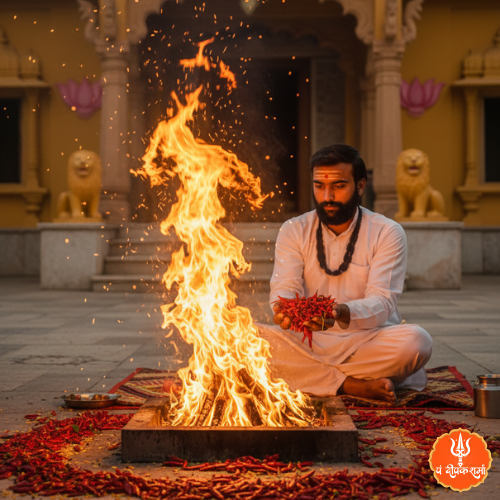
As the ritual begins, the devotee should sit in front of the havan kund with a calm and focused mind. The pandit will start by lighting the fire in the kund, using ghee and havan samagri. The flames symbolize the divine presence of Baglamukhi, and the devotee should offer the mirchi into the fire while chanting the appropriate mantras. Each offering should be accompanied by a heartfelt prayer for the removal of enemies and obstacles.
Throughout the ritual, the devotee should maintain a meditative state, visualizing their intentions and seeking the blessings of the goddess. The chanting of mantras such as ॐ ह्लीं बगलामुखि सर्व शत्रुस्तम्भनाय स्वाहा (Om Hleem Baglamukhi Sarva Shatrusambhanaya Swaha) is crucial, as it enhances the spiritual vibrations and strengthens the connection with the divine.
After the offerings are made, the pandit will conclude the ritual with aarti and blessings, ensuring that the energies of the havan are sealed and sent forth into the universe. The devotee is encouraged to express gratitude and seek further guidance from Baglamukhi Mata.
Mantra for This Ritual
The mantra associated with the Mirchi Havan is ॐ ह्लीं बगलामुखि सर्व शत्रुस्तम्भनाय स्वाहा. This powerful invocation serves to invoke the protective energies of Devi Baglamukhi, specifically aimed at subduing enemies and adversaries.
In transliteration, the mantra is read as: Om Hleem Baglamukhi Sarva Shatrusambhanaya Swaha. Each component of this mantra holds profound significance. The syllable ‘ॐ’ (Om) represents the universal sound, the essence of the divine. ‘ह्लीं’ (Hleem) is a bija mantra that embodies the energy of Baglamukhi, invoking her strength and power.
The phrase ‘सर्व शत्रुस्तम्भनाय’ translates to ‘for the immobilization of all enemies’, highlighting the primary intention behind the mantra. The concluding ‘स्वाहा’ (Swaha) signifies the offering made to the fire, acknowledging the divine presence and surrendering the devotee’s intentions to the goddess. By chanting this mantra during the Mirchi Havan, devotees align their energies with Baglamukhi’s divine will, seeking her blessings for protection and victory over adversities.
Do’s & Don’ts
When performing the Mirchi Havan, it is essential to adhere to certain do’s and don’ts to ensure the ritual’s effectiveness and sanctity. Among the do’s, it is crucial to approach the ritual with a pure heart and focused mind. The devotee should engage in self-reflection and set clear intentions for the havan, as this clarity will enhance the connection with the divine.
Additionally, it is advisable to wear clean and preferably traditional attire while performing the ritual. This not only reflects respect for the sacred practice but also helps in maintaining a conducive atmosphere for spiritual energies to flow. Offering fresh flowers and fruits during the havan is encouraged, as they symbolize purity and devotion.
On the other hand, there are certain actions to avoid during the Mirchi Havan. Engaging in negative thoughts or harboring ill intentions can hinder the effectiveness of the ritual. It is also important to refrain from using stale or impure offerings, as this can disrupt the sanctity of the havan. Lastly, distractions such as mobile phones or loud noises should be minimized to maintain a serene environment conducive to spiritual practices.
When to Perform
The timing of the Mirchi Havan plays a significant role in its effectiveness. It is recommended to perform this ritual during auspicious days, particularly on Tuesdays or Saturdays, as these days are traditionally associated with strength and overcoming obstacles. Additionally, performing the havan during the waxing phase of the moon (Shukla Paksha) is considered favorable, as it symbolizes growth and positivity.
Furthermore, if one is facing specific challenges, such as legal issues or conflicts, it is advisable to perform the Mirchi Havan as soon as possible to invoke the protective energies of Baglamukhi. The ritual can also be conducted during significant life events, such as starting a new job or entering a new phase in life, to ensure divine blessings and guidance.
Ultimately, the best time to perform the Mirchi Havan is when the devotee feels a strong calling or need for spiritual intervention. Listening to one’s intuition and seeking guidance from a knowledgeable pandit can help determine the most auspicious timing for the ritual.
How Pandit Deepak Sharma can help
Pandit Deepak Sharma, with his extensive experience in performing Baglamukhi rituals, offers invaluable guidance for those seeking to conduct the Mirchi Havan. His deep understanding of Vedic traditions ensures that each ritual is performed with precision and devotion, aligning with the sacred practices that have been upheld for centuries.
By consulting with Pandit Deepak Sharma, devotees can gain insights into the most auspicious timings and preparations required for the Mirchi Havan. His personalized approach takes into account the unique circumstances of each devotee, ensuring that the ritual is tailored to their specific needs and intentions. This attention to detail enhances the effectiveness of the havan, allowing for a deeper connection with Devi Baglamukhi.
Moreover, Pandit Deepak Sharma provides ongoing support and spiritual guidance, helping devotees navigate their challenges with confidence and faith. His presence during the ritual fosters a serene atmosphere, allowing devotees to focus on their prayers and intentions. By entrusting the Mirchi Havan to Pandit Deepak Sharma, devotees can rest assured that they are engaging in a sacred practice that honors the divine and seeks blessings for protection and empowerment.
Nalkheda Temple Connection
The Nalkheda Temple, dedicated to Devi Baglamukhi, serves as a significant spiritual hub for devotees seeking to perform the Mirchi Havan. Located in the serene Agar Malwa district of Madhya Pradesh, this temple is revered for its divine ambiance and the blessings it bestows upon visitors. The temple is a place where devotees gather to seek guidance and perform rituals under the watchful eyes of Baglamukhi Mata.
Visiting the Nalkheda Temple enhances the experience of performing the Mirchi Havan, as the energy of the sacred space amplifies the intentions of the devotees. The temple’s sanctity and the collective prayers of fellow devotees create an environment conducive to spiritual growth and empowerment. Many devotees report profound experiences and transformations after performing rituals at this temple, reinforcing its significance in the spiritual journey.
For those unable to visit the temple, Pandit Deepak Sharma offers the option of conducting the Mirchi Havan remotely, ensuring that the divine energies are still invoked and blessings are received. This connection to the Nalkheda Temple, whether in person or through remote rituals, underscores the importance of community and shared devotion in the practice of spirituality.
FAQ
What is the significance of Mirchi Havan?
The Mirchi Havan is significant for its power to remove enemies and obstacles from one’s life. By invoking the blessings of Devi Baglamukhi, devotees seek protection and empowerment against adversities. The ritual symbolizes the burning away of negativity, allowing positive energies to flow into the devotee’s life.
Who can perform the Mirchi Havan?
Anyone facing challenges from enemies, whether in personal or professional realms, can perform the Mirchi Havan. It is especially beneficial for those experiencing prolonged struggles or legal disputes. The ritual serves as a powerful tool for regaining control and eliminating negativity.
When is the best time to perform the Mirchi Havan?
The best time to perform the Mirchi Havan is during auspicious days, particularly on Tuesdays or Saturdays. Performing the ritual during the waxing phase of the moon is also favorable. Ultimately, the best time is when the devotee feels a strong calling for spiritual intervention.
What materials are needed for the Mirchi Havan?
Essential materials for the Mirchi Havan include mirchi (chili), havan samagri (sacred offerings), a havan kund (fire pit), flowers, fruits, and incense. Each of these elements plays a crucial role in the ritual, enhancing its effectiveness and sanctity.
How can Pandit Deepak Sharma assist in the Mirchi Havan?
Pandit Deepak Sharma offers invaluable guidance for performing the Mirchi Havan, ensuring that it is conducted with precision and devotion. His personalized approach takes into account the unique circumstances of each devotee, enhancing the effectiveness of the ritual.
Is it necessary to visit the Nalkheda Temple for the Mirchi Havan?
While visiting the Nalkheda Temple enhances the experience of the Mirchi Havan, it is not strictly necessary. Pandit Deepak Sharma can conduct the ritual remotely, ensuring that the divine energies are invoked and blessings are received, regardless of the devotee’s location.