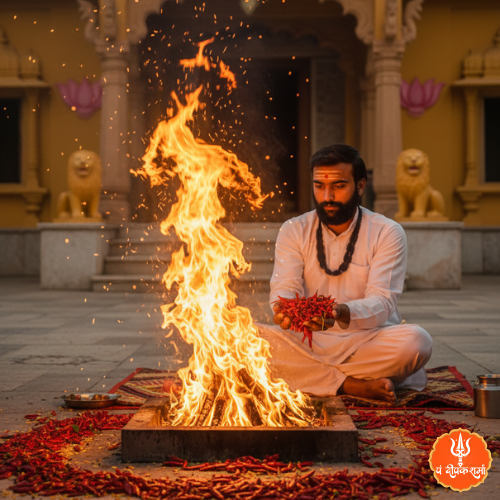
Introduction to Baglamukhi Havan
Baglamukhi Havan is a revered Vedic ritual dedicated to Devi Baglamukhi, one of the ten Mahavidyas in Hindu tradition. This havan is performed for various purposes, including seeking wisdom, protection from enemies, and overcoming obstacles in one’s life. The essence of this ritual lies in invoking the divine presence of Baglamukhi Mata, who embodies knowledge, power, and the ability to conquer adversities.
Mythological Background
According to Hindu mythology, Devi Baglamukhi is considered the goddess of speech and the protector of devotees from negative influences. She is depicted as a powerful deity who can silence adversaries and grant victory in disputes. The significance of the Baglamukhi Havan is deeply rooted in the belief that invoking her blessings can lead to the resolution of conflicts and the attainment of success in various endeavors.
Significance of Baglamukhi Havan
The Baglamukhi Havan is often performed to address issues such as legal matters, career obstacles, and competition in exams. It is believed that through this sacred fire ceremony, devotees can purify their intentions and seek the goddess’s guidance to remove hurdles from their paths. The ritual is also performed for mental clarity and spiritual upliftment.
Materials Required for Baglamukhi Havan
To perform the Baglamukhi Havan, certain materials are essential:
- Havan Kund: A fire pit made of metal or clay, specifically designed for conducting havans.
- Samagri: A mixture of sacred herbs, ghee, and other offerings that are placed in the fire.
- Flowers and Fruits: Fresh flowers and fruits are offered to the goddess as a gesture of reverence.
- Mantras: Specific mantras that invoke Devi Baglamukhi’s blessings are recited during the havan.
Steps to Perform Baglamukhi Havan
Preparation
Before starting the havan, it is important to cleanse the space where the ritual will take place. The area should be free from any negative energies. Devotees should take a bath and wear clean, preferably yellow, clothes as a mark of respect to the goddess. Set up the havan kund in the east direction, as it is considered auspicious for conducting rituals.
Invoking the Deity
Start the havan by lighting the sacred fire in the havan kund. As the flames rise, chant the following mantra to invoke the presence of Devi Baglamukhi: ॐ ह्लीं बगलामुखि सर्वविघ्न नाशाय ह्लीं स्वाहा (Om Hleem Baglamukhi Sarva Vighna Nashaya Hleem Swaha). This mantra is specifically meant to remove all obstacles. Visualize the goddess’s divine form and offer your prayers wholeheartedly.
Offering the Samagri
Once the fire is established, begin offering the samagri into the flames while continuing to chant the mantra. Each offering is made with devotion, accompanied by the prayer for specific desires—be it success in exams, resolution of legal matters, or overcoming career challenges. Repeat the mantra with each offering. It is vital to maintain concentration during this phase, as this is where the connection with the divine is strengthened.
Concluding the Havan
After all offerings are made, conclude the havan with a final prayer. Thank Devi Baglamukhi for her blessings, and seek her continued guidance. The remnants of the havan samagri can be collected and distributed among family members as a prasad (blessed offering) to share the divine energy.
Do’s and Don’ts During Baglamukhi Havan
Do’s
- Perform the havan with a pure heart and clear intentions.
- Always recite the mantras with full devotion.
- Ensure the havan area is clean and serene.
Don’ts
- Avoid using non-pure items in the havan.
- Do not perform the havan in a noisy or distracting environment.
- Refrain from consuming alcohol or non-vegetarian food on the day of the havan.
Nalkheda Temple Connection
The Baglamukhi Temple in Nalkheda is a significant place of worship for devotees seeking to perform the Baglamukhi Havan. This temple holds immense spiritual value and attracts numerous pilgrims throughout the year. The serene atmosphere and the divine presence of Devi Baglamukhi make it an ideal place for conducting havan rituals. Many devotees visit the temple to seek the blessings of the goddess, especially during auspicious days.
FAQ
- What is the best time to perform Baglamukhi Havan?
The best time to perform Baglamukhi Havan is during auspicious days like Navratri, full moon days, or on Thursdays, which are considered sacred to Goddess Baglamukhi. - Can Baglamukhi Havan be performed at home?
Yes, Baglamukhi Havan can be performed at home, provided that you maintain a clean space and follow the proper Vedic procedures. It is advisable to seek guidance from an experienced pandit for best results. - What are the benefits of Baglamukhi Havan?
Baglamukhi Havan is believed to help in overcoming legal issues, career obstacles, and gaining wisdom. It also promotes mental clarity and spiritual growth, making it beneficial for students and professionals alike. - How long does the Baglamukhi Havan take?
The duration of the Baglamukhi Havan can vary depending on the specific rituals involved, but it generally takes around one to two hours to complete the entire procedure. - Is there any specific mantra for success in exams?
Yes, the mantra ॐ ह्लीं बगलामुखि बुद्धि-विजयाय स्वाहा (Om Hleem Baglamukhi Buddhi-Vijayaya Swaha) is specifically recommended for success in educational pursuits and examinations. - How can I book a havan at Nalkheda Temple?
To book a havan at Nalkheda Temple, you can contact local temple authorities or seek assistance from Pandit Deepak Sharma, who can provide guidance and facilitate the process.
Conclusion
Performing Baglamukhi Havan is a sacred and transformative experience that can lead to spiritual growth and resolution of life’s challenges. By invoking the blessings of Devi Baglamukhi, devotees can seek her divine guidance and support in overcoming obstacles. If you wish to perform this pooja with the proper Vedic vidhi, then you can seek guidance from Nalkheda’s experienced pandit Pandit Deepak Sharma. He conducts traditional Baglamukhi pooja and havan with pure devotion and adherence to Vedic practices.