Meaning of This Ritual
baglamukhi, one of the revered Mahavidyas, embodies the power of speech and the ability to silence enemies. The rituals associated with her, especially the Baglamukhi Havan, are performed to invoke her blessings for victory over adversities, be it in legal matters, personal conflicts, or professional challenges. Each aspect of the ritual is steeped in Vedic tradition, aimed at purifying the environment and the devotee’s mind.
The essence of the Baglamukhi Havan lies in its ability to channel divine energy towards overcoming obstacles. This ritual is not merely a ceremonial act; it is a heartfelt plea to the goddess for guidance and support. The offerings made during the havan symbolize the surrender of one’s ego and the acceptance of divine will, fostering a deeper connection with the divine.
In essence, the Baglamukhi Havan serves as a powerful tool for devotees seeking relief from various life challenges. It is a means to align oneself with the cosmic energies that govern our lives, allowing for the manifestation of positive outcomes through sincere devotion and ritualistic practice.
How This Ritual Helps
The Baglamukhi Havan is particularly beneficial for those facing legal battles, conflicts, or any form of opposition. By performing this ritual, devotees seek the goddess’s intervention to ensure justice prevails and to secure victory in their endeavors. The havan acts as a spiritual shield, protecting the devotee from negative influences and adversaries.
Moreover, this ritual is known to enhance mental clarity and focus, essential for making wise decisions during challenging times. The chanting of mantras and the offerings made during the havan create a sacred atmosphere that fosters inner peace and confidence. This spiritual environment aids devotees in overcoming their fears and doubts, empowering them to face their challenges head-on.
Additionally, the Baglamukhi Havan is a means of spiritual purification. It cleanses the devotee’s aura, removing any negative energies that may hinder their progress. This purification process is crucial for those who wish to embark on new ventures or seek resolution in ongoing disputes, as it prepares them to receive the goddess’s blessings with an open heart.
Mythological Background
The mythology surrounding Baglamukhi is rich and profound, reflecting her significance in Hindu tradition. She is often depicted as a powerful goddess who can paralyze enemies and silence their harmful intentions. According to ancient texts, Baglamukhi emerged during the churning of the ocean (Samudra Manthan) to protect the gods and restore balance in the universe.
One of the most famous legends associated with her is the story of a sage who faced numerous challenges from malevolent forces. In his desperation, he prayed to Baglamukhi, who appeared before him and granted him the power to overcome his adversaries. This narrative illustrates the goddess’s role as a protector and a source of strength for her devotees.
Furthermore, Baglamukhi is often worshipped for her ability to bestow wisdom and clarity. Her devotees believe that through sincere worship, they can gain insight into their problems and the strength to confront them. This aspect of her mythology is particularly relevant for those seeking resolution in legal matters or personal conflicts, as it emphasizes her role as a guiding force in times of distress.
Who Should Perform This
The Baglamukhi Havan is recommended for individuals facing legal issues, conflicts with enemies, or any form of opposition in their lives. It is particularly beneficial for those who feel overwhelmed by challenges and seek divine intervention to restore harmony. Additionally, this ritual is suitable for professionals in competitive fields who wish to enhance their chances of success.
Moreover, anyone looking to gain clarity in their decision-making process or seeking protection from negative influences can benefit from this havan. It is a powerful spiritual tool for those who wish to align themselves with the energies of justice and victory. The ritual can also be performed on behalf of loved ones who may be facing difficulties, as the blessings of Baglamukhi extend to all who seek her grace.
Ultimately, the Baglamukhi Havan is for anyone who wishes to deepen their spiritual practice and connect with the divine feminine energy that Baglamukhi represents. It is a call to surrender to the goddess and trust in her ability to guide and protect her devotees.
Step-by-Step Vidhi (Very Detailed)
The Baglamukhi Havan is a sacred ritual that requires careful preparation and adherence to Vedic traditions. Here is a detailed step-by-step procedure for performing the havan:
Preparation
Begin by selecting an auspicious date and time for the havan, preferably during a full moon or on a Tuesday, which is considered favorable for Baglamukhi worship. Cleanse the space where the havan will be performed, ensuring it is free from any distractions. Set up a sacred altar with an image or idol of Baglamukhi, along with necessary offerings such as flowers, fruits, and sweets.
Gathering Materials
Collect all the materials needed for the havan, including samidha (wooden sticks), ghee (clarified butter), and specific herbs that are traditionally used in Baglamukhi rituals. Prepare a havan kund (sacred fire pit) where the offerings will be made. Ensure that you have the appropriate mantras and prayers ready for chanting during the ritual.
Invocation
Begin the ritual by invoking the presence of Baglamukhi. Light a lamp and offer prayers to the goddess, expressing your intentions and seeking her blessings. Chant the Baglamukhi mantra, which is essential for this ritual, to invite her energy into the space. The mantra for this havan is:
ॐ ह्लीं बगलामुखि सर्वविघ्न नाशाय ह्लीं
Transliteration: Om Hleem Baglamukhi Sarvavighna Nashaya Hleem
Meaning: This mantra is a powerful invocation to Baglamukhi, asking her to remove all obstacles and grant victory.
Performing the Havan
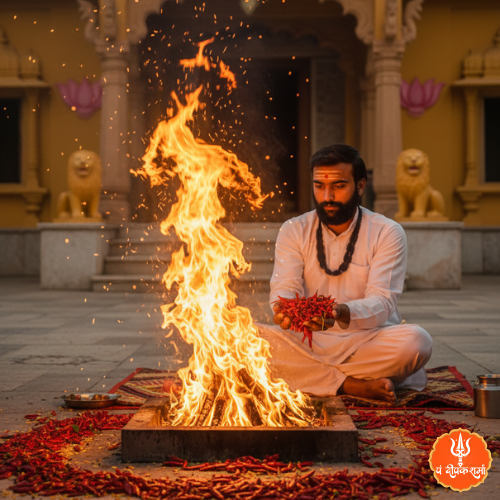
Once the invocation is complete, begin the havan by placing the samidha into the fire, accompanied by the chanting of the mantra. Offer ghee and other sacred items into the fire while visualizing your intentions being fulfilled. This process should be done with devotion and concentration, allowing the energy of the ritual to manifest.
Concluding the Ritual
After completing the offerings, express gratitude to Baglamukhi for her blessings. Allow the fire to burn down completely, and collect the ashes, which are considered sacred. These ashes can be used for further rituals or kept as a protective talisman. Finally, distribute prasad (blessed food) to all participants, sharing the divine energy of the ritual.
Mantra for This Ritual
The mantra associated with the Baglamukhi Havan is a potent invocation that carries the essence of the goddess’s energy. The mantra is:
ॐ ह्लीं बगलामुखि सर्वविघ्न नाशाय ह्लीं
Transliteration: Om Hleem Baglamukhi Sarvavighna Nashaya Hleem
This mantra serves multiple purposes, primarily focusing on the removal of obstacles and the granting of victory. The syllable ‘Hleem’ is a bija mantra, representing the divine energy of Baglamukhi. It is believed that chanting this mantra with sincerity and devotion can invoke her blessings, leading to the resolution of conflicts and the attainment of success.
Chanting the mantra during the havan creates a powerful vibrational frequency that resonates with the energies of the universe. This resonance not only enhances the effectiveness of the ritual but also aligns the devotee’s intentions with the divine will. The mantra should be repeated with focus and faith, allowing its energy to permeate the atmosphere and the devotee’s being.
Do’s & Don’ts
When performing the Baglamukhi Havan, it is essential to follow certain guidelines to ensure the ritual’s effectiveness. Here are some do’s and don’ts:
Do’s
- Perform the ritual with a pure heart and sincere intentions.
- Use fresh flowers and fruits as offerings, as they symbolize purity and devotion.
- Maintain a calm and focused environment, free from distractions.
- Chant the mantra with devotion and concentration, allowing its energy to flow.
- Share prasad with all participants, fostering a sense of community and gratitude.
Don’ts
- Avoid performing the ritual in a cluttered or impure space.
- Do not rush through the offerings; take your time to connect with the divine.
- Refrain from using stale or artificial items in the ritual.
- Do not engage in negative thoughts or actions during the ritual.
- Avoid discussing worldly matters during the havan; maintain a spiritual focus.
When to Perform
The Baglamukhi Havan can be performed at any time, but certain occasions are particularly auspicious. Performing the ritual during the full moon or on Tuesdays is believed to enhance its effectiveness. Additionally, it is recommended to conduct the havan during significant life events, such as before starting a new job, entering a new phase in life, or when facing legal challenges.
Furthermore, devotees may choose to perform the havan during festivals dedicated to Baglamukhi, such as Navratri, when her energy is believed to be more accessible. This time is ideal for invoking her blessings and seeking her guidance for the upcoming year.
Ultimately, the best time to perform the Baglamukhi Havan is when the devotee feels a strong calling to connect with the goddess. Listening to one’s intuition and aligning with the divine timing is crucial for the success of the ritual.
How Pandit Deepak Sharma can help
Pandit Deepak Sharma, with over 25 years of experience in performing Vedic rituals, offers his expertise in conducting the Baglamukhi Havan with utmost devotion and adherence to traditional practices. His deep understanding of the scriptures and the nuances of the rituals ensures that each ceremony is performed with precision and spiritual integrity.
By seeking guidance from Pandit Deepak Sharma, devotees can experience a profound connection with Baglamukhi. He provides personalized attention to each ritual, tailoring the offerings and prayers to align with the specific needs and intentions of the devotee. This personalized approach enhances the effectiveness of the havan, allowing for a more meaningful spiritual experience.
Moreover, Pandit Deepak Sharma’s presence during the ritual creates a sacred atmosphere, fostering a sense of peace and devotion among participants. His calming demeanor and spiritual wisdom guide devotees through the process, ensuring that they feel supported and connected to the divine throughout the ritual.
Nalkheda Temple Connection
Nalkheda is home to the sacred Baglamukhi Temple, a revered pilgrimage site for devotees seeking the goddess’s blessings. The temple is known for its serene environment and the powerful energy that resonates within its walls. Visiting the temple and participating in the Baglamukhi Havan there amplifies the spiritual experience, as the energy of the place enhances the effectiveness of the rituals performed.
The temple is frequented by devotees from all walks of life, each seeking solace and guidance from Baglamukhi. The rituals conducted at the temple are steeped in tradition, ensuring that the essence of Vedic practices is preserved. Participating in the havan at the Nalkheda temple allows devotees to connect with the collective energy of the community, fostering a sense of unity and shared devotion.
Furthermore, the temple’s location in the Agar Malwa district of Madhya Pradesh adds to its spiritual significance. The serene surroundings and the divine ambiance create an ideal setting for introspection and prayer, making it a perfect destination for those seeking to deepen their spiritual practice and connect with Baglamukhi.
FAQ
What is the significance of the Baglamukhi Havan?
The Baglamukhi Havan holds immense significance for devotees seeking protection and victory over adversities. It is a ritual that invokes the goddess’s blessings, allowing individuals to overcome obstacles in their lives. The havan serves as a spiritual shield, protecting devotees from negative influences and empowering them to face challenges with confidence.
Moreover, the ritual is a means of spiritual purification, cleansing the devotee’s aura and preparing them to receive divine blessings. The energy generated during the havan creates a sacred atmosphere that fosters inner peace and clarity, essential for making wise decisions during difficult times.
Can anyone perform the Baglamukhi Havan?
Yes, anyone can perform the Baglamukhi Havan, regardless of their background or experience in spiritual practices. The ritual is open to all who seek the blessings of Baglamukhi and wish to overcome challenges in their lives. It is particularly beneficial for those facing legal issues, conflicts, or any form of opposition.
However, it is essential to approach the ritual with sincerity and devotion. Those who wish to perform the havan are encouraged to seek guidance from experienced practitioners, such as Pandit Deepak Sharma, to ensure that the ritual is conducted according to Vedic traditions and with the appropriate intentions.
How long does the Baglamukhi Havan take?
The duration of the Baglamukhi Havan can vary depending on the specific rituals performed and the number of participants involved. Typically, the havan may take anywhere from one to two hours. This time includes the preparation, invocation, and the actual performance of the ritual.
It is important to allocate sufficient time for the havan, as rushing through the process can diminish its effectiveness. Devotees are encouraged to approach the ritual with patience and mindfulness, allowing for a deeper connection with the divine.
What offerings are made during the Baglamukhi Havan?
During the Baglamukhi Havan, various offerings are made to the sacred fire, including samidha (wooden sticks), ghee (clarified butter), and specific herbs that hold significance in Vedic rituals. Fresh flowers, fruits, and sweets are also offered as symbols of devotion and purity.
These offerings are made while chanting the Baglamukhi mantra, creating a powerful vibrational frequency that resonates with the energies of the universe. Each offering is a heartfelt expression of gratitude and surrender to the goddess, enhancing the spiritual connection between the devotee and Baglamukhi.
Is it necessary to have a priest for the Baglamukhi Havan?
While it is not strictly necessary to have a priest for the Baglamukhi Havan, having an experienced practitioner can significantly enhance the ritual’s effectiveness. A priest, such as Pandit Deepak Sharma, brings a deep understanding of the Vedic traditions and ensures that the ritual is performed with precision and spiritual integrity.
Moreover, a priest can guide devotees through the process, helping them connect with the divine energy of Baglamukhi. This guidance is especially beneficial for those who may be unfamiliar with the rituals or who wish to deepen their spiritual practice.
What should I do after the Baglamukhi Havan?
After completing the Baglamukhi Havan, it is customary to express gratitude to the goddess for her blessings. Collect the ashes from the havan, which are considered sacred and can be used for further rituals or kept as a protective talisman. Sharing prasad (blessed food) with participants is also an important aspect of concluding the ritual, fostering a sense of community and gratitude.
Additionally, devotees are encouraged to maintain a positive mindset and continue their spiritual practices after the havan. This may include regular prayers, meditation, and acts of kindness, which help to sustain the energy generated during the ritual and keep the connection with Baglamukhi alive.
Recommended Reading / Further Exploration
- Understanding the Importance of Baglamukhi Havan for Career Advancement
- Advanced Concepts of Shatru Nash Baglamukhi Puja (Explained Clearly)
- Real-World Use Cases of Baglamukhi Mandir Nalkheda Pooja
- Deepak Sharma Nalkheda Rituals for Small Businesses: Practical Implementation
- Complete Guide to Baglamukhi Puja for Enemies