Meaning of This Ritual
baglamukhi, one of the ten Mahavidyas, represents the divine feminine energy that empowers devotees to overcome obstacles and adversaries. The rituals associated with Baglamukhi, particularly the Baglamukhi Havan and Anushthan, are profound acts of devotion aimed at invoking her blessings for protection, victory, and wisdom. Engaging in these sacred practices allows devotees to align their energies with the divine, seeking guidance and support in their life’s challenges.
The essence of these rituals lies in their ability to transform negative energies into positive outcomes. By performing the Baglamukhi Havan, devotees not only honor the goddess but also create a sacred space that purifies their intentions and strengthens their resolve. This ritual is particularly significant for those facing legal battles, career challenges, or personal conflicts, as it channels the protective energies of Baglamukhi to ensure success and peace.
Ultimately, the meaning of this ritual transcends mere practice; it is a heartfelt connection with the divine. As devotees engage in the Havan and Anushthan, they open themselves to the blessings of Baglamukhi, fostering a sense of spiritual growth and empowerment that resonates throughout their lives.
How This Ritual Helps
The Baglamukhi Havan serves as a powerful tool for devotees seeking resolution in various aspects of life. It is particularly effective for those embroiled in court cases or legal disputes, as the energies invoked during the ritual help to clear obstacles and ensure favorable outcomes. The mantra associated with this Havan, “ॐ ह्लीं वाद-विजयाय ह्लीं फट्,” is specifically designed to invoke the goddess’s blessings for victory in legal matters.
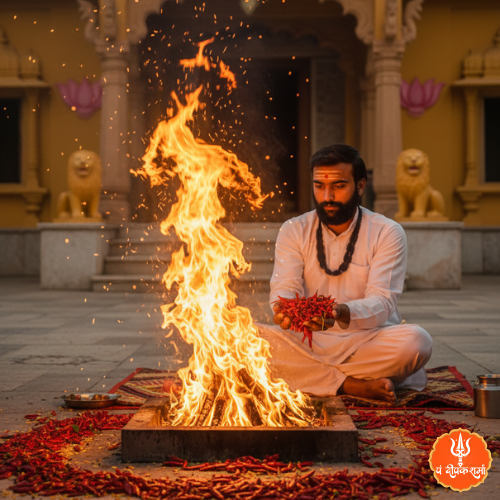
Moreover, the ritual aids in dispelling negativity and removing enemies from one’s path. The Baglamukhi Mirchi Havan, for instance, is a specialized form of this ritual that focuses on neutralizing adversarial energies. By performing this Havan, devotees can experience a profound sense of relief and empowerment, knowing that they are under the protective gaze of the goddess.
In addition to its protective benefits, the Baglamukhi Havan fosters clarity of thought and decision-making. As devotees immerse themselves in the ritual, they often find that their mental fog lifts, allowing them to approach challenges with renewed focus and determination. This clarity is essential for making informed choices that align with one’s spiritual and material goals.
Mythological Background
The mythology surrounding Baglamukhi is rich and deeply rooted in Hindu tradition. She is often depicted as a powerful goddess who wields the ability to silence enemies and protect her devotees from harm. According to ancient texts, Baglamukhi emerged during the churning of the ocean (Samudra Manthan) and is revered for her strength and wisdom.
One of the most significant stories associated with Baglamukhi involves her intervention in a battle between the gods and demons. When the gods found themselves overwhelmed by the demons’ might, they turned to Baglamukhi for assistance. In response, she manifested her divine power, rendering the demons powerless and ensuring the victory of the gods. This tale highlights her role as a protector and a force of justice, making her worship particularly relevant for those facing adversities.
Furthermore, Baglamukhi is often associated with the power of speech and communication. Her ability to silence adversaries symbolizes the importance of wise speech and the need to speak truthfully and justly. This aspect of her mythology resonates deeply with devotees who seek her blessings for clarity in communication and resolution in conflicts.
Who Should Perform This
The Baglamukhi Havan and Anushthan are recommended for anyone facing challenges in their personal or professional life. Individuals involved in legal disputes, career transitions, or those feeling overwhelmed by adversaries can greatly benefit from these rituals. The divine energies invoked during the Havan provide protection and guidance, helping devotees navigate their difficulties with confidence.
Moreover, those seeking to enhance their spiritual growth and clarity of thought are encouraged to engage in these rituals. The Baglamukhi Havan not only serves as a means of seeking external assistance but also fosters internal strength and resilience. It is particularly beneficial for students preparing for competitive exams, as the ritual helps sharpen focus and improve cognitive abilities.
Ultimately, anyone who feels the need for divine intervention, protection, or guidance in their life can perform the Baglamukhi Havan. It is a sacred practice that transcends specific circumstances, offering blessings and support to all who seek the goddess’s grace.
Step-by-Step Vidhi (Very Detailed)
Performing the Baglamukhi Havan requires careful adherence to Vedic rituals to ensure its effectiveness. The following steps outline the detailed process:
Preparation
Begin by selecting an auspicious day for the Havan, preferably on a Tuesday or Saturday, as these days are considered favorable for invoking the energies of Baglamukhi. Cleanse the ritual space thoroughly, ensuring it is free from any clutter or negative energies. Set up a small altar with an image or idol of Baglamukhi, along with offerings such as yellow flowers, sweets, and a lamp.
Gathering Materials
Collect the necessary materials for the Havan, including a Havan kund (fire pit), ghee (clarified butter), samagri (a mixture of sacred herbs and grains), and the specific mantra for the ritual. Ensure that you have a sufficient quantity of each item, as the Havan requires multiple offerings to the fire.
Invocation of the Goddess
Begin the ritual by performing a Sankalp (resolution) where you express your intentions and seek the blessings of Baglamukhi. Light the lamp and offer prayers, inviting the goddess to be present during the Havan. Recite the mantra “ॐ ह्लीं बगलामुखि सर्वविघ्न नाशाय ह्लीं” to invoke her protective energies.
Performing the Havan
Once the fire is lit in the Havan kund, begin offering samagri and ghee into the flames while chanting the mantra. Each offering should be accompanied by a heartfelt prayer, expressing your desires and seeking the goddess’s blessings for victory and protection. Continue this process for a duration of at least 30 minutes, maintaining focus and devotion throughout.
Concluding the Ritual
After completing the offerings, conclude the Havan by performing aarti (waving of the light) in front of the goddess’s image. Offer your gratitude for her presence and blessings. It is customary to distribute prasad (blessed food) among family and friends, sharing the divine energy of the ritual.
Mantra for This Ritual
The mantra associated with the Baglamukhi Havan is “ॐ ह्लीं बगलामुखि सर्वविघ्न नाशाय ह्लीं.”
Transliteration: Om Hleem Baglamukhi Sarva Vighna Nashaya Hleem.
This powerful mantra is designed to invoke the protective energies of Baglamukhi, seeking her assistance in removing obstacles and ensuring success in various endeavors. The syllable “ॐ” represents the primordial sound of the universe, while “ह्लीं” is a seed syllable that embodies the essence of Baglamukhi’s energy. The phrase “सर्वविघ्न नाशाय” translates to the removal of all obstacles, emphasizing the mantra’s purpose in overcoming challenges.
Reciting this mantra with devotion and sincerity during the Havan amplifies its effects, allowing devotees to connect deeply with the goddess. It is recommended to chant the mantra a minimum of 108 times, either during the Havan or as part of daily prayers, to enhance its potency and invoke Baglamukhi’s blessings consistently.
Do’s & Don’ts
When performing the Baglamukhi Havan, there are several important do’s and don’ts to keep in mind to ensure the ritual’s effectiveness:
Do’s
- Maintain a pure and focused mindset throughout the ritual.
- Use fresh and high-quality materials for the Havan.
- Dress in clean, traditional attire as a mark of respect.
- Invite family members to participate, fostering a collective energy of devotion.
- Offer gratitude to Baglamukhi after the ritual, acknowledging her blessings.
Don’ts
- Avoid performing the Havan in a cluttered or impure space.
- Do not engage in negative thoughts or distractions during the ritual.
- Refrain from using stale or low-quality offerings.
- Do not rush through the ritual; take your time to connect with the divine.
- Avoid discussing negative topics or conflicts during the Havan.
When to Perform
The Baglamukhi Havan can be performed at any time, but certain days are considered more auspicious for invoking the goddess’s blessings. Tuesdays and Saturdays are particularly favorable, as they align with the energies associated with Baglamukhi. Additionally, performing the Havan during the waxing moon phase (Shukla Paksha) is believed to enhance its effectiveness.
Devotees may also choose to perform the Havan during significant life events, such as starting a new job, entering a new home, or before important exams or legal proceedings. These moments provide an opportunity to seek divine guidance and support, ensuring a positive outcome in the endeavors ahead.
Ultimately, the best time to perform the Baglamukhi Havan is when one feels the need for spiritual intervention or guidance. Trusting one’s intuition and seeking the goddess’s blessings during challenging times can lead to transformative experiences and resolutions.
Nalkheda Temple Connection
The Nalkheda Temple, dedicated to Baglamukhi, is a sacred site where devotees gather to seek the goddess’s blessings through various rituals and poojas. Located in the Agar Malwa district of Madhya Pradesh, this temple is renowned for its spiritual significance and the powerful energies that resonate within its premises.
Visiting the Nalkheda Temple offers devotees a unique opportunity to connect with Baglamukhi on a deeper level. The temple’s serene environment and the presence of experienced priests, such as Pandit Deepak Sharma, ensure that rituals are performed according to authentic Vedic traditions. Devotees can participate in the Baglamukhi Havan and other rituals, receiving the goddess’s blessings directly from the sacred space.
Moreover, the temple serves as a gathering place for those seeking spiritual guidance and support. Engaging in collective prayers and rituals fosters a sense of community among devotees, strengthening their faith and devotion to Baglamukhi. The Nalkheda Temple stands as a beacon of hope and spiritual empowerment for all who visit.