Meaning of This Ritual
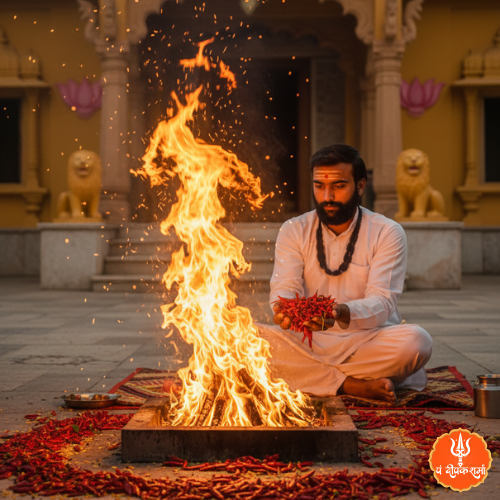
baglamukhi Havan is a sacred ritual dedicated to Devi Baglamukhi, one of the ten Mahavidyas, revered for her immense power to remove obstacles and grant victory over enemies. The word ‘Havan’ refers to the fire ritual where offerings are made to the divine through sacred fire. This ritual is not merely a ceremonial act; it is a profound spiritual practice that invokes the blessings of the goddess, seeking her grace to overcome adversities and attain success in various aspects of life.
In the context of Baglamukhi, the Havan is particularly significant for those facing legal challenges, conflicts, or seeking protection from adversaries. The essence of this ritual lies in its ability to purify the surroundings and the devotee’s mind, creating a conducive environment for divine blessings. It is a call to the goddess to intervene in one’s life, to bestow wisdom, strength, and clarity in times of distress.
As devotees gather around the sacred fire, they offer various items such as ghee, grains, and herbs, each symbolizing their prayers and intentions. The flames of the Havan symbolize the transformation of these offerings into spiritual energy, which is then directed towards the goddess, creating a powerful connection between the devotee and the divine.
How This Ritual Helps
The Baglamukhi Havan serves multiple purposes, primarily focusing on the removal of obstacles and the granting of victory in legal matters. When performed with devotion and sincerity, this ritual can help devotees navigate through challenging situations, especially those involving court cases or disputes. The divine energy invoked during the Havan is believed to provide clarity and strength, empowering the devotee to face their challenges with confidence.
Moreover, this ritual is not limited to just legal issues. It extends to various aspects of life, including career growth, protection from enemies, and overall well-being. The blessings of Devi Baglamukhi are sought to enhance one’s capabilities, ensuring that the devotee can overcome hurdles that may impede their progress. The ritual acts as a spiritual shield, safeguarding the devotee from negative influences and granting them the courage to pursue their goals.
In essence, the Baglamukhi Havan is a holistic approach to spiritual healing and empowerment. It fosters a sense of peace and assurance, allowing devotees to align themselves with the divine will and trust in the process of life. The transformative energy generated during the Havan can lead to positive changes, helping individuals manifest their desires and aspirations.
Mythological Background
The mythology surrounding Devi Baglamukhi is rich and profound, steeped in ancient texts and spiritual teachings. She is often depicted as a fierce goddess, embodying the power of speech and the ability to silence enemies. According to Hindu scriptures, Baglamukhi is known for her capacity to control and subdue adversaries, making her a protector of her devotees.
One of the most popular legends associated with her is the story of her battle against the demon Madan, who represented ignorance and negativity. The goddess, with her divine powers, subdued him, symbolizing the triumph of knowledge and righteousness over darkness. This victory is celebrated through rituals like the Baglamukhi Havan, where devotees seek her blessings to overcome their own demons, whether they be external adversaries or internal fears.
Furthermore, Baglamukhi is revered for her role in the spiritual journey of devotees. She is seen as a guide who helps individuals navigate through the complexities of life, offering wisdom and insight. Her teachings emphasize the importance of truth and integrity, encouraging devotees to remain steadfast in their pursuits. The Havan ritual is a means of connecting with this divine energy, allowing devotees to draw strength from her teachings and apply them in their lives.
Who Should Perform This
The Baglamukhi Havan is particularly beneficial for individuals facing legal challenges, conflicts, or those who feel overwhelmed by adversities in their lives. Anyone seeking protection from enemies, whether in personal or professional realms, can greatly benefit from this ritual. It is also recommended for those who wish to enhance their career prospects or achieve success in competitive examinations.
Moreover, this Havan is suitable for individuals who feel a strong connection to Devi Baglamukhi and wish to deepen their spiritual practice. It is a powerful way to invoke her blessings and seek her guidance in navigating life’s challenges. Families facing disputes or seeking harmony can also participate in this ritual as a collective effort to foster peace and understanding among members.
Ultimately, the Baglamukhi Havan is open to all devotees who approach it with sincerity and devotion. It is a sacred opportunity to connect with the divine, seek blessings, and transform one’s life through the grace of the goddess.
Step-by-Step Vidhi (Very Detailed)
The Vidhi for performing the Baglamukhi Havan is a sacred process that requires devotion and adherence to Vedic traditions. Here is a detailed step-by-step guide:
Preparation
Before commencing the Havan, it is essential to prepare the space. Clean the area where the Havan will take place, ensuring it is free from any distractions. Set up an altar with a picture or idol of Devi Baglamukhi, along with necessary items such as a Havan kund (fire pit), ghee, grains, herbs, and flowers. It is advisable to wear clean, traditional attire to maintain the sanctity of the ritual.
Invoking the Deity
Once the setup is complete, the next step is to invoke the presence of Devi Baglamukhi. Begin by lighting a lamp and offering flowers at her feet. Chant the Ganesh Vandana to seek the blessings of Lord Ganesha for the successful completion of the Havan. Follow this with the recitation of the Baglamukhi Gayatri Mantra to invite her divine energy into the space.
Performing the Havan
With the deity invoked, it is time to commence the Havan. Light the sacred fire in the Havan kund using dry wood and ghee. As the flames rise, offer the prepared items into the fire while chanting the specific mantras associated with the Baglamukhi Havan. Each offering should be made with a focused intention, visualizing the blessings being received from the goddess. Continue this process, maintaining a meditative state, and allowing the divine energy to envelop the space.
Concluding the Ritual
After the offerings are completed, conclude the Havan by performing aarti for Devi Baglamukhi. Express gratitude for her blessings and seek her continued guidance. It is customary to distribute prasad (blessed food) among participants, symbolizing the sharing of divine grace. Finally, ensure to clean the space and dispose of the remnants respectfully, acknowledging the sacredness of the ritual.
Mantra for This Ritual
The primary mantra associated with the Baglamukhi Havan is:
ॐ ह्लीं बगलामुखि सर्वविघ्न नाशाय ह्लीं
Transliteration: Om Hleem Baglamukhi Sarvavighna Nashaya Hleem
This mantra is a powerful invocation to Devi Baglamukhi, seeking her blessings to remove all obstacles and grant success in endeavors. The syllable ‘Hleem’ is a bija mantra, representing the essence of the goddess, while ‘Sarvavighna Nashaya’ translates to the removal of all hindrances. Reciting this mantra during the Havan amplifies the energy of the ritual, aligning the devotee’s intentions with the divine will.
Chanting this mantra with devotion creates a direct connection with the goddess, allowing her blessings to flow into the devotee’s life. It is essential to focus on the meaning of the mantra while reciting it, visualizing the removal of obstacles and the attainment of success. Regular recitation of this mantra can also serve as a protective shield against negative influences, fostering a sense of peace and assurance in the devotee’s life.
Do’s & Don’ts
When performing the Baglamukhi Havan, certain practices can enhance the effectiveness of the ritual, while others may hinder its spiritual benefits. Here are some important do’s and don’ts to consider:
Do’s
- Approach the ritual with a pure heart and sincere intentions.
- Maintain cleanliness in the space where the Havan is performed.
- Use fresh and pure materials for offerings, ensuring they are free from any impurities.
- Recite the mantras with focus and devotion, visualizing the blessings being received.
- Invite family members or close friends to participate, fostering a collective energy of devotion.
Don’ts
- Avoid distractions during the ritual; maintain a meditative state.
- Do not use stale or impure items for offerings.
- Refrain from engaging in negative thoughts or actions before or during the Havan.
- Do not rush through the ritual; allow time for each step to be performed with care.
- Do not neglect the post-Havan rituals, such as distributing prasad and expressing gratitude.
When to Perform
The Baglamukhi Havan can be performed at any time, but certain auspicious occasions enhance its effectiveness. It is particularly beneficial during the waxing phase of the moon (Shukla Paksha) and on specific festival days dedicated to Devi Baglamukhi. Performing the Havan on a Friday, which is considered auspicious for goddess worship, can also amplify the blessings received.
Additionally, it is advisable to perform the Havan when facing significant challenges, such as legal disputes or conflicts. This proactive approach allows devotees to seek divine intervention and guidance before entering into critical situations. Regular performance of the Havan can also serve as a preventive measure, ensuring protection and success in various endeavors.
Ultimately, the timing of the Havan should align with the devotee’s personal circumstances and spiritual needs. Consulting with a knowledgeable priest or spiritual guide can provide further insights into the most auspicious times for performing this sacred ritual.
How Pandit Deepak Sharma can help
Pandit Deepak Sharma, with his extensive experience in performing Baglamukhi rituals, offers authentic guidance and support for devotees seeking to perform the Havan. His deep understanding of Vedic traditions ensures that each ritual is conducted with precision and devotion, invoking the blessings of Devi Baglamukhi effectively.
By consulting with Pandit Deepak Sharma, devotees can receive personalized advice on the best practices for the Havan, including the appropriate materials, timings, and mantras. His presence during the ritual enhances the spiritual energy, creating a powerful atmosphere for divine blessings to flow. He also provides insights into the significance of each step, helping devotees connect more deeply with the ritual.
Furthermore, Pandit Deepak Sharma’s compassionate approach ensures that each devotee feels supported and guided throughout their spiritual journey. Whether facing legal challenges, seeking career growth, or simply wishing to deepen their connection with Devi Baglamukhi, his expertise can help devotees navigate their paths with confidence and clarity.
Nalkheda Temple Connection
The Nalkheda Temple, dedicated to Devi Baglamukhi, is a sacred site where devotees gather to seek blessings and perform rituals. This temple holds immense significance in the spiritual landscape of Madhya Pradesh, attracting pilgrims from far and wide. The temple’s serene environment and divine energy create an ideal setting for performing the Baglamukhi Havan.
Visiting the Nalkheda Temple allows devotees to immerse themselves in the spiritual atmosphere, enhancing the effectiveness of their rituals. The temple is known for its vibrant celebrations and festivals dedicated to Devi Baglamukhi, providing an opportunity for devotees to connect with the goddess and fellow worshippers.
Participating in the Havan at the temple, under the guidance of experienced priests like Pandit Deepak Sharma, ensures that the ritual is performed according to traditional Vedic practices. The collective energy of the temple and the devotion of fellow devotees amplify the blessings received, making it a powerful experience for anyone seeking the grace of Devi Baglamukhi.
FAQ
What is the significance of Baglamukhi Havan?
The Baglamukhi Havan holds profound significance in Hindu spirituality, primarily as a means to invoke the blessings of Devi Baglamukhi. This ritual is particularly beneficial for individuals facing obstacles, especially in legal matters. By performing the Havan, devotees seek the goddess’s grace to remove hindrances and achieve success in their endeavors. The sacred fire acts as a medium through which offerings are made, symbolizing the transformation of intentions into divine energy.
Moreover, the Havan fosters a sense of peace and clarity, allowing devotees to align themselves with the divine will. It serves as a spiritual shield, protecting individuals from negative influences and empowering them to face challenges with confidence. The collective energy generated during the ritual enhances its effectiveness, making it a powerful tool for spiritual growth and empowerment.
Can anyone perform the Baglamukhi Havan?
Yes, the Baglamukhi Havan is open to all devotees who approach it with sincerity and devotion. It is particularly beneficial for individuals facing legal challenges, conflicts, or those seeking protection from adversaries. Families experiencing disputes can also participate collectively to foster harmony and understanding among members. The ritual is a sacred opportunity to connect with Devi Baglamukhi and seek her blessings for overcoming obstacles and achieving success.
While anyone can perform the Havan, it is advisable to consult with a knowledgeable priest or spiritual guide, such as Pandit Deepak Sharma, to ensure that the ritual is conducted according to Vedic traditions. His guidance can enhance the spiritual energy of the Havan, making it more effective in invoking the blessings of the goddess.
What materials are needed for the Havan?
Performing the Baglamukhi Havan requires specific materials that are essential for the ritual. These typically include ghee, grains, herbs, flowers, and a Havan kund (fire pit). Each item holds symbolic significance and is used to make offerings to the goddess during the ritual. Fresh and pure materials should be used to maintain the sanctity of the Havan.
Additionally, it is important to have a picture or idol of Devi Baglamukhi to invoke her presence during the ritual. Other items such as a lamp, incense sticks, and a bell may also be included to enhance the spiritual atmosphere. Ensuring that all materials are prepared in advance allows for a smooth and focused execution of the Havan.
How long does the Havan take?
The duration of the Baglamukhi Havan can vary depending on the specific practices followed and the number of offerings made. Generally, the ritual can take anywhere from one to two hours. It is essential to allow ample time for each step to be performed with care and devotion, ensuring that the energy of the ritual is fully realized.
While the time taken may vary, the focus should be on the quality of the ritual rather than the duration. Engaging in the Havan with a meditative mindset and sincere intentions is what truly enhances its effectiveness. Consulting with a priest can provide further insights into the expected duration based on individual circumstances and practices.
Is it necessary to have a priest for the Havan?
While it is possible for individuals to perform the Baglamukhi Havan on their own, having a knowledgeable priest, such as Pandit Deepak Sharma, can greatly enhance the experience. A priest brings expertise in Vedic traditions, ensuring that the ritual is conducted accurately and effectively. Their presence can amplify the spiritual energy of the Havan, creating a more powerful connection with Devi Baglamukhi.
Moreover, a priest can provide personalized guidance on the best practices for the Havan, including the appropriate materials, timings, and mantras. This support can help devotees navigate the ritual with confidence, allowing them to focus on their intentions and prayers. Ultimately, while it is not mandatory to have a priest, their involvement can significantly enrich the spiritual experience.
Recommended Reading / Further Exploration
- Baglamukhi Havan for Court Case for Small Businesses: Practical Implementation
- Baglamukhi Anushthan Online Booking: Everything You Need to Know
- Advanced Concepts of Deepak Guruji Baglamukhi (Explained Clearly)
- How to Use Baglamukhi Puja by Deepak Sharma for Better Results
- How to Use Baglamukhi Mandir Nalkheda Pooja for Better Results