Introduction
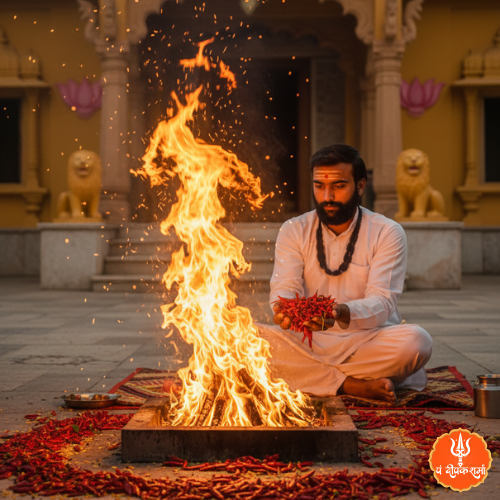
Baglamukhi Havan is a revered ritual dedicated to Devi Baglamukhi, one of the ten Mahavidyas in Hindu tradition. This havan is performed to invoke the divine blessings of the goddess, who is known for her power to remove obstacles, grant wisdom, and provide protection against adversaries. The ritual is not just a ceremonial act; it is a profound spiritual practice that connects devotees with divine energies, enabling them to overcome challenges in various aspects of life, including career, education, and personal conflicts.
The significance of Baglamukhi Havan extends beyond mere ritualistic offerings. It embodies the essence of devotion, surrender, and the quest for spiritual enlightenment. By performing this havan, devotees seek the goddess’s grace to achieve success in their endeavors, particularly in situations involving legal disputes, competitive exams, and business challenges. The sacred fire symbolizes the transformation of negative energies into positive outcomes, making it a powerful tool for spiritual and material growth.
In this comprehensive guide, we will delve into the meaning and symbolism of Baglamukhi Havan, explore its mythological background, provide a detailed step-by-step vidhi for performing the ritual, and discuss the appropriate mantras to chant. Additionally, we will cover the do’s and don’ts, the ideal timings for the ritual, and the connection to the Nalkheda Temple, where the goddess is worshipped with utmost reverence.
Meaning of This Ritual
The term ‘Havan’ refers to a fire ritual where offerings are made into the sacred fire, symbolizing the surrender of one’s desires and intentions to the divine. In the context of Baglamukhi Havan, this ritual is particularly significant as it is believed to invoke the goddess’s blessings for overcoming obstacles and achieving success. The act of offering materials into the fire represents the purification of one’s thoughts and intentions, aligning them with divine will.
Baglamukhi, whose name translates to ‘the one who speaks with a golden tongue,’ is associated with eloquence, wisdom, and the power to silence adversaries. The havan is performed to seek her blessings for clarity in communication, victory in disputes, and the removal of negative influences. The ritual is steeped in symbolism, where each offering made into the fire is a prayer for guidance and protection.
Furthermore, the havan serves as a reminder of the transient nature of material desires. By engaging in this ritual, devotees learn to focus on their spiritual growth while seeking the goddess’s assistance in their worldly affairs. It is a harmonious blend of devotion and practical spirituality, encouraging individuals to strive for excellence while remaining grounded in their faith.
How This Ritual Helps
Baglamukhi Havan is particularly beneficial for individuals facing challenges in various aspects of life. Whether it is a legal battle, competitive exams, or business hurdles, this ritual is believed to provide the necessary strength and clarity to navigate through difficulties. The goddess’s blessings are sought to ensure victory over adversaries and to enhance one’s intellectual capabilities.
In the realm of legal disputes, the havan serves as a powerful tool for those seeking justice. The mantra associated with this ritual helps in silencing opposition and securing favorable outcomes in court cases. By performing the havan with sincerity and devotion, devotees are believed to attract the goddess’s grace, which can lead to unexpected resolutions and triumphs.
For students and professionals, Baglamukhi Havan is a source of inspiration and focus. The ritual is known to enhance concentration, boost confidence, and improve decision-making abilities. As individuals seek the goddess’s blessings for wisdom, they often find themselves better equipped to tackle challenges in their academic and professional pursuits.
Mythological Background
The mythology surrounding Devi Baglamukhi is rich and profound, reflecting her significance in Hindu tradition. She is often depicted as a radiant goddess, seated on a tiger, holding a tongue in her hand, symbolizing her power to control speech and silence adversaries. According to ancient texts, she emerged from the collective energies of the gods during a battle against demons, embodying the divine feminine force that protects and empowers her devotees.
One of the most notable legends associated with Baglamukhi involves her intervention in a fierce battle between the gods and demons. As the demons wreaked havoc, the gods sought her assistance to regain their strength. With her divine powers, Baglamukhi not only silenced the demons but also empowered the gods to reclaim their rightful place. This story illustrates her role as a protector and a source of strength for those who seek her blessings.
Another significant aspect of her mythology is her association with knowledge and wisdom. Baglamukhi is revered as a goddess who bestows intelligence and clarity of thought upon her devotees. This aspect is particularly relevant for students and professionals, as her blessings are believed to enhance cognitive abilities and facilitate success in intellectual pursuits.
Throughout history, devotees have turned to Baglamukhi for guidance in overcoming obstacles and achieving their goals. Her worship is deeply rooted in the belief that through sincere devotion and the performance of rituals like the Baglamukhi Havan, individuals can harness her divine energy to transform their lives.
Who Should Perform This
Baglamukhi Havan is recommended for individuals facing challenges in various spheres of life. Those involved in legal disputes, competitive examinations, or business ventures can greatly benefit from this ritual. It is particularly beneficial for individuals seeking to enhance their communication skills, gain clarity in decision-making, and overcome obstacles posed by adversaries.
Students preparing for exams or professionals facing career challenges are encouraged to perform this havan to seek the goddess’s blessings for wisdom and success. The ritual serves as a spiritual anchor, providing strength and confidence to navigate through uncertainties. Additionally, individuals experiencing conflicts in personal or professional relationships may find solace in this ritual, as it aids in resolving disputes and fostering harmony.
Moreover, anyone seeking spiritual growth and a deeper connection with the divine can engage in Baglamukhi Havan. The ritual is not limited to specific circumstances; it is a means of expressing devotion and surrendering one’s intentions to the goddess. By performing this havan, devotees open themselves to receiving divine guidance and support in their life journeys.
Step-by-Step Vidhi (Very Detailed)
Preparation for the Havan
Before commencing the Baglamukhi Havan, it is essential to prepare the sacred space. Choose a clean and quiet area where the havan can be performed without disturbances. Gather all necessary materials, including the havan kund (fire pit), ghee (clarified butter), wood, and offerings such as grains, flowers, and fruits. It is advisable to take a bath and wear clean clothes to purify oneself before the ritual.
Set up the havan kund in the east direction, as it is considered auspicious. Place a picture or idol of Devi Baglamukhi in front of the kund. Decorate the space with flowers and light a lamp to create a divine atmosphere. The presence of a pure heart and focused mind is crucial for the success of the ritual.
Invoking the Deity
Once the preparations are complete, begin the ritual by invoking the presence of Devi Baglamukhi. Light the sacred fire in the havan kund using dry wood and ghee. As the flames rise, chant the mantra “ॐ ह्लीं बगलामुखि सर्वविघ्न नाशाय ह्लीं” (Om Hleem Baglamukhi Sarva Vighna Nashaya Hleem) to invite the goddess’s energy into the space. This mantra is a powerful invocation that seeks to eliminate all obstacles and challenges.
As the fire burns, offer ghee into the flames while continuing to chant the mantra. The act of offering symbolizes the surrender of one’s intentions to the goddess. It is important to maintain a focused mind and heartfelt devotion during this process. Visualize the goddess’s blessings enveloping you and your intentions being fulfilled.
Offering Materials
After invoking the deity, begin offering the materials into the fire. Start with grains, followed by flowers and fruits. Each offering should be accompanied by a prayer or intention. For instance, while offering grains, one can pray for prosperity and abundance. As you offer flowers, express gratitude for the blessings received. This process of offering is a significant aspect of the havan, as it reinforces the connection between the devotee and the divine.
Continue to chant the mantra throughout the offering process. The repetition of the mantra helps in focusing the mind and amplifying the energy of the ritual. It is advisable to maintain a calm and serene atmosphere, allowing the divine energies to flow freely.
Concluding the Havan
Once all offerings have been made, conclude the havan by performing aarti (light offering) to Devi Baglamukhi. Use a diya (lamp) and move it in a circular motion in front of the goddess’s idol or picture. Sing devotional songs or hymns dedicated to the goddess during this time. This act of aarti signifies the completion of the ritual and expresses gratitude for the blessings received.
Finally, distribute the prasad (blessed offerings) among family members and friends. Consuming prasad is considered auspicious and is believed to carry the goddess’s blessings. It is essential to conclude the ritual with a sense of gratitude and devotion, acknowledging the divine presence in your life.
Mantra for This Ritual
The primary mantra associated with Baglamukhi Havan is “ॐ ह्लीं बगलामुखि सर्वविघ्न नाशाय ह्लीं” (Om Hleem Baglamukhi Sarva Vighna Nashaya Hleem). This mantra is a powerful invocation that seeks the goddess’s assistance in removing all obstacles and challenges faced by the devotee.
In the context of the havan, the mantra serves multiple purposes. Firstly, it is an invocation that calls upon the goddess’s energy to bless the ritual. Secondly, it acts as a means of focusing the mind and intentions of the devotee. The repetition of the mantra during the havan amplifies its potency, creating a sacred atmosphere conducive to spiritual growth and transformation.
The meaning of the mantra can be understood as follows: ‘Om’ represents the universal sound, ‘Hleem’ is a seed syllable associated with Baglamukhi, and ‘Sarva Vighna Nashaya’ translates to ‘removal of all obstacles.’ Thus, the mantra encapsulates the essence of the ritual, emphasizing the devotee’s desire for divine intervention in overcoming challenges.
Chanting this mantra with sincerity and devotion is believed to attract the goddess’s blessings, leading to positive outcomes in various aspects of life. It is advisable to chant the mantra with a focused mind and a pure heart, allowing the divine energies to flow through the devotee.
Do’s & Don’ts
Do’s
- Perform the havan with a pure heart and focused mind.
- Use fresh and pure materials for offerings.
- Maintain cleanliness in the sacred space.
- Chant the mantra with devotion and sincerity.
- Express gratitude to the goddess after the ritual.
Don’ts
- Avoid distractions during the ritual.
- Do not use stale or impure materials for offerings.
- Refrain from negative thoughts or intentions.
- Do not rush through the ritual; take your time to connect with the divine.
- Avoid speaking ill of others during the havan.
When to Perform
Baglamukhi Havan can be performed on any auspicious day, but certain timings are considered particularly favorable. Performing the havan on a Monday or during the waxing phase of the moon is believed to enhance its effectiveness. Additionally, auspicious festivals dedicated to Devi Baglamukhi, such as Navratri, are ideal times for conducting this ritual.
It is also beneficial to perform the havan when facing significant challenges or transitions in life. For instance, if one is preparing for an important examination, experiencing legal issues, or embarking on a new business venture, conducting the havan during these times can provide the necessary support and blessings from the goddess.
Ultimately, the best time to perform Baglamukhi Havan is when the devotee feels a strong connection to the goddess and is ready to surrender their intentions. The sincerity of the devotee’s heart is what truly matters in this sacred ritual.
Nalkheda Temple Connection
The Nalkheda Baglamukhi Temple, located in the Agar Malwa district of Madhya Pradesh, is a significant pilgrimage site for devotees of Devi Baglamukhi. The temple is renowned for its spiritual ambiance and the powerful energy that envelops the premises. Many devotees visit the temple to seek the goddess’s blessings and perform rituals, including Baglamukhi Havan.
The temple is a center of devotion, attracting individuals from various walks of life who come to experience the divine presence of Baglamukhi. The rituals performed here are steeped in tradition, and the temple priests, led by Pandit Deepak Sharma, ensure that every ceremony is conducted with utmost reverence and adherence to Vedic principles.
Visiting the Nalkheda Temple and participating in the Baglamukhi Havan allows devotees to immerse themselves in the spiritual energy of the goddess. The temple serves as a reminder of the divine support available to those who seek it, reinforcing the belief that through sincere devotion, one can overcome obstacles and achieve success.
FAQ
What is the significance of Baglamukhi Havan?
Baglamukhi Havan holds immense significance in Hindu tradition as it is performed to invoke the blessings of Devi Baglamukhi, who is revered for her power to remove obstacles and grant wisdom. The ritual serves as a means of connecting with the divine, allowing devotees to seek guidance and support in their endeavors. It is particularly beneficial for those facing challenges in legal matters, competitive exams, or business ventures, as the goddess’s blessings are believed to facilitate success and victory over adversaries.
How can I prepare for Baglamukhi Havan?
Preparing for Baglamukhi Havan involves creating a sacred space and gathering all necessary materials. Choose a clean area where the havan can be performed without disturbances. Gather items such as the havan kund, ghee, wood, and offerings like grains and flowers. It is essential to purify oneself by taking a bath and wearing clean clothes before the ritual. Setting up the havan kund in the east direction and placing a picture or idol of Devi Baglamukhi enhances the auspiciousness of the ritual.
Can anyone perform Baglamukhi Havan?
Yes, anyone can perform Baglamukhi Havan, regardless of their background or experience. The ritual is accessible to all who seek the blessings of Devi Baglamukhi. However, it is important to approach the ritual with sincerity and devotion. Those facing challenges in their lives, such as legal disputes or academic pressures, may find particular benefit in performing this havan. Engaging in the ritual with a pure heart and focused intentions is key to its effectiveness.
What materials are needed for the havan?
The materials required for Baglamukhi Havan include the havan kund (fire pit), ghee (clarified butter), wood for the fire, and offerings such as grains, flowers, and fruits. It is important to use fresh and pure materials to ensure the sanctity of the ritual. Additionally, having a diya (lamp) for the aarti and a picture or idol of Devi Baglamukhi is essential for invoking her presence during the havan.
When is the best time to perform Baglamukhi Havan?
Baglamukhi Havan can be performed on any auspicious day, but certain timings are considered particularly favorable. Mondays and the waxing phase of the moon are ideal for conducting the ritual. Festivals dedicated to Devi Baglamukhi, such as Navratri, also present excellent opportunities for performing the havan. Ultimately, the best time to perform the ritual is when the devotee feels a strong connection to the goddess and is ready to surrender their intentions.
What should I do after completing the havan?
After completing the Baglamukhi Havan, it is customary to perform aarti (light offering) to Devi Baglamukhi, expressing gratitude for the blessings received. Distributing the prasad (blessed offerings) among family members and friends is also an important aspect of the ritual. Consuming prasad is considered auspicious and is believed to carry the goddess’s blessings. Concluding the ritual with a sense of gratitude and devotion reinforces the connection with the divine and acknowledges the support received during the ritual.