Meaning of This Ritual
baglamukhi Anushthan is a sacred ritual dedicated to Devi Baglamukhi, one of the revered Mahavidyas in Hindu tradition. This anushthan is performed to invoke the divine blessings of the goddess, who is known for her power to control and subdue enemies, ensuring victory in legal matters and personal conflicts. The term ‘anushthan’ signifies a disciplined and dedicated performance of rituals, aimed at achieving specific spiritual goals. Through this practice, devotees seek the grace of Baglamukhi Mata to overcome obstacles and attain success in their endeavors.
The essence of Baglamukhi Anushthan lies in its ability to channel divine energies that help devotees navigate through life’s challenges. It is believed that the goddess not only provides protection but also empowers individuals to face adversities with courage and wisdom. The rituals involved are meticulously designed to align the devotee’s intentions with the cosmic energies, fostering a deep spiritual connection with the divine.
In essence, this anushthan serves as a bridge between the devotee and the divine, facilitating a transformative experience that nurtures spiritual growth and personal empowerment. It is a profound expression of devotion, where the practitioner dedicates themselves to the service of the goddess, seeking her blessings for clarity, strength, and victory.
How This Ritual Helps
Baglamukhi Anushthan is particularly beneficial for those facing legal challenges, conflicts with adversaries, or obstacles in their professional lives. The ritual is designed to invoke the protective energies of Devi Baglamukhi, who is known for her ability to neutralize negativity and ensure justice prevails. By performing this anushthan, devotees often experience a sense of relief from their burdens, as the goddess’s blessings help to clear the path towards resolution and success.
Moreover, the anushthan instills a sense of confidence and inner strength in the devotee. It empowers them to confront their fears and challenges with a renewed spirit. The rituals performed during this anushthan are not merely ceremonial; they are imbued with deep spiritual significance that resonates with the practitioner’s intentions, fostering a sense of alignment with their higher purpose.
Additionally, the collective energy generated during the performance of Baglamukhi Anushthan can have a far-reaching impact, not just on the individual but also on their family and community. It is believed that the blessings of the goddess can extend to loved ones, providing them with protection and guidance in their own lives, thus creating a ripple effect of positivity and strength.
Mythological Background
The mythology surrounding Devi Baglamukhi is rich and profound, rooted in ancient texts and traditions. She is often depicted as a beautiful goddess, adorned with a golden crown and holding a tongue of a demon, symbolizing her power to control speech and silence adversaries. According to the scriptures, Baglamukhi is one of the ten Mahavidyas, each representing a different aspect of the divine feminine energy.
One of the most significant legends associated with Baglamukhi narrates how she helped the gods defeat the demons during a fierce battle. The demons, who were wreaking havoc in the universe, were subdued by the goddess’s divine intervention. This act of valor not only established her as a formidable force against evil but also highlighted her role as a protector of righteousness and justice.
In the context of Baglamukhi Anushthan, this mythological background serves as a source of inspiration and strength for devotees. By invoking the goddess’s name and performing the rituals, practitioners align themselves with her divine qualities, seeking her blessings for victory over their personal battles. The stories of her valor and compassion resonate deeply, encouraging devotees to trust in her power and grace.
Who Should Perform This
Baglamukhi Anushthan is particularly recommended for individuals facing legal issues, conflicts with enemies, or those seeking protection from negative influences. It is also beneficial for professionals who feel stuck in their careers or are facing obstacles in their personal lives. Anyone who wishes to invoke the divine blessings of Devi Baglamukhi for clarity, strength, and victory can participate in this sacred ritual.
Moreover, this anushthan is suitable for those who are on a spiritual journey, seeking to deepen their connection with the divine feminine energy. It is an opportunity for devotees to express their devotion and commitment to the goddess, fostering a sense of community and shared purpose among participants.
In essence, anyone who feels the need for divine intervention in their lives, whether in personal, professional, or spiritual matters, can benefit from performing Baglamukhi Anushthan. It is a powerful means of seeking guidance and support from the goddess, who is always ready to assist her devotees in their times of need.
Step-by-Step Vidhi (Very Detailed)
The performance of Baglamukhi Anushthan involves a series of sacred rituals that must be followed with devotion and precision. The following is a detailed step-by-step procedure for conducting this anushthan:
Preparation
Begin by selecting an auspicious date and time for the anushthan, preferably on a Tuesday or Friday, as these days are considered favorable for invoking the blessings of Baglamukhi. Cleanse the space where the rituals will be performed, ensuring it is free from any distractions. Set up an altar with a picture or idol of Devi Baglamukhi, adorned with flowers, fruits, and other offerings.
Invocation
Start the ritual by performing a Sankalp, which is a declaration of intent. This involves mentally focusing on your desires and stating your purpose for the anushthan. Light a diya (lamp) and incense sticks, creating a sacred atmosphere. Offer water to the goddess as a symbol of purity and devotion.
Recitation of Mantras
Begin chanting the specific mantras dedicated to Baglamukhi. The mantra for this anushthan is: ॐ ह्लीं बगलामुखि सर्वविघ्न नाशाय ह्लीं. This mantra is believed to remove all obstacles and grant victory over adversaries. Chant this mantra with sincerity and focus, ideally for a duration of 108 times, using a mala (prayer beads) to keep count.
Havan (Fire Ritual)
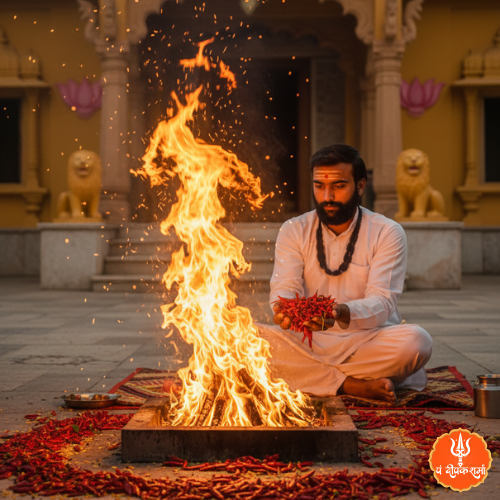
Prepare for the Havan by gathering the necessary materials, including ghee, samagri (a mixture of herbs and grains), and wood for the fire. Light the fire in a Havan kund (sacred fire pit) and offer the samagri into the flames while continuing to chant the mantra. This act of offering symbolizes surrendering your challenges to the divine, allowing the goddess to take control and provide assistance.
Conclusion of Ritual
After completing the Havan, offer a final prayer to Devi Baglamukhi, expressing gratitude for her blessings. Distribute prasad (blessed food) among family and friends, sharing the divine energy and blessings received during the anushthan. It is essential to maintain a sense of devotion and humility throughout the process, recognizing the power of the goddess in your life.
Mantra for This Ritual
The mantra specifically associated with Baglamukhi Anushthan is: ॐ ह्लीं बगलामुखि सर्वविघ्न नाशाय ह्लीं. This powerful mantra is a call to the goddess to remove all obstacles and grant victory over adversaries. The syllable ‘ॐ’ represents the universal sound, invoking the essence of the divine. ‘ह्लीं’ is a seed mantra that embodies the energy of Baglamukhi, while ‘सर्वविघ्न नाशाय’ translates to the removal of all obstacles.
Chanting this mantra with devotion and focus can create a profound connection with the goddess, allowing her blessings to flow into the devotee’s life. It is recommended to chant this mantra during the anushthan, especially during the Havan, as the fire symbolizes transformation and purification. The vibrations created by the mantra resonate with the energies of the universe, aligning the devotee’s intentions with the divine will.
Incorporating this mantra into daily prayers can also enhance the devotee’s spiritual practice, fostering a deeper connection with Devi Baglamukhi. Regular chanting can help cultivate a sense of peace, clarity, and strength, empowering individuals to face challenges with confidence and grace.
Do’s & Don’ts
When performing Baglamukhi Anushthan, there are certain do’s and don’ts that devotees should keep in mind to ensure the ritual’s effectiveness:
Do’s
- Perform the anushthan with a pure heart and sincere intentions.
- Maintain cleanliness in the space where the rituals are conducted.
- Offer fresh flowers and fruits to the goddess as a symbol of devotion.
- Chant the mantra with focus and dedication, ideally using a mala.
- Share prasad with family and friends after the ritual to spread the blessings.
Don’ts
- Avoid performing the anushthan in a cluttered or noisy environment.
- Do not engage in negative thoughts or actions during the ritual.
- Refrain from consuming non-vegetarian food or alcohol before and during the anushthan.
- Do not rush through the rituals; take your time to connect with the divine.
- Avoid distractions such as mobile phones or television during the performance.
When to Perform
Baglamukhi Anushthan can be performed at any time, but certain periods are considered more auspicious. The most favorable times include the lunar months of Chaitra and Ashwin, particularly during the Navratri festival when the energies of the goddess are believed to be heightened. Tuesdays and Fridays are also regarded as ideal days for performing this anushthan, as they are associated with the divine feminine energy.
Additionally, it is beneficial to perform this anushthan during times of personal crisis or when facing legal challenges. Devotees often choose to conduct the ritual when they feel overwhelmed by obstacles or adversaries, seeking the goddess’s intervention and support. The key is to approach the anushthan with a sincere heart and a focused mind, regardless of the timing.
Ultimately, the best time to perform Baglamukhi Anushthan is when the devotee feels a deep calling to connect with the goddess, seeking her blessings for guidance and protection in their lives.
Nalkheda Temple Connection
The Nalkheda Baglamukhi Temple, located in the Agar Malwa district of Madhya Pradesh, is a significant pilgrimage site for devotees of Devi Baglamukhi. This temple is renowned for its spiritual ambiance and the powerful energies that resonate within its premises. Many devotees travel to this sacred site to perform Baglamukhi Anushthan, seeking the blessings of the goddess in person.
The temple is not only a place of worship but also a center for various rituals and ceremonies dedicated to Baglamukhi. Pilgrims often participate in collective anushthans, fostering a sense of community and shared devotion. The temple’s priests, led by Pandit Deepak Sharma, are well-versed in the traditional Vedic practices, ensuring that the rituals are performed with authenticity and reverence.
Visiting the Nalkheda Temple for Baglamukhi Anushthan is a deeply enriching experience, allowing devotees to immerse themselves in the divine energies of the goddess. The temple serves as a beacon of hope and strength, guiding individuals on their spiritual journeys and providing them with the support they seek in times of need.
FAQ
What is Baglamukhi Anushthan?
Baglamukhi Anushthan is a sacred ritual dedicated to Devi Baglamukhi, aimed at invoking her blessings for overcoming obstacles and achieving victory in various aspects of life. It involves a series of Vedic rituals, including mantra chanting and Havan, performed with devotion and sincerity. The anushthan is particularly beneficial for those facing legal challenges or conflicts with enemies, providing spiritual support and guidance.
How does Baglamukhi Anushthan help in legal matters?
The ritual is designed to invoke the protective energies of Devi Baglamukhi, who is known for her ability to control and subdue adversaries. By performing this anushthan, devotees seek the goddess’s intervention in their legal affairs, aiming for justice and resolution. The energy generated during the rituals is believed to create a favorable environment for the devotee, helping them navigate through legal challenges with confidence.
Can anyone perform Baglamukhi Anushthan?
Yes, Baglamukhi Anushthan can be performed by anyone seeking the blessings of the goddess. It is particularly recommended for individuals facing legal issues, conflicts, or those seeking protection from negative influences. The anushthan is open to all devotees who wish to deepen their connection with Devi Baglamukhi and seek her guidance in their lives.
What is the significance of the mantra used in this anushthan?
The mantra ॐ ह्लीं बगलामुखि सर्वविघ्न नाशाय ह्लीं is a powerful invocation to Devi Baglamukhi, aimed at removing obstacles and granting victory. Each syllable of the mantra holds deep spiritual significance, resonating with the energies of the goddess. Chanting this mantra with devotion helps to align the devotee’s intentions with the divine will, fostering a strong connection with the goddess.
When is the best time to perform Baglamukhi Anushthan?
While Baglamukhi Anushthan can be performed at any time, auspicious periods include the lunar months of Chaitra and Ashwin, particularly during the Navratri festival. Tuesdays and Fridays are also considered favorable days for conducting this ritual. Ultimately, the best time is when the devotee feels a deep calling to connect with the goddess and seek her blessings.
How can I get my Baglamukhi Anushthan performed?
For proper Vedic guidance or to get your Baglamukhi pooja or havan done with traditional vidhi, you may contact Pandit Deepak Sharma (Nalkheda). He is experienced in performing Baglamukhi rituals as per Vedic tradition, ensuring authenticity and spiritual integrity.
Recommended Reading / Further Exploration
- Understanding Baglamukhi Havan: A Ritual for Career Advancement
- How to Use Baglamukhi Specialist Deepak Sharma for Better Results
- How to Use Baglamukhi Havan Cost for Better Results
- Deepak Sharma Puja Charges for Small Businesses: Practical Implementation
- Advanced Concepts of Baglamukhi Mandir Nalkheda Pooja (Explained Clearly)