Meaning of This Ritual
The baglamukhi Anushthan is a revered spiritual practice dedicated to Devi Baglamukhi, one of the ten Mahavidyas in Hindu tradition. This ritual is performed to invoke the divine blessings of the goddess, who is known for her power to remove obstacles, grant victory, and provide protection from adversaries. The term ‘Anushthan’ signifies a disciplined and dedicated approach to worship, emphasizing the importance of devotion and sincerity in the practice. Through this ritual, devotees seek not only material benefits but also spiritual growth and enlightenment.
In essence, the Baglamukhi Anushthan is a comprehensive spiritual endeavor that involves specific rituals, mantras, and offerings designed to please the goddess. It is believed that by performing this Anushthan with utmost faith and devotion, one can overcome challenges in various aspects of life, including legal issues, career obstacles, and personal conflicts. The ritual serves as a means to align oneself with the divine energies of Baglamukhi, fostering a sense of peace, clarity, and strength.
Moreover, the Anushthan is often accompanied by the chanting of powerful mantras that resonate with the energies of the goddess. These mantras are not merely words but are imbued with spiritual significance, capable of transforming the devotee’s circumstances and invoking divine intervention. The process of performing the Baglamukhi Anushthan is a sacred journey that deepens one’s connection with the divine and enhances one’s spiritual practice.
How This Ritual Helps
The Baglamukhi Anushthan is known for its multifaceted benefits, addressing both material and spiritual needs of the devotees. One of the primary benefits is the removal of obstacles and challenges that hinder progress in life. Whether it is a court case, career stagnation, or personal conflicts, the blessings of Baglamukhi can pave the way for resolution and success. Devotees often report experiencing a sense of relief and clarity after performing this ritual, as it helps to dispel negativity and confusion.
Additionally, this Anushthan is particularly effective for those facing legal issues. The divine energy of Baglamukhi is believed to provide protection and guidance during legal proceedings, ensuring that justice prevails. The mantra associated with this ritual, “ॐ ह्लीं वाद-विजयाय ह्लीं फट्,” is specifically designed to invoke victory in legal matters. By chanting this mantra with devotion, devotees can attract the goddess’s blessings, leading to favorable outcomes in court.
Furthermore, the Baglamukhi Anushthan enhances one’s overall spiritual well-being. It fosters a deeper connection with the divine, promoting inner peace and harmony. The ritual encourages self-reflection and personal growth, allowing devotees to align their actions with their higher purpose. As a result, participants often find themselves more resilient in the face of challenges, equipped with the strength and wisdom to navigate life’s complexities.
Mythological Background
The mythology surrounding Devi Baglamukhi is rich and profound, reflecting her significance in Hindu tradition. According to ancient texts, Baglamukhi is considered the goddess of speech and communication, embodying the power to silence enemies and protect devotees from harm. She is often depicted seated on a throne, holding a tongue of a demon, symbolizing her ability to control and subdue negativity.
One of the most famous legends associated with Baglamukhi narrates the story of her intervention during a fierce battle between the gods and demons. The gods, overwhelmed by the demons’ strength, invoked the goddess’s assistance. In response, Baglamukhi manifested her divine power, silencing the demons and granting victory to the gods. This mythological tale underscores her role as a protector and a source of strength for those who seek her blessings.
Moreover, Baglamukhi is revered as a goddess of knowledge and wisdom. She is believed to bestow clarity of thought and the ability to articulate one’s desires effectively. This aspect of her persona is particularly relevant for those facing challenges in communication, whether in personal relationships or professional settings. The Baglamukhi Anushthan, therefore, not only seeks her blessings for overcoming obstacles but also for enhancing one’s ability to express oneself and achieve success.
Who Should Perform This
The Baglamukhi Anushthan is suitable for anyone seeking to overcome challenges in their life, regardless of their background or circumstances. However, it is particularly beneficial for individuals facing legal issues, career obstacles, or conflicts with adversaries. Those who feel overwhelmed by negativity or are in need of protection from harmful influences will find solace in this ritual.
Moreover, students preparing for competitive exams or individuals seeking clarity in their communication can also benefit from the Baglamukhi Anushthan. The goddess’s blessings are believed to enhance focus, intelligence, and the ability to articulate thoughts effectively. Therefore, anyone who wishes to improve their academic or professional prospects should consider performing this ritual.
Additionally, the Anushthan is ideal for those on a spiritual journey, seeking to deepen their connection with the divine. It serves as a powerful tool for self-reflection and personal growth, allowing devotees to align their intentions with their higher purpose. Ultimately, anyone with a sincere heart and a desire to invoke the blessings of Devi Baglamukhi can perform this sacred ritual.
Step-by-Step Vidhi (Very Detailed)
Performing the Baglamukhi Anushthan requires careful adherence to Vedic rituals and guidelines. The following steps outline the process:
Preparation
Begin by selecting an auspicious date for the Anushthan, preferably on a Wednesday or during a favorable lunar phase. Cleanse the space where the ritual will take place, ensuring it is free from any distractions. Set up an altar dedicated to Devi Baglamukhi, adorned with flowers, fruits, and a picture or idol of the goddess. Prepare a sacred space by lighting a lamp and incense, creating an atmosphere conducive to worship.
Gathering Materials
Collect all necessary materials for the ritual, including yellow flowers, turmeric, raw sugar, and offerings for the goddess. Prepare a sacred thread (yajnopavita) to wear during the Anushthan, symbolizing purity and devotion. Ensure that you have the appropriate mantra texts and any other items required for the specific rituals you plan to perform.
Performing the Havan
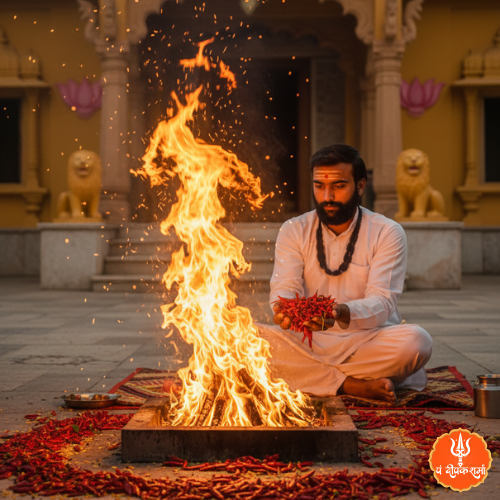
Begin the ritual by performing the Havan, a fire ceremony that is central to the Anushthan. Light the sacred fire in a designated havan kund and offer ghee, grains, and the prepared offerings into the flames while chanting the Baglamukhi mantra. This act symbolizes the surrender of one’s desires to the divine and the invocation of the goddess’s blessings. Continue the Havan for a prescribed duration, maintaining focus and devotion throughout the process.
Chanting Mantras
After the Havan, engage in the chanting of the Baglamukhi mantra, “ॐ ह्लीं बगलामुखि सर्वविघ्न नाशाय ह्लीं.” Repeat this mantra with sincerity and concentration, visualizing the goddess’s presence and seeking her blessings. It is recommended to chant the mantra a specific number of times, such as 108, to enhance its potency. This repetition deepens the connection with the divine and reinforces the intentions behind the Anushthan.
Offering Prasad
Conclude the ritual by offering prasad to the goddess, which may include sweets or fruits. This act symbolizes gratitude and devotion, acknowledging the blessings received during the Anushthan. Share the prasad with family and friends, spreading the divine energy and goodwill generated through the ritual.
Post-Ritual Reflection
After completing the Anushthan, take a moment for personal reflection and meditation. Express gratitude to Devi Baglamukhi for her blessings and guidance. This period of introspection allows devotees to internalize the experiences of the ritual and reinforces the commitment to align their actions with their spiritual goals.
Mantra for This Ritual
The mantra associated with the Baglamukhi Anushthan is of utmost importance, as it serves as a direct invocation to the goddess. The primary mantra is:
ॐ ह्लीं बगलामुखि सर्वविघ्न नाशाय ह्लीं
Transliteration: Om Hleem Baglamukhi Sarva Vighna Nashaya Hleem
This mantra translates to: “Om, I invoke Baglamukhi, the remover of all obstacles.” The syllable ‘Hleem’ is a powerful seed sound that resonates with the energies of the goddess, enhancing the effectiveness of the mantra. By chanting this mantra with devotion, devotees seek to eliminate barriers in their lives and attract the blessings of success and protection.
The significance of this mantra lies in its ability to connect the devotee with the divine essence of Baglamukhi. Each repetition serves as a reminder of the goddess’s power and presence, reinforcing the intention behind the Anushthan. It is essential to approach the chanting with sincerity, focusing on the desired outcomes while maintaining a humble heart.
Do’s & Don’ts
To ensure the effectiveness of the Baglamukhi Anushthan, it is crucial to adhere to certain guidelines. Here are some do’s and don’ts to consider:
Do’s
- Perform the Anushthan with a pure heart and sincere intentions.
- Maintain cleanliness in the ritual space and personal attire.
- Use fresh flowers and offerings for the goddess.
- Chant the mantra with focus and devotion, ideally in a quiet environment.
- Share the prasad with family and friends to spread the blessings.
Don’ts
- Avoid performing the ritual in a hurried or distracted manner.
- Do not use stale or wilted offerings for the goddess.
- Refrain from consuming non-vegetarian food or alcohol during the Anushthan.
- Do not engage in negative thoughts or actions while performing the ritual.
- Avoid discussing the Anushthan with those who may not understand its significance.
When to Perform
The Baglamukhi Anushthan can be performed at any time, but certain auspicious occasions enhance its effectiveness. Wednesdays are particularly favorable, as they are dedicated to the worship of Baglamukhi. Additionally, performing the Anushthan during specific lunar phases, such as the full moon or new moon, can amplify the benefits.
It is also recommended to align the Anushthan with significant personal events, such as starting a new job, facing legal challenges, or preparing for competitive exams. By performing the ritual during these critical times, devotees can harness the goddess’s energies to support their endeavors.
Ultimately, the best time to perform the Baglamukhi Anushthan is when one feels a sincere need for the goddess’s blessings. Trusting one’s intuition and seeking guidance from a knowledgeable pandit can help determine the most auspicious timing for the ritual.
Nalkheda Temple Connection
The Nalkheda Temple, dedicated to Devi Baglamukhi, is a sacred site that holds immense significance for devotees. Located in the Agar Malwa district of Madhya Pradesh, this temple attracts pilgrims seeking the goddess’s blessings for various aspects of life. The temple is renowned for its powerful energy and the divine presence of Baglamukhi, making it an ideal place for performing the Anushthan.
Visiting the Nalkheda Temple enhances the experience of the Baglamukhi Anushthan, as devotees can immerse themselves in the spiritual atmosphere and connect with the goddess on a deeper level. The temple’s rituals and ceremonies, conducted by experienced pandits, provide an authentic Vedic experience that amplifies the benefits of the Anushthan.
Moreover, the temple serves as a hub for spiritual seekers, offering guidance and support for those wishing to perform the Baglamukhi Anushthan. Engaging with the temple community and participating in collective worship can further strengthen one’s spiritual practice and deepen the connection with Devi Baglamukhi.
FAQ
What is the significance of Baglamukhi Anushthan?
The Baglamukhi Anushthan holds profound significance in Hindu tradition as it is a means to invoke the blessings of Devi Baglamukhi. This ritual is performed to remove obstacles, achieve success, and gain protection from adversaries. The goddess is revered for her power to grant victory in legal matters, enhance communication skills, and foster personal growth. By undertaking this Anushthan, devotees seek to align themselves with the divine energies of Baglamukhi, inviting her blessings into their lives.
Furthermore, the Anushthan serves as a spiritual practice that encourages self-reflection and devotion. It allows individuals to connect with the goddess on a personal level, deepening their understanding of their spiritual journey. The ritual’s structured approach fosters discipline and commitment, essential qualities for anyone seeking to progress on their spiritual path.
How long does the Baglamukhi Anushthan take?
The duration of the Baglamukhi Anushthan can vary depending on individual preferences and the specific rituals performed. Generally, the Anushthan can take anywhere from a few hours to an entire day. The Havan, which is a central component of the ritual, typically lasts for a prescribed duration, often around 1 to 2 hours. However, the overall time spent on the Anushthan may also include preparation, chanting, and personal reflection.
It is essential to approach the Anushthan with a mindset of devotion rather than focusing solely on the time taken. The quality of the ritual and the sincerity of the devotee’s intentions are what truly matter. Engaging in the Anushthan with a calm and focused mind enhances its effectiveness, allowing the devotee to fully immerse themselves in the experience.
Can anyone perform the Baglamukhi Anushthan?
Yes, anyone can perform the Baglamukhi Anushthan, regardless of their background or prior experience with rituals. The key requirement is a sincere heart and a genuine desire to seek the blessings of Devi Baglamukhi. The Anushthan is accessible to all, and its benefits can be experienced by anyone who approaches it with devotion and respect.
However, for those who may feel uncertain about the rituals or wish to ensure that they are performed correctly, seeking guidance from an experienced pandit, such as Pandit Deepak Sharma, can be beneficial. A knowledgeable pandit can provide insights into the proper procedures and help enhance the overall experience of the Anushthan.
What offerings are made during the Baglamukhi Anushthan?
During the Baglamukhi Anushthan, various offerings are made to the goddess as a sign of devotion and gratitude. Common offerings include yellow flowers, turmeric, raw sugar, and fruits. These items are considered auspicious and are believed to please the goddess. The act of offering symbolizes surrendering one’s desires and seeking the goddess’s blessings for success and protection.
Additionally, devotees may also offer sweets as prasad after the completion of the Anushthan. Sharing prasad with family and friends is an essential aspect of the ritual, as it spreads the divine energy and blessings received during the Anushthan. The offerings made during the ritual reflect the devotee’s sincerity and commitment to seeking the goddess’s grace.
Is it necessary to visit the Nalkheda Temple for the Anushthan?
While it is not mandatory to visit the Nalkheda Temple to perform the Baglamukhi Anushthan, doing so can significantly enhance the experience. The temple, dedicated to Devi Baglamukhi, is a sacred site that radiates powerful energy and divine presence. Performing the Anushthan at the temple allows devotees to immerse themselves in the spiritual atmosphere and connect with the goddess on a deeper level.
Moreover, the temple provides an authentic Vedic experience, with rituals conducted by experienced pandits. Engaging with the temple community and participating in collective worship can further strengthen one’s spiritual practice. However, for those unable to visit the temple, performing the Anushthan at home with sincerity and devotion is equally valid and can yield significant benefits.