Meaning of This Ritual
In the sacred tradition of Vedic rituals, the puja performed by Pandit Deepak Sharma holds immense significance, especially when it comes to the revered baglamukhi Mata. This puja is not merely a ceremonial act; it is a profound spiritual engagement that connects devotees with divine energies. Understanding the meaning behind the puja charges is essential for devotees seeking to engage in these rituals with clarity and devotion.
The essence of this ritual lies in its ability to invoke the blessings of Baglamukhi Mata, who is known for her power to remove obstacles and grant victory over adversaries. When devotees approach Pandit Deepak Sharma for their puja, they are not just paying for a service; they are investing in their spiritual well-being and seeking divine intervention in their lives. Thus, the charges associated with the puja reflect the depth of this spiritual connection.
It is crucial to recognize that the charges for the puja encompass various elements, including the materials required, the time and effort of the pandit, and the spiritual energy that is invoked during the ceremony. Each aspect of the puja is meticulously planned to ensure that the devotees receive the maximum benefit from their offerings to Baglamukhi Mata.
How This Ritual Helps
The Baglamukhi puja, especially when performed under the guidance of Pandit Deepak Sharma, serves as a powerful tool for devotees seeking resolution in various aspects of life. Whether it is overcoming legal challenges, seeking career advancement, or removing negative influences, this ritual is designed to bring about positive change. The spiritual vibrations created during the puja resonate with the energies of Baglamukhi Mata, facilitating a deep connection that can lead to transformative outcomes.
One of the primary benefits of engaging in this puja is the removal of obstacles that hinder personal and professional growth. Many devotees have experienced significant shifts in their circumstances after participating in the Baglamukhi Havan or Anushthan. The ritual acts as a catalyst for change, aligning the devotee’s intentions with the divine will of Baglamukhi Mata, thereby opening doors to new opportunities and blessings.
Additionally, this ritual fosters a sense of peace and reassurance among devotees. The act of surrendering one’s worries and fears to the divine through the puja instills a profound sense of faith and trust in the cosmic order. As devotees witness the positive changes in their lives, their belief in the power of the ritual deepens, creating a cycle of devotion and spiritual growth.
Mythological Background
The mythology surrounding Baglamukhi Mata is rich and deeply rooted in Hindu tradition. She is one of the ten Mahavidyas, embodying the essence of knowledge, power, and protection. According to ancient texts, Baglamukhi is revered as the goddess who can silence enemies and grant victory in disputes. Her divine presence is believed to be particularly potent during rituals, where her blessings can be invoked to overcome challenges.
Legends tell of how Baglamukhi Mata once intervened in a fierce battle between gods and demons, using her divine powers to restore balance and righteousness. This act of protection and guidance is what devotees seek when they perform the Baglamukhi puja. By invoking her name and energies, they hope to receive her blessings in their own battles against negativity and adversity.
Furthermore, the stories of devotees who have experienced miraculous outcomes after performing this puja add to the rich tapestry of Baglamukhi’s mythology. These narratives serve as a source of inspiration and faith for those seeking her blessings, reinforcing the belief that the goddess is always present to assist her devotees in their times of need.
Who Should Perform This
The Baglamukhi puja is open to all who seek the blessings of the goddess, regardless of their background or spiritual experience. However, it is particularly beneficial for individuals facing challenges in their personal or professional lives. Those involved in legal disputes, career transitions, or facing obstacles from enemies are encouraged to engage in this ritual to seek divine intervention.
Moreover, individuals who feel overwhelmed by negativity or are in need of spiritual protection can greatly benefit from the Baglamukhi Havan. The ritual serves as a shield against malevolent forces, providing a sense of security and peace of mind. It is also recommended for those who wish to enhance their spiritual practice and deepen their connection with the divine.
Ultimately, anyone who is sincere in their devotion and seeks the blessings of Baglamukhi Mata can participate in this sacred ritual. The guidance of Pandit Deepak Sharma ensures that the puja is performed with the utmost reverence and adherence to Vedic traditions, allowing devotees to experience the full benefits of their offerings.
Step-by-Step Vidhi (Very Detailed)
Performing the Baglamukhi puja requires careful preparation and adherence to Vedic rituals. Here is a detailed step-by-step guide to ensure that the puja is conducted properly:
Step 1: Preparation
Before the puja begins, it is essential to prepare the space. Clean the area where the puja will be performed, ensuring it is free from any distractions. Set up an altar dedicated to Baglamukhi Mata, adorned with her image or idol, flowers, and other offerings. The atmosphere should be serene and conducive to spiritual practice.
Step 2: Sankalp (Intention Setting)
Once the space is prepared, the devotee should sit quietly and set their intention for the puja. This involves focusing on the specific desires or challenges they wish to address through the ritual. The sankalp is a crucial part of the puja, as it aligns the devotee’s energy with the divine purpose of the ritual.
Step 3: Offering of Materials
Gather the necessary materials for the puja, including flowers, fruits, incense, and a diya (lamp). Each item holds symbolic significance and is offered to the goddess during the ritual. As the offerings are made, the devotee should chant the appropriate mantras, invoking the blessings of Baglamukhi Mata.
Step 4: Havan (Fire Ritual)
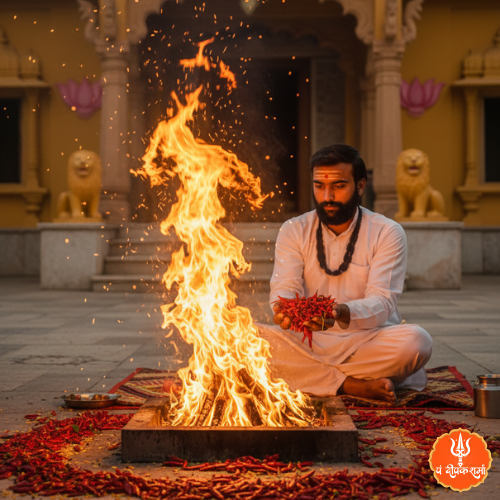
The havan is a central component of the Baglamukhi puja. Prepare the havan kund (fire pit) and light the sacred fire. As the flames rise, offer ghee, grains, and other sacred items into the fire while chanting mantras. This act symbolizes the surrender of one’s desires and challenges to the divine, allowing the energy to transform into blessings.
Step 5: Conclusion and Aarti
After the havan is complete, conclude the puja with an aarti, singing praises to Baglamukhi Mata. This final act of devotion seals the energy of the ritual, inviting the goddess’s blessings into the devotee’s life. It is important to express gratitude for the divine intervention and to remain open to receiving the blessings that follow.
Mantra for This Ritual
The mantra associated with the Baglamukhi puja is a powerful invocation that encapsulates the essence of the goddess’s energy. The specific mantra for overcoming enemies and seeking victory is:
ॐ ह्लीं बगलामुखि सर्व शत्रुस्तम्भनाय स्वाहा
Transliteration: Om Hleem Baglamukhi Sarva Shatrusambhanaya Swaha
This mantra serves as a direct appeal to Baglamukhi Mata, seeking her protection against adversaries and obstacles. The syllables of the mantra resonate with divine frequencies, creating a powerful vibration that can transform the devotee’s circumstances. Chanting this mantra with sincerity and devotion amplifies its effects, allowing the devotee to connect deeply with the goddess’s energies.
The meaning of this mantra is profound. “Om” is the universal sound, representing the essence of the divine. “Hleem” is a seed syllable that invokes the protective energies of Baglamukhi. The phrase “Sarva Shatrusambhanaya” translates to the removal of all enemies, emphasizing the goddess’s power to silence negativity and grant victory. The concluding “Swaha” signifies the offering made to the fire, symbolizing the surrender of one’s challenges to the divine.
Chanting this mantra regularly, especially during the puja, enhances the devotee’s connection with Baglamukhi Mata, inviting her blessings into their life. It is recommended to recite this mantra with a focused mind and a pure heart, allowing the energies to flow freely and manifest positive changes.
Do’s & Don’ts
Engaging in the Baglamukhi puja requires mindfulness and adherence to certain guidelines to ensure its effectiveness. Here are some do’s and don’ts to consider:
Do’s
- Do approach the puja with a sincere heart and clear intentions.
- Do prepare the space and materials in advance to create a conducive environment.
- Do chant the mantras with devotion and focus, allowing the energies to resonate.
- Do express gratitude to Baglamukhi Mata after the puja, acknowledging her blessings.
Don’ts
- Don’t rush through the rituals; take your time to connect with the divine.
- Don’t engage in negative thoughts or distractions during the puja.
- Don’t neglect the importance of cleanliness and purity in the space where the puja is performed.
- Don’t forget to follow the guidance of Pandit Deepak Sharma for a proper Vedic experience.
When to Perform
The timing of the Baglamukhi puja can significantly influence its effectiveness. While it can be performed at any time, certain auspicious days are particularly favorable. For instance, performing the puja on a Tuesday or during the waxing phase of the moon is considered highly beneficial.
Additionally, devotees may choose to perform the puja during significant personal milestones, such as before starting a new job, entering a legal battle, or embarking on a new venture. These moments often carry heightened energies, making them ideal for invoking the blessings of Baglamukhi Mata.
Ultimately, the best time to perform the puja is when the devotee feels a strong calling to connect with the goddess. Trusting one’s intuition and aligning with the divine energies is key to maximizing the benefits of the ritual.
How Pandit Deepak Sharma can help
Pandit Deepak Sharma, with his extensive experience and deep understanding of Vedic rituals, plays a crucial role in guiding devotees through the Baglamukhi puja. His expertise ensures that the rituals are performed with precision, adhering to traditional practices that enhance their effectiveness.
By consulting with Pandit Deepak Sharma, devotees can gain insights into the specific requirements of their puja, including the materials needed and the appropriate mantras to chant. His personalized approach allows for a deeper connection with Baglamukhi Mata, ensuring that each devotee’s unique circumstances are addressed during the ritual.
Moreover, Pandit Deepak Sharma’s compassionate guidance provides reassurance to devotees, helping them navigate their spiritual journeys with confidence. His presence during the puja amplifies the energies, creating a sacred atmosphere that fosters divine blessings and transformative experiences.
Nalkheda Temple Connection
The Nalkheda Temple, dedicated to Baglamukhi Mata, serves as a significant spiritual hub for devotees seeking her blessings. The temple’s sacred atmosphere and rich history enhance the experience of performing the Baglamukhi puja. Pilgrims from far and wide visit this temple to connect with the divine energies and seek guidance from Pandit Deepak Sharma.
At the Nalkheda Temple, the rituals are conducted with utmost reverence, following the authentic Vedic traditions. The temple’s serene environment allows devotees to immerse themselves in their spiritual practices, fostering a deep connection with Baglamukhi Mata.
Engaging in the puja at the Nalkheda Temple not only amplifies the energies of the ritual but also creates a sense of community among devotees. The shared experience of seeking blessings from Baglamukhi Mata strengthens the bonds of faith and devotion, making it a truly enriching spiritual journey.
FAQ
What are the benefits of performing the Baglamukhi puja?
The Baglamukhi puja offers numerous benefits, particularly in overcoming obstacles and achieving success in various aspects of life. Devotees have reported significant improvements in their legal matters, career advancements, and protection from negative influences after engaging in this ritual. The blessings of Baglamukhi Mata are believed to empower individuals to face challenges with confidence and resilience.
Additionally, the puja fosters a sense of peace and spiritual growth. By surrendering one’s worries to the divine, devotees often experience a profound sense of relief and clarity. This emotional and spiritual upliftment is a key aspect of the ritual, allowing individuals to navigate their lives with renewed faith and purpose.
How can I prepare for the Baglamukhi puja?
Preparing for the Baglamukhi puja involves several steps to ensure a successful and meaningful experience. First, it is essential to create a clean and sacred space for the ritual. This can be done by tidying the area and setting up an altar dedicated to Baglamukhi Mata, adorned with her image and offerings.
Gathering the necessary materials, such as flowers, fruits, and incense, is also crucial. Each item holds significance and contributes to the overall energy of the puja. Additionally, setting a clear intention for the ritual is vital, as it aligns the devotee’s focus with the divine purpose of the puja.
Can anyone perform the Baglamukhi puja?
Yes, the Baglamukhi puja is open to all who seek the blessings of the goddess. There are no restrictions based on background or spiritual experience. However, it is particularly beneficial for individuals facing challenges in their lives, such as legal disputes or career obstacles. The guidance of Pandit Deepak Sharma can enhance the experience, ensuring that the ritual is performed correctly and effectively.
What is the significance of the mantra used in the puja?
The mantra used in the Baglamukhi puja is a powerful invocation that connects devotees with the energies of the goddess. Each syllable of the mantra resonates with divine frequencies, amplifying the effectiveness of the ritual. The mantra serves as a direct appeal to Baglamukhi Mata, seeking her protection and blessings against adversaries.
Chanting the mantra with sincerity and devotion enhances the connection with the goddess, inviting her blessings into the devotee’s life. The significance of the mantra lies in its ability to transform the devotee’s circumstances, aligning their intentions with the divine will of Baglamukhi Mata.
When is the best time to perform the Baglamukhi puja?
The best time to perform the Baglamukhi puja is during auspicious days, such as Tuesdays or during the waxing phase of the moon. However, it can also be performed during significant personal milestones, such as before starting a new job or entering a legal battle. Ultimately, the best time is when the devotee feels a strong calling to connect with the goddess.
Trusting one’s intuition and aligning with the divine energies is key to maximizing the benefits of the ritual. The guidance of Pandit Deepak Sharma can help identify the most auspicious times for individual devotees.
How does Pandit Deepak Sharma enhance the puja experience?
Pandit Deepak Sharma’s extensive experience and deep understanding of Vedic rituals significantly enhance the Baglamukhi puja experience. His expertise ensures that the rituals are performed with precision and adherence to traditional practices, amplifying their effectiveness.
By consulting with Pandit Deepak Sharma, devotees can gain personalized insights into their puja, including the materials needed and the appropriate mantras to chant. His compassionate guidance provides reassurance, helping devotees navigate their spiritual journeys with confidence and faith.