Meaning of This Ritual
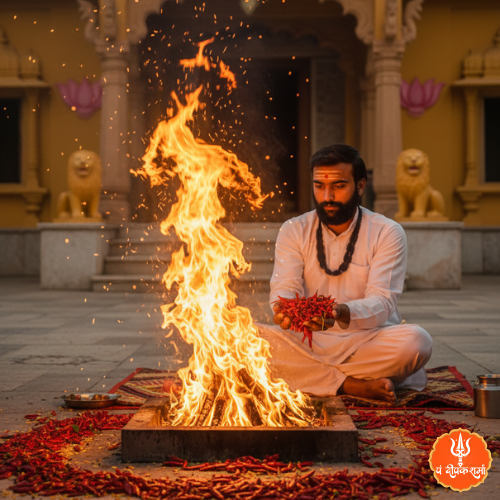
Chaitra Navratri is a sacred period dedicated to the worship of Goddess Durga, celebrated with great fervor across India. During this time, devotees perform various rituals, including the Chaitra navratri havan, to invoke divine blessings and seek the protection and guidance of the Goddess. The havan, a fire ritual, symbolizes the purification of the environment and the devotee’s spirit, making it an essential part of the worship during this auspicious festival.
The Chaitra Navratri Havan specifically focuses on the worship of Devi baglamukhi, one of the ten Mahavidyas, who is revered for her power to remove obstacles and grant victory over adversaries. This ritual is not just a ceremonial act; it is a profound spiritual practice that connects the devotee with the divine energy of the Goddess, fostering a sense of peace, protection, and empowerment.
Understanding the meaning behind this ritual is crucial for its successful execution. Each element of the havan, from the offerings to the mantras chanted, holds deep significance. The fire represents the divine presence, while the offerings symbolize our devotion and surrender to the Goddess. By performing the Chaitra Navratri Havan with sincerity and faith, devotees can align themselves with the divine energies and invite blessings into their lives.
How This Ritual Helps
The Chaitra Navratri Havan serves multiple purposes, each designed to enhance the devotee’s spiritual journey and address specific life challenges. Primarily, it is a means of seeking the blessings of Goddess Baglamukhi for overcoming obstacles, whether they be in personal, professional, or spiritual realms. The havan acts as a conduit for divine energy, helping to clear negative influences and promote a positive environment.
Moreover, this ritual is particularly beneficial for those facing legal issues or conflicts. The powerful mantras recited during the havan are believed to invoke the Goddess’s protection and guidance, leading to favorable outcomes in court cases or disputes. Devotees often report a sense of relief and clarity after performing the havan, as it helps them navigate challenging situations with confidence and faith.
Additionally, the Chaitra Navratri Havan fosters a sense of community and collective spirituality. When performed in a group, the energy generated amplifies the intentions of all participants, creating a powerful atmosphere of devotion and positivity. This communal aspect not only strengthens individual faith but also enhances the overall spiritual experience, making it a cherished tradition among devotees.
Mythological Background
The worship of Goddess Baglamukhi is steeped in rich mythology, with numerous stories highlighting her divine powers and significance. According to ancient texts, she is one of the ten Mahavidyas, representing the ultimate knowledge and wisdom. Her name, ‘Baglamukhi,’ translates to ‘the one who is powerful in speech,’ symbolizing her ability to control and silence enemies, making her a formidable force against negativity and obstacles.
One popular legend narrates how Baglamukhi emerged from the collective consciousness of the gods to combat the demon Madhu and Kaitabh, who threatened the cosmic order. With her divine grace, she defeated these formidable foes, restoring balance and harmony to the universe. This victory not only established her as a protector of dharma but also as a source of strength for her devotees, who seek her blessings for overcoming adversities.
Furthermore, the significance of Chaitra Navratri is deeply rooted in the celebration of the Goddess’s victory over evil. Each day of Navratri is dedicated to a different form of the Goddess, culminating in the worship of Durga, who embodies the triumph of good over evil. The Chaitra Navratri Havan, therefore, becomes a powerful expression of devotion, allowing devotees to connect with the divine energy of Baglamukhi and seek her blessings for victory in their own lives.
Who Should Perform This
The Chaitra Navratri Havan is open to all devotees seeking the blessings of Goddess Baglamukhi. It is particularly beneficial for individuals facing challenges in their personal or professional lives, such as legal disputes, career obstacles, or interpersonal conflicts. Those who feel overwhelmed by negativity or adversities may find solace and strength through this ritual.
Additionally, individuals involved in competitive fields, such as academics or business, can greatly benefit from the havan. The divine energy invoked during the ritual is believed to enhance focus, clarity, and determination, aiding in the pursuit of success. Furthermore, those seeking spiritual growth and a deeper connection with the divine are encouraged to participate in the Chaitra Navratri Havan, as it fosters a sense of devotion and alignment with higher energies.
Families and communities can also come together to perform the havan, creating a collective energy that amplifies the intentions of all participants. This communal aspect not only strengthens bonds among individuals but also enhances the overall spiritual experience, making it a cherished tradition during the Navratri festival.
Step-by-Step Vidhi (Very Detailed)
Performing the Chaitra Navratri Havan requires careful preparation and adherence to Vedic rituals. Here is a detailed step-by-step guide to ensure the havan is conducted properly:
Preparation
Begin by selecting an auspicious date and time for the havan, preferably during the Chaitra Navratri period. Clean the space where the havan will take place, ensuring it is free from impurities. Set up a havan kund (fire pit) made of metal or clay, and place it in a clean and sacred area. Gather all necessary materials, including ghee (clarified butter), wood, samagri (offerings), and the specific mantras to be recited.
Invoking the Deity
Once the havan kund is prepared, invoke the presence of Goddess Baglamukhi by chanting her mantras. Light the fire in the havan kund using dry wood and ghee, offering a small amount of ghee into the flames while reciting the mantra: ॐ ह्लीं बगलामुखि सर्वविघ्न नाशाय ह्लीं (Om Hleem Baglamukhi Sarvavighna Nashaya Hleem). This mantra is specifically aimed at removing obstacles and inviting the Goddess’s blessings.
Offering Samagri
As the fire burns, begin offering samagri into the flames. This can include items like grains, flowers, and other sacred offerings. Each offering should be accompanied by the recitation of specific mantras dedicated to the Goddess. It is essential to maintain a focused and devotional mindset throughout this process, as the energy of the offerings is amplified by the sincerity of the devotee’s heart.
Concluding the Ritual
After all offerings have been made, conclude the havan by performing aarti (a ritual of light) for Goddess Baglamukhi. This involves circling a lit lamp in front of the deity while singing devotional songs. Finally, distribute the prasad (blessed food) to all participants, symbolizing the sharing of divine blessings. It is important to express gratitude to the Goddess for her presence and blessings during the ritual.
Mantra for This Ritual
The primary mantra for the Chaitra Navratri Havan dedicated to Goddess Baglamukhi is: ॐ ह्लीं बगलामुखि सर्वविघ्न नाशाय ह्लीं (Om Hleem Baglamukhi Sarvavighna Nashaya Hleem). This mantra is a powerful invocation that seeks the removal of all obstacles and challenges faced by the devotee.
In transliteration, it reads as: Om Hleem Baglamukhi Sarvavighna Nashaya Hleem. The meaning of this mantra is profound; it emphasizes the devotee’s plea to the Goddess to eliminate all forms of hindrances, whether they be in personal life, career, or spiritual pursuits. By chanting this mantra with devotion, one can align themselves with the divine energy of Baglamukhi, inviting her blessings into their lives.
Chanting this mantra during the havan not only enhances the effectiveness of the ritual but also serves as a means of focusing the mind and heart on the divine presence of the Goddess. It is recommended to recite this mantra with sincerity and faith, allowing its vibrations to permeate the atmosphere and create a sacred space for the ritual.
Do’s & Don’ts
To ensure the success of the Chaitra Navratri Havan, it is essential to follow certain do’s and don’ts. These guidelines help maintain the sanctity of the ritual and enhance its effectiveness. Here are some key points to consider:
Do’s
- Perform the havan with a pure heart and sincere intentions.
- Gather all necessary materials beforehand to avoid interruptions during the ritual.
- Maintain a clean and sacred space for the havan.
- Invite family and friends to participate, fostering a sense of community and shared devotion.
- Recite the mantras with focus and devotion, allowing the energy of the ritual to flow.
Don’ts
- Avoid distractions during the ritual; maintain a focused and serene atmosphere.
- Do not consume non-vegetarian food or alcohol before or during the havan.
- Refrain from using impure or contaminated materials for the offerings.
- Do not rush through the ritual; take your time to connect with the divine.
- Do not forget to express gratitude to the Goddess at the end of the ritual.
When to Perform
The Chaitra Navratri Havan is ideally performed during the nine days of the Chaitra Navratri festival, which typically falls in March or April. Each day of Navratri is dedicated to a different form of the Goddess, making it an auspicious time for worship and devotion. However, devotees can also perform the havan on specific days that hold personal significance, such as birthdays, anniversaries, or during times of crisis.
It is important to consult a knowledgeable pandit or spiritual guide to determine the most auspicious time for performing the havan. The alignment of planetary positions and individual horoscopes can influence the effectiveness of the ritual, making it beneficial to seek guidance in this regard. Performing the havan at an auspicious time enhances the likelihood of receiving the Goddess’s blessings and achieving desired outcomes.
In addition to the Navratri festival, the Chaitra Navratri Havan can also be performed during other significant occasions, such as the beginning of a new venture, before important exams, or when facing challenges in life. The key is to approach the ritual with a sincere heart and a desire for divine guidance and support.
How Pandit Deepak Sharma can help
Pandit Deepak Sharma, a revered Vedic practitioner, specializes in performing Baglamukhi rituals, including the Chaitra Navratri Havan. With over 25 years of experience, he possesses a deep understanding of the Vedic scriptures and the significance of each ritual. His expertise ensures that the havan is conducted according to authentic Vedic traditions, maximizing its effectiveness and spiritual impact.
By seeking guidance from Pandit Deepak Sharma, devotees can benefit from personalized advice on the best practices for performing the havan. He can assist in selecting the appropriate mantras, offerings, and timings, ensuring that the ritual aligns with the devotee’s specific needs and intentions. His compassionate approach fosters a sense of trust and comfort, allowing devotees to connect deeply with the divine during the ritual.
Furthermore, Pandit Deepak Sharma’s connection to the Nalkheda Baglamukhi Temple enhances the spiritual experience of the havan. He can provide insights into the temple’s significance and the blessings associated with performing rituals in this sacred space. By participating in the Chaitra Navratri Havan under his guidance, devotees can deepen their spiritual journey and invite the divine blessings of Goddess Baglamukhi into their lives.
Nalkheda Temple Connection
The Nalkheda Baglamukhi Temple, located in Madhya Pradesh, is a revered pilgrimage site for devotees seeking the blessings of Goddess Baglamukhi. The temple holds immense spiritual significance, attracting pilgrims from all over the country, especially during the Chaitra Navratri festival. The divine energy of the temple enhances the effectiveness of rituals performed there, making it an ideal location for conducting the Chaitra Navratri Havan.
Visiting the Nalkheda Temple during Navratri allows devotees to immerse themselves in the sacred atmosphere and connect with the divine presence of the Goddess. The temple’s rituals, conducted by experienced pandits, ensure that devotees receive authentic spiritual guidance and blessings. Participating in the havan at the temple not only amplifies the energy of the ritual but also fosters a sense of community among fellow devotees.
The temple’s rich history and the stories associated with Goddess Baglamukhi further deepen the spiritual experience for devotees. By connecting with the temple and its rituals, individuals can enhance their spiritual journey and invite the blessings of the Goddess into their lives. The Nalkheda Baglamukhi Temple serves as a beacon of hope and divine grace, making it a cherished destination for those seeking spiritual upliftment.
FAQ
What is the significance of the Chaitra Navratri Havan?
The Chaitra Navratri Havan holds immense significance as it is dedicated to the worship of Goddess Baglamukhi, who is revered for her power to remove obstacles and grant victory. This ritual serves as a means for devotees to connect with the divine energy of the Goddess, seeking her blessings for overcoming challenges in various aspects of life. The havan not only purifies the environment but also enhances the spiritual connection between the devotee and the divine.
During this auspicious period, the havan becomes a powerful tool for invoking the Goddess’s blessings, especially for those facing legal issues or conflicts. The mantras recited during the ritual are believed to create a protective shield around the devotee, fostering a sense of security and empowerment. By participating in the Chaitra Navratri Havan, devotees can experience a profound transformation in their lives, aligning themselves with the divine energies of Baglamukhi.
Can anyone perform the Chaitra Navratri Havan?
Yes, the Chaitra Navratri Havan is open to all devotees seeking the blessings of Goddess Baglamukhi. It is particularly beneficial for individuals facing challenges in their personal or professional lives, such as legal disputes or career obstacles. Families and communities can also come together to perform the havan, creating a collective energy that amplifies the intentions of all participants.
While anyone can perform the havan, it is advisable to seek guidance from an experienced pandit, such as Pandit Deepak Sharma, to ensure that the ritual is conducted according to Vedic traditions. This guidance can enhance the effectiveness of the havan and ensure that it aligns with the devotee’s specific needs and intentions.
What materials are needed for the Chaitra Navratri Havan?
To perform the Chaitra Navratri Havan, several materials are required, including a havan kund (fire pit), ghee (clarified butter), wood, samagri (offerings), and specific mantras. The havan kund should be placed in a clean and sacred area, and all materials should be gathered beforehand to avoid interruptions during the ritual.
Common offerings include grains, flowers, and other sacred items that symbolize devotion and surrender to the Goddess. Each offering should be accompanied by the recitation of specific mantras dedicated to Goddess Baglamukhi. Ensuring that all materials are pure and free from contamination is essential for maintaining the sanctity of the ritual.
How can I ensure the success of the havan?
To ensure the success of the Chaitra Navratri Havan, it is crucial to perform the ritual with a pure heart and sincere intentions. Maintaining a clean and sacred space for the havan is essential, as is gathering all necessary materials beforehand. During the ritual, it is important to recite the mantras with focus and devotion, allowing the energy of the ritual to flow.
Avoiding distractions and maintaining a serene atmosphere will enhance the effectiveness of the havan. Additionally, expressing gratitude to Goddess Baglamukhi at the end of the ritual is vital, as it acknowledges her presence and blessings during the ceremony.
When is the best time to perform the Chaitra Navratri Havan?
The Chaitra Navratri Havan is ideally performed during the nine days of the Chaitra Navratri festival, which typically falls in March or April. Each day of Navratri is dedicated to a different form of the Goddess, making it an auspicious time for worship and devotion. However, devotees can also perform the havan on specific days that hold personal significance, such as birthdays or anniversaries.
Consulting a knowledgeable pandit or spiritual guide can help determine the most auspicious time for performing the havan. The alignment of planetary positions and individual horoscopes can influence the effectiveness of the ritual, making it beneficial to seek guidance in this regard.
What role does Pandit Deepak Sharma play in the Chaitra Navratri Havan?
Pandit Deepak Sharma is a revered Vedic practitioner specializing in Baglamukhi rituals, including the Chaitra Navratri Havan. With over 25 years of experience, he ensures that the havan is conducted according to authentic Vedic traditions, maximizing its effectiveness and spiritual impact. His expertise allows devotees to receive personalized advice on the best practices for performing the havan.
By seeking guidance from Pandit Deepak Sharma, devotees can benefit from his deep understanding of the Vedic scriptures and the significance of each ritual. His compassionate approach fosters a sense of trust and comfort, allowing devotees to connect deeply with the divine during the ritual.