Meaning of This Ritual
The baglamukhi rituals hold profound significance in the spiritual realm, particularly for devotees seeking protection and victory over adversities. These rituals are dedicated to Devi Baglamukhi, one of the ten Mahavidyas, who embodies the power of speech and the ability to silence enemies. The essence of these rituals lies in invoking the divine energy of Baglamukhi to overcome obstacles, especially in legal matters and conflicts. The rituals serve as a means to align oneself with the cosmic energies, ensuring that the devotee receives the blessings of the goddess.
In the context of Nalkheda, these rituals are performed with utmost devotion and adherence to Vedic traditions. The Baglamukhi Havan, for instance, is a sacred fire ceremony that not only purifies the surroundings but also channels the divine energies to aid the devotee in their pursuits. Understanding the meaning behind these rituals is crucial for anyone looking to engage in them, as it fosters a deeper connection with the divine and enhances the efficacy of the practices.
How This Ritual Helps
Engaging in Baglamukhi rituals can bring about transformative changes in a devotee’s life. The primary purpose of these rituals is to seek the blessings of the goddess for overcoming challenges, particularly in legal disputes and conflicts with adversaries. When performed with sincerity and faith, these rituals can lead to favorable outcomes, providing the devotee with the strength to face their challenges head-on. The spiritual energy generated during the rituals acts as a protective shield, warding off negativity and ensuring that the devotee remains focused on their goals.
Moreover, the Baglamukhi Havan is known to enhance clarity of thought and communication, which is essential in legal matters. By invoking the goddess’s blessings, devotees often find themselves better equipped to articulate their thoughts and arguments, leading to successful resolutions in court cases. The rituals also serve to instill a sense of confidence and empowerment, enabling individuals to navigate through life’s challenges with grace and poise.
Mythological Background
The mythology surrounding Devi Baglamukhi is rich and deeply rooted in Hindu tradition. According to ancient texts, she is revered as the goddess who can paralyze enemies and protect her devotees from harm. One of the most famous legends involves the demon Madan, who terrorized the heavens. The gods, in desperation, turned to Baglamukhi for help. In response, she manifested her divine power, rendering Madan immobile and restoring peace to the celestial realms.
This narrative highlights the goddess’s role as a protector and a force against malevolence. Her ability to silence enemies symbolizes the triumph of truth and righteousness over falsehood and injustice. Devotees believe that by performing Baglamukhi rituals, they can invoke this divine power to overcome their own adversaries, whether they be in the form of legal battles, personal conflicts, or other challenges in life.
Who Should Perform This
Baglamukhi rituals are particularly beneficial for individuals facing legal issues, conflicts with enemies, or challenges that require a decisive resolution. Those who feel overwhelmed by adversities or are in need of protection from negative influences are encouraged to engage in these rituals. Additionally, individuals seeking clarity in communication, especially in legal or professional settings, will find the blessings of Baglamukhi invaluable.
Moreover, anyone who wishes to enhance their spiritual journey and deepen their connection with the divine can participate in these rituals. The transformative energy of Baglamukhi can aid in personal growth, helping devotees to cultivate inner strength and resilience. It is essential, however, for participants to approach these rituals with sincerity and devotion, as the effectiveness of the practices is closely tied to the devotee’s faith and intention.
Step-by-Step Vidhi (Very Detailed)
The performance of Baglamukhi rituals requires meticulous attention to detail and adherence to Vedic traditions. Here is a step-by-step guide to conducting the Baglamukhi Havan:
Preparation
Begin by selecting an auspicious date and time for the ritual, preferably on a Wednesday, which is considered favorable for Baglamukhi worship. Cleanse the space where the havan will be performed, ensuring it is free from any negativity. Set up a sacred altar with a picture or idol of Devi Baglamukhi, along with necessary offerings such as flowers, fruits, and sweets.
Gathering Materials
Collect all the materials required for the havan, including ghee, samagri (a mixture of various offerings), and wood for the fire. It is important to use pure and high-quality materials to ensure the sanctity of the ritual. Additionally, prepare a sacred thread (yajnopavita) to wear during the ceremony, symbolizing purity and commitment to the ritual.
Invocation
Begin the ritual by performing a short prayer to invoke the blessings of the goddess. Light a diya (lamp) and offer incense to purify the environment. Recite the following mantra to invite Devi Baglamukhi into the space: ॐ ह्लीं बगलामुखि सर्वविघ्न नाशाय ह्लीं. This mantra is a powerful invocation that calls upon the goddess to remove obstacles and grant protection.
Performing the Havan
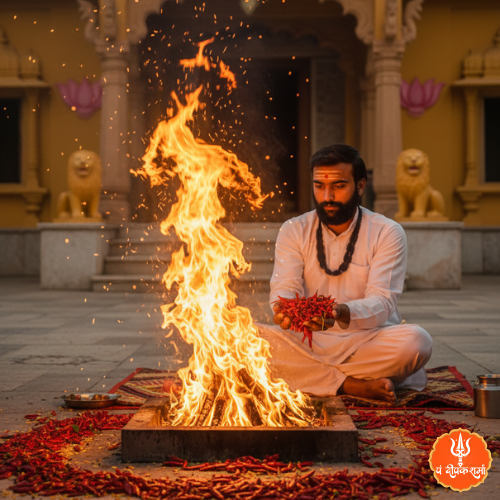
Once the invocation is complete, proceed to light the havan fire using the wood and ghee. As the flames rise, offer the samagri into the fire while chanting the mantra repeatedly. This act symbolizes the surrender of one’s troubles to the divine, allowing the goddess to take control of the situation. Continue to offer ghee and samagri while maintaining focus on your intentions and desires.
Concluding the Ritual
After the offerings are made, conclude the havan by performing aarti (a ceremonial worship with light) to Devi Baglamukhi. Express gratitude for her blessings and seek her guidance in your endeavors. Distribute the prasad (blessed food) among participants, ensuring that everyone receives a share of the divine blessings. Finally, close the ritual with a prayer for peace and prosperity.
Mantra for This Ritual
The mantra associated with the Baglamukhi Havan is a powerful invocation that encapsulates the essence of the ritual. The mantra is:
ॐ ह्लीं बगलामुखि सर्वविघ्न नाशाय ह्लीं
**Transliteration:** Om Hleem Baglamukhi Sarva-Vighna Nashaya Hleem
This mantra translates to, “Om, may the energy of Baglamukhi remove all obstacles and grant protection.” The syllables ‘Hleem’ are considered to be a seed sound that resonates with the divine energy of Baglamukhi. By chanting this mantra with devotion, devotees can align themselves with the goddess’s power, inviting her blessings into their lives.
Chanting this mantra during the havan not only enhances the spiritual atmosphere but also serves as a reminder of the devotee’s intentions. It is recommended to chant the mantra a specific number of times, traditionally 108, to maximize its potency. The repetition of the mantra creates a vibrational energy that attracts the goddess’s attention and invokes her protective qualities.
Do’s & Don’ts
Engaging in Baglamukhi rituals requires mindfulness and adherence to certain guidelines to ensure their effectiveness. Here are some essential do’s and don’ts:
Do’s
- Approach the ritual with a pure heart and sincere intentions.
- Dress in clean and traditional attire to honor the sacredness of the ritual.
- Maintain focus during the chanting and offerings, avoiding distractions.
- Offer fresh flowers and fruits as a sign of respect and devotion.
- Share the prasad with family and friends to spread the blessings.
Don’ts
- Avoid engaging in negative thoughts or actions during the ritual.
- Do not consume alcohol or non-vegetarian food before or during the ritual.
- Refrain from using harsh language or engaging in arguments in the vicinity of the ritual.
- Do not rush through the offerings; take your time to connect with the divine.
- Avoid performing the ritual in a cluttered or unclean space.
When to Perform
The timing of Baglamukhi rituals plays a significant role in their effectiveness. It is advisable to perform these rituals on auspicious days, particularly during the waxing phase of the moon (Shukla Paksha) and on Wednesdays, which are considered highly favorable for Baglamukhi worship. Additionally, performing the rituals during specific festivals dedicated to the goddess, such as Navratri, can enhance their potency.
Devotees are encouraged to choose a time when they can devote their full attention to the ritual, free from distractions and interruptions. Early morning hours, known as Brahma Muhurta, are particularly auspicious for spiritual practices, as this time is believed to be filled with divine energy. Engaging in the rituals during these times can amplify the blessings received from Devi Baglamukhi.
Nalkheda Temple Connection
The Nalkheda Temple, dedicated to Devi Baglamukhi, is a sacred site that attracts devotees from all over the country. The temple is known for its serene atmosphere and powerful spiritual vibrations, making it an ideal location for performing Baglamukhi rituals. Visiting the temple not only allows devotees to seek the goddess’s blessings but also provides an opportunity to connect with fellow devotees and participate in communal worship.
At the Nalkheda Temple, rituals are conducted with strict adherence to Vedic traditions, ensuring that the sanctity of the practices is maintained. Devotees can engage in various rituals, including the Baglamukhi Havan, under the guidance of experienced priests like Pandit Deepak Sharma. The temple’s rich history and spiritual significance enhance the overall experience, allowing devotees to immerse themselves in the divine presence of Baglamukhi.
FAQ
Recommended Reading / Further Exploration
- Understanding Baglamukhi Havan for Enemy Removal: A Divine Ritual
- baglamukhi havan: Everything You Need to Know
- Complete Guide to Baglamukhi Puja Nalkheda
- Advanced Concepts of Shatru Nash Baglamukhi Puja (Explained Clearly)
- Mirchi Havan by Deepak Sharma for Small Businesses: Practical Implementation