Introduction
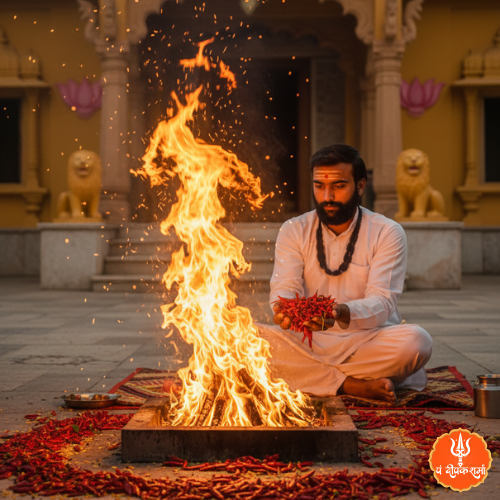
Baglamukhi Havan is a sacred ritual dedicated to Goddess Baglamukhi, one of the ten Mahavidyas in Hindu tradition. This powerful havan is particularly sought after for resolving court cases and legal disputes. However, many devotees often make mistakes during the performance of this ritual, which can hinder its effectiveness. In this article, we will explore common mistakes made during Baglamukhi Havan for court cases and provide guidance on how to rectify them, ensuring that your devotion reaches the divine and brings the desired results.
Meaning of This Ritual
The term ‘Havan’ refers to a fire ritual where offerings are made to the sacred fire, symbolizing the connection between the devotee and the divine. Baglamukhi Havan specifically invokes the blessings of Goddess Baglamukhi, who is revered for her power to silence enemies and grant victory in legal matters. The ritual embodies the principles of surrender, faith, and devotion, allowing the practitioner to seek divine intervention in overcoming obstacles.
How This Ritual Helps
Performing Baglamukhi Havan for court cases can significantly enhance the chances of success in legal battles. The ritual is believed to invoke the goddess’s blessings, providing clarity, strength, and protection against adversaries. It helps in removing negative energies and influences that may be affecting the outcome of the case. Additionally, the havan purifies the environment, creating a positive aura that can influence the decision-makers involved in the legal proceedings.
Mythological Background
The mythology surrounding Goddess Baglamukhi is rich and profound. She is often depicted as a fierce warrior goddess who embodies the power of speech and silence. According to ancient texts, she is known to have vanquished demons and enemies through her divine powers. One of the most significant tales involves her defeating the demon Madan, who represented ignorance and chaos. By invoking her blessings through rituals like the Baglamukhi Havan, devotees seek to harness her strength to overcome their own challenges.
Another important aspect of her mythology is her association with the power of knowledge and wisdom. It is said that those who worship her with sincerity and devotion are granted the ability to articulate their thoughts clearly and effectively, which is crucial in legal matters. This divine wisdom aids in making informed decisions and strategies during court proceedings.
Furthermore, Baglamukhi is often referred to as the goddess of speech, and her blessings are sought to ensure that one’s words carry weight and authority. This is particularly important in a courtroom setting, where the ability to communicate effectively can influence the outcome of a case.
Devotees believe that by performing Baglamukhi Havan, they not only seek her blessings for victory but also cultivate inner strength and resilience to face challenges head-on. This dual aspect of seeking external support while nurturing internal fortitude is what makes the ritual profoundly impactful.
Who Should Perform This
Baglamukhi Havan is particularly beneficial for individuals involved in legal disputes, whether as plaintiffs or defendants. Anyone facing challenges in court, such as ongoing cases, appeals, or legal negotiations, can benefit from this ritual. Additionally, lawyers and legal professionals may also perform this havan to seek blessings for their clients and ensure favorable outcomes in their cases.
Moreover, those who feel overwhelmed by their circumstances or are facing unjust accusations can find solace and strength through this ritual. It is essential for the devotee to approach the havan with a pure heart, sincere intentions, and unwavering faith in the goddess.
Step-by-Step Vidhi (Very Detailed)
To perform Baglamukhi Havan for court cases, it is crucial to follow the Vedic vidhi meticulously. Here is a detailed step-by-step guide:
- Preparation: Begin by selecting an auspicious day for the havan. Ideally, perform it on a Tuesday or Saturday, as these days are considered favorable for invoking the goddess’s blessings. Clean the space where the havan will be conducted, ensuring it is free from any negative energies.
- Gathering Materials: Collect all necessary materials, including a havan kund (fire pit), ghee (clarified butter), samagri (a mixture of herbs and grains), flowers, and the specific mantra for the ritual.
- Purification: Before starting the havan, purify yourself and the space by taking a bath and wearing clean clothes. Light incense sticks and chant prayers to create a sacred atmosphere.
- Invoking the Goddess: Sit in front of the havan kund and place a picture or idol of Goddess Baglamukhi. Offer flowers and light a diya (lamp) in her honor. Begin chanting the mantra “ॐ ह्लीं वाद-विजयाय ह्लीं फट्” to invoke her presence.
- Performing the Havan: Add samagri to the fire while chanting the mantra. Offer ghee in small quantities, allowing it to mix with the samagri. Continue chanting the mantra with devotion, visualizing the goddess granting you victory in your legal matters.
- Concluding the Ritual: Once the offerings are complete, express your gratitude to the goddess. Allow the fire to burn down completely, and collect the ashes, which can be disposed of respectfully. It is customary to distribute prasad (blessed food) among family members or devotees present.
Mantra for This Ritual
The mantra associated with Baglamukhi Havan for court cases is:
Devanagari: ॐ ह्लीं वाद-विजयाय ह्लीं फट्
Transliteration: Om Hleem Vada-Vijayaya Hleem Phat
Meaning: This mantra invokes the power of Goddess Baglamukhi to grant victory in disputes and legal matters. The syllable ‘Hleem’ is a seed sound that represents the goddess’s energy, while ‘Vada-Vijayaya’ translates to victory in speech or arguments. The term ‘Phat’ signifies the cutting away of obstacles and negativity. By chanting this mantra with devotion, one seeks the goddess’s blessings to overcome challenges and achieve success in court.
Do’s & Don’ts
To ensure the effectiveness of Baglamukhi Havan, it is essential to follow certain do’s and don’ts:
- Do’s:
- Perform the havan with a pure heart and sincere intentions.
- Use fresh materials for the ritual, including flowers and samagri.
- Maintain a calm and focused mind during the chanting and offerings.
- Invite family members or close friends to participate, as collective energy enhances the ritual.
- Don’ts:
- Avoid distractions and negative thoughts while performing the havan.
- Do not use stale or impure materials for the offerings.
- Refrain from speaking ill of others during the ritual, as it can negate the positive energy.
- Do not rush through the process; take your time to connect with the divine.
When to Perform
Baglamukhi Havan can be performed at any time when one is facing legal challenges. However, it is particularly auspicious to conduct the ritual during the waxing phase of the moon, as this is considered a time of growth and positive energy. Additionally, performing the havan on specific days associated with Goddess Baglamukhi, such as Tuesdays and Saturdays, can enhance its effectiveness.
It is also advisable to perform the havan before important court dates or hearings to seek the goddess’s blessings for a favorable outcome. Regular practice of this ritual can help maintain a protective shield against adversaries and negative influences.
Nalkheda Temple Connection
The Nalkheda Baglamukhi Temple, located in Madhya Pradesh, is a significant pilgrimage site for devotees seeking the blessings of Goddess Baglamukhi. The temple is renowned for its traditional rituals and the spiritual energy that envelops the premises. Many devotees visit the temple to perform Baglamukhi Havan under the guidance of experienced priests, ensuring that the rituals are conducted according to Vedic traditions.
At the Nalkheda Temple, devotees can participate in group havans, which amplify the collective energy and enhance the effectiveness of the ritual. The temple serves as a sanctuary for those seeking solace and divine intervention in their lives, particularly in legal matters. Pilgrims often leave the temple feeling rejuvenated and empowered, ready to face their challenges with renewed strength.
FAQ
What is Baglamukhi Havan?
Baglamukhi Havan is a sacred fire ritual dedicated to Goddess Baglamukhi, performed to seek her blessings for victory in legal matters and to overcome obstacles. The ritual involves offerings made to the sacred fire while chanting specific mantras, invoking the goddess’s divine energy.
Who can perform Baglamukhi Havan?
Anyone facing legal challenges, including individuals involved in court cases or legal disputes, can perform Baglamukhi Havan. It is also beneficial for lawyers and legal professionals seeking blessings for their clients. The key is to approach the ritual with sincerity and devotion.
What are the common mistakes in performing Baglamukhi Havan?
Common mistakes include using impure materials, rushing through the ritual, and allowing distractions during the chanting. It is essential to maintain a focused and calm mindset, use fresh offerings, and perform the ritual with a pure heart to ensure its effectiveness.
When is the best time to perform this havan?
The best time to perform Baglamukhi Havan is during the waxing phase of the moon, particularly on Tuesdays and Saturdays. These days are considered auspicious for invoking the goddess’s blessings and enhancing the ritual’s effectiveness.
How does Baglamukhi Havan help in court cases?
Baglamukhi Havan helps by invoking the blessings of the goddess, providing clarity, strength, and protection against adversaries. The ritual purifies the environment and creates a positive aura that can influence decision-makers, enhancing the chances of a favorable outcome in legal matters.
Can I perform Baglamukhi Havan at home?
Yes, Baglamukhi Havan can be performed at home, provided you follow the Vedic vidhi and maintain a sacred atmosphere. It is advisable to gather all necessary materials and perform the ritual with sincerity and devotion to ensure its effectiveness.
What should I do with the havan ashes?
The ashes from the havan should be disposed of respectfully, often by immersing them in a river or burying them in the ground. This symbolizes the return of the energy to nature and signifies the completion of the ritual.