Meaning of This Ritual
baglamukhi Havan is a sacred ritual dedicated to Devi Baglamukhi, one of the ten Mahavidyas. The term ‘Havan’ refers to the fire ritual where offerings are made into the sacred fire, invoking divine blessings. This ritual is particularly powerful for overcoming obstacles, gaining victory over adversaries, and seeking protection from negative influences. The essence of Baglamukhi Havan lies in its ability to channel divine energies for the devotee’s benefit, making it a vital practice for those facing challenges in various aspects of life.
In the context of Baglamukhi, the Havan serves as a medium to connect with the divine, allowing devotees to express their intentions and desires. The fire symbolizes purity and transformation, and through this ritual, one seeks to purify their surroundings and mind, creating a conducive environment for spiritual growth and success. It is essential to perform this Havan with utmost devotion and adherence to Vedic traditions to reap its full benefits.
Understanding the meaning behind Baglamukhi Havan enriches the experience, as it transforms a mere ritual into a profound spiritual journey. Each offering made into the fire is a symbol of surrender, and the flames carry the prayers to the divine, ensuring that the devotee’s voice is heard in the celestial realms.
How This Ritual Helps
The Baglamukhi Havan is known for its multifaceted benefits, primarily focusing on the removal of obstacles and the attainment of victory. Many devotees turn to this ritual when facing legal challenges, seeking success in court cases, or dealing with adversaries. The divine energy invoked during the Havan is believed to empower the devotee, providing them with the strength and clarity needed to overcome difficulties.
Moreover, this Havan is instrumental in enhancing one’s mental clarity and decision-making abilities. By invoking the blessings of Devi Baglamukhi, devotees often find themselves better equipped to handle conflicts and challenges in their personal and professional lives. The ritual also serves as a protective shield, safeguarding the devotee from negative energies and ill-wishers.
Ultimately, the Baglamukhi Havan is not just about seeking immediate relief from problems; it is a holistic approach to spiritual well-being. It fosters a sense of inner peace and confidence, allowing devotees to navigate life’s challenges with grace and resilience.
Mythological Background
The mythology surrounding Devi Baglamukhi is rich and profound. She is revered as the goddess of speech and power, often depicted holding a tongue in her hand, symbolizing her ability to control and subdue enemies. According to ancient texts, Baglamukhi is one of the ten Mahavidyas, representing the ultimate truth and the power of knowledge. Her worship is believed to bestow wisdom and the ability to articulate one’s thoughts effectively.
One of the most famous legends associated with Baglamukhi narrates how she helped the gods defeat the demons during a celestial battle. The demons, who were wreaking havoc in the universe, were subdued by her divine intervention, showcasing her power to silence negativity and restore balance. This mythological backdrop reinforces the significance of the Baglamukhi Havan, as it is a means to invoke the goddess’s protective and empowering energies.
Furthermore, Baglamukhi is often associated with the concept of ‘Shakti,’ or divine feminine energy. Her worship is not just about seeking material gains; it is about harnessing the inner strength and wisdom that lies within each individual. This deeper understanding of her mythology enhances the devotee’s connection to the ritual, making the Baglamukhi Havan a transformative experience.
Who Should Perform This
The Baglamukhi Havan is particularly beneficial for individuals facing legal issues, conflicts, or challenges in their personal or professional lives. Those who feel overwhelmed by adversaries or negative influences are encouraged to participate in this ritual to seek the goddess’s blessings for protection and victory. Additionally, anyone looking to enhance their communication skills or seeking clarity in decision-making can greatly benefit from this Havan.
Moreover, the ritual is suitable for individuals who are on a spiritual journey, aiming to deepen their connection with the divine. It is a powerful tool for those who wish to cultivate inner strength and resilience, helping them navigate life’s challenges with confidence. The Havan can be performed by anyone, regardless of their spiritual background, as long as it is done with sincerity and devotion.
Families facing collective challenges or individuals seeking to remove obstacles for their loved ones can also participate in the Baglamukhi Havan. The communal aspect of the ritual enhances its potency, creating a supportive environment for all involved.
Step-by-Step Vidhi (Very Detailed)
The Baglamukhi Havan involves a series of meticulously followed steps to ensure its effectiveness. The process begins with the selection of an auspicious date and time, preferably during a ‘Shubh Muhurat.’ It is advisable to consult a knowledgeable pandit to determine the best timing based on individual horoscopes.
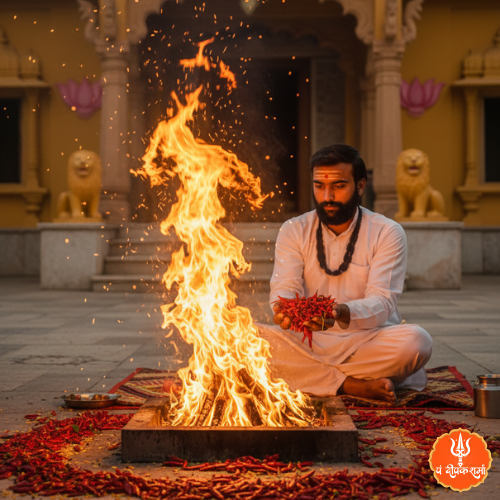
Once the date is set, the devotee should prepare the Havan Kund, a sacred fire pit made of clay or metal. The Kund should be placed in a clean and serene environment, ideally facing east. The devotee should then gather all necessary materials, including ghee, samagri (a mixture of sacred offerings), and specific herbs that are traditionally used in Baglamukhi Havan.
On the day of the Havan, the devotee should take a purifying bath and wear clean, preferably white, clothes. The ritual begins with the invocation of Lord Ganesha, seeking his blessings for the smooth conduct of the Havan. After this, the devotee should light the sacred fire in the Kund, using the ghee and samagri to fuel the flames. As the fire burns, mantras dedicated to Devi Baglamukhi should be chanted with devotion, focusing on the intention behind the ritual.
Offerings of ghee and samagri should be made into the fire at regular intervals, accompanied by the chanting of specific mantras. The devotee should maintain a focused and meditative state throughout the Havan, visualizing the divine energy of Baglamukhi enveloping them. The ritual concludes with the offering of flowers and fruits to the goddess, expressing gratitude for her blessings.
Mantra for This Ritual
For the Baglamukhi Havan, the following mantra is highly effective:
ॐ ह्लीं बगलामुखि सर्वविघ्न नाशाय ह्लीं स्वाहा
Transliteration: Om Hleem Baglamukhi Sarva-Vighna Nashaya Hleem Swaha
Meaning: This mantra is a powerful invocation to Devi Baglamukhi, seeking her blessings to remove all obstacles and difficulties. The syllable ‘Hleem’ is a seed sound that resonates with the energy of the goddess, while ‘Sarva-Vighna Nashaya’ translates to the removal of all hindrances. By chanting this mantra with sincerity, devotees can invoke the protective and empowering energies of Baglamukhi, ensuring their path is clear of challenges.
Chanting this mantra during the Havan not only enhances the ritual’s effectiveness but also serves as a reminder of the devotee’s intentions. It is essential to maintain a focused mindset while reciting the mantra, allowing the divine energies to flow into the Havan and the devotee’s life.
Do’s & Don’ts
To ensure the success of the Baglamukhi Havan, it is crucial to adhere to certain do’s and don’ts. Among the do’s, maintaining a clean and sacred space for the Havan is paramount. The devotee should prepare the area with respect, ensuring that it is free from any distractions or negative energies. It is also advisable to gather all necessary materials beforehand to avoid interruptions during the ritual.
Another important aspect is to approach the Havan with a pure heart and focused mind. The intentions behind the ritual should be clear, and the devotee should be in a calm state to facilitate a deeper connection with the divine. Regular chanting of the Baglamukhi mantra during the Havan will enhance its effectiveness, allowing the devotee to remain aligned with their spiritual goals.
On the other hand, certain actions should be avoided during the Havan. Engaging in negative thoughts or harboring doubts can hinder the ritual’s effectiveness. It is also essential to refrain from consuming non-vegetarian food or alcohol before and during the Havan, as these can disrupt the spiritual energies being invoked. Lastly, it is advisable to avoid any form of distraction, such as using mobile phones or engaging in conversations unrelated to the ritual.
When to Perform
The timing of the Baglamukhi Havan plays a significant role in its effectiveness. It is best performed during auspicious days, such as during the waxing phase of the moon or on specific festival days dedicated to Devi Baglamukhi. Consulting a knowledgeable pandit can help determine the most favorable timings based on individual horoscopes and current planetary positions.
Additionally, the Havan can be performed during times of personal crisis or when facing significant challenges. Many devotees choose to conduct the ritual during the Navratri festival, as it is a time of heightened spiritual energy and devotion. Performing the Havan during this period can amplify its effects, making it a powerful tool for overcoming obstacles and seeking divine blessings.
Ultimately, the best time to perform the Baglamukhi Havan is when the devotee feels a strong calling to connect with the goddess. Listening to one’s intuition and seeking guidance from a spiritual mentor can help determine the right moment for this sacred ritual.
How Pandit Deepak Sharma can help
Pandit Deepak Sharma, with over 25 years of experience in performing Baglamukhi rituals, offers authentic guidance and support for devotees seeking to conduct the Baglamukhi Havan. His deep understanding of Vedic traditions ensures that the rituals are performed with precision and devotion, allowing devotees to connect with the divine energies effectively.
By consulting with Pandit Deepak Sharma, devotees can gain insights into the best timings, materials needed, and the specific mantras to chant during the Havan. His personalized approach ensures that each ritual is tailored to the individual’s needs, enhancing the overall experience and effectiveness of the Havan.
Moreover, Pandit Deepak Sharma’s presence during the Havan serves as a source of spiritual strength and reassurance for devotees. His calming demeanor and profound knowledge create a sacred atmosphere, allowing participants to immerse themselves fully in the ritual and receive the blessings of Devi Baglamukhi.
Nalkheda Temple Connection
The Nalkheda Temple, dedicated to Devi Baglamukhi, is a significant pilgrimage site for devotees seeking spiritual solace and empowerment. The temple’s serene environment and sacred ambiance make it an ideal location for performing the Baglamukhi Havan. Many devotees travel to Nalkheda to seek the goddess’s blessings and participate in the rituals conducted by experienced pandits.
At the Nalkheda Temple, the Baglamukhi Havan is performed with utmost reverence, following traditional Vedic procedures. The temple’s rich history and spiritual significance enhance the experience, allowing devotees to connect with the divine on a deeper level. The presence of fellow devotees during the Havan fosters a sense of community and shared devotion, amplifying the ritual’s effects.
Visiting the Nalkheda Temple not only provides an opportunity to perform the Baglamukhi Havan but also allows devotees to immerse themselves in the rich spiritual heritage of the region. The temple serves as a beacon of hope and strength for those seeking guidance and support from Devi Baglamukhi.
FAQ
What is the significance of Baglamukhi Havan?
The Baglamukhi Havan holds immense significance in Hindu spirituality, particularly for those seeking to overcome obstacles and adversaries. It is a powerful ritual that invokes the blessings of Devi Baglamukhi, enabling devotees to gain clarity, strength, and protection. The Havan serves as a medium to connect with the divine, allowing individuals to express their intentions and seek guidance in challenging situations.
Moreover, the ritual is rooted in ancient Vedic traditions, emphasizing the importance of fire as a purifying element. The offerings made into the sacred fire symbolize the surrender of one’s troubles and desires to the goddess, facilitating a transformative experience. Through the Baglamukhi Havan, devotees often find themselves empowered to face life’s challenges with renewed confidence and resilience.
Can anyone perform the Baglamukhi Havan?
Yes, anyone can perform the Baglamukhi Havan, regardless of their spiritual background. The ritual is open to all who seek the blessings of Devi Baglamukhi for overcoming obstacles and gaining victory. It is essential, however, to approach the Havan with sincerity and devotion, as the effectiveness of the ritual is closely tied to the devotee’s intentions.
While individuals can perform the Havan on their own, seeking guidance from an experienced pandit, such as Pandit Deepak Sharma, can enhance the experience. A knowledgeable pandit can provide insights into the proper procedures, timings, and materials needed, ensuring that the ritual is conducted in accordance with Vedic traditions.
What materials are needed for the Baglamukhi Havan?
The materials required for the Baglamukhi Havan include ghee, samagri (a mixture of sacred offerings), specific herbs, and a Havan Kund (fire pit). It is advisable to gather these materials beforehand to ensure a smooth and uninterrupted ritual. The samagri typically consists of items like rice, sugar, and various herbs that are traditionally used in Vedic rituals.
Additionally, flowers and fruits are often offered to Devi Baglamukhi at the conclusion of the Havan as a gesture of gratitude. The quality and purity of the materials used play a significant role in the effectiveness of the ritual, so it is essential to source them with care and respect.
How long does the Baglamukhi Havan take?
The duration of the Baglamukhi Havan can vary depending on the specific procedures followed and the devotee’s intentions. Typically, the Havan lasts between one to two hours. This includes the time taken for preparations, the actual ritual, and the chanting of mantras.
It is important to allocate sufficient time for the Havan, as rushing through the ritual can diminish its effectiveness. Devotees are encouraged to approach the Havan with a calm and focused mindset, allowing themselves to fully immerse in the spiritual experience.
Can I perform the Baglamukhi Havan for someone else?
Yes, performing the Baglamukhi Havan for someone else is a common practice and is often done when a devotee wishes to seek blessings on behalf of a family member or friend. This act of selflessness amplifies the ritual’s power, as the intentions behind the Havan are directed towards the well-being of another individual.
When conducting the Havan for someone else, it is essential to maintain a clear focus on their specific challenges and desires. The devotee should visualize the recipient receiving the blessings of Devi Baglamukhi, enhancing the effectiveness of the ritual. Consulting with a knowledgeable pandit can provide additional guidance on how to best perform the Havan for another person.