Meaning of This Ritual
The Chaitra navratri havan is a sacred ritual dedicated to Devi baglamukhi, one of the ten Mahavidyas. During this auspicious period, devotees seek the blessings of the goddess to remove obstacles, gain wisdom, and achieve victory over adversaries. The havan symbolizes purification and the invocation of divine energies, creating a sacred space where devotees can connect with the divine. It is believed that performing this ritual during the Chaitra month, which typically falls in March-April, enhances its spiritual potency, aligning the energies of the universe with the intentions of the devotees.
This ritual is particularly significant as it coincides with the Navratri festival, a time when the divine feminine is worshipped in various forms. Each day of Navratri is dedicated to a different aspect of the goddess, and the Chaitra Navratri Havan serves as a means to channel these energies for personal growth and spiritual upliftment. The havan involves the chanting of mantras, offerings to the fire, and the recitation of sacred texts, all of which contribute to the overall sanctity and effectiveness of the ritual.
In essence, the Chaitra Navratri Havan is not just a ritual; it is a profound spiritual experience that allows devotees to express their devotion, seek guidance, and manifest their desires through the grace of Devi Baglamukhi.
How This Ritual Helps
The Chaitra Navratri Havan is believed to bring numerous benefits to those who participate in it with a pure heart and sincere intentions. One of the primary purposes of this ritual is to invoke the blessings of Devi Baglamukhi, who is known for her ability to remove obstacles and grant victory over challenges. This is particularly beneficial for individuals facing legal issues, career hurdles, or personal conflicts. The havan acts as a spiritual shield, protecting devotees from negative energies and adversaries.
Moreover, the ritual helps in enhancing mental clarity and focus. The chanting of specific mantras during the havan is said to awaken the intellect and provide wisdom, making it easier for devotees to make important decisions in their lives. This is especially relevant during the Chaitra Navratri, a time when the energies of the goddess are believed to be at their peak, amplifying the effects of the ritual.
Additionally, the communal aspect of the havan fosters a sense of unity and collective energy among participants. When devotees come together to perform the ritual, their combined intentions create a powerful force that can lead to transformative experiences. This collective energy not only benefits the individual participants but also contributes to the overall spiritual atmosphere, making it a truly enriching experience.
Mythological Background
The significance of the Chaitra Navratri Havan is deeply rooted in Hindu mythology. Devi Baglamukhi is revered as the goddess of speech, wisdom, and power. According to ancient texts, she is one of the ten Mahavidyas, representing the ultimate form of knowledge and the ability to conquer ignorance. The mythology surrounding her is rich and varied, with numerous stories highlighting her divine attributes and the miracles she performs for her devotees.
One popular legend speaks of how Devi Baglamukhi helped the gods defeat the demon Madhu-Kaitabh, who had taken away the Vedas and threatened the cosmic order. Through her divine intervention, she restored balance and harmony, showcasing her role as a protector and a source of strength for those who seek her blessings. This mythological background reinforces the belief that performing the Chaitra Navratri Havan can invoke her protective energies, ensuring success and victory over life’s challenges.
Furthermore, the Chaitra month is considered highly auspicious in the Hindu calendar, marking the onset of spring and new beginnings. It is believed that during this time, the goddess is particularly attentive to the prayers of her devotees, making it an ideal period for performing rituals like the havan. The combination of the goddess’s divine presence and the auspicious timing enhances the spiritual significance of the Chaitra Navratri Havan.
Who Should Perform This
The Chaitra Navratri Havan is open to all devotees who seek the blessings of Devi Baglamukhi for various aspects of their lives. It is especially beneficial for individuals facing legal challenges, career obstacles, or personal conflicts. Those who feel overwhelmed by negativity or adversaries can find solace and strength through this ritual. Additionally, students preparing for competitive exams may also benefit from the wisdom and clarity that the havan invokes.
Moreover, individuals looking to enhance their spiritual practices or deepen their connection with the divine can participate in the Chaitra Navratri Havan. The ritual serves as a means of purification, allowing devotees to cleanse their minds and hearts, making space for positive energies and divine guidance. It is also an excellent opportunity for families to come together in devotion, fostering unity and collective spiritual growth.
Ultimately, anyone who wishes to experience the transformative power of Devi Baglamukhi and seek her blessings can perform this havan. The key is to approach the ritual with sincerity, devotion, and a clear intention, as these elements play a crucial role in the effectiveness of the ritual.
Step-by-Step Vidhi (Very Detailed)
To perform the Chaitra Navratri Havan, it is essential to follow a specific Vedic vidhi to ensure that the ritual is conducted correctly and with reverence. Here is a detailed step-by-step guide:
Preparation
Begin by selecting an auspicious date during the Chaitra Navratri, preferably on the first day of Navratri. Clean the space where the havan will be performed, ensuring it is free from any impurities. Set up a havan kund (fire pit) using bricks or a metal container, and place it in a clean and sacred area. Decorate the space with flowers, and ensure that all necessary items for the havan are gathered, including ghee, samagri (havan materials), and the required mantras.
Invoking the Deities
Once the preparation is complete, begin the ritual by invoking the presence of the deities. Light a diya (lamp) and offer flowers to the idol or picture of Devi Baglamukhi. Chant the Ganesh Vandana to remove any obstacles from the ritual. This is followed by the recitation of the Navagraha Vandana to seek blessings from the nine planetary deities, ensuring their favorable influence during the havan.
Performing the Havan
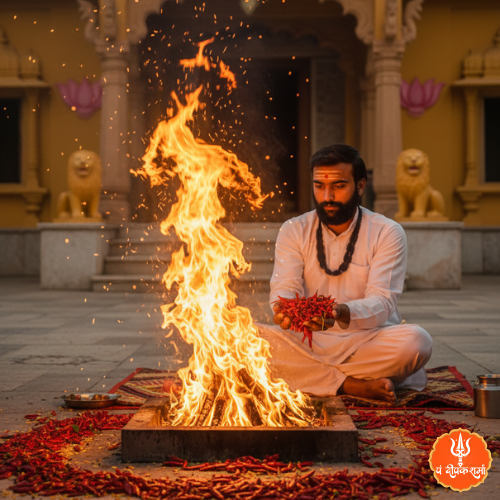
With the deities invoked, proceed to perform the havan. Begin by lighting the fire in the havan kund using dry wood and ghee. Once the fire is established, offer samagri into the flames while chanting the specific mantras associated with the Chaitra Navratri Havan. The mantra for this havan is ॐ ह्लीं बगलामुखि सर्वविघ्न नाशाय ह्लीं (Om Hleem Baglamukhi Sarva Vighna Nashaya Hleem), which translates to invoking the goddess for the removal of all obstacles.
Continue to offer ghee and samagri while chanting the mantra repeatedly. The energy of the fire, combined with the vibrations of the mantras, creates a powerful atmosphere conducive to spiritual growth and divine blessings. It is essential to maintain focus and devotion throughout the ritual, as this enhances the effectiveness of the havan.
Concluding the Ritual
After completing the offerings, conclude the havan by performing aarti (waving of light) in front of the deity. Offer sweets and fruits as prasad to the goddess, expressing gratitude for her blessings. Finally, distribute the prasad among all participants, sharing the divine energy and blessings received during the ritual. It is customary to conclude with a prayer for peace and prosperity for all.
Mantra for This Ritual
The primary mantra for the Chaitra Navratri Havan is ॐ ह्लीं बगलामुखि सर्वविघ्न नाशाय ह्लीं. This powerful mantra is dedicated to Devi Baglamukhi and is chanted to invoke her blessings for the removal of obstacles and challenges in life.
In transliteration, it reads as: Om Hleem Baglamukhi Sarva Vighna Nashaya Hleem. The meaning of this mantra is profound. The syllable ‘ॐ’ represents the primordial sound, the essence of the universe. ‘ह्लीं’ (Hleem) is a bija mantra associated with Baglamukhi, symbolizing her power and energy. The phrase ‘सर्वविघ्न नाशाय’ translates to ‘for the removal of all obstacles,’ indicating the devotee’s intention to seek the goddess’s assistance in overcoming difficulties.
Chanting this mantra during the havan not only invokes the goddess’s presence but also aligns the devotee’s energies with her divine will. It is believed that sincere chanting of this mantra can lead to transformative experiences, helping individuals navigate through life’s challenges with grace and strength. The mantra serves as a reminder of the goddess’s protective nature, encouraging devotees to trust in her guidance and support.
Do’s & Don’ts
When performing the Chaitra Navratri Havan, it is essential to adhere to certain do’s and don’ts to ensure the ritual’s sanctity and effectiveness. Among the do’s, it is crucial to approach the ritual with a pure heart and sincere intentions. Dress modestly and maintain a calm demeanor throughout the ceremony. It is also advisable to gather all necessary materials beforehand to avoid interruptions during the ritual.
Another important aspect is to maintain focus while chanting the mantras. Avoid distractions and engage fully in the ritual, as this enhances the spiritual experience. Offering food items that are pure and sattvic, such as fruits and sweets, is also recommended, as they symbolize devotion and gratitude towards the goddess.
On the other hand, there are certain practices to avoid during the havan. Refrain from using impure or non-vegetarian items in the offerings, as this can diminish the sanctity of the ritual. Additionally, avoid negative thoughts or distractions, as they can interfere with the energy flow. It is also advisable not to rush through the ritual; take your time to connect with the divine and experience the blessings of the havan fully.
When to Perform
The Chaitra Navratri Havan is ideally performed during the nine nights of Navratri, which usually occurs in the Chaitra month, typically in March or April. The first day of Navratri, known as Pratipada, is particularly auspicious for initiating the havan. Each day of Navratri is dedicated to a different form of the goddess, making it a powerful time for spiritual practices.
For those unable to perform the havan during the actual Navratri days, it is still beneficial to conduct the ritual on any day of the Chaitra month. The energies of the goddess are believed to be potent during this time, and performing the havan can yield significant spiritual benefits. It is essential to choose a day that resonates with one’s personal intentions and goals, ensuring that the ritual aligns with the devotee’s desires.
Consulting with a knowledgeable pandit, such as Pandit Deepak Sharma, can also provide guidance on the most auspicious timings for the havan, ensuring that the ritual is performed with maximum effectiveness and spiritual alignment.
How Pandit Deepak Sharma can help
Pandit Deepak Sharma, with his extensive experience in performing Vedic rituals, is an invaluable resource for those seeking to conduct the Chaitra Navratri Havan. His deep understanding of the rituals and their significance ensures that each ceremony is performed with utmost devotion and adherence to Vedic traditions. He can guide devotees through the entire process, from preparation to the concluding prayers, ensuring that every aspect of the ritual is conducted correctly.
Moreover, Pandit Deepak Sharma can provide personalized insights based on individual needs and circumstances. Whether it is addressing specific challenges, seeking blessings for success in legal matters, or enhancing spiritual growth, his guidance can help tailor the havan to align with the devotee’s intentions. His presence during the ritual adds an extra layer of sanctity, as he invokes the divine energies with sincerity and devotion.
For those who wish to experience the full benefits of the Chaitra Navratri Havan, consulting with Pandit Deepak Sharma can be a transformative step. His expertise ensures that the ritual is not only a ceremonial act but a deeply spiritual experience that fosters connection with Devi Baglamukhi.
Nalkheda Temple Connection
The Nalkheda Temple, dedicated to Devi Baglamukhi, is a significant pilgrimage site for devotees seeking her blessings. The temple is renowned for its spiritual atmosphere and the powerful energy that resonates within its premises. Performing the Chaitra Navratri Havan at this sacred site amplifies the benefits of the ritual, as the divine presence of the goddess is believed to be particularly strong here.
Visiting the Nalkheda Temple during Navratri offers devotees a unique opportunity to engage in collective worship and participate in various rituals conducted by experienced pandits like Pandit Deepak Sharma. The temple hosts special ceremonies during this auspicious time, attracting devotees from far and wide who come to seek the goddess’s blessings for success, protection, and spiritual growth.
Furthermore, the temple’s serene environment provides a perfect backdrop for introspection and devotion. Engaging in the Chaitra Navratri Havan at Nalkheda not only enhances the spiritual experience but also fosters a sense of community among devotees, creating a shared space for collective prayers and intentions.
FAQ
What is the significance of the Chaitra Navratri Havan?
The Chaitra Navratri Havan holds immense significance as it is a ritual dedicated to Devi Baglamukhi, who embodies wisdom and power. This havan is performed to seek her blessings for overcoming obstacles and achieving success in various aspects of life. The ritual aligns the energies of the devotees with the divine, creating a sacred space for spiritual growth and transformation.
Who can perform the Chaitra Navratri Havan?
Anyone seeking the blessings of Devi Baglamukhi can perform the Chaitra Navratri Havan. It is particularly beneficial for individuals facing legal issues, career challenges, or personal conflicts. Students preparing for exams and those looking to enhance their spiritual practices can also participate in this ritual. The key is to approach the havan with sincerity and devotion.
What materials are needed for the havan?
To perform the Chaitra Navratri Havan, you will need a havan kund, ghee, samagri (havan materials), flowers, and offerings such as fruits and sweets. It is essential to gather these materials beforehand to ensure a smooth and uninterrupted ritual. Additionally, having a picture or idol of Devi Baglamukhi is recommended for invoking her presence during the havan.
Can the havan be performed at home?
Yes, the Chaitra Navratri Havan can be performed at home, provided that the space is clean and sacred. It is advisable to create a peaceful environment free from distractions. However, for those seeking a more profound experience, participating in the havan at the Nalkheda Temple under the guidance of experienced pandits can amplify the benefits of the ritual.
What is the best time to perform the havan?
The best time to perform the Chaitra Navratri Havan is during the nine nights of Navratri, starting from the first day of the Chaitra month. However, it can also be conducted on any day of the Chaitra month. Consulting with a knowledgeable pandit can help determine the most auspicious timing for the ritual, ensuring that it aligns with the devotee’s intentions.
How can Pandit Deepak Sharma assist in the havan?
Pandit Deepak Sharma offers his expertise in conducting the Chaitra Navratri Havan, ensuring that the ritual is performed with adherence to Vedic traditions. His guidance includes personalized insights based on individual needs, making the ritual more effective. His presence during the havan adds a layer of sanctity, invoking the divine energies with sincerity and devotion.
Recommended Reading / Further Exploration
- Step-by-Step Baglamukhi Havan Procedure: Step-by-Step Explanation
- Common Mistakes in Baglamukhi Anushthan Nalkheda and How to Fix Them
- How to Use Legal Victory Havan for Better Results
- Common Mistakes in Nyayik Vijay Havan and How to Fix Them
- Understanding Baglamukhi Havan for Spiritual Protection and Success