Meaning of This Ritual
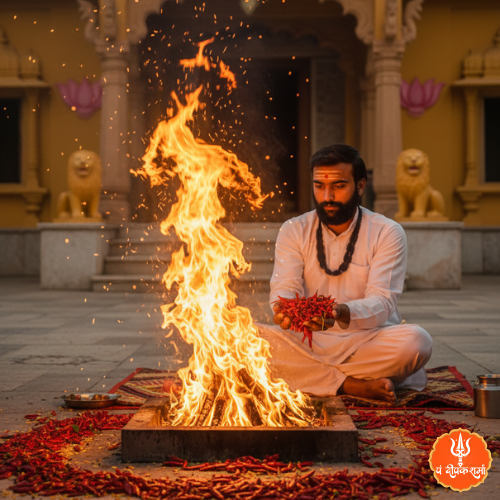
baglamukhi Havan is a sacred ritual dedicated to Devi Baglamukhi, one of the ten Mahavidyas in Hindu tradition. This havan is performed to invoke the divine blessings of the goddess, who is revered for her power to remove obstacles and grant victory over adversaries. The term ‘Havan’ refers to the fire ritual where offerings are made to the sacred fire, symbolizing the purification of the devotee’s intentions and desires. The essence of Baglamukhi Havan lies in its ability to channel divine energy for protection, success, and spiritual growth.
The ritual is not merely a ceremonial act; it embodies a deep spiritual connection between the devotee and the divine. Through the performance of this havan, devotees seek to align themselves with the cosmic energies that Devi Baglamukhi represents. It is believed that the goddess bestows her grace upon those who sincerely engage in this ritual, leading to the removal of negative influences and the enhancement of one’s personal and professional life.
In essence, Baglamukhi Havan serves as a medium through which devotees can express their devotion, seek guidance, and request the goddess’s intervention in their lives. The significance of this ritual is profound, as it not only addresses immediate concerns but also fosters a long-term spiritual relationship with the divine.
How This Ritual Helps
The benefits of Baglamukhi Havan are manifold, extending beyond the immediate desires of the devotees. One of the primary purposes of this ritual is to eliminate obstacles and adversities that hinder personal growth and success. Many devotees have experienced significant improvements in their lives after performing this havan, particularly in areas related to legal matters, career advancements, and interpersonal relationships.
Furthermore, the havan is known for its protective qualities. Devi Baglamukhi is often invoked for her power to shield devotees from negative energies and harmful influences. By performing this ritual, individuals can create a spiritual barrier against adversaries and misfortunes, ensuring a smoother path towards their goals. The act of offering to the sacred fire symbolizes the surrender of one’s fears and anxieties, allowing the divine to take charge of the situation.
Additionally, the spiritual vibrations generated during the havan can lead to a sense of inner peace and clarity. Devotees often report feeling rejuvenated and empowered, as the ritual helps to align their energies with those of the universe. This alignment not only aids in overcoming challenges but also enhances overall well-being, making Baglamukhi Havan a holistic approach to personal and spiritual development.
Mythological Background
The mythology surrounding Devi Baglamukhi is rich and deeply rooted in Hindu tradition. She is often depicted as a powerful goddess who embodies the essence of knowledge, wisdom, and strength. According to ancient texts, Baglamukhi is known for her ability to silence enemies and protect her devotees from harm. The legend states that she emerged from the collective energy of the other Mahavidyas to combat evil forces threatening the balance of the universe.
One of the most significant stories associated with Baglamukhi is her confrontation with the demon Madan. It is said that Madan, who was wreaking havoc in the world, was subdued by the goddess through her divine powers. This victory not only established her as a formidable force against evil but also highlighted her role as a protector of righteousness. The victory of Baglamukhi over Madan symbolizes the triumph of good over evil, making her an essential deity for those seeking justice and protection.
Moreover, the worship of Baglamukhi is often linked to the concept of ‘Shakti’ or divine feminine energy. She represents the transformative power of the goddess, capable of turning obstacles into opportunities. This aspect of her mythology resonates with devotees who seek empowerment and strength in their lives. The stories of her valor and benevolence inspire countless individuals to turn to her in times of need, reinforcing the belief in her protective and guiding presence.
Who Should Perform This
Baglamukhi Havan is particularly beneficial for individuals facing challenges in their personal or professional lives. Those involved in legal disputes, seeking career advancements, or experiencing conflicts with adversaries are encouraged to perform this ritual. The havan serves as a powerful tool for invoking the goddess’s blessings, providing the necessary support to overcome obstacles and achieve success.
Additionally, individuals who feel overwhelmed by negative energies or are in need of spiritual protection may find solace in this ritual. The act of performing the havan not only fosters a connection with Devi Baglamukhi but also creates a protective shield against harmful influences. It is a recommended practice for anyone looking to enhance their spiritual journey and seek guidance from the divine.
Moreover, Baglamukhi Havan can be performed by anyone who wishes to deepen their spiritual practice. Whether one is a seasoned devotee or new to the path, the ritual offers a profound experience of devotion and connection. It is an opportunity to express one’s faith and seek the goddess’s blessings, making it accessible to all who wish to engage in this sacred tradition.
Step-by-Step Vidhi (Very Detailed)
The performance of Baglamukhi Havan involves a series of meticulously followed steps, ensuring that the ritual is conducted in accordance with Vedic traditions. The first step is to prepare the havan kund, which is a sacred fire pit. This is typically made of clay or metal and should be placed in a clean, auspicious location. The area should be purified through the recitation of mantras and the sprinkling of holy water.
Next, the devotee should gather all necessary materials, including ghee, samagri (a mixture of various offerings), and specific herbs associated with the ritual. Each item holds significance and is believed to enhance the efficacy of the havan. It is essential to ensure that all materials are pure and of high quality, as this reflects the devotee’s sincerity and devotion.
Once the preparations are complete, the devotee should perform a preliminary puja to invoke the presence of Devi Baglamukhi. This involves lighting a diya (lamp) and offering flowers, fruits, and incense at the altar. The devotee should then chant the appropriate mantras, focusing on their intentions and desires. After this, the havan can commence, where offerings are made to the fire while reciting specific mantras dedicated to Baglamukhi. Each offering symbolizes the surrender of one’s challenges and the invocation of divine blessings.
During the havan, it is important to maintain a focused and devotional mindset. The devotee should engage in meditation, visualizing the goddess’s presence and seeking her guidance. The ritual concludes with the distribution of prasad (blessed offerings) among participants, symbolizing the sharing of divine grace. This step-by-step process ensures that the havan is performed with reverence and devotion, allowing the devotee to fully experience the blessings of Devi Baglamukhi.
Mantra for This Ritual
The mantra associated with Baglamukhi Havan is:
ॐ ह्लीं बगलामुखि सर्वविघ्न नाशाय ह्लीं
**Transliteration:** Om Hleem Baglamukhi Sarva-Vighna Nashaya Hleem
This powerful mantra is dedicated to Devi Baglamukhi and is chanted to invoke her blessings for the removal of all obstacles. The syllable ‘Hleem’ is a bija mantra, representing the essence of the goddess’s energy. It is believed that chanting this mantra with devotion can help in overcoming challenges and achieving success in various endeavors.
The meaning of the mantra can be understood as follows: ‘Om’ signifies the universal sound, the essence of the divine. ‘Hleem’ is a seed syllable that embodies the transformative power of the goddess. ‘Baglamukhi’ refers to the goddess herself, while ‘Sarva-Vighna Nashaya’ translates to ‘the removal of all obstacles.’ Together, the mantra serves as a powerful invocation for devotees seeking to clear their paths and attain victory over adversities.
Chanting this mantra during the havan creates a sacred atmosphere, enhancing the spiritual vibrations and inviting the goddess’s presence. It is recommended to recite the mantra with sincerity and focus, allowing the devotee to connect deeply with Devi Baglamukhi and receive her blessings.
Do’s & Don’ts
When performing Baglamukhi Havan, it is essential to adhere to certain guidelines to ensure the ritual’s effectiveness. Among the do’s, it is important to maintain a pure and clean environment. The space where the havan is conducted should be free from clutter and negativity. Devotees should also wear clean and traditional attire, reflecting their respect for the ritual.
Another important aspect is the intention behind the ritual. Devotees should approach the havan with a sincere heart, focusing on their desires and the challenges they wish to overcome. It is advisable to engage in meditation and prayer before commencing the ritual, allowing oneself to connect with the divine energy of Devi Baglamukhi.
On the other hand, there are certain don’ts that should be avoided during the havan. Engaging in negative thoughts or distractions can diminish the effectiveness of the ritual. It is crucial to remain focused and devoted throughout the process. Additionally, consuming non-vegetarian food or alcohol before or during the ritual is strictly prohibited, as it goes against the principles of purity and devotion.
When to Perform
Baglamukhi Havan can be performed on any auspicious day, but certain times are considered particularly favorable. Many devotees choose to conduct the havan on the day of Navratri, a festival dedicated to the worship of the divine feminine. This period is believed to amplify the energy of the rituals, making it an ideal time for invoking the blessings of Devi Baglamukhi.
Additionally, the full moon and new moon days are also considered auspicious for performing this havan. These lunar phases are believed to enhance the spiritual vibrations, making it a powerful time for rituals and prayers. Devotees may also choose to perform the havan during significant personal milestones, such as starting a new job, entering into a new phase of life, or facing legal challenges.
Ultimately, the best time to perform Baglamukhi Havan is when the devotee feels a strong calling to seek the goddess’s blessings. The sincerity of intention and devotion is what truly matters, and engaging in the ritual during a time that feels significant to the devotee can lead to profound spiritual experiences.
Nalkheda Temple Connection
The Nalkheda Temple, dedicated to Devi Baglamukhi, is a revered pilgrimage site for devotees seeking her blessings. Located in the Agar Malwa district of Madhya Pradesh, this temple is known for its spiritual significance and the powerful energy that resonates within its premises. Many devotees visit the temple to perform Baglamukhi Havan under the guidance of experienced pandits, ensuring that the rituals are conducted according to Vedic traditions.
The temple is not only a place of worship but also a center for spiritual learning and guidance. Pandit Deepak Sharma, a renowned practitioner of Baglamukhi rituals, offers his expertise to devotees, helping them navigate their spiritual journeys. The temple’s serene environment and the presence of the goddess create a conducive atmosphere for meditation and reflection, allowing devotees to connect deeply with the divine.
Visiting the Nalkheda Temple for Baglamukhi Havan provides devotees with an opportunity to engage in a collective spiritual experience. The temple often hosts special events and gatherings, where devotees come together to chant mantras, offer prayers, and share their experiences. This sense of community enhances the overall spiritual experience, making it a cherished pilgrimage for many.
FAQ
What is the significance of Baglamukhi Havan?
Baglamukhi Havan holds immense significance in Hindu tradition as it is dedicated to Devi Baglamukhi, who is revered for her power to remove obstacles and grant victory over adversaries. The ritual serves as a means for devotees to connect with the divine, seek guidance, and invoke blessings for success in various aspects of life. Many devotees have experienced transformative changes after performing this havan, making it a powerful spiritual practice.
Through the havan, devotees not only express their devotion but also surrender their challenges to the goddess, allowing her to intervene in their lives. The ritual is believed to create a protective shield against negative energies, ensuring a smoother path towards achieving one’s goals. Overall, Baglamukhi Havan is a holistic approach to personal and spiritual development.
Can anyone perform Baglamukhi Havan?
Yes, Baglamukhi Havan can be performed by anyone who wishes to seek the blessings of Devi Baglamukhi. It is particularly beneficial for individuals facing challenges in their personal or professional lives, such as legal disputes or conflicts with adversaries. However, it is also accessible to those who wish to deepen their spiritual practice and connect with the divine.
The ritual can be performed individually or collectively, and it is recommended to engage in the havan with a sincere heart and focused intention. Regardless of one’s background or experience, the act of performing Baglamukhi Havan offers a profound opportunity for spiritual growth and connection with the goddess.
What materials are needed for Baglamukhi Havan?
The materials required for Baglamukhi Havan include ghee, samagri (a mixture of various offerings), specific herbs, and a havan kund (fire pit). Each item holds significance and is essential for the successful completion of the ritual. It is important to ensure that all materials are pure and of high quality, reflecting the devotee’s sincerity and devotion.
Additionally, flowers, fruits, and incense are often offered during the ritual as a sign of respect and devotion to the goddess. The preparation of these materials should be done with care, as they contribute to the overall energy and effectiveness of the havan.
How long does the Baglamukhi Havan take?
The duration of Baglamukhi Havan can vary depending on the specific rituals and the number of offerings made. Generally, the havan can take anywhere from one to two hours. This time allows for proper preparation, invocation of the goddess, and the performance of the ritual itself.
It is important to approach the havan with patience and devotion, as the quality of the ritual is more significant than the time taken. Engaging in meditation and prayer during the havan enhances the spiritual experience, making it a meaningful and transformative practice.
What should I do after the havan is completed?
After the completion of Baglamukhi Havan, it is customary to distribute prasad (blessed offerings) among participants. This act symbolizes the sharing of divine grace and reinforces the sense of community among devotees. It is also recommended to engage in gratitude and reflection, acknowledging the blessings received during the ritual.
Devotees may choose to continue their spiritual practice by reciting mantras or engaging in meditation. Maintaining a connection with Devi Baglamukhi after the havan is essential for nurturing the spiritual relationship and inviting her blessings into everyday life.
Recommended Reading / Further Exploration
- Understanding Baglamukhi Havan for Legal Victory: A Divine Ritual
- Advanced Concepts of baglamukhi anushthan (Explained Clearly)
- Baglamukhi Havan Nalkheda: Beginner to Pro in One Detailed Guide
- Baglamukhi Havan for Court Case for Small Businesses: Practical Implementation
- Baglamukhi Rituals Nalkheda: Step-by-Step Explanation