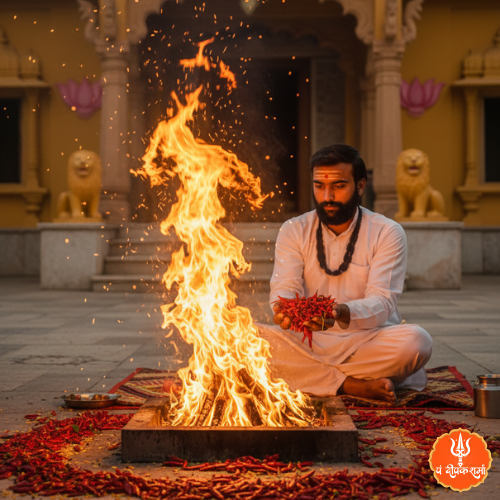
Meaning of This Ritual
baglamukhi, one of the ten Mahavidyas, embodies the divine feminine energy that is both nurturing and fierce. The rituals associated with Baglamukhi, particularly the Baglamukhi Havan, are performed to invoke her blessings for wisdom, protection, and victory over adversaries. This ritual is not merely a ceremonial act; it is a profound spiritual practice aimed at aligning the devotee’s energies with the divine will of Baglamukhi Mata. The essence of this ritual lies in its ability to transform negative energies into positive outcomes, guiding devotees towards success in their endeavors.
The Baglamukhi Havan is particularly significant for those facing legal challenges or conflicts with enemies. By performing this ritual, devotees seek the grace of the goddess to overcome obstacles and achieve justice. The sacred fire in the havan symbolizes the purification of the soul and the removal of all hindrances, allowing the devotee to emerge victorious in their pursuits. Each element of the ritual, from the offerings to the chanting of mantras, is designed to create a powerful connection with the divine, ensuring that the devotee’s prayers are heard and answered.
In essence, the Baglamukhi Havan serves as a bridge between the devotee and the divine, facilitating a deep spiritual connection that fosters personal growth and resilience. It is a call to the goddess for guidance and support, reinforcing the belief that with faith and devotion, one can navigate through life’s challenges with grace and strength.
How This Ritual Helps
The Baglamukhi Havan is a multifaceted ritual that offers numerous benefits to devotees. Primarily, it is performed to seek the blessings of Baglamukhi Mata for overcoming legal issues and adversities. The energy generated during the havan helps in dispelling negative influences and ensuring a favorable outcome in court cases. Devotees often report a sense of relief and clarity after participating in this ritual, as it empowers them to face their challenges with renewed vigor.
Moreover, the ritual serves as a protective shield against enemies and malicious intentions. By invoking the divine presence of Baglamukhi, devotees can safeguard themselves from harm and ensure that their endeavors are shielded from negativity. The chanting of specific mantras during the havan acts as a powerful tool for manifestation, allowing devotees to attract positive energy and repel negativity.
Additionally, the Baglamukhi Havan fosters a sense of community and collective energy among participants. When performed in a group, the collective intention amplifies the effectiveness of the ritual, creating a powerful atmosphere of devotion and faith. This communal aspect not only enhances the spiritual experience but also strengthens the bonds among devotees, fostering a sense of belonging and support.
Mythological Background
In Hindu mythology, Baglamukhi is revered as a manifestation of the goddess Durga, embodying the power of speech and the ability to control one’s enemies. According to ancient texts, she is depicted as a radiant figure, often shown holding a club and a tongue of a demon, symbolizing her power to silence adversaries and protect her devotees. The mythology surrounding Baglamukhi emphasizes her role as a protector and a warrior, who fights against injustice and empowers her followers to overcome their fears.
One of the most significant legends associated with Baglamukhi is her battle against the demon Madan, who represents ignorance and chaos. In this myth, Baglamukhi uses her divine powers to subdue Madan, showcasing her ability to bring order and clarity to the lives of her devotees. This victory not only highlights her strength but also reinforces the belief that with devotion and faith, one can conquer even the most formidable challenges.
The worship of Baglamukhi is deeply rooted in Vedic traditions, where she is often invoked for wisdom and guidance. Her mantras are believed to possess immense power, capable of transforming the lives of those who chant them with sincerity. The rituals performed in her honor, such as the Baglamukhi Havan, are designed to align the devotee’s energies with her divine essence, facilitating a deeper connection with the goddess and inviting her blessings into their lives.
Who Should Perform This
The Baglamukhi Havan is particularly beneficial for individuals facing legal challenges, conflicts with adversaries, or those seeking protection from negative influences. It is recommended for anyone who feels overwhelmed by obstacles in their personal or professional life, as the ritual serves to empower them and provide clarity in difficult situations. Those involved in legal disputes, whether as plaintiffs or defendants, can greatly benefit from the divine intervention of Baglamukhi, as her blessings are believed to ensure justice and fairness.
Moreover, this ritual is suitable for individuals seeking to enhance their communication skills and assertiveness. Baglamukhi is known as the goddess of speech, and her blessings can help devotees articulate their thoughts and intentions more effectively. This aspect makes the havan particularly relevant for professionals in fields that require negotiation or public speaking, as it can help them present their ideas with confidence and clarity.
Additionally, anyone looking to remove negative energies or influences from their life can participate in the Baglamukhi Havan. The ritual acts as a cleansing process, purifying the devotee’s aura and creating a protective barrier against harmful forces. Thus, it is a powerful spiritual tool for anyone seeking to improve their circumstances and foster a more positive environment.
Step-by-Step Vidhi (Very Detailed)
The Baglamukhi Havan is a sacred ritual that requires careful preparation and adherence to Vedic traditions. Below is a detailed step-by-step procedure for performing this ritual:
Preparation
Before commencing the havan, it is essential to prepare the sacred space. This involves cleaning the area where the havan will take place, ensuring that it is free from any impurities. A sacred cloth or mat should be placed on the ground, and a havan kund (fire pit) should be established in the center. The kund should be made of metal or clay, and its dimensions should be appropriate for the number of offerings to be made.
Gather all necessary materials, including ghee (clarified butter), samagri (a mixture of sacred offerings such as grains, herbs, and flowers), and the specific items required for the ritual, such as a bell, conch shell, and incense. It is also important to have the mantra texts ready for chanting during the havan.
Devotees should purify themselves by taking a bath and wearing clean, preferably white or yellow, clothes. It is customary to perform a small puja (worship) to Lord Ganesha before starting the havan, seeking his blessings for the removal of obstacles.
Lighting the Sacred Fire
Once the preparations are complete, the next step is to light the sacred fire in the havan kund. This is done using dry wood and ghee, which should be offered into the fire while chanting the Ganesh mantra for auspiciousness. The fire represents the divine presence of Baglamukhi and serves as a medium for the offerings made during the ritual.
As the fire begins to burn, devotees should focus their intentions on the purpose of the havan, visualizing the blessings they wish to receive from Baglamukhi Mata. It is essential to maintain a calm and focused mind during this process, as the energy generated by the fire will amplify the prayers and intentions of the devotees.
Once the fire is established, the offerings of samagri should be made into the flames, accompanied by the chanting of the Baglamukhi mantra. Each offering should be made with devotion, visualizing the negative energies being transformed into positive blessings through the divine fire.
Chanting the Mantras
The chanting of mantras is a crucial aspect of the Baglamukhi Havan. The primary mantra used during this ritual is:
ॐ ह्लीं बगलामुखि सर्वविघ्न नाशाय ह्लीं
Transliteration: Om Hleem Baglamukhi Sarvavighna Nashaya Hleem
This mantra invokes the protective and empowering energies of Baglamukhi, seeking her blessings for the removal of obstacles and adversaries. Devotees should chant this mantra with sincerity and focus, repeating it multiple times as they make offerings into the fire.
In addition to the primary mantra, other relevant mantras may also be chanted based on the specific intentions of the devotees. Each mantra should be recited with devotion, allowing the vibrations to resonate within the sacred space and enhance the effectiveness of the ritual.
Concluding the Havan
After completing the offerings and chanting, the havan should be concluded with a prayer of gratitude to Baglamukhi Mata. Devotees should express their heartfelt thanks for her blessings and guidance, acknowledging the divine presence that has been invoked during the ritual.
It is customary to perform aarti (a ceremonial worship with light) at the end of the havan, using a diya (lamp) and singing devotional songs in praise of Baglamukhi. This final act of devotion seals the energy generated during the havan and reinforces the connection with the goddess.
Finally, the remnants of the havan, including the ashes and any remaining samagri, should be collected and disposed of respectfully, often by immersing them in a sacred river or burying them in the ground, symbolizing the return of the energy to nature.
Mantra for This Ritual
The primary mantra for the Baglamukhi Havan is:
ॐ ह्लीं बगलामुखि सर्वविघ्न नाशाय ह्लीं
Transliteration: Om Hleem Baglamukhi Sarvavighna Nashaya Hleem
This mantra holds profound significance in the context of the ritual. The syllable ‘ॐ’ (Om) represents the primordial sound of the universe, symbolizing the essence of the divine. The word ‘ह्लीं’ (Hleem) is a bija (seed) mantra associated with Baglamukhi, embodying her energy and power. The phrase ‘सर्वविघ्न नाशाय’ translates to ‘for the removal of all obstacles,’ highlighting the purpose of invoking her blessings during the havan.
Chanting this mantra with devotion creates a powerful vibration that resonates with the energies of Baglamukhi, facilitating a connection that empowers the devotee to overcome challenges and adversities. It is essential to recite this mantra with a focused mind and pure intentions, allowing the divine energy to flow through the devotee and manifest in their life.
In addition to this primary mantra, devotees may also incorporate other mantras relevant to their specific needs, such as those for protection or success in legal matters. Each mantra serves to enhance the spiritual experience and deepen the connection with Baglamukhi Mata.
Do’s & Don’ts
When performing the Baglamukhi Havan, it is important to adhere to certain guidelines to ensure the ritual’s effectiveness. Here are some essential do’s:
- Do prepare the space: Ensure that the area for the havan is clean and free from distractions. A serene environment enhances the spiritual experience.
- Do maintain focus: During the ritual, keep your mind focused on your intentions and the blessings you seek from Baglamukhi Mata.
- Do offer with devotion: Make offerings with a pure heart, visualizing the transformation of negative energies into positive blessings.
On the other hand, there are certain actions to avoid:
- Don’t rush the ritual: Take your time to perform each step with care and devotion. Rushing can dilute the energy of the ritual.
- Don’t engage in negative thoughts: Maintain a positive mindset throughout the ritual, as negative energies can hinder the effectiveness of the havan.
- Don’t neglect gratitude: Always conclude the ritual with a prayer of thanks to Baglamukhi, acknowledging her presence and blessings.
When to Perform
The Baglamukhi Havan can be performed at any time, but certain auspicious timings can enhance its effectiveness. It is particularly beneficial to conduct the ritual on specific days dedicated to Baglamukhi, such as Tuesdays and Fridays, which are considered sacred for her worship. Additionally, performing the havan during the waxing phase of the moon is believed to amplify the positive energies associated with the ritual.
It is also advisable to perform the havan when facing significant challenges, such as impending legal matters or conflicts with adversaries. Engaging in this ritual during times of distress can provide the necessary spiritual support and guidance from Baglamukhi Mata, helping devotees navigate their difficulties with confidence.
Furthermore, devotees may choose to perform the havan during personal milestones, such as starting a new job, launching a business, or entering a new phase of life. Invoking the blessings of Baglamukhi during these pivotal moments can provide the strength and protection needed to succeed in new endeavors.
How Pandit Deepak Sharma can help
Pandit Deepak Sharma, with over 25 years of experience in performing Vedic rituals, offers authentic guidance for those wishing to perform the Baglamukhi Havan. His deep understanding of the rituals and their significance ensures that devotees receive the full benefits of the ceremony. He is dedicated to upholding the traditional practices associated with Baglamukhi worship, ensuring that each ritual is conducted with the utmost reverence and authenticity.
By seeking the assistance of Pandit Deepak Sharma, devotees can gain insights into the specific requirements for their havan, including the necessary materials and the appropriate mantras to chant. His personalized approach allows for a deeper connection with Baglamukhi Mata, enhancing the spiritual experience and ensuring that the ritual aligns with the devotee’s intentions.
Moreover, Pandit Deepak Sharma provides ongoing support and guidance, helping devotees navigate their spiritual journeys with wisdom and compassion. His commitment to serving the community and fostering spiritual growth makes him a trusted guide for anyone seeking to connect with the divine energies of Baglamukhi.
Nalkheda Temple Connection
The Nalkheda Temple, dedicated to Baglamukhi Mata, is a sacred site that attracts devotees from all over India. This temple is renowned for its spiritual significance and the powerful energies associated with Baglamukhi. Visiting the temple and participating in the rituals conducted by Pandit Deepak Sharma can greatly enhance the spiritual experience, providing devotees with a direct connection to the goddess.
The temple is a place of refuge for those seeking solace and guidance, and the atmosphere is imbued with devotion and reverence. Devotees who visit the Nalkheda Temple often report profound experiences and a sense of peace that comes from being in the presence of the goddess. The rituals performed here, including the Baglamukhi Havan, are conducted with strict adherence to Vedic traditions, ensuring that the divine energies are invoked effectively.
Additionally, the Nalkheda Temple serves as a hub for spiritual gatherings and community events, fostering a sense of unity among devotees. Engaging in the rituals at this temple not only enhances individual spiritual journeys but also strengthens the collective energy of the community, creating a powerful atmosphere of devotion and faith.
FAQ
What is the significance of the Baglamukhi Havan?
The Baglamukhi Havan holds immense significance for devotees seeking protection and victory over adversaries. It is a ritual that invokes the blessings of Baglamukhi Mata, who is revered for her ability to silence enemies and remove obstacles. By performing this havan, devotees align themselves with the divine energies of the goddess, fostering a sense of empowerment and clarity in their lives. The ritual serves as a spiritual tool for overcoming challenges, particularly in legal matters, ensuring that the devotee receives divine guidance and support.
Can anyone perform the Baglamukhi Havan?
Yes, the Baglamukhi Havan can be performed by anyone seeking the blessings of the goddess. It is particularly beneficial for individuals facing legal issues, conflicts with adversaries, or those looking to enhance their communication skills. The ritual is open to all, regardless of background or experience, as long as the devotee approaches it with sincerity and devotion. It is advisable to seek guidance from an experienced pandit, such as Pandit Deepak Sharma, to ensure that the ritual is performed correctly and effectively.
How often should the Baglamukhi Havan be performed?
The frequency of performing the Baglamukhi Havan depends on the individual’s circumstances and needs. It can be conducted as often as necessary, especially during challenging times or when facing significant obstacles. Many devotees choose to perform the havan during auspicious occasions or milestones in their lives, such as starting a new job or entering a new phase. Regular participation in the ritual can strengthen the connection with Baglamukhi Mata and enhance the spiritual journey of the devotee.
What materials are needed for the Baglamukhi Havan?
The materials required for the Baglamukhi Havan include ghee (clarified butter), samagri (a mixture of sacred offerings), a havan kund (fire pit), and the necessary items for the ritual, such as a bell, conch shell, and incense. It is essential to gather these materials beforehand to ensure a smooth and uninterrupted ritual. The specific offerings may vary based on the devotee’s intentions, and consulting with a knowledgeable pandit can provide guidance on the appropriate items to include.
Is it necessary to visit the Nalkheda Temple to perform the havan?
While the Baglamukhi Havan can be performed at home or any sacred space, visiting the Nalkheda Temple enhances the spiritual experience significantly. The temple is imbued with the divine energies of Baglamukhi, and participating in the rituals conducted by Pandit Deepak Sharma provides a direct connection to the goddess. Devotees often find that the atmosphere of the temple fosters a deeper sense of devotion and clarity, making it an ideal location for performing the havan.
What should I do after the havan is completed?
After completing the Baglamukhi Havan, it is customary to express gratitude to Baglamukhi Mata for her blessings and guidance. This can be done through a prayer or aarti, acknowledging the divine presence that has been invoked during the ritual. The remnants of the havan, including the ashes and any remaining offerings, should be disposed of respectfully, often by immersing them in a sacred river or burying them in the ground. This act symbolizes the return of the energy to nature and reinforces the connection with the divine.
Recommended Reading / Further Exploration
- Understanding Baglamukhi Havan for Overcoming Life's Challenges
- Complete Guide to Baglamukhi Mirchi Anushthan
- How to Use Baglamukhi Havan Cost for Better Results
- Advanced Concepts of Baglamukhi Specialist Deepak Sharma (Explained Clearly)
- Baglamukhi Rituals Nalkheda: Beginner to Pro in One Detailed Guide