Meaning of This Ritual
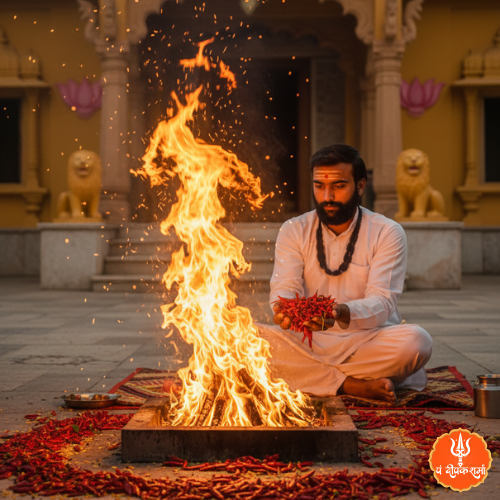
The baglamukhi Havan is a sacred ritual dedicated to Devi Baglamukhi, one of the ten Mahavidyas in Hinduism, revered for her power to bestow wisdom and victory over adversaries. The term ‘Havan’ refers to the fire ritual where offerings are made to the divine through sacred fire. This ritual is not merely a ceremonial act; it embodies the essence of surrendering one’s troubles and seeking divine intervention for overcoming obstacles, particularly in matters of legal disputes and personal conflicts.
In the context of Baglamukhi, the Havan serves as a medium to invoke her blessings, empowering devotees to gain clarity, strength, and protection against enemies. It is believed that through this ritual, one can attain victory in court cases, resolve disputes, and eliminate negative influences from their life. The act of performing Havan is a profound expression of devotion, aligning the devotee’s energies with the divine will of Baglamukhi Mata.
Thus, the Baglamukhi Havan is not only a spiritual practice but also a transformative experience that reinforces faith and cultivates a deeper connection with the divine. It is a call to the universe to assist in overcoming challenges, making it a vital ritual for those seeking guidance and support in their lives.
How This Ritual Helps
The Baglamukhi Havan is particularly beneficial for individuals facing legal issues, conflicts with enemies, or any form of obstruction in their personal or professional lives. By performing this Havan, devotees seek to invoke the divine energy of Baglamukhi, who is known for her ability to silence adversaries and grant victory in disputes. The ritual is believed to create a protective shield around the devotee, warding off negative energies and influences that may hinder their progress.
Moreover, the Havan acts as a purifying force, cleansing the environment and the devotee’s mind of any negativity. As the sacred fire burns, it symbolizes the destruction of obstacles and the emergence of clarity and wisdom. This purification is essential for those who wish to embark on new ventures or resolve ongoing conflicts, as it prepares the devotee spiritually and mentally to face challenges with renewed strength.
Additionally, the chanting of specific mantras during the Havan amplifies its effects, aligning the devotee’s intentions with the cosmic energies. This alignment is crucial for manifesting desired outcomes, whether it be success in legal matters, career advancements, or personal growth. Thus, the Baglamukhi Havan serves as a comprehensive spiritual tool for empowerment and protection.
Mythological Background
The mythology surrounding Devi Baglamukhi is rich and profound, rooted in ancient texts and scriptures. She is often depicted as a powerful goddess who embodies the force of speech and communication. According to legend, Baglamukhi is known to have subdued the demon Madan, who represented chaos and negativity. By silencing him, she demonstrated her ability to control and eliminate adversaries, making her a revered figure for those seeking victory over their enemies.
In the Devi Bhagavata Purana, Baglamukhi is described as a fierce protector of her devotees, granting them the strength to overcome challenges and emerge victorious in their endeavors. Her worship is particularly emphasized during times of conflict, where her blessings are sought to ensure success in legal battles and personal disputes. The Baglamukhi Havan, therefore, is a direct invocation of her power, allowing devotees to tap into her divine energy for assistance.
Furthermore, the goddess is associated with the element of fire, which is symbolic of transformation and purification. The act of performing Havan, with fire as its central element, aligns perfectly with Baglamukhi’s nature, as it signifies the burning away of obstacles and the illumination of the path ahead. This deep connection between the goddess and the ritual enhances its significance, making it a vital practice for devotees seeking her blessings.
Who Should Perform This
The Baglamukhi Havan is recommended for anyone facing challenges in their life, particularly those involved in legal disputes, conflicts with enemies, or situations requiring resolution and clarity. Individuals who feel overwhelmed by negativity or who are in need of protection from harmful influences can greatly benefit from this ritual. It is also suitable for those seeking to enhance their career prospects or improve their decision-making abilities.
Moreover, this Havan is beneficial for students preparing for competitive exams or individuals seeking success in their professional endeavors. The blessings of Baglamukhi can provide the necessary focus, clarity, and confidence to overcome obstacles and achieve desired outcomes. Therefore, anyone who resonates with the need for empowerment and support in their life can partake in this sacred ritual.
Additionally, families facing conflicts or seeking harmony can perform the Baglamukhi Havan together, as it promotes unity and collective strength. The ritual serves as a means to not only seek individual blessings but also to foster a supportive environment where all members can thrive. Thus, the Havan is a versatile practice that caters to a wide range of needs and aspirations.
Step-by-Step Vidhi (Very Detailed)
Performing the Baglamukhi Havan requires careful adherence to Vedic rituals to ensure its efficacy. Here is a detailed step-by-step process:
1. Preparation of the Havan Kund
The first step involves preparing the Havan Kund, which is a sacred fire pit. It should be made of mud or metal and placed in a clean, auspicious location. The size of the Kund should be appropriate for the number of offerings to be made. Clean the area around the Kund and decorate it with flowers and sacred items to create a serene atmosphere.
Once the Kund is ready, place a layer of dried cow dung cakes at the bottom, as they are considered pure and help in sustaining the fire. Ensure that the Kund is aligned towards the east or north, as these directions are deemed auspicious for performing Havan.
2. Gathering of Materials
Gather all the necessary materials for the Havan, including ghee (clarified butter), various types of grains, herbs, and specific offerings like flowers and fruits. The primary offerings for Baglamukhi Havan include yellow mustard seeds, which are believed to attract her blessings. Ensure that all items are fresh and pure, as they represent your devotion and sincerity.
Additionally, prepare a set of sacred mantras that will be chanted during the Havan. It is essential to have a clear understanding of these mantras, as they hold significant power in invoking the goddess’s blessings.
3. Invocation of the Deity
Before lighting the fire, perform a small puja to invoke the presence of Devi Baglamukhi. Light a diya (lamp) and offer flowers while chanting her mantras. This invocation is crucial as it establishes a connection with the divine and sets the tone for the Havan.
Once the deity is invoked, offer a small portion of the gathered materials into the Kund as a gesture of respect and devotion. This initial offering signifies your readiness to receive blessings and guidance from the goddess.
4. Lighting the Fire
With the materials in place, light the fire in the Havan Kund using a natural source like dry leaves or wood. As the flames rise, chant the Baglamukhi mantra, focusing your intentions on the specific outcomes you seek. The fire symbolizes the divine presence and the energy of transformation, making it a vital aspect of the ritual.
As the fire burns, continue to offer ghee and other materials into the flames while chanting the mantras. This process of offering is known as ‘Havan Samagri’ and is essential for invoking the goddess’s blessings. Each offering should be made with devotion, visualizing the desired results manifesting in your life.
5. Concluding the Havan
Once all offerings have been made, conclude the Havan by performing a final prayer to Devi Baglamukhi. Express your gratitude for her blessings and seek her continued guidance. It is customary to perform aarti (a circular motion of a lighted lamp) in front of the Kund, symbolizing the completion of the ritual.
After the Havan, collect the remaining ashes and materials, which are considered sacred. These can be distributed among family members or used in personal rituals as a symbol of the goddess’s blessings. The entire process should be performed with a pure heart and focused mind, ensuring that the energy of the ritual is directed towards positive outcomes.
Mantra for This Ritual
The primary mantra for the Baglamukhi Havan is:
ॐ ह्लीं बगलामुखि सर्वविघ्न नाशाय ह्लीं
**Transliteration:** Om Hleem Baglamukhi Sarva Vighna Nashaya Hleem
This mantra is a powerful invocation that seeks the blessings of Devi Baglamukhi to remove all obstacles and difficulties. The syllable ‘Hleem’ is a bija (seed) mantra that resonates with the energy of the goddess, symbolizing protection and victory.
Chanting this mantra during the Havan creates a sacred vibration that aligns the devotee’s intentions with the divine will of Baglamukhi. It is believed that through sincere repetition of this mantra, one can attract the goddess’s grace, leading to the resolution of conflicts and the attainment of success in various endeavors.
Moreover, the mantra serves as a reminder of the devotee’s commitment to overcoming challenges and seeking divine support. It encapsulates the essence of the Baglamukhi Havan, making it an integral part of the ritual. Devotees are encouraged to chant this mantra with focus and devotion, especially during the offering phase of the Havan, to enhance its effectiveness.
Do’s & Don’ts
When performing the Baglamukhi Havan, it is essential to observe certain do’s and don’ts to ensure the ritual’s sanctity and effectiveness. Here are some guidelines:
Do’s
- Perform the Havan in a clean and sacred space, free from disturbances.
- Gather all materials beforehand to avoid interruptions during the ritual.
- Maintain a focused and calm mindset throughout the Havan.
- Chant the mantras with sincerity and devotion, visualizing your intentions.
- Offer the materials into the fire with respect, acknowledging the divine presence.
Don’ts
- Avoid performing the Havan during inauspicious timings or on days considered unfavorable.
- Do not engage in negative thoughts or distractions during the ritual.
- Refrain from consuming non-vegetarian food or alcohol before and during the Havan.
- Do not rush through the ritual; take your time to connect with the divine.
- Avoid using impure or stale materials for the offerings.
By adhering to these guidelines, devotees can enhance the spiritual energy of the Baglamukhi Havan, ensuring a more profound connection with the goddess and a greater likelihood of manifesting their desires.
When to Perform
The Baglamukhi Havan can be performed at any time, but certain auspicious days are particularly favorable for invoking the goddess’s blessings. It is recommended to conduct the Havan on days associated with Baglamukhi, such as the full moon (Purnima), new moon (Amavasya), or during the Navratri festival, when the energies of the divine feminine are heightened.
Additionally, performing the Havan on a Wednesday is considered auspicious, as it is dedicated to Lord Ganesha, who is also revered for removing obstacles. This alignment with Ganesha enhances the effectiveness of the Baglamukhi Havan, making it a powerful combination for overcoming challenges.
Moreover, if one is facing immediate challenges, such as legal issues or conflicts, it is advisable to perform the Havan as soon as possible to seek timely intervention from the goddess. The urgency of the situation can also dictate the timing of the ritual, ensuring that the devotee’s needs are addressed promptly.
How Pandit Deepak Sharma can help
Pandit Deepak Sharma, with his extensive experience in performing Baglamukhi rituals, can provide invaluable guidance and support for those seeking to conduct the Baglamukhi Havan. His deep understanding of Vedic traditions ensures that the ritual is performed with utmost authenticity and devotion, aligning with the sacred practices passed down through generations.
By consulting with Pandit Deepak Sharma, devotees can receive personalized advice on the specific materials and mantras to use for their Havan, tailored to their unique needs and circumstances. His expertise can help ensure that the ritual is conducted in a manner that maximizes its spiritual benefits, fostering a deeper connection with Devi Baglamukhi.
Furthermore, Pandit Deepak Sharma can assist in creating a serene and conducive environment for the Havan, allowing devotees to focus entirely on their spiritual intentions. His presence during the ritual serves as a source of reassurance and guidance, enhancing the overall experience and effectiveness of the Havan.
Nalkheda Temple Connection
The Nalkheda Temple, dedicated to Devi Baglamukhi, is a significant pilgrimage site for devotees seeking her blessings. The temple is renowned for its spiritual ambiance and the profound energy that resonates within its premises. Performing the Baglamukhi Havan at this temple amplifies the ritual’s effects, as the energy of the sacred space enhances the connection with the goddess.
Visiting the Nalkheda Temple allows devotees to immerse themselves in the divine presence of Baglamukhi, fostering a deeper understanding of her teachings and blessings. The temple’s serene environment provides the perfect backdrop for conducting the Havan, enabling devotees to focus on their spiritual intentions without distractions.
Moreover, the temple is frequented by numerous devotees who share their experiences and stories of transformation, creating a vibrant community of faith and support. This collective energy further enhances the potency of the Baglamukhi Havan, making it a truly transformative experience for those who partake in it.