Meaning of This Ritual
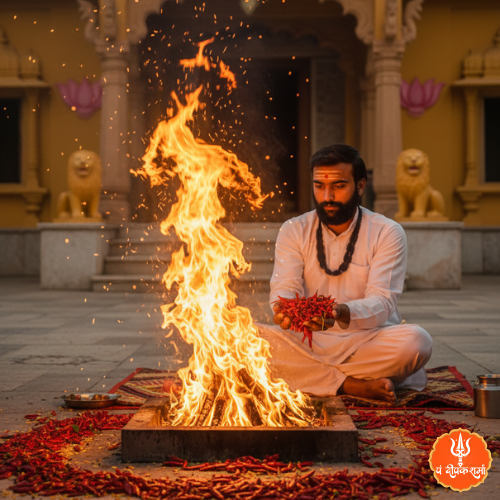
The baglamukhi Havan is a sacred Vedic ritual dedicated to Devi Baglamukhi, one of the ten Mahavidyas, revered for her power to bestow wisdom, victory, and protection from adversaries. This havan is performed to invoke the divine blessings of the goddess, seeking her grace in overcoming obstacles and achieving success in various aspects of life. The essence of this ritual lies in its ability to purify the environment and the devotee’s mind, creating a conducive atmosphere for spiritual growth and divine connection.
In the context of Baglamukhi, the havan serves as a means to channel the goddess’s energy, allowing devotees to align themselves with her divine will. The flames of the havan symbolize the burning away of negativity, ignorance, and obstacles, paving the way for clarity, strength, and victory. Through the chanting of specific mantras and offerings made during the havan, devotees express their devotion and surrender to the goddess, seeking her guidance and protection.
Moreover, the Baglamukhi Havan is not merely a ritual; it is a profound spiritual experience that fosters a deep connection between the devotee and the divine. It is a call for the goddess’s intervention in one’s life, whether it be for personal growth, overcoming enemies, or achieving success in legal matters. The havan embodies the principles of surrender, faith, and devotion, making it a significant practice for those seeking the blessings of Baglamukhi Mata.
How This Ritual Helps
The Baglamukhi Havan is renowned for its multifaceted benefits, primarily focusing on the removal of obstacles and the attainment of victory in challenging situations. One of the most sought-after outcomes of this ritual is the resolution of legal issues. Many devotees turn to this havan when faced with court cases, believing that the divine intervention of Baglamukhi Mata can lead to favorable outcomes. The specific mantras chanted during the havan are believed to invoke the goddess’s blessings for justice and victory in legal matters.
Additionally, the havan is instrumental in dispelling negativity and overcoming adversaries. The energy generated during the ritual acts as a protective shield, safeguarding the devotee from harmful influences and ill-will. This aspect of the havan is particularly significant for individuals who feel threatened by rivals or enemies, as it empowers them to face challenges with confidence and strength.
Furthermore, the Baglamukhi Havan promotes mental clarity and focus, making it an excellent choice for those preparing for competitive exams or seeking career advancement. The blessings of the goddess enhance one’s intellect and decision-making abilities, enabling devotees to navigate their professional paths with wisdom and success. Overall, the havan serves as a powerful tool for spiritual upliftment, protection, and the achievement of one’s goals.
Mythological Background
The mythology surrounding Devi Baglamukhi is rich and profound, reflecting her significance in Hindu tradition. She is often depicted as a beautiful woman adorned with a golden crown, symbolizing her divine authority and power. Baglamukhi is known as the goddess who can paralyze enemies and silence their negative influences, making her a formidable force against adversity. Her name itself signifies the essence of ‘stopping’ or ‘paralyzing,’ which is central to her role as a protector of her devotees.
According to ancient texts, Baglamukhi emerged from the collective energy of the other Mahavidyas during a cosmic battle against evil forces. Her divine intervention was crucial in restoring balance and order in the universe. This narrative highlights her role as a warrior goddess, embodying strength, wisdom, and compassion. Devotees believe that by invoking her through the Baglamukhi Havan, they can tap into her formidable energy and seek her blessings in overcoming life’s challenges.
Furthermore, the worship of Baglamukhi is deeply rooted in the practice of Tantra, where her mantras and rituals are considered powerful tools for transformation and empowerment. The Baglamukhi Havan, therefore, is not just a ritual but a means of connecting with the deeper spiritual truths that she represents. It is a way for devotees to align themselves with her divine energy, seeking her guidance in their personal and spiritual journeys.
Who Should Perform This
The Baglamukhi Havan is particularly beneficial for individuals facing challenges in their personal or professional lives. Those involved in legal disputes or court cases are encouraged to participate in this ritual, as it is believed to invoke the goddess’s blessings for justice and victory. Additionally, individuals who feel threatened by enemies or adversaries can benefit from the protective energies of this havan, which aims to neutralize negative influences and empower the devotee.
Moreover, students preparing for competitive exams or individuals seeking career advancements may also find this ritual advantageous. The blessings of Baglamukhi Mata enhance mental clarity, focus, and decision-making abilities, making it easier to navigate challenges in academic and professional settings. Therefore, anyone seeking guidance, protection, or success in their endeavors is encouraged to consider the Baglamukhi Havan.
It is also important to note that the havan can be performed by anyone with sincere devotion and faith in Devi Baglamukhi. While the presence of a qualified priest, such as Pandit Deepak Sharma, can enhance the ritual’s effectiveness, the true essence lies in the devotee’s intention and dedication to the goddess. Thus, whether performed individually or through a priest, the Baglamukhi Havan is accessible to all who seek her blessings.
Step-by-Step Vidhi (Very Detailed)
The Baglamukhi Havan is a sacred process that requires careful preparation and adherence to Vedic traditions. The following steps outline the detailed procedure for performing this ritual:
1. Preparation
Before commencing the havan, it is essential to create a clean and sacred space. This involves purifying the area where the havan will be conducted, ideally using holy water or Ganga jal. The devotee should also take a bath and wear clean, preferably white, clothes to maintain purity during the ritual. The havan samagri (materials) should be gathered, including ghee, grains, herbs, and specific offerings that resonate with the goddess’s energy.
2. Setting Up the Havan Kund
The havan kund, a fire pit made of metal or clay, should be placed in the center of the sacred space. It is crucial to ensure that the kund is properly constructed to contain the fire safely. Once the kund is ready, the devotee should place a layer of dried grass or wood at the bottom, followed by the havan samagri. This setup is vital for creating the right environment for the fire to burn and the mantras to resonate.
3. Invoking the Deities
Before lighting the fire, the devotee should perform a small puja to invoke the blessings of Lord Ganesha, the remover of obstacles. This is done by offering flowers, fruits, and sweets to the deity while chanting appropriate mantras. Following this, the devotee should invoke Devi Baglamukhi by reciting her mantras and offering her favorite items, such as yellow flowers and turmeric, into the havan kund.
4. Lighting the Fire
Once the deities have been invoked, the fire can be lit in the havan kund. The devotee should use dry wood or camphor to ignite the flames, ensuring that the fire burns brightly. As the fire is lit, it is essential to chant the Baglamukhi mantras, focusing on the intention of the ritual. This is a crucial moment, as the energy generated by the fire is believed to carry the prayers and offerings to the goddess.
5. Offering Samagri
Throughout the havan, the devotee should offer samagri into the fire while chanting specific mantras. Each offering is a symbolic gesture of surrender and devotion. The offerings may include ghee, grains, and herbs, each chosen for their significance in the ritual. As the samagri is offered, the devotee should visualize the goddess’s blessings descending upon them, enhancing the potency of the ritual.
6. Concluding the Havan
After completing the offerings, the devotee should conclude the havan with a final prayer, expressing gratitude to Devi Baglamukhi for her blessings. It is customary to perform aarti (a ceremonial worship with light) at this stage, using a diya (lamp) and singing devotional songs. The ashes from the havan can be collected and preserved, as they are considered sacred and may be used for future rituals or sprinkled around the home for protection.
Mantra for This Ritual
The primary mantra associated with the Baglamukhi Havan is:
ॐ ह्लीं बगलामुखि सर्वविघ्न नाशाय ह्लीं
Transliteration: Om Hleem Baglamukhi Sarva Vighna Nashaya Hleem
This powerful mantra is dedicated to Devi Baglamukhi and is chanted to seek her blessings for the removal of all obstacles. The syllable ‘Hleem’ is a bija mantra, representing the essence of the goddess’s energy. When chanted with devotion, this mantra is believed to invoke the goddess’s protective energy, helping devotees overcome challenges and achieve success in their endeavors.
The meaning of this mantra can be understood in several layers. Firstly, ‘Om’ signifies the universal sound, the essence of the divine. ‘Hleem’ is a seed sound that embodies the goddess’s power. ‘Baglamukhi’ refers to the goddess herself, while ‘Sarva Vighna Nashaya’ translates to ‘removal of all obstacles.’ Thus, this mantra serves as a powerful invocation, calling upon the goddess to clear the path for the devotee, allowing them to move forward without hindrance.
Chanting this mantra during the Baglamukhi Havan enhances the ritual’s effectiveness, as it aligns the devotee’s energy with that of the goddess. It is recommended to chant this mantra with focus and intention, ideally during the havan, to maximize its spiritual benefits. Regular recitation of this mantra can also lead to a deeper connection with Devi Baglamukhi, fostering a sense of protection and guidance in daily life.
Do’s & Don’ts
When performing the Baglamukhi Havan, certain guidelines should be followed to ensure the ritual’s sanctity and effectiveness. Among the do’s, it is essential to approach the ritual with a pure heart and sincere intentions. Devotees should prepare themselves mentally and spiritually, creating a conducive environment for the havan. It is also advisable to gather all necessary materials beforehand, ensuring that everything is in place for a smooth ritual.
Additionally, chanting the mantras with devotion and focus is crucial. The energy generated during the havan is directly influenced by the devotee’s concentration and faith. Therefore, maintaining a calm and peaceful mindset throughout the ritual is vital. Offering the samagri with love and gratitude enhances the connection with the goddess, making the ritual more meaningful.
On the other hand, there are certain don’ts to be mindful of. It is important to avoid any distractions during the havan, such as using mobile phones or engaging in conversations unrelated to the ritual. Negative thoughts or doubts should also be kept at bay, as they can hinder the effectiveness of the ritual. Lastly, consuming non-vegetarian food or alcohol before or during the havan is strictly prohibited, as it goes against the principles of purity and devotion.
When to Perform
The Baglamukhi Havan can be performed at any time, but certain auspicious occasions enhance its significance. Many devotees choose to conduct the havan on specific days dedicated to Devi Baglamukhi, such as during Navratri or on Tuesdays, which are considered particularly favorable for invoking her blessings. Additionally, the havan can be performed during personal milestones, such as starting a new job, entering a new home, or facing legal challenges, as these moments often call for divine intervention.
Furthermore, the lunar calendar plays a role in determining the best times for the havan. Performing the ritual during the waxing phase of the moon (Shukla Paksha) is believed to amplify the positive energies associated with the ritual. It is advisable to consult with a knowledgeable priest, such as Pandit Deepak Sharma, to identify the most auspicious timings based on individual circumstances and astrological considerations.
Ultimately, the sincerity of the devotee’s intentions is paramount. Regardless of the timing, the Baglamukhi Havan can be performed whenever one feels the need for divine guidance, protection, or resolution of challenges. The key is to approach the ritual with faith and devotion, allowing the goddess’s blessings to flow into one’s life.
Nalkheda Temple Connection
The Nalkheda Temple, dedicated to Devi Baglamukhi, is a significant pilgrimage site for devotees seeking her blessings. Located in the Agar Malwa district of Madhya Pradesh, this temple is renowned for its spiritual ambiance and the profound energy that permeates the surroundings. The temple attracts countless devotees who come to offer their prayers and perform rituals, including the Baglamukhi Havan.
Visiting the Nalkheda Temple provides an opportunity for devotees to connect with the divine in a sacred space. The temple’s architecture and serene environment enhance the spiritual experience, allowing individuals to immerse themselves in devotion and prayer. Many devotees choose to perform the Baglamukhi Havan at the temple under the guidance of experienced priests like Pandit Deepak Sharma, ensuring that the rituals are conducted according to Vedic traditions.
Moreover, the temple serves as a center for spiritual learning and guidance, where devotees can seek advice on various aspects of their lives. The presence of the goddess is felt strongly within the temple, and many have reported transformative experiences after participating in rituals and receiving blessings. Thus, the Nalkheda Temple stands as a beacon of hope and spiritual empowerment for those seeking the grace of Devi Baglamukhi.
FAQ
What is the significance of the Baglamukhi Havan?
The Baglamukhi Havan holds immense significance in Hindu spirituality, particularly for those seeking protection and victory over adversaries. This ritual is dedicated to Devi Baglamukhi, who is revered for her ability to silence enemies and remove obstacles. By performing this havan, devotees aim to invoke the goddess’s blessings, seeking her guidance in overcoming challenges in their personal and professional lives. The havan serves as a powerful means of connecting with the divine, allowing individuals to align their intentions with the goddess’s will.
Furthermore, the ritual is believed to purify the environment and the devotee’s mind, creating a sacred space for spiritual growth. The energy generated during the havan acts as a protective shield, safeguarding the devotee from negative influences. Thus, the Baglamukhi Havan is not only a ritual for seeking victory but also a transformative spiritual experience that fosters a deeper connection with the divine.
Can anyone perform the Baglamukhi Havan?
Yes, anyone with sincere devotion and faith in Devi Baglamukhi can perform the Baglamukhi Havan. While it is beneficial to have a qualified priest, such as Pandit Deepak Sharma, conduct the ritual, individuals can also perform it on their own. The key is to approach the ritual with a pure heart and genuine intentions. Whether performed individually or through a priest, the effectiveness of the havan lies in the devotee’s faith and dedication to the goddess.
It is important to prepare oneself mentally and spiritually before the ritual, creating a conducive environment for the havan. Gathering the necessary materials and maintaining focus during the ritual enhances its effectiveness. Thus, anyone seeking the blessings of Baglamukhi Mata is encouraged to consider participating in this sacred ritual.
What materials are needed for the Baglamukhi Havan?
The materials required for the Baglamukhi Havan include ghee, grains, herbs, and specific offerings that resonate with Devi Baglamukhi. Common items used in the havan include yellow flowers, turmeric, and various types of samagri that are considered auspicious. It is essential to gather these materials beforehand to ensure a smooth and uninterrupted ritual.
Additionally, the havan kund, a fire pit made of metal or clay, is necessary for conducting the ritual. The kund should be set up in a clean and sacred space, and it is crucial to prepare the area by purifying it with holy water or Ganga jal. By having all the required materials ready, devotees can focus on the spiritual aspects of the havan, enhancing their connection with the goddess.
When is the best time to perform the Baglamukhi Havan?
The Baglamukhi Havan can be performed at any time, but certain auspicious occasions enhance its significance. Many devotees choose to conduct the havan on specific days dedicated to Devi Baglamukhi, such as during Navratri or on Tuesdays. Additionally, performing the havan during the waxing phase of the moon (Shukla Paksha) is believed to amplify the positive energies associated with the ritual.
Consulting with a knowledgeable priest can help identify the most auspicious timings based on individual circumstances and astrological considerations. Ultimately, the sincerity of the devotee’s intentions is paramount, and the havan can be performed whenever one feels the need for divine guidance or resolution of challenges.
How can I book the Baglamukhi Havan online?
Booking the Baglamukhi Havan online is a convenient option for devotees who wish to participate in this sacred ritual. Many temples, including the Nalkheda Temple, offer online booking services for havans and poojas. Interested individuals can visit the temple’s official website or contact the temple authorities to inquire about the booking process.
It is advisable to provide details regarding the preferred date and any specific requirements for the havan during the booking process. By securing a booking, devotees can ensure that the ritual is conducted according to Vedic traditions, under the guidance of experienced priests like Pandit Deepak Sharma. This online booking option makes it easier for devotees to connect with the divine and participate in the Baglamukhi Havan from the comfort of their homes.
Recommended Reading / Further Exploration
- Baglamukhi Anushthan Nalkheda for Small Businesses: Practical Implementation
- Baglamukhi Anushthan Online Booking: Step-by-Step Explanation
- Advanced Concepts of Career Havan (Explained Clearly)
- Baglamukhi Specialist Deepak Sharma for Small Businesses: Practical Implementation
- Book Baglamukhi Havan: Beginner to Pro in One Detailed Guide