Introduction
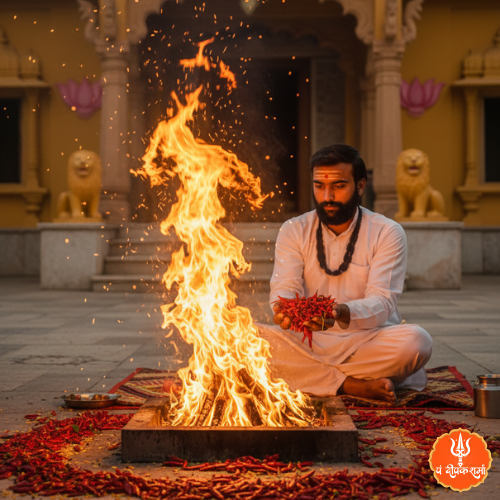
Baglamukhi Havan is a revered ritual in the Hindu tradition, dedicated to Goddess Baglamukhi, who represents the power of speech, knowledge, and the ability to overcome obstacles. Performing this havan is believed to invoke the divine blessings of the goddess, helping devotees achieve clarity, success, and protection against adversities in their lives. The Nalkheda Baglamukhi Temple is a holy site where this powerful ritual is performed with utmost devotion and adherence to Vedic traditions. Pandit Deepak Sharma, an experienced Vedic scholar, conducts these ceremonies with precision, ensuring that every aspect of the ritual aligns with the divine intent.
Meaning of This Ritual
The term ‘Havan’ refers to a fire ritual where offerings are made into the sacred fire, symbolizing the surrender of one’s desires and the invocation of divine energies. In the context of Baglamukhi Havan, it represents the act of seeking the goddess’s intervention to remove obstacles in one’s life, whether they are related to career, personal relationships, or health. The flames serve as a medium to carry the offerings to the divine, purifying the intentions of the devotee.
How This Ritual Helps
Baglamukhi Havan is performed primarily to:
- Overcome obstacles and challenges in various aspects of life.
- Gain clarity and wisdom in decision-making.
- Achieve success in legal matters and court cases.
- Enhance career growth and professional opportunities.
- Remove negative influences and enemies from one’s life.
Devotees often find that after performing this havan, they experience a sense of calm, increased focus, and a renewed sense of purpose, enabling them to navigate life’s challenges more effectively.
Mythological Background
In Hindu mythology, Goddess Baglamukhi is one of the ten Mahavidyas and is revered for her ability to control the speech and actions of her devotees. Her blessings are sought in various aspects of life, particularly when facing adversaries or challenges. The story of her divine intervention is woven into the fabric of many ancient texts, illustrating her power to silence enemies and protect her devotees from harm.
One famous legend recounts how she helped a king who was besieged by enemies. Through the performance of a dedicated havan and prayers, the king sought her blessings, and as a result, his adversaries were rendered powerless. This story exemplifies the transformative power of Baglamukhi Havan, showcasing how it can turn the tide in favor of those who earnestly seek the goddess’s help.
Moreover, Baglamukhi is often depicted holding a tongue, symbolizing her mastery over speech and the importance of wise words. This reinforces the belief that through her grace, one can attain success in communication, negotiations, and legal matters.
The havan thus serves not only as a ritualistic offering but also as a profound spiritual practice that aligns the devotee with the goddess’s energies, inviting her blessings into their lives.
Who Should Perform This
Baglamukhi Havan is suitable for anyone facing challenges or obstacles in their lives, particularly in the following situations:
- If you are involved in legal disputes or court cases.
- When seeking clarity in career decisions or professional growth.
- If you are facing difficulties with adversaries or negative influences.
- For students aiming to excel in competitive exams.
- Anyone looking to enhance their communication skills and eloquence.
It is advisable to consult with a knowledgeable pandit, such as Pandit Deepak Sharma, to ensure the havan is performed correctly and effectively.
Step-by-Step Vidhi (Very Detailed)
The following is a detailed procedure for performing Baglamukhi Havan:
Preparation
1. **Select an Auspicious Date:** Consult a calendar or a learned pandit to choose a favorable day for the ritual.
2. **Gather Materials:** You will need the following items:
- Havan kund (fire pit)
- Wood for the fire (Samidha)
- Ghee (clarified butter)
- Havan samagri (a mixture of herbs and substances for the offering)
- Flowers and fruits for offerings
- Incense sticks and camphor
- Holy water
- Images or idols of Goddess Baglamukhi
3. **Cleansing Ritual:** Begin with a purification ritual for yourself and the surrounding space. This can include bathing and wearing clean clothes.
Setting Up the Havan
4. **Prepare the Havan Kund:** Place the havan kund in a clean and sacred space. Ensure that it is oriented properly according to Vedic traditions.
5. **Arrange the Samagri:** Place the havan samagri, ghee, and other offerings near the kund, easily accessible during the ritual.
Invocation and Offering
6. **Begin with Ganesh Vandana:** Start the ritual by invoking Lord Ganesha, asking for the removal of obstacles. You can chant Ganesha mantras or perform a small pooja.
7. **Invoke Goddess Baglamukhi:** Light the fire in the havan kund, and as you do so, invoke the blessings of Goddess Baglamukhi by chanting her mantras:
Mantra: ॐ ह्लीं बगलामुखि सर्वविघ्न नाशाय ह्लीं स्वाहा
8. **Make Offerings:** Gradually add the havan samagri, ghee, and other offerings into the fire while chanting the mantra. Focus your intentions on what you wish to achieve or overcome.
9. **Prayers for Clarity and Success:** As you perform the havan, recite prayers or verses dedicated to Goddess Baglamukhi, seeking her guidance and support.
Concluding the Ritual
10. **Final Offerings:** Once the main offerings are made, conclude the ritual with a final prayer, expressing gratitude to Goddess Baglamukhi.
11. **Distribution of Prasad:** After the havan, distribute the remaining samagri as prasad among participants, symbolizing the blessings received.
12. **Clean the Space:** Finally, clean the havan area and dispose of the ashes respectfully, often in flowing water.
Mantra for This Ritual
The key mantra used during Baglamukhi Havan is:
ॐ ह्लीं बगलामुखि सर्वविघ्न नाशाय ह्लीं स्वाहा
**Transliteration:** Om Hleem Baglamukhi Sarva Vighna Nashaya Hleem Swaha
**Meaning:** This mantra is a powerful invocation to Goddess Baglamukhi, asking her to remove all obstacles and challenges from our path. The repetition of this mantra during the havan intensifies the energy and focus of the ritual, aligning the devotee with the divine will of the goddess.
Do’s & Don’ts
Do’s:
- Perform the havan with a pure heart and focused mind.
- Ensure all materials are clean and pure.
- Invite family members or close friends to participate in the ritual.
- Follow the traditional procedures as advised by a knowledgeable pandit.
Don’ts:
- Avoid performing the ritual in a hurry or without proper preparations.
- Do not use impure materials or offerings.
- Refrain from negativity or distractions during the ceremony.
- Do not interrupt the ritual once it has begun.
When to Perform
Baglamukhi Havan can be performed at any time, but it is particularly effective on:
- Days associated with Goddess Baglamukhi, such as Tuesdays and Fridays.
- During auspicious lunar phases, like Purnima (full moon) or Amavasya (new moon).
- Before important events, such as interviews, exams, or court hearings.
Nalkheda Temple Connection
The Nalkheda Baglamukhi Temple, located in Madhya Pradesh, is a magnificent shrine dedicated to the goddess. Many devotees travel to this sacred site to perform Baglamukhi Havan under the guidance of experienced pandits like Pandit Deepak Sharma. The temple holds a significant place in Hindu spirituality, attracting seekers from all over India who wish to experience the divine blessings of Baglamukhi.
FAQ
What is Baglamukhi Havan?
Baglamukhi Havan is a sacred ritual performed to invoke the blessings of Goddess Baglamukhi for overcoming obstacles and challenges in life.
Who can perform Baglamukhi Havan?
Anyone facing difficulties in their personal or professional life can perform this havan, especially those involved in legal matters or seeking clarity in their careers.
What materials are needed for the havan?
The havan requires materials such as wood, ghee, havan samagri, flowers, and a sacred fire pit (havan kund).
How does Baglamukhi Havan help?
This ritual is believed to help in removing obstacles, achieving success, and enhancing communication skills, thus benefiting various aspects of life.
When is the best time to perform this havan?
Baglamukhi Havan can be performed on auspicious days like Tuesdays and Fridays, or during significant lunar phases.
Can I perform this havan at home?
Yes, with proper guidance and preparation, you can perform Baglamukhi Havan at home. Consulting a knowledgeable pandit is advisable for best results.
Agar aap is pooja ko proper Vedic vidhi ke saath karwana chahte hain, toh Nalkheda ke experienced pandit Pandit Deepak Sharma se margdarshan le sakte hain. Woh traditional Baglamukhi pooja aur havan ko shuddh vidhi se karte hain.