Introduction
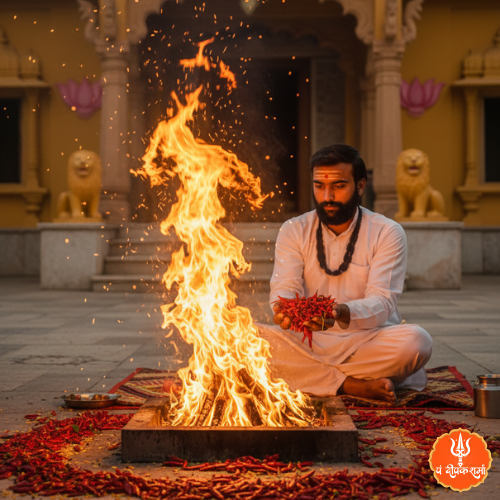
In the sacred tradition of Hindu rituals, the Baglamukhi Havan holds a profound place, especially when it comes to overcoming legal challenges. Devi Baglamukhi, revered as one of the ten Mahavidyas, embodies the power of speech and victory over adversaries. Engaging in a Baglamukhi Havan not only invokes divine blessings but also serves as a spiritual remedy for those entangled in legal disputes. This article delves deep into the essence of Baglamukhi Havan, its meaning, and how it can be a beacon of hope for individuals facing legal hurdles.
Meaning of This Ritual
The term ‘Havan’ refers to a Vedic fire ritual wherein offerings are made to the sacred fire, symbolizing the divine presence. In the context of Baglamukhi Havan, this ritual is performed to seek the blessings of Goddess Baglamukhi for protection, wisdom, and success in legal matters. The ritual is rooted in ancient scriptures, where it is believed that invoking the goddess through specific mantras and offerings may help devotees overcome the challenges posed by enemies and legal adversaries.
How This Ritual Helps
Baglamukhi Havan is considered a powerful tool for those facing legal challenges. The transformative energy of the ritual aims to:
- Provide spiritual strength to face legal battles.
- Clear obstacles that may hinder justice.
- Invoke divine protection against adversaries.
- Enhance clarity of thought and decision-making during legal proceedings.
Through sincere devotion and adherence to the ritual’s guidelines, devotees may find themselves better equipped to navigate the complexities of the legal system.
Mythological Background
The roots of Baglamukhi Havan can be traced back to ancient Hindu mythology, where Devi Baglamukhi is depicted as a fierce goddess who immobilizes her enemies through her divine powers. According to various texts, she is worshipped for her ability to protect devotees from the negative intentions of others and to grant victory in disputes. The stories of her valor and compassion resonate deeply within the hearts of her followers, making the Havan a cherished practice for those seeking her blessings.
In one popular myth, it is narrated that a sage faced numerous challenges due to a deceitful king. The sage prayed to Baglamukhi, who responded by granting him the wisdom and strength to confront the king and ultimately prevail. This narrative underscores the essence of faith and the power of the Baglamukhi Havan as a means to overcome life’s adversities.
Another tale highlights the goddess’s role in protecting her devotees from the clutches of evil forces. As she intervenes in the battles between good and evil, her devotees experience not only victory but also a profound sense of peace and protection. Such stories inspire countless individuals to perform the Baglamukhi Havan with utmost faith and devotion.
Baglamukhi’s association with the power of speech and communication also emphasizes the importance of clear expression in legal matters. By engaging in the Havan, devotees aim to enhance their ability to articulate their thoughts and arguments, thus empowering them in legal disputes.
Who Should Perform This
The Baglamukhi Havan is particularly beneficial for individuals who:
- Are involved in ongoing legal disputes or court cases.
- Seek protection from adversaries or enemies.
- Desire clarity and confidence in their communication during legal proceedings.
- Wish to invoke divine blessings for success in their endeavors.
Whether one is facing a complex legal case or simply seeking spiritual guidance, this ritual serves as a significant avenue to channel divine energies for assistance.
Step-by-Step Vidhi (Very Detailed)
To perform the Baglamukhi Havan effectively, follow this detailed vidhi:
Step 1: Preparation
Gather the necessary materials for the Havan, including:
- Havan kund (sacred fire pit)
- Wood (preferably mango or other sacred wood)
- Samagri (a mixture of herbs and grains)
- Ghee (clarified butter)
- Flowers and fruits for offerings
- Havan mantras (specific to Baglamukhi)
Ensure that the space is clean and serene to create a conducive atmosphere for the ritual.
Step 2: Invoking the Deity
Begin the Havan by lighting the sacred fire in the kund. Once the fire is lit, chant the following mantra to invoke the presence of Goddess Baglamukhi:
Mantra: ॐ ह्लीं बगलामुखि सर्वविघ्न नाशाय ह्लीं स्वाहा
Transliteration: Om Hleem Baglamukhi Sarvavighna Nashaya Hleem Swaha
This mantra is believed to eliminate all obstacles and invoke the goddess’s protective energy.
Step 3: Offering Samagri
As you chant the mantras, offer the samagri into the fire. Each offering should be accompanied by a prayer for specific wishes related to your legal troubles. Visualize the negativity associated with the legal challenges being consumed by the sacred fire.
Step 4: Chanting and Meditation
Continue chanting the Baglamukhi mantras and meditate on the goddess’s image. This step is crucial for focusing the mind and heart on the divine presence. It is recommended to chant the mantra repetitively for a specific number of times, typically 108.
Step 5: Completion and Gratitude
Once the ritual is complete, express gratitude to Goddess Baglamukhi for her guidance and blessings. Distribute the prasad (offered food) among family members or devotees. It is customary to conclude with a prayer for peace and protection for all.
Mantra for This Ritual
The mantra used during the Baglamukhi Havan is powerful and embodies the essence of the goddess. The mantra is:
ॐ ह्लीं बगलामुखि सर्वविघ्न नाशाय ह्लीं स्वाहा
Transliteration: Om Hleem Baglamukhi Sarvavighna Nashaya Hleem Swaha
This mantra translates to: “Om, I invoke Baglamukhi, who removes all obstacles; may it be so.” Reciting this mantra with sincerity is believed to invoke the goddess’s divine intervention in overcoming legal challenges.
Do’s & Don’ts
To ensure the efficacy of the Baglamukhi Havan, consider the following guidelines:
Do’s:
- Perform the Havan with a pure heart and focused intention.
- Use natural materials for offerings to maintain the sanctity of the ritual.
- Invite family members to participate, fostering a collective spiritual experience.
- Follow the rituals respectfully and with devotion.
Don’ts:
- Avoid distractions during the Havan; maintain a serene environment.
- Do not engage in negative thoughts or actions before, during, or after the ritual.
- Refrain from using synthetic materials in the offerings.
- Do not underestimate the power of faith; believe in the process and the divine.
When to Perform
The Baglamukhi Havan can be performed at any auspicious time, especially during:
- Significant festivals associated with Goddess Baglamukhi.
- During the waxing phase of the moon.
- On Tuesdays or Fridays, which are considered favorable for invoking the goddess.
It is essential to select a day that resonates with your spiritual beliefs and intentions for the ritual.
Nalkheda Temple Connection
The Nalkheda Baglamukhi Temple, located in Madhya Pradesh, is a revered site for devotees seeking the blessings of the goddess. Visiting this temple enhances the spiritual experience and offers an opportunity to engage in the Havan under the guidance of experienced priests. The temple stands as a beacon of hope for many, providing a sacred space to connect with divine energies and seek resolution in legal matters.
FAQ
- What is the significance of Baglamukhi Havan?
Baglamukhi Havan is significant for invoking the goddess’s blessings to overcome obstacles, especially in legal matters. It is believed to provide spiritual strength and protection.
- How can I prepare for the Havan?
Preparation involves gathering materials such as samagri, ghee, and flowers. Creating a serene environment is essential for a successful ritual.
- Can anyone perform the Baglamukhi Havan?
Yes, anyone facing legal challenges or seeking divine guidance can perform the Havan, as long as they do so with sincerity and devotion.
- How often should I perform the Havan?
It can be performed as needed, particularly during significant legal challenges or at auspicious times.
- Is it necessary to visit the Nalkheda Temple for the Havan?
While visiting the temple enhances the experience, performing the Havan at home with devotion is equally effective.
- What should I do after the Havan?
After the Havan, express gratitude, distribute prasad, and maintain a positive mindset moving forward.
Agar aap is pooja ko proper Vedic vidhi ke saath karwana chahte hain, toh Nalkheda ke experienced pandit Pandit Deepak Sharma se margdarshan le sakte hain. Woh traditional Baglamukhi pooja aur havan ko shuddh vidhi se karte hain.