Introduction
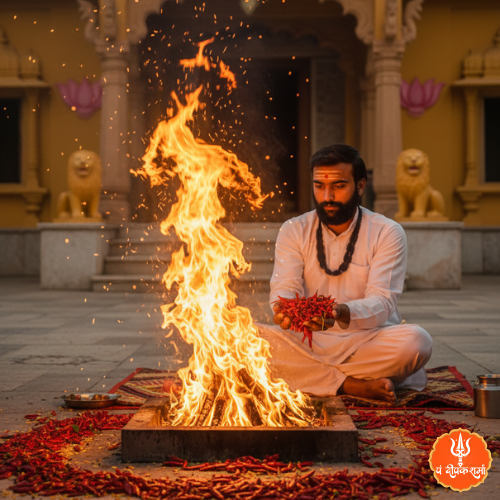
In the realm of Hindu spirituality, the Baglamukhi Havan stands out as a revered ritual, especially for individuals facing legal challenges. Devi Baglamukhi, one of the ten Mahavidyas, is known for her power to grant victory over adversaries, including in court cases. This ritual not only invokes the divine blessings of the goddess but also serves as a spiritual medium to seek relief from legal woes.
Meaning of This Ritual
The Baglamukhi Havan is a sacred fire ceremony where offerings are made to the goddess Baglamukhi. The term ‘Havan’ denotes the act of making offerings into the fire, symbolizing purification and the removal of obstacles. It is believed that through this ritual, devotees can gain strength, focus, and divine intervention in their legal matters.
How This Ritual Helps
Participating in the Baglamukhi Havan for legal victory may help in several ways:
- Divine Blessing: Invoking the goddess’s blessings for favorable outcomes.
- Spiritual Strength: Empowering the devotee with confidence and resilience in facing legal challenges.
- Obstacles Removal: Assisting in the removal of hurdles that may hinder legal proceedings.
Mythological Background
The mythology surrounding Baglamukhi is profound and rich. According to ancient texts, she is depicted as a formidable warrior goddess who can silence enemies and protect her devotees.
One of the most important legends associated with her is that of a sage who, despite his piety and righteousness, faced insurmountable challenges due to the machinations of evil forces. In dire need, he prayed to Baglamukhi, who responded by bestowing her blessings, leading to his ultimate victory.
This narrative reflects the power of devotion and the belief that with the right intention and sincere prayers, even the most daunting challenges can be overcome. The Baglamukhi Havan, therefore, serves as a modern-day invocation of this ancient power.
Another tale speaks of a king who faced losing his kingdom due to unjust accusations. Desperate, he performed the Baglamukhi Havan, and through divine intervention, he was able to clear his name and reclaim his throne. Such stories instill faith and underscore the efficacy of this ritual in legal matters.
The powerful mantra associated with Baglamukhi, “ॐ ह्लीं वाद-विजयाय ह्लीं फट्,” is often chanted during the Havan, invoking her blessings for victory in disputes and court cases.
Who Should Perform This
The Baglamukhi Havan is particularly beneficial for:
- Individuals facing court cases or legal disputes.
- Those who feel victimized or oppressed by others.
- Anyone seeking to remove negative influences affecting their legal matters.
Step-by-Step Vidhi (Very Detailed)
Performing the Baglamukhi Havan requires careful adherence to Vedic rituals. Here’s a detailed guide:
Step 1: Preparation
Begin by purifying the space where the Havan will be conducted. Clean the area and set up an altar with an image or idol of Devi Baglamukhi. Gather all the necessary materials, including:
- Havan samagri (sacred offerings such as ghee, grains, herbs)
- Agni Kund (fire pit)
- Flowers, fruits, and sweets for offerings
- Incense and camphor
Step 2: Sankalp (Resolution)
The priest or the individual performing the Havan should take a Sankalp, declaring their intention for the ritual. This includes stating the purpose of the Havan, such as seeking legal victory.
Step 3: Lighting the Havan
With the mantra “ॐ ह्लीं वाद-विजयाय ह्लीं फट्,” light the sacred fire in the Agni Kund. This fire is considered to be a medium for the offerings to reach the divine.
Step 4: Offering Materials
As the fire burns, offer the Havan samagri into the fire while chanting the Baglamukhi mantra and other relevant mantras. Each offering should be made with devotion, visualizing the goddess absorbing the energy of the offerings.
Step 5: Concluding Prayers
After all offerings have been made, conclude the Havan with prayers of gratitude, thanking Devi Baglamukhi for her blessings and protection. It is customary to perform Aarti at this stage.
Mantra for This Ritual
The primary mantra used during the Baglamukhi Havan for legal victory is:
ॐ ह्लीं वाद-विजयाय ह्लीं फट्
Transliteration: Om Hleem Vada-Vijayaya Hleem Phat
Meaning: This mantra is a powerful invocation for victory in disputes and legal matters. It is believed that chanting this mantra directs the divine energies of Baglamukhi toward overcoming obstacles in court cases.
Do’s & Don’ts
To ensure the effectiveness of the Baglamukhi Havan, it is essential to follow certain guidelines:
Do’s
- Perform the Havan with a pure heart and focused intention.
- Use fresh and high-quality offerings.
- Invite a knowledgeable pandit if you are unfamiliar with the rituals.
Don’ts
- Avoid performing the Havan in an impure or untidy space.
- Do not rush through the rituals; take your time to maintain devotion.
- Refrain from using stale or inappropriate offerings.
When to Perform
The Baglamukhi Havan can be performed at any time, but it is particularly auspicious during:
- Shukla Paksha (the waxing phase of the Moon)
- On Tuesdays and Fridays, which are considered favorable for the goddess Baglamukhi.
Nalkheda Temple Connection
The Nalkheda Baglamukhi Temple in Madhya Pradesh is one of the most revered places for performing the Baglamukhi Havan. Devotees from across the country visit this temple to seek the blessings of the goddess. The temple is renowned for its traditional rituals and the spiritual atmosphere that aids in connecting with the divine.
FAQ
- What is the significance of Baglamukhi Havan for court cases?
This Havan is believed to invoke the blessings of Devi Baglamukhi for victory in legal matters, providing strength and protection against adversaries. - Can I perform this Havan at home?
Yes, the Baglamukhi Havan can be performed at home, provided that you have the necessary materials and follow the correct rituals. - How long does the Havan take?
The duration of the Havan may vary but generally takes about 1.5 to 2 hours, depending on the rituals and offerings. - Is it necessary to have a pandit perform the Havan?
While it is beneficial to have a knowledgeable pandit to ensure proper rituals, individuals can also perform it if they are familiar with the process. - What offerings are required for the Baglamukhi Havan?
You will need ghee, grains, herbs, flowers, fruits, and sweets for the offerings, along with the Havan samagri. - Can I perform the Havan for someone else?
Yes, you can perform the Havan for someone else, especially if they are in need of legal assistance or facing challenges.
Agar aap is pooja ko proper Vedic vidhi ke saath karwana chahte hain, toh Nalkheda ke experienced pandit Pandit Deepak Sharma se margdarshan le sakte hain. Woh traditional Baglamukhi pooja aur havan ko shuddh vidhi se karte hain.