Introduction
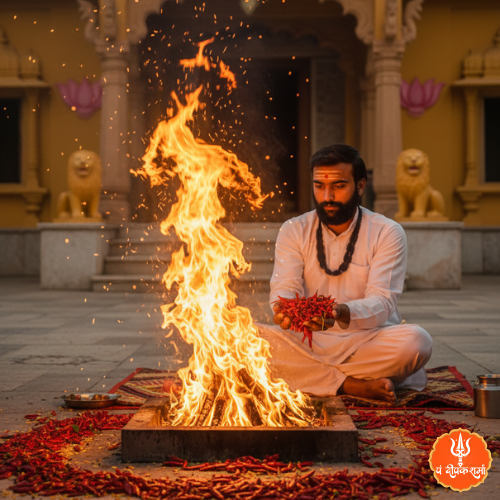
In the realm of Vedic rituals, the Baglamukhi Havan holds a profound significance, particularly for those seeking protection from enemies. Devi Baglamukhi, one of the ten Mahavidyas, is revered for her power to neutralize adversities and instill confidence in her devotees. The essence of this havan lies in its ability to invoke divine blessings for the removal of obstacles posed by enemies, thus ensuring a harmonious and prosperous life.
Meaning of This Ritual
The Baglamukhi Havan is not merely a ceremonial practice; it is a sacred invocation of divine energies. The act of performing this havan signifies the surrender of one’s fears and the plea for strength against adversaries. The term ‘Havan’ refers to the ritual of making offerings into the sacred fire, which is believed to carry the prayers and intentions of the devotee to the divine realm.
How This Ritual Helps
This powerful havan is traditionally performed to ward off negative energies and to seek the blessings of Devi Baglamukhi for protection against enemies. It is believed that through this ritual, one can overcome challenges posed by rivals, competitors, or any form of opposition in life. The havan creates a protective shield around the devotee, fostering an environment of peace and success.
Mythological Background
According to Hindu mythology, Devi Baglamukhi is depicted as a goddess who has the power to control speech, making her a formidable force against adversaries. The stories surrounding her often highlight her ability to silence the negativity and malice surrounding her devotees. In one popular legend, she is said to have defeated the demon who threatened the peace of her devotees, symbolizing the triumph of good over evil. This narrative forms the backbone of the Baglamukhi Havan, as devotees seek her intervention to overcome their own challenges.
The significance of Baglamukhi is also evident in various texts, where she is portrayed as a protector of her followers, granting them the courage and wisdom to face their enemies. The havan, therefore, is not just a ritual; it is an act of devotion that fosters a profound connection with the divine.
Furthermore, the Baglamukhi Havan is often performed during auspicious times, specifically on days that hold special significance for the goddess. This enhances the potency of the ritual, aligning the devotee’s intentions with the cosmic energies at play.
Who Should Perform This
The Baglamukhi Havan is particularly beneficial for individuals facing challenges from enemies or competitors. It is suitable for those involved in legal disputes, business rivalries, or personal conflicts. Additionally, anyone seeking to enhance their protective aura and promote peace in their lives can benefit from this powerful ritual.
Step-by-Step Vidhi (Very Detailed)
Preparation
Before commencing the havan, it is essential to prepare the sacred space. Clean the area where the havan will be performed and set up an altar dedicated to Devi Baglamukhi. Place an image or idol of the goddess prominently on the altar.
Materials Required
- Havan samagri (sacred offerings such as ghee, herbs, and grains)
- Wood for the havan fire
- A small havan kund (fire pit)
- Flowers and fruits for offerings
- Incense sticks and diyas (lamps)
Ritual Steps
1. **Achaman**: Begin with achaman, a purification process where the devotee takes water in their right hand and sips it three times, reciting appropriate mantras.
2. **Pranayama**: Engage in pranayama (breathing exercises) to calm the mind and prepare for the ritual.
3. **Lighting the Fire**: Light the fire in the havan kund using dry wood and ghee. The fire symbolizes the presence of the divine.
4. **Offering Ghee**: Begin the havan by offering ghee into the fire while reciting the mantra “ॐ ह्लीं बगलामुखि सर्व शत्रुस्तम्भनाय स्वाहा”. This mantra is dedicated to Devi Baglamukhi and invokes her blessings for protection against enemies.
5. **Offering Samagri**: Continue to add the havan samagri into the fire, each time reciting the mantra. Focus on the intention of removing negativity and obstacles.
6. **Prayers and Offerings**: After the offerings, recite prayers for protection and success. Offer flowers and fruits to the goddess as a gesture of gratitude.
7. **Concluding the Ritual**: Once the offerings are complete, perform aarti and seek blessings from Devi Baglamukhi. Conclude the ritual with a moment of silence or meditation.
Mantra for This Ritual
The primary mantra used during the Baglamukhi Havan for enemy removal is:
Devanagari: ॐ ह्लीं बगलामुखि सर्व शत्रुस्तम्भनाय स्वाहा
Transliteration: Om Hleem Baglamukhi Sarva Shatrustambhanaya Swaha
Meaning: This powerful mantra is invoked to seek the blessings of Devi Baglamukhi for the immobilization of enemies. It emphasizes the strength and protection that the goddess can provide to her devotees.
Do’s & Don’ts
Do’s
- Perform the havan with a pure heart and focused intentions.
- Follow the steps precisely to maintain the sanctity of the ritual.
- Offer fresh flowers and fruits to the goddess.
Don’ts
- Avoid distractions during the ritual.
- Do not perform the havan in a cluttered or unclean environment.
- Refrain from negative thoughts while performing the havan.
When to Perform
The ideal times to perform the Baglamukhi Havan include auspicious days like Wednesdays and during auspicious lunar phases. It is particularly beneficial during the Navratri festival, when the energies of the goddess are heightened.
Nalkheda Temple Connection
The Baglamukhi Temple in Nalkheda is a prominent pilgrimage site for devotees seeking the blessings of Devi Baglamukhi. Visiting this temple and performing the havan under the guidance of an experienced pandit can enhance the spiritual benefits. The temple is known for its serene environment, making it a perfect place for devotees to connect with the divine.
FAQ
- What is the significance of Baglamukhi Havan? Baglamukhi Havan is significant for those seeking protection and resolution against enemies and obstacles, invoking divine blessings to overcome challenges.
- Can anyone perform the havan? Yes, anyone facing challenges from adversaries or seeking spiritual protection can perform this havan.
- How often should the havan be performed? It is advisable to perform the havan during auspicious times, especially when facing challenges related to enemies or legal issues.
- What materials are needed for the havan? The havan requires specific materials like havan samagri, ghee, wood, and offerings for the goddess.
- Is there a specific mantra for the havan? Yes, the mantra used is “ॐ ह्लीं बगलामुखि सर्व शत्रुस्तम्भनाय स्वाहा”, which invokes the goddess’s protection against enemies.
- Where is the best place to perform the havan? While it can be performed at home, doing it at the Nalkheda Temple under guidance can amplify the benefits.
Agar aap is pooja ko proper Vedic vidhi ke saath karwana chahte hain, toh Nalkheda ke experienced pandit Pandit Deepak Sharma se margdarshan le sakte hain. Woh traditional Baglamukhi pooja aur havan ko shuddh vidhi se karte hain.