Introduction
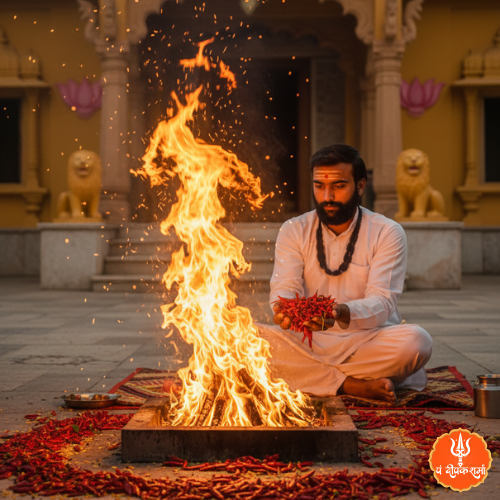
Baglamukhi Havan is a powerful Vedic ritual dedicated to Devi Baglamukhi, one of the ten Mahavidyas in Hinduism. This sacred havan is particularly revered for its ability to ward off enemies and obstacles, providing devotees with protection and strength. Conducting this havan with sincere devotion can invoke the divine blessings of Baglamukhi Mata, offering relief from adversarial situations.
Meaning of This Ritual
The term ‘Havan’ refers to a fire ritual where offerings are made into the sacred fire, invoking divine energies. Baglamukhi, the goddess of speech and power, represents the ability to overcome challenges and silence adversaries. Her blessings are sought to remove negativity and obstacles, making this ritual essential for those facing conflicts or opposition.
How This Ritual Helps
Performing the Baglamukhi Havan for enemy removal is believed to generate positive vibrations that can help dissolve enmity and protect oneself from harmful influences. This havan helps in:
- Enhancing one’s personal power and confidence.
- Reducing the impact of negative energies and adversaries.
- Facilitating legal and personal disputes to resolve favorably.
- Creating a protective shield around the devotee.
Mythological Background
Baglamukhi Mata is venerated for her ability to control and defeat enemies. According to Hindu mythology, she is depicted as a fierce goddess who can silence her foes and bring justice. In the ancient scriptures, there are numerous tales of devotees who worshipped Baglamukhi and received her blessings to overcome powerful enemies, ensuring their victory in battles and conflicts.
One notable myth involves a sage who was tormented by a group of enemies. He turned to Baglamukhi in prayer, performing a dedicated Havan to seek her intervention. Pleased with his devotion, she granted him the strength to defeat his adversaries. This story exemplifies the protective nature of Baglamukhi and the effectiveness of her havan.
In another tale, a king who faced opposition from rival kingdoms performed this havan to invoke Baglamukhi’s blessings. The divine intervention led to his victory and the establishment of peace in his realm. Such stories reinforce the belief that sincere devotion to Baglamukhi through the havan can lead to personal empowerment and protection.
Moreover, the chanting of specific mantras during the havan amplifies its effects, aligning the devotee’s energy with that of the goddess. The use of sacred herbs and offerings in the fire is believed to purify the surroundings and invoke divine blessings.
Who Should Perform This
This havan is recommended for individuals facing:
- Legal disputes or court cases.
- Obstacles in personal or professional relationships.
- Challenges from adversaries or competitors.
- Anyone seeking protection from negative influences.
It is essential for devotees to approach this ritual with sincerity and a clear intent to seek the blessings of Baglamukhi Mata.
Step-by-Step Vidhi (Very Detailed)
Performing the Baglamukhi Havan requires careful adherence to traditional rituals. Here is a detailed guide:
1. Preparation
- Choose an auspicious day, preferably during the waxing moon phase.
- Set up a clean and sacred space for the havan.
- Gather all necessary materials: havan samagri (herbs, ghee, grains), a havan kund (fire pit), and the required mantras.
2. Sankalp (Resolution)
The devotee should sit in front of the havan kund and take a moment to meditate. With a focused mind, make a Sankalp (resolution) stating the purpose of the havan, such as removing enemies or overcoming obstacles.
3. Lighting the Fire
Light the fire in the havan kund with pure ghee and dry wood. As the fire ignites, offer a prayer to Baglamukhi Mata, invoking her presence.
4. Offering the Samagri
As the fire burns, begin to offer the samagri into the flames, chanting the specific mantras:
- For enemy removal: “ॐ ह्लीं बगलामुखि सर्व शत्रुस्तम्भनाय स्वाहा” (Om Hleem Baglamukhi Sarva Shatrustambhanaya Swaha)
Repeat the mantra with each offering, focusing on the intention of overcoming adversaries.
5. Concluding the Havan
Once the offerings are made, conclude the havan by offering a final prayer of gratitude to Baglamukhi Mata. Allow the fire to burn out naturally, and collect the ash, which is considered sacred and can be used for further rituals or protection.
Mantra for This Ritual
The key mantra used in this havan is:
Devanagari: ॐ ह्लीं बगलामुखि सर्व शत्रुस्तम्भनाय स्वाहा
Transliteration: Om Hleem Baglamukhi Sarva Shatrustambhanaya Swaha
Meaning: This mantra invokes the energy of Baglamukhi to bind and silence enemies, offering the devotee protection and strength. Reciting this mantra with devotion strengthens the connection with the goddess, enhancing the effectiveness of the ritual.
Do’s & Don’ts
- Do: Approach the ritual with a sincere heart and clear intentions.
- Do: Maintain cleanliness and purity in the surroundings.
- Do: Respect the rituals and follow them as per tradition.
- Don’t: Engage in any negative thoughts or actions before or during the ritual.
- Don’t: Use impure items in the havan.
- Don’t: Rush through the rituals; take your time to connect with the divine.
When to Perform
The Baglamukhi Havan can be performed during:
- The waxing phase of the moon (Shukla Paksha).
- On auspicious days like Navratri or other festivals dedicated to Devi.
- Whenever one feels the need for protection against adversaries.
Nalkheda Temple Connection
The Baglamukhi Temple in Nalkheda, Madhya Pradesh, is a revered site for devotees. Visiting this temple to perform the havan under the guidance of an experienced pandit can enhance the spiritual experience. The temple is dedicated to Baglamukhi Mata and attracts many devotees seeking blessings for overcoming obstacles and adversaries.
Those unable to visit can still perform the havan at home, but connecting with the energy of the temple adds a profound layer of spiritual significance.
FAQ
- What materials are needed for Baglamukhi Havan?
You will need havan samagri, ghee, grains, and a havan kund. Ensure everything is pure and clean.
- Can I perform the havan at home?
Yes, you can perform the havan at home. Ensure to follow the rituals and maintain a sacred space.
- How long does the havan take?
The duration of the havan varies, but it typically takes around 1 to 2 hours to complete.
- Is there a specific time to perform this ritual?
Perform it during the waxing moon phase or on auspicious days dedicated to Baglamukhi Mata.
- What are the benefits of Baglamukhi Havan?
This havan is believed to provide protection from enemies, enhance personal power, and facilitate the resolution of conflicts.
- Can I perform the havan for someone else?
Yes, you can perform the havan on behalf of someone else with their consent, focusing on their specific needs.
Agar aap is pooja ko proper Vedic vidhi ke saath karwana chahte hain, toh Nalkheda ke experienced pandit Pandit Deepak Sharma se margdarshan le sakte hain. Woh traditional Baglamukhi pooja aur havan ko shuddh vidhi se karte hain.