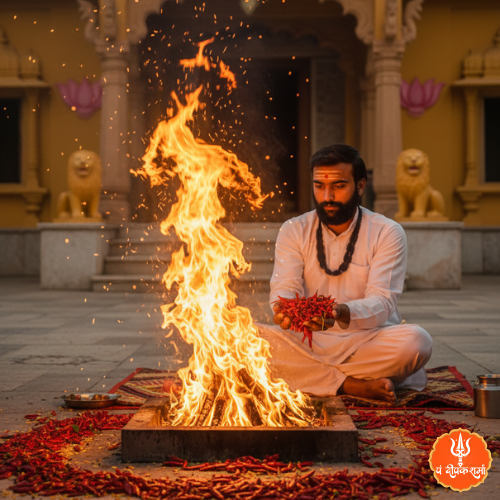
In the realm of Vedic traditions, the worship of Baglamukhi Mata holds a significant place, especially when it comes to overcoming adversaries and obstacles. Devi Baglamukhi, one of the ten Mahavidyas, represents the divine feminine power that can silence our enemies and protect us from harm. The Baglamukhi Havan, especially for enemy removal, is a sacred ritual that invokes her blessings, ensuring that devotees are shielded from negativity and malice.
Meaning of This Ritual
The Baglamukhi Havan is not just a ritual; it is a profound spiritual practice aimed at invoking the energy of the goddess to dispel enemies and overcome challenges. The term ‘Havan’ denotes a fire ritual where offerings are made into the sacred fire, symbolizing the purification of the devotee’s intentions and desires. By performing this havan, one seeks to align with Baglamukhi’s divine energy, which is known to subdue adversaries and bring about peace and resolution in conflicts.
Baglamukhi Mata is often depicted sitting on a throne, holding a tongue in one hand, symbolizing her ability to silence harmful speech and actions. This aspect is crucial when seeking relief from enemies, as it emphasizes the importance of controlling negative influences in one’s life.
How This Ritual Helps
The Baglamukhi Havan serves multiple purposes for devotees. Primarily, it helps in:
- Enemy Removal: The primary goal is to neutralize the influence of enemies, whether known or unknown, who may be obstructing one’s path.
- Protection: The havan acts as a shield, protecting the devotee from malice and negativity.
- Clarity and Focus: Engaging in this ritual helps one gain clarity in difficult situations, allowing for better decision-making.
- Spiritual Growth: The havan fosters a deeper connection with the divine, promoting overall spiritual well-being.
- Conflict Resolution: It aids in resolving disputes and conflicts, ensuring harmony and peace in personal and professional relationships.
Mythological Background
The roots of Baglamukhi’s worship lie deep within Hindu mythology. According to ancient texts, Baglamukhi Mata is revered as a goddess of knowledge, wisdom, and power. She is said to have emerged from the combined energies of the other Mahavidyas to assist the gods in their battles against demonic forces. One significant story narrates how she helped the gods during the great war with the demons, embodying the essence of strategic warfare.
In another tale, she is described as a compassionate mother who, upon witnessing her devotees in distress, appears to alleviate their sufferings. This aspect makes her worship particularly important for those facing adversities, especially from rivals or enemies.
Furthermore, Baglamukhi’s association with the element of fire during the havan symbolizes transformation. Just as fire transforms offerings into energy, so too can the blessings of the goddess transform the life of her devotee, turning hardships into opportunities for growth and success.
Her mantra, “ॐ ह्लीं बगलामुखि सर्व शत्रुस्तम्भनाय स्वाहा” (Om Hleem Baglamukhi Sarva Shatrusambhanaya Swaha), is a powerful invocation that calls upon her to immobilize and defeat enemies. Reciting this mantra during the havan enhances the potency of the ritual, making it a formidable practice for those in need of protection.
Who Should Perform This
The Baglamukhi Havan is ideal for individuals facing conflicts, whether in personal relationships, business environments, or legal situations. It is particularly beneficial for:
- Those feeling threatened by enemies or competitors.
- Individuals involved in legal disputes or court cases.
- Professionals seeking growth in their careers while facing opposition.
- Anyone who feels blocked by negative energies and seeks spiritual cleansing.
This ritual can be performed by devotees themselves or conducted by an experienced pandit. Engaging a knowledgeable pandit, like Pandit Deepak Sharma from Nalkheda, ensures that the ritual adheres to Vedic traditions, amplifying its effectiveness.
Step-by-Step Vidhi (Very Detailed)
Performing the Baglamukhi Havan for enemy removal requires careful preparation and adherence to Vedic rituals. Below is a detailed step-by-step guide:
Preparation
1. **Select an Auspicious Day:** Choose a day that aligns with favorable planetary positions. Ideally, consult a knowledgeable pandit to determine the best timing.
2. **Gather Materials:** Collect all necessary items, including:
- Havan Kund (sacred fire pit)
- Wood for the fire (preferably mango or sandalwood)
- Ghee (clarified butter)
- Herbs and samagri (mixed offerings)
- Flowers and incense
- Rice and sugar for offerings
Conducting the Havan
3. **Purification:** Begin by purifying the space. Sprinkle water mixed with Ganga Jal around the area to create a sanctified environment.
4. **Setting Up the Havan Kund:** Place the Havan Kund in a clean space, preferably facing east. Arrange the wood in a pyramid shape within the Kund.
5. **Invoke the Divine:** Light the fire using dry leaves or newspaper. As the fire ignites, chant the mantra “ॐ ह्लीं बगलामुखि सर्व शत्रुस्तम्भनाय स्वाहा” to invite the goddess’s presence.
6. **Offerings:** As the fire burns, begin adding ghee and samagri into the flames while continuing to chant the mantra. Each offering symbolizes a prayer for the removal of specific enemies or obstacles.
7. **Prayers and Intentions:** After making several offerings, take a moment to express your intentions clearly. Visualize the obstacles being removed and offer gratitude to the goddess for her protection.
Concluding the Havan
8. **Arti and Prasad:** Once the havan is complete, perform an Aarti using a lighted diya while singing hymns in praise of Baglamukhi. Afterward, distribute the prasad (blessed food) to all participants as a token of the goddess’s blessings.
9. **Gratitude:** Conclude the ritual by expressing gratitude to Devi Baglamukhi for her divine intervention and blessings. This helps in fortifying your connection with the goddess.
Mantra for This Ritual
The central mantra for the Baglamukhi Havan for enemy removal is:
Devanagari: ॐ ह्लीं बगलामुखि सर्व शत्रुस्तम्भनाय स्वाहा
Transliteration: Om Hleem Baglamukhi Sarva Shatrusambhanaya Swaha
Meaning: This powerful mantra invokes the energy of Baglamukhi Mata to immobilize all enemies and obstacles. The sound “Hleem” resonates with the energies of control, strength, and victory, while “Swaha” signifies the offering made into the fire.
Chanting this mantra with pure devotion during the havan amplifies its effectiveness, aligning the devotee’s intentions with the divine will of Baglamukhi Mata.
Do’s & Don’ts
When performing the Baglamukhi Havan, it is essential to follow certain guidelines to ensure its success:
- Do’s:
- Conduct the ritual with a pure heart and clear intentions.
- Use fresh, quality materials for the havan to enhance its effectiveness.
- Seek blessings from a knowledgeable pandit to ensure proper execution.
- Maintain silence and focus during the ritual to invite divine energies.
- Don’ts:
- Do not engage in negative thoughts or speak ill during the ritual.
- Avoid using stale or impure offerings, as they can hinder the ritual.
- Do not rush through the ritual; patience and devotion are key.
- Refrain from performing the havan during inauspicious timings.
When to Perform
The ideal times to perform the Baglamukhi Havan include:
- On auspicious festivals dedicated to Goddess Baglamukhi, such as Navratri.
- During the waxing phase of the moon, which is considered more favorable.
- When facing specific challenges or conflicts in your life, seeking immediate relief.
Consulting with Pandit Deepak Sharma can provide insights into the most suitable timing based on individual circumstances and astrological factors.
Nalkheda Temple Connection
The Nalkheda Temple, dedicated to Devi Baglamukhi, is a significant pilgrimage site for devotees. Located in the Agar Malwa district of Madhya Pradesh, this temple attracts numerous visitors seeking the blessings of the goddess. The temple is renowned for its serene ambiance and the profound energy that envelops the premises.
The rituals performed at this temple, especially the Baglamukhi Havan, are carried out with utmost devotion and adherence to Vedic traditions. Pilgrims visiting the Nalkheda Temple can engage in various rituals, including the Baglamukhi Havan, under the guidance of experienced pandits like Pandit Deepak Sharma, ensuring a complete spiritual experience.
Many devotees have reported miraculous changes in their lives after performing rituals at this sacred site, making it a must-visit for those seeking divine intervention against their enemies.
In conclusion, the Baglamukhi Havan for enemy removal is a powerful spiritual practice that not only seeks to eliminate adversaries but also fosters a deeper connection with the divine. Engaging in this sacred ritual with devotion can lead to profound transformations in one’s life.
FAQ
What is Baglamukhi Havan?
Baglamukhi Havan is a Vedic fire ritual dedicated to Goddess Baglamukhi, aimed at removing enemies and obstacles from one’s life. It involves offerings made into the sacred fire while chanting specific mantras to invoke the goddess’s blessings.
Who can perform the Baglamukhi Havan?
Anyone can perform the Baglamukhi Havan, but it is particularly beneficial for those facing adversities from enemies or competitors. It is advisable to seek the guidance of an experienced pandit for proper execution.
When is the best time to perform this havan?
The best times to perform the Baglamukhi Havan are during auspicious festivals like Navratri, on the waxing moon phase, or during personal crises when immediate relief is desired. Consulting with a pandit can provide specific recommendations based on your circumstances.
What materials are needed for the havan?
Essential materials for the Baglamukhi Havan include a Havan Kund, wood for the fire, ghee, herbs, flowers, and offerings like rice and sugar. Using fresh and quality materials enhances the ritual’s effectiveness.
How does the havan help in removing enemies?
The havan invokes the divine energy of Goddess Baglamukhi to immobilize and neutralize enemies. By offering prayers and intentions during the ritual, devotees can seek protection and resolution from conflicts.
Can I perform this ritual at home?
Yes, the Baglamukhi Havan can be performed at home, but it is essential to maintain a clean and sanctified space. For enhanced results, it is recommended to engage a knowledgeable pandit for guidance and support.
@@END@@