Meaning of This Ritual
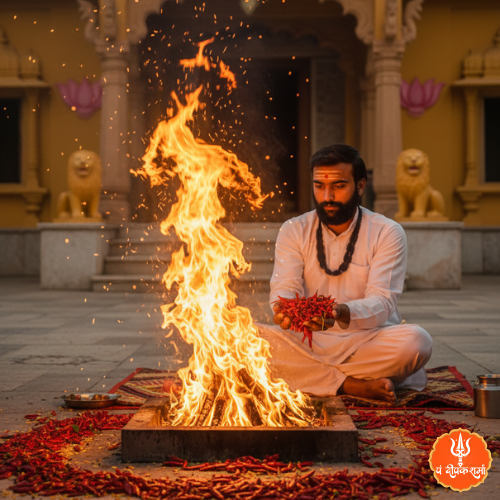
The baglamukhi Havan is a sacred fire ritual dedicated to Devi Baglamukhi, one of the ten Mahavidyas in Hindu tradition. This ritual is performed to invoke the divine blessings of the goddess, who is revered for her power to control and eliminate adversities. The word ‘Havan’ signifies the act of making offerings into the sacred fire, which is believed to carry the prayers and intentions of the devotees to the divine realm. Through this ritual, devotees seek protection from enemies, resolution of legal issues, and overall success in their endeavors.
In essence, the Baglamukhi Havan is not merely a ritual but a profound spiritual experience that connects the devotee with the divine energy of Baglamukhi Mata. It is a way to express devotion, seek guidance, and receive blessings for overcoming obstacles. The offerings made during the Havan symbolize the surrender of one’s ego and desires to the divine, allowing the goddess to intervene in the devotee’s life.
How This Ritual Helps
The Baglamukhi Havan serves multiple purposes, primarily focusing on the removal of obstacles and enemies. It is particularly beneficial for those facing legal challenges, as it invokes the goddess’s blessings for victory in court cases. The ritual is also known to enhance one’s career prospects, providing the necessary strength and clarity to navigate professional challenges. Many devotees have reported experiencing a sense of relief and empowerment after performing this Havan.
Moreover, the Havan creates a positive energy field that purifies the surroundings and the participants. The sacred fire is considered a medium through which the divine energy is transmitted, cleansing the mind and spirit of negativity. This purification process is essential for those seeking spiritual growth and clarity in their lives. The Havan also fosters a sense of community among participants, as they come together in devotion and shared purpose.
Mythological Background
According to Hindu mythology, Devi Baglamukhi is known as the goddess of speech and power. She is often depicted as a beautiful woman holding a club and a noose, symbolizing her ability to control and subdue enemies. The legend states that she emerged from the collective consciousness of the gods to combat the forces of evil and restore dharma. Her divine intervention is sought by those who wish to overcome adversaries and achieve success in their pursuits.
The Baglamukhi Havan is rooted in ancient Vedic traditions, where fire rituals were performed to appease deities and seek their blessings. The significance of fire in these rituals is profound, as it represents purity and the divine presence. It is believed that the flames carry the offerings and prayers to the heavens, where the goddess listens and responds to the devotees’ calls. The ritual is often accompanied by specific mantras that invoke the goddess’s energy, enhancing the effectiveness of the Havan.
Who Should Perform This
The Baglamukhi Havan is suitable for anyone seeking relief from obstacles, particularly those facing legal issues or conflicts with enemies. It is especially beneficial for individuals involved in court cases, as the blessings of Devi Baglamukhi can provide the necessary support for a favorable outcome. Additionally, those looking to enhance their career prospects or seeking guidance in competitive exams may also find this ritual advantageous.
Moreover, the Havan can be performed by individuals who wish to strengthen their spiritual connection with Devi Baglamukhi. It is an excellent opportunity for devotees to express their devotion and seek blessings for personal growth and protection. Families facing challenges or seeking harmony can also participate in this ritual together, fostering unity and collective strength.
Step-by-Step Vidhi (Very Detailed)
The Baglamukhi Havan is a detailed process that requires careful preparation and adherence to Vedic rituals. Here is a step-by-step guide to performing the Havan:
Preparation
Begin by selecting an auspicious date and time for the Havan, ideally on a Tuesday or Saturday, as these days are considered favorable for invoking Devi Baglamukhi. Clean the space where the Havan will be performed, ensuring it is free from any negativity. Set up a Havan Kund (sacred fire pit) using clay or metal, and place it in a clean and quiet area.
Gather all necessary materials, including ghee (clarified butter), samagri (a mixture of sacred offerings), flowers, and incense. It is also essential to have a picture or idol of Devi Baglamukhi placed near the Havan Kund. Prepare a seating arrangement for the participants, ensuring that everyone is comfortable and focused on the ritual.
Invocation of the Goddess
Once everything is prepared, begin the ritual by invoking the presence of Devi Baglamukhi. Light a diya (lamp) and offer flowers to the goddess while reciting her mantra. This sets the intention for the Havan and invites the divine energy into the space. The mantra for this ritual is:
ॐ ह्लीं बगलामुखि सर्वविघ्न नाशाय ह्लीं
Transliteration: Om Hleem Baglamukhi Sarva-Vighna Nashaya Hleem
Meaning: This mantra is a powerful invocation for the removal of all obstacles and difficulties.
Performing the Havan
With the invocation complete, proceed to perform the Havan. Begin by pouring ghee into the Havan Kund while chanting the mantra. The offerings of samagri should be made into the fire, accompanied by the recitation of specific mantras dedicated to Devi Baglamukhi. Each offering represents a surrender of your challenges and desires to the goddess.
Continue to chant the mantra and offer ghee and samagri into the fire for a set duration, typically around 30 to 45 minutes. Maintain a focused and devotional mindset throughout the ritual, allowing the energy of the Havan to envelop you and the participants. Conclude the Havan by offering gratitude to Devi Baglamukhi for her blessings and protection.
Mantra for This Ritual
The mantra associated with the Baglamukhi Havan is a vital component of the ritual. It is essential to recite it with devotion and focus:
ॐ ह्लीं बगलामुखि सर्वविघ्न नाशाय ह्लीं
Transliteration: Om Hleem Baglamukhi Sarva-Vighna Nashaya Hleem
This mantra holds profound significance as it directly appeals to Devi Baglamukhi for the removal of all obstacles. The syllable ‘Hleem’ is a bija (seed) mantra that embodies the essence of the goddess’s energy. Reciting this mantra with sincerity and devotion can invoke the goddess’s blessings, providing strength and clarity in challenging situations.
When chanting the mantra, it is important to maintain a calm and focused mind. Visualize the goddess’s presence and feel her energy surrounding you. The repetition of the mantra during the Havan enhances its potency, allowing the devotee to connect deeply with the divine. It is recommended to chant this mantra at least 108 times during the Havan, as this number holds spiritual significance in Hindu tradition.
Do’s & Don’ts
To ensure the effectiveness of the Baglamukhi Havan, there are certain do’s and don’ts that devotees should follow:
Do’s
- Perform the Havan with a pure heart and sincere intentions.
- Ensure that the space is clean and free from distractions.
- Dress in simple, clean attire, preferably in shades of yellow or orange, which are auspicious colors associated with Devi Baglamukhi.
- Invite family members or close friends to participate, fostering a sense of community and shared devotion.
- Maintain focus and devotion throughout the ritual, avoiding any negative thoughts or distractions.
Don’ts
- Avoid performing the Havan during inauspicious times, such as eclipses or on days dedicated to other deities.
- Do not consume alcohol or non-vegetarian food before or during the ritual.
- Refrain from using harsh or negative language in the presence of the Havan.
- Do not interrupt the ritual once it has begun; maintain a respectful silence.
- Avoid any form of distraction, such as mobile phones or loud noises, during the Havan.
When to Perform
The Baglamukhi Havan can be performed at any time, but certain periods are considered particularly auspicious. Tuesdays and Saturdays are favored days for invoking the goddess’s blessings, as they are associated with strength and overcoming obstacles. Additionally, performing the Havan during the waxing phase of the moon is believed to enhance its effectiveness.
Devotees may also choose to perform the Havan during significant personal events, such as starting a new job, entering a new phase of life, or facing legal challenges. It is advisable to consult with a knowledgeable pandit to determine the most auspicious timing based on individual circumstances and astrological factors.
Nalkheda Temple Connection
The Nalkheda Baglamukhi Temple, located in the Agar Malwa district of Madhya Pradesh, is a revered pilgrimage site for devotees of Devi Baglamukhi. The temple is known for its serene atmosphere and the powerful energy that resonates within its walls. Many devotees visit the temple to seek blessings and perform rituals, including the Baglamukhi Havan.
At the temple, experienced pandits, including Pandit Deepak Sharma, perform authentic Vedic rituals, ensuring that devotees receive the full benefits of their prayers and offerings. The temple serves as a spiritual hub, attracting individuals from all walks of life who come to connect with the divine and seek guidance in their lives.
Visiting the Nalkheda Temple and participating in the Baglamukhi Havan there can amplify the spiritual experience, as the energy of the temple enhances the effectiveness of the ritual. Devotees often report profound transformations and blessings after performing rituals at this sacred site.