Introduction
Baglamukhi Havan holds a prominent place in the spiritual practices of devotees seeking divine blessings from Goddess Baglamukhi. This ritual is not merely a ceremonial act; it embodies deep spiritual significance, often regarded as a powerful means to attain success and protection from adversities. As one of the ten Mahavidyas, Baglamukhi represents the energy of speech and the ability to overcome obstacles. Performing the Havan invokes her grace, facilitating the removal of hindrances in various aspects of life, including career, education, and personal challenges.
Meaning of This Ritual
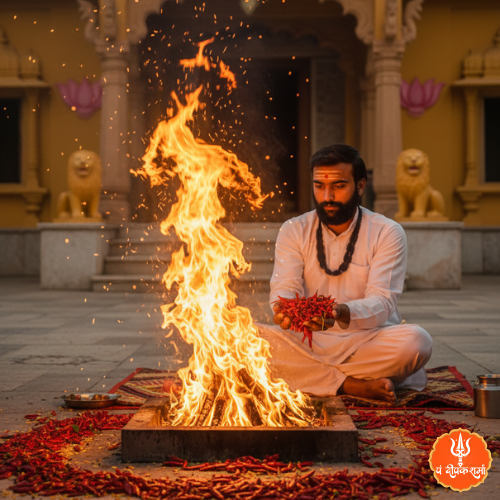
The Baglamukhi Havan is a sacred fire ritual performed to appease Goddess Baglamukhi. The term ‘Havan’ itself originates from the Sanskrit word ‘Hav’, which means to offer. In this context, offerings made into the sacred fire symbolize the surrender of one’s difficulties and the invocation of divine energy to bring about positive changes. The ritual is layered with mantras and offerings that align with the energies of the goddess, making it a holistic approach to spiritual growth and empowerment.
How This Ritual Helps
Engaging in Baglamukhi Havan is believed to bring about numerous benefits. It aids in overcoming enemies and obstacles, enhancing one’s career prospects, and ensuring success in various endeavors. The ritual also instills confidence and clarity of thought, which are essential for navigating life’s challenges. Furthermore, it is often sought by individuals facing legal issues or career blockages, as the blessings of the goddess are thought to provide protection and guidance in such matters.
Mythological Background
The significance of Baglamukhi Havan is deeply rooted in Hindu mythology. According to ancient texts, Baglamukhi is revered as the goddess who immobilizes enemies and silences negative forces. One of the most famous legends associated with her involves the suppression of a fierce demon who threatened the peace of the heavens. The goddess, with her divine wisdom and strength, managed to subdue him, thereby restoring harmony. This act of protection is what devotees seek to replicate through the Havan, as they aim to invoke her strength in their own lives.
Another tale revolves around the goddess aiding her devotees in battles, both literal and metaphorical. The power of her mantra, when chanted during the Havan, is said to create a shield against adversities. This transformative energy is central to the ritual, making it a vital practice for those seeking to protect their interests and ensure victory in their pursuits.
Additionally, the goddess is often depicted with a tongue of fire, symbolizing her ability to consume negativity and empower her followers. By performing the Havan, devotees align themselves with this potent energy, allowing them to channel it into their own lives for greater success and protection.
Who Should Perform This
Baglamukhi Havan is suitable for anyone facing challenges in their personal or professional life. Individuals seeking resolution in court cases, career advancements, or facing opposition from rivals may particularly benefit from this ritual. It is also recommended for students preparing for competitive exams, as the blessings of the goddess are believed to enhance focus and cognitive abilities. Moreover, those desiring spiritual growth and protection from negative influences can find solace in this devotional practice.
Step-by-Step Vidhi (Very Detailed)
The following is a detailed guide to performing the Baglamukhi Havan:
- Preparation: Start by cleansing the space where the Havan will be performed. Set up an altar with an image or idol of Goddess Baglamukhi. Gather all necessary materials, including Havan samagri (ritual offerings), ghee, and specific herbs.
- Creating the Havan Kund: Construct a small fire pit (Kund) using bricks or clay. The Kund should be square or rectangular, symbolizing stability and balance.
- Purification: Perform a purification ritual (Achaman) by sipping water three times while reciting mantras. This cleanses the mind and prepares the devotee for the sacred act.
- Lighting the Fire: Light the fire in the Kund using dried leaves and ghee. As the flames rise, chant the mantra “ॐ ह्लीं बगलामुखि सर्वविघ्न नाशाय ह्लीं” to invoke the goddess’s energy.
- Offering: Add the Havan samagri into the fire while chanting specific mantras. Each offering should be made with intention, visualizing the obstacles being removed as the offerings are consumed by the flames.
- Conclusion: After completing the offerings, conclude the Havan with a prayer of gratitude to Goddess Baglamukhi for her blessings. Allow the fire to extinguish naturally.
Mantra for This Ritual
The key mantra associated with Baglamukhi Havan is:
Mantra: ॐ ह्लीं बगलामुखि सर्वविघ्न नाशाय ह्लीं
Transliteration: Om Hleem Baglamukhi Sarva Vighna Nashaya Hleem
Meaning: This mantra translates to invoking Goddess Baglamukhi to remove all obstacles. Each element of the mantra is imbued with spiritual significance, enhancing its effectiveness during the Havan.
Do’s & Don’ts
Do’s:
- Perform the Havan with a pure heart and focused mind.
- Use authentic materials for the offerings to ensure the ritual’s sanctity.
- Invite family members or close friends to join in the ritual for shared blessings.
Don’ts:
- Avoid distractions during the ritual to maintain focus on the divine.
- Do not use artificial or impure materials in the Havan.
- Refrain from negative thoughts or intentions while performing the ritual.
When to Perform
Baglamukhi Havan can be performed on auspicious days such as Navratri, or during any significant personal event or challenge. Many devotees choose to perform it on Fridays, which are considered particularly favorable for worshipping this goddess. Consulting a knowledgeable pandit for guidance on timing can enhance the ritual’s effectiveness.
Nalkheda Temple Connection
The Nalkheda Temple is a revered site for devotees of Goddess Baglamukhi, attracting those seeking her blessings through Havan and pooja. The temple’s serene ambiance aids devotees in deepening their spiritual connection with the goddess, making it an ideal location for performing the ritual. Visiting the temple, participating in communal rituals, and seeking the guidance of Pandit Deepak Sharma can further enhance the experience.
FAQ
What materials are needed for Baglamukhi Havan?
The essential materials include Havan samagri, ghee, dried herbs, and a representation of Goddess Baglamukhi. It is also important to have a clean space for the Havan Kund.
Can I perform the Havan at home?
Yes, Baglamukhi Havan can be performed at home, provided you have a suitable space and materials. It is recommended to maintain a calm and sacred environment during the ritual.
How long does the Havan take?
The duration of the Havan varies based on the devotee’s preference and the number of offerings made. Typically, it can last anywhere from 30 minutes to 2 hours.
Is it necessary to have a pandit perform the Havan?
While it is beneficial to have a knowledgeable pandit guide you through the Havan for proper execution, devotees can also perform it themselves with proper preparation and understanding.
What are the benefits of performing Baglamukhi Havan?
Performing Baglamukhi Havan is believed to help remove obstacles, enhance career prospects, provide protection from negative influences, and bless devotees with success and clarity.
Can the Havan be performed for someone else?
Yes, Baglamukhi Havan can be performed on behalf of someone else, such as a family member or friend, with their permission and intention for their well-being.
Agar aap is pooja ko proper Vedic vidhi ke saath karwana chahte hain, toh Nalkheda ke experienced pandit Pandit Deepak Sharma se margdarshan le sakte hain. Woh traditional Baglamukhi pooja aur havan ko shuddh vidhi se karte hain.