Introduction to Baglamukhi Havan
Baglamukhi Havan is a revered Vedic ritual dedicated to Devi Baglamukhi, one of the ten Mahavidyas, who embodies the power of speech, intellect, and victory. This powerful havan is performed to seek the blessings of Devi Baglamukhi for protection from enemies, overcoming obstacles, and achieving success in various endeavors. The significance of this ritual is deeply rooted in ancient scriptures and is known to bring about positive transformations in the lives of devotees.
The Sacred Vidhi of Baglamukhi Havan
Performing the Baglamukhi Havan requires detailed attention to Vedic rituals and procedures. Below is a step-by-step guide to conducting this sacred havan.
Preparation for the Havan
Before initiating the Baglamukhi Havan, it is essential to prepare the environment and gather all necessary materials. The following steps outline this preparation:
- Cleansing the Space: Begin by cleaning the area where the havan will be performed. It is crucial to create a pure atmosphere, free from any negativity. Light incense and sprinkle holy water to sanctify the space.
- Gathering Havan Samagri: Collect all required items, including ghee, wood sticks, herbs, and specific offerings (such as rice and flowers) that will be used during the havan. Each item holds significant energy and importance in the ritual.
- Setting Up the Havan Kund: Construct a havan kund (fire altar) using bricks or clay in a square shape. Ensure it is appropriately sized to accommodate the offerings made during the havan.
Invoking Devi Baglamukhi
Once the preparations are complete, the next step is to invoke the divine presence of Devi Baglamukhi. This is done through chanting specific mantras and performing a small puja:
- Offering a Prayer: Stand in front of the havan kund and offer a prayer to Devi Baglamukhi, expressing your intentions and seeking her blessings. You may say, “ॐ ह्लीं बगलामुखि सर्वरक्षणाय नमः” (Om Hleem Baglamukhi Sarvarakshanaya Namah), which means “I offer my salutations to Devi Baglamukhi, who protects all.”
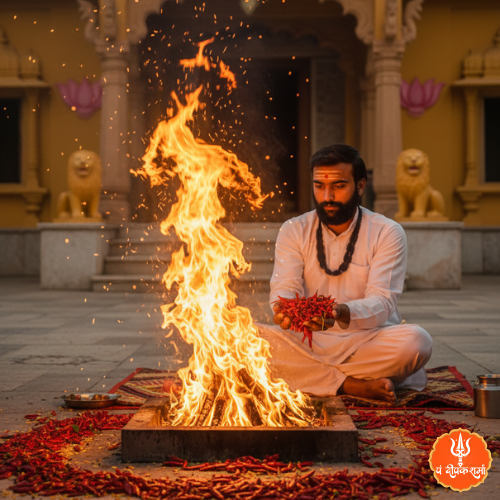
- Lighting the Fire: Light the fire in the havan kund using dry wood and ghee. As the flames rise, visualize your intentions being carried into the universe.
- Offering the Ingredients: Begin to offer the prepared samagri into the fire while chanting the Baglamukhi mantra. Each offering should be made with focus and devotion, symbolizing the release of your worries and the invitation for blessings.
Concluding the Havan
After completing the offerings, conclude the havan with gratitude:
- Pradakshina (Circumambulation): Walk around the havan kund three times, symbolizing the acceptance of blessings. This act is a way of honoring the divine presence.
- Offering Aarti: Perform an aarti ceremony with a lamp to honor Devi Baglamukhi. As you sing hymns, visualize her divine light enveloping you.
- Distribution of Prasad: Share the prasad (blessed food) with all participants, symbolizing the sharing of divine blessings.
Mythological Background of Baglamukhi
Devi Baglamukhi is often depicted as a beautiful goddess dressed in yellow, symbolizing knowledge and wisdom. According to Hindu mythology, she is known to have the power to control speech and is considered the protector against enemies and false accusations. Her devotees believe that worshiping her helps in overcoming challenges and achieving victory in legal matters, disputes, and personal conflicts. The fierce and protective nature of Baglamukhi makes her a revered deity among those seeking justice and protection.
The Mantra for Baglamukhi Havan
The mantra that is primarily used during the Baglamukhi Havan is:
ॐ ह्लीं बगलामुखि सर्वरक्षणाय नमः
Transliteration: Om Hleem Baglamukhi Sarvarakshanaya Namah
Meaning: “I offer my salutations to Devi Baglamukhi, who protects all.” This mantra is a call for divine intervention to protect against all adversities and obstacles.
When to Perform Baglamukhi Havan
The Baglamukhi Havan can be performed during various auspicious occasions. It is particularly beneficial:
- When facing legal challenges or court cases.
- When seeking protection from enemies or negative influences.
- During the start of a new venture or job.
- Before important examinations or competitions.
Choosing a suitable muhurat (auspicious time) for the havan enhances its effectiveness. Consulting with a knowledgeable pandit can help determine the best timing based on your specific needs.
Do’s and Don’ts of Baglamukhi Havan
To ensure the success of the Baglamukhi Havan, consider the following:
- Do: Maintain a focused and devotional mindset throughout the ritual.
- Do: Dress in clean and appropriate attire, preferably in shades of yellow, which is auspicious for Baglamukhi.
- Do: Offer genuine intentions and heartfelt prayers during the havan.
- Don’t: Engage in negative thoughts or actions while performing the ritual.
- Don’t: Interrupt the havan once initiated, as it can disrupt the flow of energy.
- Don’t: Use any impure materials or items that are not part of the havan samagri.
Nalkheda Temple Connection
The Nalkheda Baglamukhi Temple is a significant pilgrimage site for devotees seeking the blessings of Devi Baglamukhi. Nestled in the Agar Malwa district of Madhya Pradesh, this temple attracts numerous visitors who come to perform the Baglamukhi Havan and offer their prayers. The temple is known for its serene environment and the spiritual energy that surrounds it, making it an ideal place for conducting various rituals and anushthans.
FAQ
- What is the significance of Baglamukhi Havan?
Baglamukhi Havan is performed to seek protection from enemies and to remove obstacles in life. It is particularly beneficial for those facing legal challenges or conflicts. - How often can Baglamukhi Havan be performed?
This havan can be performed as often as needed, especially during times of struggle or when embarking on new ventures. - Can Baglamukhi Havan be performed at home?
Yes, Baglamukhi Havan can be performed at home, but it is recommended to conduct it under the guidance of an experienced pandit for the best results. - What materials are needed for Baglamukhi Havan?
The essential materials include ghee, specific herbs, wood sticks, rice, flowers, and the havan kund itself. All items should be pure and prepared with devotion. - What is the right time to perform the havan?
The havan can be performed on auspicious days, especially during favorable planetary alignments, or whenever one faces adversity. - How can I learn more about performing Baglamukhi Havan?
For deeper insights and guidance, you may consult with Nalkheda’s experienced pandit, Pandit Deepak Sharma, who specializes in traditional Baglamukhi rituals.
Agar aap is pooja ko proper Vedic vidhi ke saath karwana chahte hain, toh Nalkheda ke experienced pandit Pandit Deepak Sharma se margdarshan le sakte hain. Woh traditional Baglamukhi pooja aur havan ko shuddh vidhi se karte hain.