Meaning of This Ritual
baglamukhi Anushthan is a sacred ritual dedicated to Devi Baglamukhi, one of the ten Mahavidyas in Hindu tradition. This anushthan is performed to invoke the divine blessings of the Goddess for various purposes, including overcoming obstacles, achieving success in legal matters, and gaining strength against adversaries. The term ‘Anushthan’ signifies a disciplined and dedicated practice, often involving specific rituals, mantras, and offerings to please the deity.
In essence, this ritual is not merely a set of actions; it embodies deep devotion and a sincere plea for divine intervention. The spiritual energy generated through the anushthan is believed to purify the surroundings and the devotee’s mind, creating a conducive environment for the blessings of Baglamukhi to manifest. It is a pathway to align oneself with the divine will, seeking guidance and support in challenging times.
Furthermore, the Baglamukhi Anushthan is often associated with the removal of negativity and obstacles, making it a powerful tool for devotees facing legal issues or conflicts. The ritual is steeped in tradition, ensuring that each step is performed with utmost reverence and adherence to Vedic principles, thus enhancing its efficacy.
How This Ritual Helps
The Baglamukhi Anushthan serves multiple purposes, primarily focusing on the removal of obstacles and the attainment of success in various endeavors. One of the most significant benefits is its effectiveness in legal matters. Many devotees perform this ritual to seek the blessings of Baglamukhi for favorable outcomes in court cases, ensuring justice prevails. The energy generated during the anushthan is believed to create a protective shield around the devotee, safeguarding them from any negative influences that may hinder their progress.
Additionally, the anushthan is beneficial for those facing challenges in their careers or personal lives. By invoking the Goddess’s blessings, devotees often experience a surge of confidence and clarity, enabling them to make better decisions and navigate through life’s complexities. The ritual acts as a catalyst for personal growth, helping individuals overcome fears and doubts that may be holding them back.
Moreover, the spiritual vibrations created during the Baglamukhi Anushthan are said to enhance the devotee’s mental fortitude. This mental strength is crucial when dealing with adversaries or competitors, as it empowers individuals to stand firm in their beliefs and actions. The anushthan not only aids in overcoming external challenges but also fosters inner peace and resilience, allowing devotees to face life’s trials with grace.
Mythological Background
The mythology surrounding Devi Baglamukhi is rich and profound, rooted in ancient texts and traditions. She is revered as the goddess of speech, knowledge, and power, often depicted as a beautiful woman holding a tongue of a demon, symbolizing her ability to control and subdue negativity. According to Hindu mythology, Baglamukhi is known to have emerged from the collective energy of the gods during a time of great turmoil, where her divine intervention was necessary to restore balance and harmony.
One of the most popular legends associated with Baglamukhi is her battle against the demon Madan. This demon had been wreaking havoc in the heavens, and the gods, unable to defeat him, turned to Baglamukhi for help. With her immense power and wisdom, she subdued Madan, teaching him the importance of humility and respect. This victory not only restored peace but also established her as a formidable force against evil, making her a protector for her devotees.
Furthermore, Baglamukhi is often associated with the concept of ‘Shakti’ or divine feminine energy. She embodies the strength and resilience that women possess, making her a symbol of empowerment. Devotees believe that by performing the Baglamukhi Anushthan, they can tap into this divine energy, gaining the strength to overcome their challenges and adversaries. Her mythology serves as a reminder of the power of faith, devotion, and the importance of seeking divine guidance in times of need.
Who Should Perform This
The Baglamukhi Anushthan is suitable for anyone seeking divine intervention in their lives, particularly those facing legal challenges or conflicts with adversaries. Individuals involved in court cases, disputes, or any form of legal proceedings can greatly benefit from this ritual. It is believed that the blessings of Baglamukhi can help secure favorable outcomes and provide the necessary strength to navigate through complex situations.
Moreover, those who feel overwhelmed by negativity or obstacles in their personal or professional lives can also perform this anushthan. It is particularly beneficial for individuals who are struggling with self-doubt, fear, or anxiety, as the ritual helps to instill confidence and mental clarity. The anushthan serves as a powerful reminder of the divine support available to all, encouraging individuals to take charge of their lives with faith and determination.
Additionally, the Baglamukhi Anushthan is recommended for those looking to enhance their communication skills or public speaking abilities. Since Baglamukhi is associated with speech and knowledge, performing this ritual can help individuals articulate their thoughts more clearly, making it an ideal choice for students, professionals, or anyone seeking to improve their expressive capabilities.
Step-by-Step Vidhi (Very Detailed)
Performing the Baglamukhi Anushthan requires dedication and adherence to specific Vedic rituals. The following steps outline the detailed procedure for conducting this sacred anushthan:
Preparation
Begin by selecting an auspicious date and time for the anushthan, preferably on a Tuesday or Friday, as these days are considered favorable for invoking the blessings of Goddess Baglamukhi. Cleanse the space where the ritual will be performed, ensuring it is free from any distractions. Set up an altar with a picture or idol of Devi Baglamukhi, along with offerings such as yellow flowers, sweets, and a lamp.
Achaman
Before starting the ritual, perform Achaman, a purification process that involves sipping water three times while reciting specific mantras. This step is essential to cleanse the mind and body, preparing oneself to connect with the divine energy of Baglamukhi.
Kalash Sthapana
Place a Kalash (pot) filled with water on the altar, symbolizing abundance and purity. Decorate the Kalash with mango leaves and a coconut on top. This represents the presence of the divine and is an important element in Vedic rituals.
Ganesha Vandana
Begin the anushthan by invoking Lord Ganesha, the remover of obstacles. Offer prayers and perform a small Ganesha puja, seeking his blessings for a successful ritual. This step is crucial as it sets the tone for the entire anushthan.
Navagraha Puja
Next, perform the Navagraha puja to seek the blessings of the nine celestial bodies. This is done by offering prayers and flowers to each planet, ensuring that all cosmic energies are aligned for the ritual.
Baglamukhi Puja
Now, focus on the main puja for Devi Baglamukhi. Offer yellow flowers, sweets, and other items while chanting the Baglamukhi mantra. Light the lamp and incense sticks, creating a sacred atmosphere. Recite the mantra with devotion, visualizing the goddess’s presence and seeking her blessings.
Havan
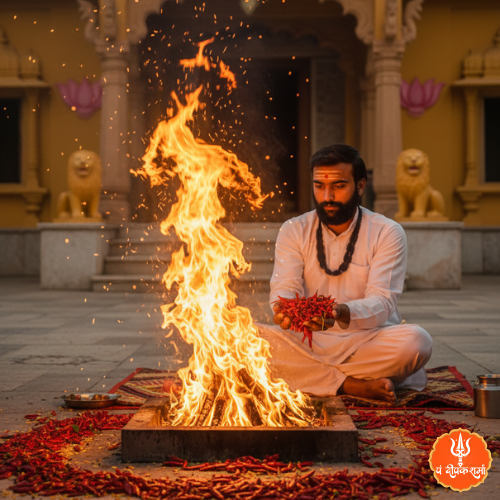
After completing the puja, perform the Havan (fire ritual). Prepare a Havan kund (fire pit) and offer ghee, grains, and other sacred items into the fire while chanting the Baglamukhi mantra. This step is vital as it amplifies the energy of the ritual, sending your prayers to the divine.
Pradakshina
Conclude the anushthan by performing Pradakshina (circumambulation) around the altar, symbolizing respect and devotion. This act reinforces your connection with the divine and signifies your commitment to the ritual.
Prasad Distribution
Finally, distribute the prasad (blessed food) among family and friends, sharing the divine blessings received during the anushthan. This act of generosity enhances the positive energy generated during the ritual.
Mantra for This Ritual
The primary mantra associated with the Baglamukhi Anushthan is:
ॐ ह्लीं बगलामुखि सर्वविघ्न नाशाय ह्लीं
Transliteration: Om Hleem Baglamukhi Sarva Vighna Nashaya Hleem
This powerful mantra is a call to the Goddess Baglamukhi, seeking her blessings to remove all obstacles and challenges in one’s life. The syllable ‘Hleem’ is considered a seed mantra, embodying the essence of the goddess’s energy. By chanting this mantra with devotion, devotees can invoke the protective and empowering qualities of Baglamukhi, allowing them to overcome difficulties and emerge victorious in their endeavors.
The mantra serves as a reminder of the divine support available to devotees, encouraging them to maintain faith and perseverance in the face of adversity. Regular recitation of this mantra, especially during the anushthan, enhances its potency, creating a strong connection with the goddess and inviting her blessings into one’s life.
Do’s & Don’ts
When performing the Baglamukhi Anushthan, it is essential to follow certain guidelines to ensure the ritual’s effectiveness. Here are some important do’s:
- Do maintain purity: Ensure that you are physically and mentally clean before performing the ritual. This includes bathing and wearing clean, preferably yellow, clothes.
- Do offer sincere prayers: Approach the ritual with a pure heart and genuine intentions. Sincerity in your prayers enhances the connection with the divine.
- Do follow the Vedic procedures: Adhere to the prescribed steps of the anushthan as outlined in the Vedic texts. This ensures that the ritual is performed correctly and respectfully.
On the other hand, here are some important don’ts:
- Don’t rush the ritual: Take your time with each step, allowing yourself to fully engage in the process. Rushing can lead to distractions and diminish the ritual’s effectiveness.
- Don’t consume non-vegetarian food: It is advisable to abstain from non-vegetarian food and alcohol during the period of the anushthan to maintain spiritual purity.
- Don’t involve negativity: Avoid negative thoughts or distractions during the ritual. Focus on your intentions and the blessings you seek from Baglamukhi.
When to Perform
The Baglamukhi Anushthan can be performed at any time, but certain periods are considered more auspicious. Performing the ritual during the Navratri festival, particularly on the Ashtami or Navami days, is highly recommended. These days are dedicated to the worship of the divine feminine and are believed to amplify the energy of the anushthan.
Additionally, Tuesdays and Fridays are also favorable days for conducting the Baglamukhi Anushthan. These days are associated with strength and prosperity, making them ideal for seeking the blessings of the goddess. It is essential to choose a time when you can devote your full attention to the ritual, free from distractions.
Moreover, if you are facing specific challenges, such as legal issues or conflicts, it is advisable to perform the anushthan as soon as possible. The sooner you seek the divine intervention of Baglamukhi, the more effective the ritual can be in addressing your concerns.
How Pandit Deepak Sharma can help
Pandit Deepak Sharma, with his extensive experience in performing Baglamukhi rituals, offers authentic Vedic guidance for devotees seeking to conduct the Baglamukhi Anushthan. His deep understanding of the scriptures and traditional practices ensures that each ritual is performed with precision and devotion, enhancing its effectiveness.
By consulting with Pandit Deepak Sharma, devotees can receive personalized advice on the best timing, procedures, and offerings for their anushthan. His guidance helps individuals connect more deeply with the divine, ensuring that their prayers are heard and answered. Whether you are facing legal challenges or seeking personal growth, Pandit Deepak Sharma’s expertise can provide the spiritual support needed to navigate through life’s difficulties.
Furthermore, Pandit Deepak Sharma also facilitates the performance of the Baglamukhi Havan and other related rituals at the Nalkheda Temple, allowing devotees to experience the sacred atmosphere and collective energy of worship. This communal aspect of the ritual enhances its spiritual potency, creating a powerful environment for divine blessings to flow.
Nalkheda Temple Connection
The Nalkheda Temple, dedicated to Devi Baglamukhi, is a significant pilgrimage site for devotees seeking her blessings. Located in the Agar Malwa district of Madhya Pradesh, this temple is renowned for its serene ambiance and spiritual energy. The temple attracts numerous devotees who come to perform rituals, including the Baglamukhi Anushthan, in the presence of the goddess.
Visiting the Nalkheda Temple provides devotees with an opportunity to engage in direct worship and connect with the divine in a sacred space. The temple’s architecture and tranquil surroundings create an ideal environment for spiritual reflection and devotion. Many devotees report profound experiences and transformations after visiting the temple and participating in the rituals conducted there.
Moreover, the temple serves as a hub for various Baglamukhi rituals, including the Baglamukhi Havan and Mirchi Havan, performed by Pandit Deepak Sharma. These rituals are conducted with utmost reverence, ensuring that the traditional Vedic practices are upheld. The connection to the Nalkheda Temple enhances the spiritual significance of the Baglamukhi Anushthan, making it a powerful experience for all devotees.
FAQ
What is the significance of Baglamukhi Anushthan?
The Baglamukhi Anushthan holds immense significance as it is a means to invoke the blessings of Devi Baglamukhi, who is known for her power to remove obstacles and grant success in various endeavors. This ritual is particularly beneficial for individuals facing legal challenges, as it helps in securing favorable outcomes in court cases. Additionally, the anushthan fosters mental clarity and confidence, empowering devotees to overcome personal and professional challenges.
Through the performance of this ritual, devotees express their devotion and seek divine intervention in their lives. The energy generated during the anushthan creates a protective shield around the devotee, safeguarding them from negative influences and enhancing their spiritual journey.
Can anyone perform the Baglamukhi Anushthan?
Yes, anyone can perform the Baglamukhi Anushthan, regardless of their background or experience. The ritual is open to all who seek the blessings of Devi Baglamukhi for overcoming obstacles and achieving success. It is particularly recommended for individuals facing legal issues, conflicts, or personal challenges. However, it is essential to approach the ritual with sincerity and devotion, as the effectiveness of the anushthan is closely linked to the devotee’s intentions.
For those unfamiliar with the rituals, seeking guidance from an experienced pandit, such as Pandit Deepak Sharma, can enhance the experience and ensure that the anushthan is performed correctly according to Vedic traditions.
What offerings are made during the Baglamukhi Anushthan?
During the Baglamukhi Anushthan, devotees typically offer yellow flowers, sweets, and other items that are dear to the goddess. Yellow is considered a sacred color associated with Baglamukhi, symbolizing prosperity and auspiciousness. Additionally, ghee, grains, and other sacred items are offered during the Havan, which is a crucial part of the ritual. These offerings are made with love and devotion, enhancing the connection with the divine and inviting the blessings of the goddess.
It is important to ensure that the offerings are fresh and pure, reflecting the devotee’s sincerity and respect for the ritual. The act of offering is a significant aspect of the anushthan, symbolizing the devotee’s willingness to surrender to the divine will.
How long does the Baglamukhi Anushthan take?
The duration of the Baglamukhi Anushthan can vary depending on the specific rituals performed and the devotee’s intentions. Generally, the anushthan can take anywhere from a few hours to an entire day. The time spent on the ritual is not as important as the devotion and sincerity with which it is performed. Each step of the anushthan should be carried out with mindfulness and respect, allowing the devotee to fully engage in the spiritual experience.
For those who wish to perform the anushthan in a more structured manner, consulting with Pandit Deepak Sharma can provide clarity on the timing and procedures, ensuring that the ritual is completed effectively.
Is there a specific time to perform the Baglamukhi Anushthan?
While the Baglamukhi Anushthan can be performed at any time, certain periods are considered more auspicious. Performing the ritual during the Navratri festival, particularly on the Ashtami or Navami days, is highly recommended. Additionally, Tuesdays and Fridays are favorable days for conducting the anushthan, as these days are associated with strength and prosperity. Choosing an auspicious time enhances the energy of the ritual, making it more effective in invoking the blessings of the goddess.
It is advisable to consult with a knowledgeable pandit to determine the best timing for your specific intentions and circumstances, ensuring that the anushthan aligns with cosmic energies.
Recommended Reading / Further Exploration
- Baglamukhi Havan Experience: Beginner to Pro in One Detailed Guide
- Understanding the Importance of Baglamukhi Havan for Career Advancement
- Baglamukhi Mirchi Anushthan: Beginner to Pro in One Detailed Guide
- Common Mistakes in baglamukhi havan and How to Fix Them
- How to Use Baglamukhi Havan Nalkheda for Better Results