Meaning of This Ritual
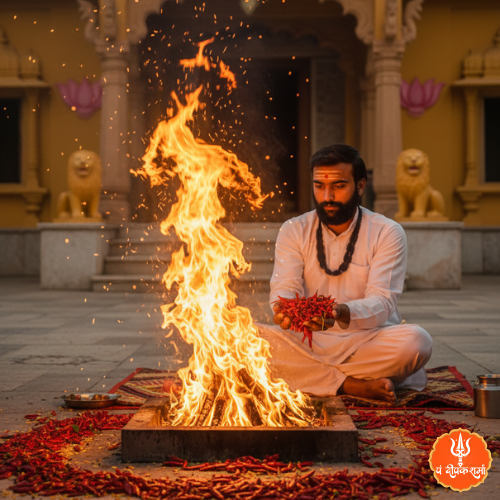
The Shatrunashak Havan, a sacred ritual dedicated to Devi Baglamukhi, holds immense significance in Vedic traditions. The term ‘Shatrunashak’ translates to ‘enemy remover,’ and this ritual is performed to seek divine intervention in overcoming adversities caused by enemies. It is believed that through this havan, one can invoke the blessings of Baglamukhi Mata, who is revered for her power to silence and defeat foes. The essence of this ritual lies in its ability to create a protective shield around the devotee, ensuring safety from negative influences and malicious intentions.
In the context of spiritual practices, the Shatrunashak Havan serves as a powerful tool for those facing challenges from rivals, whether in personal, professional, or legal matters. This havan not only aims to eliminate external threats but also fosters inner strength and resilience, allowing devotees to navigate their lives with confidence and clarity. The flames of the havan symbolize the destruction of negativity, while the offerings made during the ritual are believed to appease the divine energies, inviting their grace into the devotee’s life.
Moreover, the Shatrunashak Havan is often performed during times of distress or when one feels overwhelmed by the presence of adversaries. It is a call for divine support, a way to align oneself with the cosmic energies that govern justice and protection. The ritual is steeped in tradition, and its performance is guided by the principles of Vedic scriptures, ensuring that every aspect is conducted with reverence and devotion.
How This Ritual Helps
The Shatrunashak Havan is not merely a ceremonial act; it is a profound spiritual practice that brings about tangible changes in the devotee’s life. By invoking the blessings of Baglamukhi Mata, devotees seek to dissolve obstacles and confrontations posed by enemies. The havan acts as a catalyst for transformation, allowing individuals to regain their power and agency in challenging situations. It is said that the energy generated during the ritual creates a protective aura, safeguarding the devotee from harm.
Additionally, this havan is believed to enhance the devotee’s mental clarity and decision-making abilities. As the flames consume the offerings, they symbolize the burning away of confusion and fear, replacing them with courage and wisdom. This clarity is essential, especially when facing adversaries, as it empowers individuals to respond effectively rather than react impulsively. The Shatrunashak Havan thus serves as a spiritual anchor, helping devotees maintain their composure and focus amidst turmoil.
Furthermore, the ritual fosters a sense of community and support among participants. When performed collectively, the energy of the group amplifies the intentions behind the havan, creating a collective shield against negativity. This communal aspect reinforces the belief that one is not alone in their struggles, and the shared prayers and offerings strengthen the bond between devotees and the divine.
Mythological Background
The roots of the Shatrunashak Havan are deeply embedded in Hindu mythology, particularly in the narratives surrounding Devi Baglamukhi. She is one of the ten Mahavidyas, a group of powerful goddesses who embody various aspects of the divine feminine. Baglamukhi is often depicted as a fierce protector, wielding a club and a noose, symbolizing her ability to subdue enemies and protect her devotees from harm.
According to ancient texts, Baglamukhi is known for her ability to silence adversaries and bring justice to those who are wronged. Her devotees believe that by performing the Shatrunashak Havan, they can invoke her divine presence and seek her assistance in overcoming challenges posed by enemies. The mythology surrounding her emphasizes the importance of faith and devotion, as it is through sincere worship that one can experience her transformative power.
The stories of Baglamukhi’s victories over demons and adversaries serve as inspiration for devotees. They illustrate the principle that righteousness ultimately prevails over evil, and that with the right intentions and actions, one can overcome any obstacle. This mythological backdrop enriches the significance of the Shatrunashak Havan, making it a potent ritual for those seeking protection and empowerment.
Who Should Perform This
The Shatrunashak Havan is particularly beneficial for individuals who find themselves in situations where they are facing opposition or hostility. This includes those involved in legal disputes, competitive environments, or personal conflicts. Anyone who feels threatened by the actions of others or is experiencing undue stress due to adversarial relationships can greatly benefit from this ritual.
Moreover, the havan is suitable for individuals seeking to enhance their personal strength and resilience. It is not limited to specific circumstances; rather, it serves as a proactive measure to fortify oneself against potential challenges. Those who wish to cultivate a sense of inner peace and confidence in their dealings with others may also find this ritual to be of great assistance.
Additionally, families and communities facing collective challenges can come together to perform the Shatrunashak Havan. By uniting their intentions and prayers, they can create a powerful force against negativity and adversity. This communal approach not only strengthens the bonds among participants but also amplifies the effectiveness of the ritual.
Step-by-Step Vidhi (Very Detailed)
The performance of the Shatrunashak Havan follows a meticulous Vedic process, ensuring that every aspect is conducted with reverence and precision. Below is a detailed step-by-step guide to the vidhi:
Preparation
Before the havan, it is essential to prepare the space and gather all necessary materials. The havan kund (fire pit) should be constructed with proper dimensions, ideally made of clay or metal. Cleanse the area with sacred water and sprinkle it with rice and flowers to invite positive energies. Gather offerings such as ghee, grains, and specific herbs associated with the ritual.
Invocation of Deities
Begin the ritual by invoking the presence of Devi Baglamukhi and other deities associated with protection and justice. This is done through the chanting of specific mantras and offerings of flowers and fruits. Light a lamp and place it in front of the havan kund, symbolizing the illumination of divine guidance.
Performing the Havan
Once the deities are invoked, the actual havan can begin. Pour ghee into the fire while chanting the appropriate mantras, such as the Shatrunashak mantra. Each offering should be made with devotion, visualizing the removal of enemies and obstacles. The flames are believed to carry the prayers to the divine, ensuring that they are heard and answered.
Concluding the Ritual
After the havan is complete, express gratitude to the deities for their blessings. Offer prasad (blessed food) to participants and share the energy of the ritual. It is customary to conclude with a prayer for peace and protection for all involved. The remnants of the havan, such as the ashes, can be collected and disposed of respectfully, often at a sacred site.
Mantra for This Ritual
The primary mantra for the Shatrunashak Havan is:
ॐ ह्लीं बगलामुखि सर्व शत्रुस्तम्भनाय स्वाहा
Transliteration: Om Hleem Baglamukhi Sarva Shatrusambhanaya Swaha
This mantra is a powerful invocation that calls upon the divine energy of Baglamukhi to immobilize all enemies and adversaries. The syllable ‘Hleem’ represents the essence of protection and strength, while ‘Sarva Shatrusambhanaya’ translates to ‘for the immobilization of all enemies.’ The term ‘Swaha’ signifies the offering made to the fire, completing the invocation.
Chanting this mantra during the havan is believed to enhance its effectiveness, as it aligns the devotee’s intentions with the divine will. The repetition of the mantra creates a vibrational energy that resonates with the cosmic forces, amplifying the prayers and offerings made during the ritual. Devotees are encouraged to chant this mantra with sincerity and focus, visualizing the removal of obstacles and the establishment of peace in their lives.
Do’s & Don’ts
To ensure the success of the Shatrunashak Havan, there are certain do’s and don’ts that devotees should keep in mind. Firstly, it is essential to approach the ritual with a pure heart and sincere intentions. Devotees should engage in self-reflection and ensure that their motivations for performing the havan are aligned with positive outcomes.
Do maintain a clean and sacred environment during the ritual. This includes wearing clean clothes and refraining from consuming non-vegetarian food or alcohol before the havan. Offerings should be fresh and pure, as they represent the devotee’s devotion and respect towards the divine.
On the other hand, avoid distractions during the ritual. It is crucial to remain focused and present, as this enhances the energy of the havan. Refrain from engaging in negative thoughts or actions that may counteract the intentions behind the ritual. Additionally, do not share the details of the ritual with those who may not understand its significance, as this can dilute its power.
When to Perform
The Shatrunashak Havan can be performed at any time when one feels the need for protection against adversaries. However, certain auspicious timings, such as during the waxing moon phase or on specific festival days dedicated to Devi Baglamukhi, are considered particularly favorable. Performing the havan during these times is believed to enhance its potency and align the devotee with cosmic energies.
Moreover, it is advisable to perform the havan before facing significant challenges, such as legal battles or competitive exams. By proactively seeking divine intervention, devotees can create a protective shield around themselves, ensuring that they are equipped to handle any adversities that may arise.
Additionally, regular performance of the Shatrunashak Havan can help maintain a continuous flow of protective energy in one’s life. Devotees may choose to conduct this ritual annually or biannually, depending on their personal circumstances and spiritual goals.
How Pandit Deepak Sharma can help
Pandit Deepak Sharma, an experienced Vedic practitioner, specializes in performing the Shatrunashak Havan with authenticity and devotion. His deep understanding of the rituals and their significance ensures that each ceremony is conducted in accordance with Vedic traditions. Devotees seeking to perform this havan can benefit from his guidance, as he provides personalized support tailored to individual needs.
By consulting with Pandit Deepak Sharma, devotees can gain insights into the best timings and preparations for the havan. He emphasizes the importance of intention and devotion, guiding participants to approach the ritual with the right mindset. His presence during the ceremony enhances the energy and effectiveness of the havan, creating a sacred atmosphere conducive to divine blessings.
Furthermore, Pandit Deepak Sharma offers ongoing spiritual support, helping devotees navigate the challenges they face. His wisdom and experience provide reassurance, allowing individuals to feel empowered as they embark on their spiritual journeys. Through his guidance, devotees can deepen their connection with Devi Baglamukhi and experience the transformative power of the Shatrunashak Havan.
Nalkheda Temple Connection
The Nalkheda Temple, dedicated to Devi Baglamukhi, serves as a sacred space for devotees seeking spiritual solace and empowerment. The temple is renowned for its rich history and the profound energy that permeates its surroundings. Pilgrims from far and wide visit this temple to seek the blessings of Baglamukhi, particularly through rituals such as the Shatrunashak Havan.
At the Nalkheda Temple, the atmosphere is charged with devotion, and the presence of the goddess is felt strongly by all who visit. The temple’s sanctity enhances the effectiveness of the havan, as the collective prayers of devotees resonate with the divine energies. Performing the Shatrunashak Havan at this temple allows individuals to connect deeply with the goddess and receive her blessings in a powerful manner.
Moreover, the temple serves as a hub for spiritual gatherings and rituals, fostering a sense of community among devotees. The shared experience of worship and devotion creates a supportive environment, where individuals can uplift one another in their spiritual journeys. The Nalkheda Temple stands as a beacon of hope and strength, guiding devotees towards overcoming their challenges with the grace of Devi Baglamukhi.
FAQ
What is the significance of the Shatrunashak Havan?
The Shatrunashak Havan holds immense significance as it is specifically designed to remove enemies and obstacles from one’s life. By invoking the blessings of Devi Baglamukhi, devotees seek divine intervention to overcome adversities caused by rivals. This ritual not only aims to eliminate external threats but also fosters inner strength and resilience, allowing individuals to navigate their lives with confidence and clarity.
The flames of the havan symbolize the destruction of negativity, while the offerings made during the ritual are believed to appease the divine energies, inviting their grace into the devotee’s life. The Shatrunashak Havan serves as a powerful tool for those facing challenges from rivals, whether in personal, professional, or legal matters.
Who can benefit from performing the Shatrunashak Havan?
Individuals facing opposition or hostility, such as those involved in legal disputes or competitive environments, can greatly benefit from the Shatrunashak Havan. It is also suitable for anyone who feels threatened by the actions of others or is experiencing undue stress due to adversarial relationships. Additionally, families and communities facing collective challenges can come together to perform this havan, creating a powerful force against negativity and adversity.
Moreover, those seeking to enhance their personal strength and resilience may find this ritual beneficial. It serves as a proactive measure to fortify oneself against potential challenges, allowing individuals to cultivate a sense of inner peace and confidence in their dealings with others.
What materials are needed for the Shatrunashak Havan?
The materials required for the Shatrunashak Havan include a havan kund (fire pit), ghee, grains, herbs, flowers, and fruits. The havan kund should be constructed with proper dimensions, ideally made of clay or metal. Cleanse the area with sacred water and sprinkle it with rice and flowers to invite positive energies. Gather fresh offerings, as they represent the devotee’s devotion and respect towards the divine.
It is essential to ensure that all materials used in the havan are pure and free from any impurities. This includes wearing clean clothes and refraining from consuming non-vegetarian food or alcohol before the ritual. The quality of the offerings reflects the sincerity of the devotee’s intentions.
How is the Shatrunashak Havan performed?
The Shatrunashak Havan is performed by following a meticulous Vedic process. It begins with the preparation of the space and gathering of materials. The ritual involves invoking the presence of Devi Baglamukhi and other deities associated with protection and justice through chanting specific mantras and offerings.
Once the deities are invoked, the actual havan begins with pouring ghee into the fire while chanting the Shatrunashak mantra. Each offering is made with devotion, visualizing the removal of enemies and obstacles. After the havan is complete, gratitude is expressed to the deities, and prasad is shared among participants.
When is the best time to perform the Shatrunashak Havan?
The Shatrunashak Havan can be performed at any time when one feels the need for protection against adversaries. However, certain auspicious timings, such as during the waxing moon phase or on specific festival days dedicated to Devi Baglamukhi, are considered particularly favorable. Performing the havan during these times is believed to enhance its potency and align the devotee with cosmic energies.
Moreover, it is advisable to perform the havan before facing significant challenges, such as legal battles or competitive exams. By proactively seeking divine intervention, devotees can create a protective shield around themselves, ensuring that they are equipped to handle any adversities that may arise.
How can Pandit Deepak Sharma assist in performing the Shatrunashak Havan?
Pandit Deepak Sharma specializes in performing the Shatrunashak Havan with authenticity and devotion. His deep understanding of the rituals and their significance ensures that each ceremony is conducted in accordance with Vedic traditions. Devotees seeking to perform this havan can benefit from his guidance, as he provides personalized support tailored to individual needs.
By consulting with Pandit Deepak Sharma, devotees can gain insights into the best timings and preparations for the havan. His presence during the ceremony enhances the energy and effectiveness of the havan, creating a sacred atmosphere conducive to divine blessings.
Recommended Reading / Further Exploration
- Understanding Baglamukhi Havan for Career Advancement: A Divine Ritual
- How to Use Deepak Guruji Baglamukhi for Better Results
- Enemy Removal Havan: Everything You Need to Know
- Common Mistakes in Baglamukhi Anushthan Online Booking and How to Fix Them
- Nalkheda Baglamukhi Temple Rituals: Step-by-Step Explanation