Meaning of This Ritual
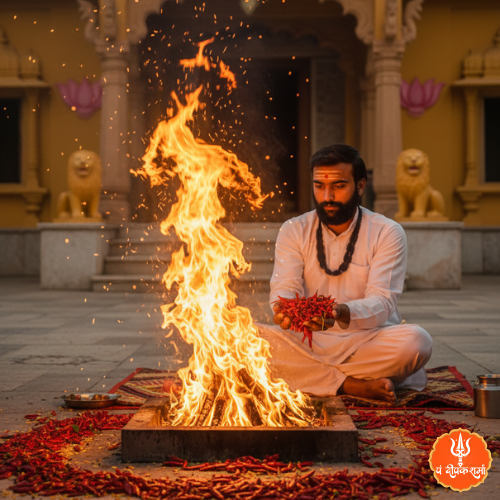
The Enemy Removal Havan, or Shatrunashak Havan, is a sacred Vedic ritual dedicated to the divine energy of Baglamukhi Mata. This havan is performed to seek protection from adversaries and to neutralize negative influences that may hinder one’s progress in life. The essence of this ritual lies in invoking the powerful energies of Baglamukhi, who is revered for her ability to silence enemies and grant victory over obstacles. In the spiritual realm, this havan serves as a shield, safeguarding devotees from harm and ensuring a path of peace and prosperity.
In the context of Vedic traditions, havans are not merely ceremonial acts; they are profound spiritual practices that channel divine energies through the medium of fire. The flames of the havan symbolize the purification of the mind and soul, while the offerings made during the ritual represent the surrender of one’s ego and desires to the divine. By performing the Enemy Removal Havan, devotees express their faith and devotion, seeking the blessings of Baglamukhi Mata to overcome challenges posed by enemies or negative forces.
This ritual is particularly significant for individuals facing conflicts in personal or professional life, as it helps to restore balance and harmony. The chanting of specific mantras during the havan amplifies the spiritual vibrations, creating an atmosphere conducive to divine intervention. Ultimately, the Enemy Removal Havan is a means of aligning oneself with the protective energies of the universe, fostering a sense of security and well-being.
How This Ritual Helps
The Enemy Removal Havan is designed to provide spiritual protection and relief from the negative influences of adversaries. By invoking the blessings of Baglamukhi Mata, devotees can experience a profound transformation in their lives. The ritual helps in several ways, including the dissolution of enmity, the resolution of conflicts, and the establishment of peace. When performed with sincerity and devotion, this havan can lead to a significant reduction in the challenges posed by enemies, allowing individuals to focus on their personal and professional growth.
One of the primary benefits of this ritual is its ability to neutralize negative energies that may be directed towards an individual. Whether these energies arise from jealousy, competition, or malice, the Enemy Removal Havan serves as a powerful antidote. The sacred fire acts as a purifying force, consuming negativity and transforming it into positive energy. This process not only protects the devotee but also fosters a sense of inner strength and resilience.
Furthermore, the havan instills confidence in devotees, empowering them to face challenges head-on. As the ritual unfolds, the chanting of mantras creates a protective shield around the individual, enhancing their ability to navigate through life’s adversities. Many devotees have reported experiencing a newfound clarity and focus after participating in this ritual, enabling them to make better decisions and take constructive actions towards their goals.
Mythological Background
The significance of the Enemy Removal Havan is deeply rooted in Hindu mythology, particularly in the stories surrounding Baglamukhi Mata. She is one of the ten Mahavidyas, a group of powerful goddesses representing various aspects of the divine feminine energy. Baglamukhi is often depicted as a fierce protector, wielding a club and a noose, symbolizing her ability to control and subdue enemies. Her name itself translates to ‘the one who makes the enemies mute,’ highlighting her role as a guardian against adversaries.
According to ancient texts, Baglamukhi Mata is believed to have emerged from the collective energy of the other Mahavidyas to combat evil forces threatening the cosmos. Her divine intervention is sought in times of distress, particularly when one faces opposition or hostility. The stories of her victories over demons and malevolent beings serve as a reminder of her unwavering strength and compassion for her devotees.
The Enemy Removal Havan draws upon these mythological narratives, channeling the protective energies of Baglamukhi to shield devotees from harm. The ritual is often performed during auspicious times, invoking the goddess’s blessings to ensure success and protection. By aligning oneself with the divine energies of Baglamukhi, devotees can experience a profound sense of security and empowerment, knowing that they are under her watchful gaze.
Who Should Perform This
The Enemy Removal Havan is beneficial for anyone facing challenges posed by adversaries, whether in personal relationships, professional settings, or legal matters. Individuals who feel threatened by jealousy, rivalry, or hostility from others can greatly benefit from this ritual. It is particularly recommended for those involved in competitive fields, such as business, politics, or academics, where conflicts may arise frequently.
Moreover, this havan is suitable for individuals seeking to resolve ongoing disputes or legal issues. The divine energies invoked during the ritual can help to mitigate tensions and foster a spirit of cooperation among conflicting parties. Those who wish to enhance their personal safety and well-being may also find solace in performing the Enemy Removal Havan, as it serves as a protective shield against negative influences.
Ultimately, anyone who feels the need for spiritual protection and guidance can participate in this ritual. It is essential, however, for devotees to approach the havan with a pure heart and sincere intentions, as the effectiveness of the ritual is closely tied to the devotion and faith of the participant.
Step-by-Step Vidhi (Very Detailed)
The Enemy Removal Havan is a sacred process that requires careful preparation and adherence to Vedic rituals. Below is a detailed step-by-step guide to performing this havan:
Preparation
Before commencing the havan, it is crucial to prepare the sacred space. Choose a clean and quiet area where the havan can be performed without disturbances. Lay down a clean cloth or asana on the ground, and place a havan kund (fire pit) in the center. Gather all necessary materials, including ghee, samagri (a mixture of sacred offerings), and the specific items required for the havan.
Devotees should also take a bath and wear clean, preferably white or yellow clothes, as these colors are considered auspicious. It is advisable to create a peaceful atmosphere by lighting incense and offering flowers to Baglamukhi Mata’s idol or picture placed nearby.
Invocation of Deities
Once the preparation is complete, the next step is to invoke the presence of Baglamukhi Mata and other deities. Begin by lighting the havan fire using dry wood and ghee. As the flames rise, chant the following mantra to invite the goddess:
ॐ ह्लीं बगलामुखि सर्व शत्रुस्तम्भनाय स्वाहा
Transliteration: Om Hleem Baglamukhi Sarva Shatrustambhanaya Swaha
Meaning: This mantra is a powerful invocation to Baglamukhi, asking her to immobilize all enemies and protect the devotee.
As you chant, visualize the divine energy of Baglamukhi enveloping the space, creating a protective barrier against negativity.
Offering of Samagri
After invoking the deities, begin the offering of samagri into the fire. Each offering should be accompanied by the chanting of the mantra. Offer items such as rice, ghee, and other sacred materials while focusing on your intention of removing obstacles and enemies. With each offering, express your gratitude to Baglamukhi Mata for her blessings and protection.
It is essential to maintain a meditative state during this process, allowing the energy of the havan to resonate within you. The offerings symbolize the surrender of your fears and worries to the divine, reinforcing your connection with Baglamukhi Mata.
Concluding the Havan
Once all offerings have been made, conclude the havan by performing aarti (a ceremonial worship with light). Light a lamp and rotate it in front of the idol or picture of Baglamukhi Mata while singing her praises. This act of devotion signifies the culmination of the ritual and the acceptance of the offerings by the goddess.
Finally, express your heartfelt prayers and intentions to Baglamukhi Mata, seeking her continued guidance and protection. It is customary to distribute prasad (blessed food) among family members and participants, sharing the divine blessings received during the havan.
Mantra for This Ritual
The primary mantra for the Enemy Removal Havan is:
ॐ ह्लीं बगलामुखि सर्व शत्रुस्तम्भनाय स्वाहा
Transliteration: Om Hleem Baglamukhi Sarva Shatrustambhanaya Swaha
This mantra holds immense power and significance in the context of the ritual. The syllable ‘ॐ’ represents the universal sound, embodying the essence of the divine. ‘ह्लीं’ is a bija (seed) mantra associated with Baglamukhi, invoking her protective energies. The phrase ‘सर्व शत्रुस्तम्भनाय’ translates to ‘to immobilize all enemies,’ emphasizing the purpose of the mantra in seeking protection from adversaries.
Chanting this mantra during the havan creates a direct connection with Baglamukhi Mata, allowing devotees to tap into her divine strength. The vibrations generated by the mantra resonate within the havan, amplifying the spiritual energy and enhancing the effectiveness of the ritual. It is recommended to chant this mantra with devotion and focus, ideally 108 times, to fully harness its power.
Do’s & Don’ts
To ensure the effectiveness of the Enemy Removal Havan, it is essential to follow certain guidelines. Here are some important do’s and don’ts:
Do’s
- Perform the havan with a pure heart and sincere intentions.
- Maintain a clean and sacred environment for the ritual.
- Use fresh and pure materials for the offerings.
- Chant the mantra with devotion and focus, ideally 108 times.
- Express gratitude to Baglamukhi Mata after the ritual.
Don’ts
- Avoid performing the havan in a cluttered or impure space.
- Do not rush through the ritual; take your time to connect with the divine.
- Refrain from using stale or impure offerings.
- Do not engage in negative thoughts or actions during the ritual.
- Avoid discussing conflicts or enemies during the havan.
When to Perform
The Enemy Removal Havan can be performed at any time when one feels the need for protection from adversaries. However, certain auspicious days are particularly favorable for this ritual. Performing the havan on a Tuesday or Saturday is considered highly beneficial, as these days are associated with strength and protection in Hindu tradition.
Additionally, the waning moon phase (Krishna Paksha) is often regarded as an ideal time for rituals aimed at removing negativity. It is advisable to consult with a knowledgeable pandit to determine the most auspicious timing based on individual circumstances and astrological factors.
Ultimately, the sincerity of the devotee’s intentions is paramount. Regardless of the timing, performing the Enemy Removal Havan with devotion and faith will yield positive results and spiritual protection.
How Pandit Deepak Sharma can help
Pandit Deepak Sharma, with his extensive experience in performing Baglamukhi rituals, can provide invaluable guidance for those seeking to conduct the Enemy Removal Havan. His deep understanding of Vedic traditions and rituals ensures that the havan is performed according to authentic practices, maximizing its effectiveness.
By consulting with Pandit Deepak Sharma, devotees can receive personalized advice on the preparation, materials, and timing of the havan. He can also assist in performing the ritual, ensuring that every aspect is conducted with reverence and precision. His presence during the havan enhances the spiritual atmosphere, allowing devotees to connect more deeply with Baglamukhi Mata.
Moreover, Pandit Deepak Sharma offers ongoing support and guidance, helping devotees to navigate any challenges that may arise after the ritual. His compassionate approach and commitment to serving the community make him a trusted spiritual guide for those seeking protection and empowerment through the Enemy Removal Havan.
Nalkheda Temple Connection
The Nalkheda Temple, dedicated to Baglamukhi Mata, serves as a significant spiritual center for devotees seeking her blessings. Located in the Agar Malwa district of Madhya Pradesh, this temple is renowned for its serene atmosphere and divine energy. Many devotees travel to Nalkheda to perform rituals and havans under the guidance of experienced pandits, including Pandit Deepak Sharma.
The temple holds a special place in the hearts of devotees, as it is believed that performing rituals here amplifies their spiritual benefits. The sacred ambiance of the temple, combined with the collective energy of fellow devotees, creates a powerful environment for spiritual practices. The Enemy Removal Havan, when performed at the Nalkheda Temple, is believed to yield even greater protection and blessings from Baglamukhi Mata.
Visiting the Nalkheda Temple not only allows devotees to participate in the Enemy Removal Havan but also offers an opportunity for personal darshan of the goddess. This connection with the divine is a transformative experience, fostering a deep sense of devotion and spiritual growth. For those unable to visit the temple, Pandit Deepak Sharma can also perform the havan remotely, ensuring that the blessings of Baglamukhi Mata reach devotees wherever they are.