Meaning of This Ritual
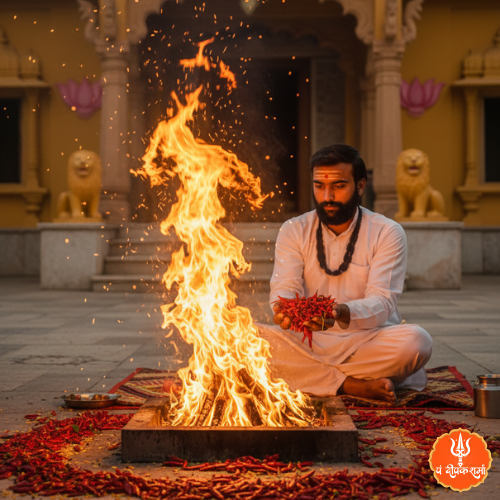
The Court Case Havan, also known as Nyayik Vijay Havan, is a sacred ritual dedicated to Devi baglamukhi, one of the ten Mahavidyas in Hindu tradition. This havan is performed with the intention of seeking divine intervention in legal matters, ensuring victory in court cases, and overcoming obstacles posed by adversaries. The essence of this ritual lies in invoking the blessings of Baglamukhi Mata, who is revered for her power to silence enemies and grant justice.
In Vedic tradition, havans are considered a powerful means of connecting with the divine. The act of offering oblations into the sacred fire symbolizes the surrender of one’s worries and the invocation of divine energies to assist in overcoming challenges. The Court Case Havan specifically focuses on the energies associated with justice, truth, and victory, making it a vital practice for those facing legal disputes.
Through this ritual, devotees express their faith and devotion, seeking not just a favorable outcome in their legal battles but also inner peace and strength to endure the trials they face. The havan serves as a reminder of the divine presence in our lives, guiding us through difficult times.
How This Ritual Helps
The Court Case Havan is believed to provide numerous benefits to devotees facing legal challenges. Firstly, it helps in removing obstacles that may hinder the progress of a case. By invoking the blessings of Baglamukhi Mata, devotees seek her divine intervention to ensure that justice prevails. This ritual is particularly effective in cases where there is a sense of fear or uncertainty regarding the outcome.
Moreover, the havan is said to enhance the devotee’s mental clarity and confidence. Legal battles can often be stressful and overwhelming, leading to anxiety and doubt. Participating in the Court Case Havan instills a sense of calm and assurance, allowing devotees to approach their situations with a positive mindset. The sacred chants and offerings made during the ritual create an atmosphere of divine energy that uplifts the spirit.
Additionally, this ritual is known to strengthen the devotee’s connection with the divine. By engaging in this spiritual practice, individuals not only seek external support but also foster an internal sense of resilience and faith. The blessings of Baglamukhi Mata are believed to empower devotees to face their challenges with courage and determination.
Mythological Background
The mythology surrounding Devi Baglamukhi is rich and profound. She is often depicted as a goddess who possesses the power to control speech and silence enemies. According to Hindu scriptures, Baglamukhi emerged from the collective energy of the other Mahavidyas to combat evil forces and protect dharma. Her name itself signifies the power to immobilize adversaries and bring about justice.
One of the most famous legends associated with Baglamukhi involves her confrontation with the demon Madan. This demon had been terrorizing the heavens and earth, disrupting the balance of good and evil. In response to the prayers of the gods, Baglamukhi manifested to subdue Madan. With her divine powers, she not only defeated him but also taught the importance of righteousness and truth. This story exemplifies her role as a protector of justice and a champion against injustice.
Furthermore, Baglamukhi is often worshipped by those seeking victory in legal matters. Her ability to grant success in court cases is well-documented in various texts, making her a favored deity among devotees facing legal challenges. The Court Case Havan is a way to honor her and seek her blessings for favorable outcomes.
Who Should Perform This
The Court Case Havan is recommended for anyone who is currently involved in legal disputes or facing challenges in court. This includes individuals, families, and even businesses that find themselves entangled in legal matters. It is particularly beneficial for those who feel overwhelmed or anxious about their cases, as the ritual helps to instill confidence and clarity.
Moreover, this havan can be performed on behalf of someone else, such as a family member or friend who may be struggling with legal issues. In such cases, the devotee can act as a conduit for divine blessings, channeling the energy of the ritual towards the person in need. This selfless act of devotion is highly regarded in Vedic traditions.
Additionally, legal professionals, such as lawyers and advocates, may also benefit from participating in this ritual. By seeking the blessings of Baglamukhi Mata, they can enhance their skills and effectiveness in representing their clients, ensuring that justice is served.
Step-by-Step Vidhi (Very Detailed)
The Vidhi for the Court Case Havan is a sacred process that must be followed meticulously to ensure its effectiveness. The first step involves selecting an auspicious date and time for the ritual. It is advisable to consult a knowledgeable pandit to determine the most favorable timing based on the lunar calendar and the devotee’s personal horoscope.
Once the date is set, the next step is to prepare the havan kund, which is the sacred fire pit. This should be done in a clean and serene environment, preferably at a place where the devotee feels spiritually connected. The kund is typically made of mud or metal, and it should be filled with sacred materials such as ghee, wood, and herbs that are specifically chosen for the havan.
On the day of the ritual, the devotee should take a bath and wear clean, preferably white or yellow clothes, as these colors are associated with purity and auspiciousness. The havan begins with the invocation of Lord Ganesha, the remover of obstacles, followed by prayers to Devi Baglamukhi. Offerings of flowers, fruits, and sweets are made to the deity, along with the chanting of specific mantras.
The main part of the havan involves offering ghee and other sacred materials into the fire while reciting the mantra: ॐ ह्लीं वाद-विजयाय ह्लीं फट्. This mantra is powerful and is repeated multiple times during the ritual, with each repetition symbolizing a plea for victory in legal matters. The devotee should focus on their intentions and visualize the desired outcome as they perform the offerings.
After the havan, it is customary to perform aarti and offer gratitude to Baglamukhi Mata for her blessings. The remnants of the havan, known as prasad, can be distributed among family and friends, symbolizing the sharing of divine blessings.
Mantra for This Ritual
The primary mantra for the Court Case Havan is ॐ ह्लीं वाद-विजयाय ह्लीं फट्. This mantra is a powerful invocation that calls upon the energies of Baglamukhi Mata to grant victory in legal matters. The syllable ‘ह्लीं’ is a bija mantra, representing the essence of the goddess, while ‘वाद-विजयाय’ translates to ‘for victory in arguments or disputes’. The term ‘फट्’ signifies the cutting away of obstacles and negativity.
When chanting this mantra, devotees should focus their minds on their intentions, visualizing the successful resolution of their legal issues. It is recommended to chant this mantra 108 times during the havan, as this number holds significant spiritual importance in Hinduism.
In addition to its power in legal matters, this mantra also serves to enhance the devotee’s confidence and clarity of thought. By regularly chanting it, individuals can cultivate a sense of inner strength and resilience, enabling them to face challenges with a positive mindset. The mantra acts as a shield against negativity and empowers the devotee to navigate through life’s difficulties with grace.
Do’s & Don’ts
When performing the Court Case Havan, there are certain do’s and don’ts that devotees should keep in mind to ensure the ritual’s success. Among the do’s, it is essential to maintain a clean and sacred environment while performing the havan. This includes wearing clean clothes and ensuring that the havan kund is prepared with pure materials. Devotees should also approach the ritual with a sincere heart and a focused mind, as the energy of the ritual is influenced by the devotee’s intentions.
It is advisable to involve family members or close friends in the ritual, as their positive energy can enhance the effectiveness of the havan. Additionally, offering food and sweets as prasad after the ritual is a beautiful way to share the blessings received from Baglamukhi Mata.
On the other hand, there are certain actions to avoid during the ritual. It is crucial not to engage in negative thoughts or doubts while performing the havan, as this can hinder the flow of positive energy. Devotees should refrain from consuming alcohol or non-vegetarian food on the day of the ritual, as these substances are considered impure in Vedic traditions. Lastly, it is important to avoid any form of disrespect towards the ritual or the deity, as this can negate the blessings sought through the havan.
When to Perform
The Court Case Havan can be performed at any time when one is facing legal challenges. However, certain auspicious days are considered particularly favorable for this ritual. For instance, performing the havan on a full moon day or during specific festivals dedicated to Devi Baglamukhi can amplify its effects. Consulting with a knowledgeable pandit can provide insights into the best timing based on the lunar calendar and personal circumstances.
Additionally, it is beneficial to perform the havan before an important court date or hearing. This proactive approach allows devotees to align their energies with the divine, seeking blessings for a favorable outcome. Regularly engaging in this ritual, especially during times of uncertainty, can also help maintain a strong connection with Baglamukhi Mata, ensuring her guidance and support.
Ultimately, the timing of the havan should resonate with the devotee’s personal intuition and circumstances. Listening to one’s inner voice and seeking divine guidance can lead to the most auspicious moments for performing this sacred ritual.
How Pandit Deepak Sharma can help
Pandit Deepak Sharma, a revered Vedic practitioner, specializes in performing Baglamukhi rituals and havans with authenticity and devotion. With over 25 years of experience, he possesses a deep understanding of the intricacies involved in the Court Case Havan. His guidance ensures that the ritual is conducted according to traditional Vedic practices, maximizing its effectiveness.
Devotees seeking assistance can approach Pandit Deepak Sharma for personalized guidance tailored to their unique situations. He provides insights into the best timings, materials needed, and the specific mantras to chant, ensuring that devotees feel supported throughout the process. His compassionate approach fosters a sense of trust and reassurance, allowing individuals to engage in the ritual with confidence.
Moreover, Pandit Deepak Sharma emphasizes the importance of maintaining a spiritual connection with Baglamukhi Mata beyond the ritual itself. He encourages devotees to cultivate a regular practice of devotion, which can enhance the benefits received from the havan. Through his teachings, devotees learn to navigate their challenges with faith and resilience, empowered by the blessings of the goddess.
Nalkheda Temple Connection
The Nalkheda Temple, dedicated to Devi Baglamukhi, is a sacred site where devotees gather to seek blessings and perform rituals. This temple holds immense significance in the hearts of many, as it is believed to be a powerful center for spiritual energy. The temple’s serene environment and divine ambiance create a conducive space for worship and reflection.
Visiting the Nalkheda Temple to perform the Court Case Havan adds an extra layer of sanctity to the ritual. The presence of the goddess in her abode amplifies the energy of the havan, making it a profoundly transformative experience for devotees. Many individuals have reported experiencing a sense of peace and clarity after participating in rituals at this temple.
For those unable to visit the temple in person, Pandit Deepak Sharma offers the option of performing the havan on behalf of devotees, ensuring that they receive the blessings of Baglamukhi Mata from afar. This connection to the temple and the goddess remains strong, providing spiritual support during challenging times.
FAQ
What is the significance of the Court Case Havan?
The Court Case Havan is a powerful ritual aimed at seeking divine intervention in legal matters. It is performed to invoke the blessings of Devi Baglamukhi, who is known for her ability to grant victory in disputes. The havan helps in removing obstacles and instilling confidence in devotees, allowing them to face their legal challenges with faith and clarity.
How often should one perform the Court Case Havan?
The frequency of performing the Court Case Havan depends on individual circumstances. It is advisable to conduct the ritual before important court dates or hearings. Additionally, engaging in the havan during times of uncertainty or stress can help maintain a strong connection with Baglamukhi Mata, ensuring her guidance and support throughout the legal process.
Can the havan be performed for someone else?
Yes, the Court Case Havan can be performed on behalf of someone else, such as a family member or friend facing legal challenges. This selfless act of devotion is highly regarded in Vedic traditions, as it channels the energy of the ritual towards the person in need. The devotee can act as a conduit for divine blessings, enhancing the effectiveness of the havan.
What materials are needed for the Court Case Havan?
The materials required for the Court Case Havan include ghee, specific herbs, wood for the fire, and offerings such as flowers and fruits. It is essential to prepare the havan kund with pure materials to ensure the ritual’s effectiveness. Consulting with a knowledgeable pandit can provide insights into the specific items needed based on the ritual’s requirements.
Is it necessary to have a pandit perform the havan?
While it is possible for devotees to perform the Court Case Havan on their own, having an experienced pandit like Pandit Deepak Sharma conduct the ritual can enhance its effectiveness. A knowledgeable pandit ensures that the ritual is performed according to traditional Vedic practices, maximizing the benefits received from the havan. Their guidance provides reassurance and support throughout the process.
What should one do after the havan?
After the Court Case Havan, it is customary to perform aarti and offer gratitude to Baglamukhi Mata for her blessings. The remnants of the havan, known as prasad, can be distributed among family and friends, symbolizing the sharing of divine blessings. Devotees are encouraged to maintain a regular practice of devotion, fostering a continued connection with the goddess.