Meaning of This Ritual
Chaitra Navratri is a sacred time when devotees honor the divine feminine energy embodied by the goddess Durga. Among the many forms of the goddess, baglamukhi Mata holds a special place, revered for her power to bestow wisdom and victory over adversities. The Chaitra Navratri Havan dedicated to Baglamukhi is a profound ritual that symbolizes the removal of obstacles and the attainment of success in various endeavors. It is a time when devotees seek the blessings of the goddess to overcome challenges, particularly in legal matters and personal conflicts.
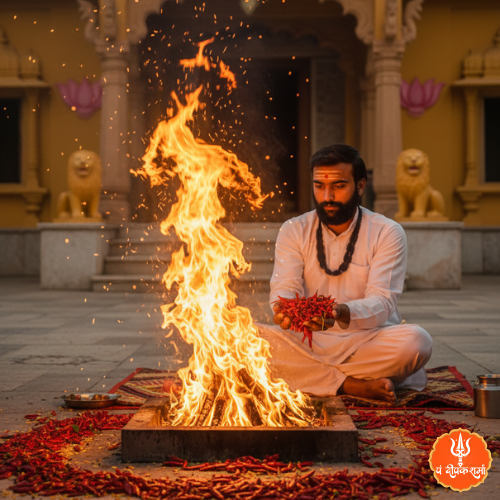
The havan, or fire ritual, involves offerings made to the sacred fire, which is considered a purifying element. The flames represent the goddess’s divine energy, consuming negativity and transforming it into positive outcomes. Through this ritual, devotees express their devotion and seek the goddess’s grace, believing that their sincere prayers will be heard and answered. The Chaitra Navratri Baglamukhi Havan is not merely a ritual; it is a heartfelt plea for divine intervention in one’s life.
Performing this havan during the auspicious days of Chaitra Navratri enhances its potency, as the energies of the goddess are believed to be particularly strong during this period. Devotees engage in this ritual with a pure heart and unwavering faith, hoping to align themselves with the divine will of Baglamukhi Mata.
How This Ritual Helps
The Chaitra Navratri Havan dedicated to Baglamukhi Mata serves multiple purposes, primarily focusing on the removal of obstacles and the attainment of success. One of the key benefits of this ritual is its ability to provide relief from legal troubles. Many devotees turn to Baglamukhi for assistance in court cases, believing that her blessings can lead to favorable outcomes. The havan acts as a spiritual shield, protecting individuals from negative influences and adversaries.
Moreover, this ritual is known for enhancing one’s intellect and decision-making abilities. By invoking the goddess, devotees seek clarity and wisdom, which are essential in navigating complex situations. The energy generated during the havan is believed to sharpen the mind, enabling individuals to make informed choices and act decisively in their personal and professional lives.
Additionally, the Chaitra Navratri Havan fosters a sense of inner peace and confidence. As devotees engage in the ritual, they often experience a profound connection with the divine, which instills a sense of reassurance and strength. This spiritual empowerment encourages individuals to face challenges head-on, knowing that they are supported by the grace of Baglamukhi Mata.
Mythological Background
The mythology surrounding Baglamukhi Mata is rich and deeply rooted in Hindu tradition. She is one of the ten Mahavidyas, a group of powerful goddesses who embody various aspects of the divine feminine. Baglamukhi is often depicted as a fierce warrior, wielding a club and seated on a throne, symbolizing her authority over ignorance and negativity. Her name translates to ‘the one who stuns,’ reflecting her ability to immobilize enemies and obstacles.
According to ancient texts, Baglamukhi emerged during the churning of the ocean (Samudra Manthan), where she played a crucial role in restoring balance and order. Her divine intervention is said to have quelled the forces of chaos, showcasing her power to protect her devotees from harm. This mythological narrative reinforces the belief that invoking Baglamukhi during the Chaitra Navratri Havan can lead to victory over adversaries and challenges.
Furthermore, the goddess is associated with the element of speech and communication. She is revered for her ability to grant eloquence and persuasive power, making her a favored deity for those seeking success in legal matters and negotiations. The stories of her divine exploits serve as a source of inspiration for devotees, encouraging them to seek her blessings during times of difficulty.
Who Should Perform This
The Chaitra Navratri Havan dedicated to Baglamukhi Mata is suitable for anyone facing challenges in their life, particularly in legal matters, career, or personal conflicts. Individuals involved in court cases, disputes, or negotiations can greatly benefit from this ritual, as it is believed to invoke the goddess’s blessings for victory and resolution. Those seeking clarity and wisdom in decision-making are also encouraged to participate in this havan, as it enhances mental acuity and confidence.
Moreover, this ritual is ideal for devotees who wish to strengthen their connection with the divine feminine energy. It is a time for spiritual growth and self-reflection, making it an excellent opportunity for individuals to engage in practices that promote inner peace and resilience. Whether one is facing immediate challenges or seeking long-term spiritual benefits, the Chaitra Navratri Havan offers a pathway to divine support.
Families and communities may also come together to perform this havan, fostering a sense of unity and collective strength. By invoking Baglamukhi Mata as a group, devotees can amplify the energy of the ritual, creating a powerful atmosphere of devotion and faith.
Step-by-Step Vidhi (Very Detailed)
The Chaitra Navratri Havan is a sacred ritual that requires careful preparation and adherence to Vedic traditions. Here is a detailed step-by-step guide to performing this havan:
Preparation
Begin by selecting an auspicious date during Chaitra Navratri for the havan. Cleanse the space where the ritual will be performed, ensuring it is free from any negativity. Gather all necessary materials, including a havan kund (fire pit), ghee, samagri (offerings), and the appropriate mantras for invocation.
It is essential to wear clean, traditional attire while performing the havan. Devotees should also take a bath and purify themselves before engaging in the ritual. Setting a positive intention for the havan is crucial, as it aligns the devotee’s energy with the divine purpose of the ritual.
Invocation of the Goddess
Once the preparations are complete, begin the ritual by invoking Baglamukhi Mata. Light a diya (lamp) and offer flowers at the altar. Recite the following mantra to invite the goddess’s presence:
“ॐ ह्लीं बगलामुखि सर्वविघ्न नाशाय ह्लीं” (Om Hleem Baglamukhi Sarva Vighna Nashaya Hleem)
As you chant this mantra, visualize the goddess enveloping you in her divine light, granting you protection and guidance. This invocation sets the tone for the entire ritual, establishing a sacred connection with the goddess.
Performing the Havan
Next, proceed to the havan kund. Pour ghee into the fire while reciting the mantra dedicated to Baglamukhi. Offer samagri, including grains, herbs, and other sacred items, into the fire as a symbol of surrender and devotion. Each offering should be accompanied by a heartfelt prayer, seeking the goddess’s blessings for specific challenges or desires.
Continue to chant the mantra and offer ghee and samagri into the fire for a set duration, typically around 30 to 60 minutes. The energy generated during this time is believed to purify the surroundings and attract positive vibrations. Conclude the havan by performing aarti (waving of light) in front of the fire, expressing gratitude to Baglamukhi Mata for her divine presence.
Mantra for This Ritual
The mantra used during the Chaitra Navratri Havan is a powerful invocation that resonates with the energies of Baglamukhi Mata. The mantra is:
“ॐ ह्लीं बगलामुखि सर्वविघ्न नाशाय ह्लीं”
**Transliteration:** Om Hleem Baglamukhi Sarva Vighna Nashaya Hleem
**Meaning:** This mantra translates to “Om, I invoke Baglamukhi, the remover of all obstacles, Hleem.” The syllable ‘Hleem’ is a bija (seed) mantra associated with the goddess, symbolizing her protective and transformative powers. By chanting this mantra, devotees seek the removal of impediments in their lives, particularly those related to legal issues, conflicts, and challenges.
Chanting this mantra during the havan creates a powerful vibration that aligns the devotee’s intentions with the divine will of Baglamukhi Mata. It is believed that sincere repetition of this mantra, especially during the auspicious days of Chaitra Navratri, amplifies its effects, leading to spiritual and material benefits.
Do’s & Don’ts
To ensure the effectiveness of the Chaitra Navratri Havan, it is essential to follow certain guidelines. Here are some do’s and don’ts to keep in mind:
Do’s
- Perform the havan with a pure heart and sincere intentions.
- Dress in clean, traditional attire to honor the sacredness of the ritual.
- Gather all necessary materials beforehand to avoid interruptions during the ritual.
- Maintain a calm and focused mindset throughout the havan.
- Offer prayers and gratitude to Baglamukhi Mata after completing the ritual.
Don’ts
- Avoid performing the havan in a cluttered or unclean space.
- Do not engage in negative thoughts or distractions during the ritual.
- Refrain from consuming non-vegetarian food or alcohol on the day of the havan.
- Do not rush through the ritual; take your time to connect with the divine.
- Do not perform the havan for selfish or malicious intentions.
When to Perform
The Chaitra Navratri Havan is ideally performed during the nine nights of Chaitra Navratri, which typically falls in March or April. Each day of Navratri is dedicated to a different form of the goddess, with the final day being particularly auspicious for invoking Baglamukhi Mata. Devotees are encouraged to perform the havan on the eighth or ninth day of Navratri, known as Ashtami and Navami, respectively, for maximum benefits.
Additionally, the havan can be performed on any day when one feels the need for divine intervention, particularly in times of legal troubles or personal conflicts. The energy of the goddess is believed to be accessible at any time, but aligning the ritual with the auspicious days of Navratri enhances its effectiveness.
How Pandit Deepak Sharma can help
Pandit Deepak Sharma, an experienced Vedic practitioner, specializes in performing Baglamukhi rituals, including the Chaitra Navratri Havan. With over 25 years of experience, he possesses a deep understanding of the Vedic traditions and the significance of each ritual. His guidance ensures that the havan is conducted with the utmost reverence and adherence to Vedic principles.
By consulting with Pandit Deepak Sharma, devotees can receive personalized advice on the best practices for their specific situations. He can assist in tailoring the havan to address individual challenges, whether they relate to legal matters, career growth, or personal conflicts. His expertise in the rituals associated with Baglamukhi Mata provides devotees with a sense of assurance and spiritual support.
Moreover, Pandit Deepak Sharma’s connection with the Nalkheda Baglamukhi Temple enhances the authenticity of the rituals performed. Devotees can trust that their prayers and offerings will reach the divine, fostering a deeper connection with Baglamukhi Mata.
Nalkheda Temple Connection
The Nalkheda Baglamukhi Temple, located in the Agar Malwa district of Madhya Pradesh, is a revered pilgrimage site for devotees of Baglamukhi Mata. This temple is known for its spiritual significance and the powerful energy that resonates within its premises. The temple attracts countless devotees, especially during Chaitra Navratri, when the atmosphere is charged with devotion and reverence.
Visiting the Nalkheda Temple during Navratri provides devotees with an opportunity to participate in various rituals and ceremonies dedicated to Baglamukhi Mata. The temple’s sanctity and the presence of the goddess are believed to amplify the effects of the Chaitra Navratri Havan, making it an ideal location for spiritual seekers.
Devotees can also seek the blessings of Pandit Deepak Sharma at the temple, who performs traditional rituals and havans in accordance with Vedic practices. His presence adds to the spiritual experience, allowing devotees to connect with the divine energy of Baglamukhi Mata in a profound way.
FAQ
What is the significance of performing the Chaitra Navratri Havan?
The Chaitra Navratri Havan holds immense significance as it is a time when devotees seek the blessings of Baglamukhi Mata for overcoming obstacles and achieving success. This ritual is particularly beneficial for those facing legal challenges, as it invokes the goddess’s protective energy. By performing the havan, devotees express their devotion and faith, believing that their prayers will be answered. The ritual serves as a spiritual cleansing, purifying the surroundings and the devotee’s mind, allowing for a deeper connection with the divine.
Moreover, the havan is a means of fostering inner strength and clarity. As devotees engage in this sacred practice, they often experience a sense of empowerment, enabling them to confront challenges with confidence. The energy generated during the havan is believed to attract positive vibrations, creating a conducive environment for success and harmony.
Can anyone perform the Chaitra Navratri Havan?
Yes, the Chaitra Navratri Havan can be performed by anyone seeking the blessings of Baglamukhi Mata. It is particularly recommended for individuals facing difficulties in legal matters, career challenges, or personal conflicts. Families and communities can also come together to perform the havan, amplifying its energy and collective intention. The ritual is open to all, regardless of background or experience, as long as it is approached with sincerity and devotion.
It is advisable for those unfamiliar with the rituals to seek guidance from an experienced practitioner, such as Pandit Deepak Sharma, to ensure that the havan is conducted correctly and effectively. His expertise can provide valuable insights and enhance the overall experience of the ritual.
What materials are needed for the Chaitra Navratri Havan?
To perform the Chaitra Navratri Havan, several materials are required. The essential items include a havan kund (fire pit), ghee (clarified butter), samagri (offerings), and the appropriate mantras for invocation. Additionally, flowers, incense, and a diya (lamp) are often used to create a sacred atmosphere. It is important to gather these materials beforehand to ensure a smooth and uninterrupted ritual.
Each offering made during the havan should be accompanied by heartfelt prayers, making the materials a symbolic representation of the devotee’s intentions. The quality of the offerings is also significant, as they should be pure and clean, reflecting the devotee’s sincerity in seeking the goddess’s blessings.
How can I ensure the effectiveness of the havan?
To ensure the effectiveness of the Chaitra Navratri Havan, it is essential to perform it with a pure heart and sincere intentions. Maintaining a calm and focused mindset throughout the ritual is crucial, as distractions can dilute the energy generated during the havan. It is also important to adhere to the traditional practices and guidelines associated with the ritual.
Engaging in self-reflection and setting clear intentions before the havan can enhance its effectiveness. Devotees should approach the ritual with faith and devotion, believing in the power of Baglamukhi Mata to bring about positive change. Following the do’s and don’ts outlined for the havan will further support its success.
What should I do after the havan is completed?
After completing the Chaitra Navratri Havan, it is customary to express gratitude to Baglamukhi Mata for her divine presence and blessings. Perform aarti (waving of light) in front of the havan kund as a sign of reverence. Devotees may also choose to distribute prasad (blessed offerings) among family and friends, sharing the positive energy generated during the ritual.
It is advisable to maintain a positive mindset and continue to seek the goddess’s blessings in daily life. Engaging in acts of kindness and devotion can further strengthen the connection with Baglamukhi Mata, ensuring that the benefits of the havan continue to manifest in one’s life.
Recommended Reading / Further Exploration
- Real-World Use Cases of Baglamukhi Puja Madhya Pradesh
- How to Use Baglamukhi Havan Nalkheda for Better Results
- Pandit Deepak Sharma Baglamukhi for Small Businesses: Practical Implementation
- Court Case Baglamukhi Puja for Small Businesses: Practical Implementation
- How to Use Baglamukhi Rituals Nalkheda for Better Results