Introduction
Baglamukhi Mata, revered as one of the ten Mahavidyas, holds a significant place in Hindu spirituality, especially within the realm of Vedic rituals. The Nalkheda Baglamukhi Temple, located in Madhya Pradesh, serves as a sacred site for devotees seeking blessings and guidance through various rituals, including the Baglamukhi Havan, Anushthan, and Puja. Pandit Deepak Sharma, a specialist in these rituals, has dedicated over 25 years to performing traditional ceremonies that align with Vedic principles. This article delves into the advanced concepts surrounding Baglamukhi rituals, elucidating their meanings, benefits, and the intricate processes involved.
Meaning of This Ritual
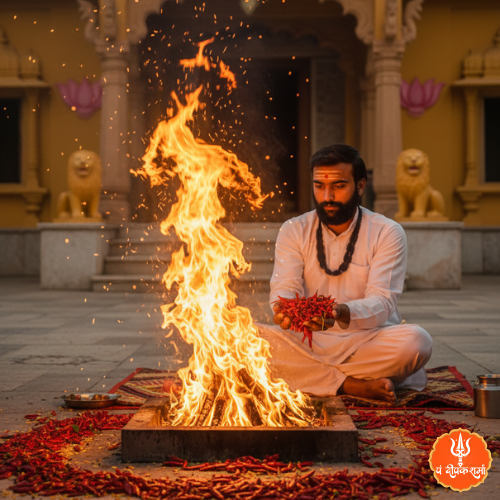
The Baglamukhi Havan is not merely a ritual; it embodies the essence of devotion and spiritual awakening. The term ‘Havan’ refers to a fire ritual, where offerings are made to the sacred fire, symbolizing the divine presence of Baglamukhi Mata. This ritual is particularly significant for those seeking protection from adversities, legal issues, and obstacles in their personal and professional lives. The act of performing a Havan signifies surrendering one’s troubles to the divine, invoking blessings for resolution and success.
In essence, the Baglamukhi Havan represents the transformative power of fire, which purifies and elevates the devotee’s intentions. The offerings made during the Havan, including ghee, grains, and herbs, are believed to carry the devotee’s prayers to the divine realm, ensuring that their desires are acknowledged and fulfilled. This ritual is deeply rooted in the belief that the divine energy of Baglamukhi Mata can dispel negativity and bring forth victory in challenging situations.
How This Ritual Helps
Engaging in the Baglamukhi Havan offers numerous benefits, particularly for those facing legal challenges or seeking to overcome obstacles in their careers. The ritual is designed to invoke the protective energies of Baglamukhi Mata, who is known for her ability to silence enemies and grant victory in disputes. By performing this Havan, devotees often experience a sense of relief from stress and anxiety, as they place their trust in the divine will.
Moreover, the Baglamukhi Havan serves as a powerful tool for self-empowerment. It encourages individuals to confront their fears and challenges head-on, fostering a mindset of resilience and determination. The blessings received from the ritual can lead to favorable outcomes in court cases, career advancements, and personal growth. As devotees witness the positive changes in their lives, their faith in the divine deepens, creating a cycle of spiritual and material abundance.
Mythological Background
The mythology surrounding Baglamukhi Mata is rich and profound, steeped in ancient texts and spiritual teachings. According to Hindu scriptures, Baglamukhi is depicted as a fierce goddess who possesses the power to control and subdue enemies. She is often portrayed with a golden complexion, holding a club in one hand and a book in the other, symbolizing her authority over knowledge and power.
One of the most significant tales associated with Baglamukhi is her battle against the demon Madan. The demon, who represented ignorance and chaos, sought to disrupt the cosmic order. In response, Baglamukhi manifested her divine energy, defeating Madan and restoring harmony. This victory symbolizes the triumph of wisdom over ignorance, making her a revered figure for those seeking clarity and guidance in their lives.
Furthermore, Baglamukhi’s association with the element of fire is crucial in understanding the significance of the Havan. Fire, in Hindu philosophy, is seen as a purifying force that consumes negativity and transforms it into positive energy. The Havan, therefore, becomes a medium through which devotees can channel their prayers and intentions, seeking the goddess’s intervention in their lives.
Who Should Perform This
The Baglamukhi Havan is particularly beneficial for individuals facing legal issues, career challenges, or conflicts with adversaries. Those who feel overwhelmed by obstacles or uncertainties in their lives can greatly benefit from this ritual. It is also recommended for students preparing for competitive exams, as the blessings of Baglamukhi Mata can enhance focus and clarity of thought.
Moreover, anyone seeking spiritual growth and empowerment can engage in this Havan. The ritual fosters a deep connection with the divine, encouraging devotees to cultivate inner strength and resilience. Whether one is a seasoned practitioner or a newcomer to Vedic rituals, the Baglamukhi Havan offers a pathway to spiritual awakening and personal transformation.
Step-by-Step Vidhi (Very Detailed)
Preparation for the Havan
Before commencing the Baglamukhi Havan, it is essential to prepare the sacred space. This involves cleaning the area where the Havan will take place, ensuring that it is free from distractions and impurities. Devotees should set up a Havan Kund (fire pit) using materials such as clay or metal, which are conducive to the ritual.
Gather all necessary items, including ghee, grains, herbs, and offerings specific to Baglamukhi Mata. It is also advisable to have a picture or idol of the goddess present during the ritual, as this serves as a focal point for devotion. Devotees should wear clean, traditional attire to honor the sanctity of the ritual.
Invoking the Deity
Once the preparations are complete, the next step is to invoke the presence of Baglamukhi Mata. This is done through a series of prayers and mantras, inviting the goddess to bless the Havan. Devotees should recite the mantra “ॐ ह्लीं बगलामुखि सर्वविघ्न नाशाय ह्लीं” to seek her protection and guidance.
As the fire is lit, devotees should focus their intentions on the challenges they wish to overcome, visualizing the flames consuming their fears and obstacles. This moment of connection is crucial, as it sets the tone for the entire ritual. The act of offering ghee and grains into the fire symbolizes the surrendering of one’s troubles to the divine.
Performing the Havan
During the Havan, devotees should maintain a meditative state, allowing their thoughts to align with their intentions. The offerings should be made at specific intervals, accompanied by the recitation of mantras that resonate with the purpose of the ritual. Each offering is a prayer, a plea for assistance and guidance from Baglamukhi Mata.
It is important to remain focused and present throughout the Havan, as distractions can hinder the effectiveness of the ritual. After the offerings are completed, devotees should conclude the Havan with a prayer of gratitude, thanking Baglamukhi Mata for her blessings and guidance.
Mantra for This Ritual
The mantra associated with the Baglamukhi Havan is “ॐ ह्लीं बगलामुखि सर्वविघ्न नाशाय ह्लीं.” This powerful invocation serves multiple purposes, particularly in seeking protection from obstacles and adversaries. The syllable ‘ॐ’ represents the universal sound, signifying the essence of the divine. The term ‘ह्लीं’ is a bija mantra, embodying the energy of Baglamukhi Mata.
Transliteration of the mantra is: “Om Hleem Baglamukhi Sarva Vighna Nashaya Hleem.” The meaning of this mantra revolves around invoking the goddess to remove all obstacles and grant victory over challenges. Reciting this mantra during the Havan amplifies the devotee’s intentions, aligning their energy with that of the divine.
Regular recitation of this mantra, both during the Havan and in daily practice, can lead to profound spiritual benefits. It fosters a sense of empowerment and clarity, enabling devotees to navigate life’s challenges with confidence and grace.
Do’s & Don’ts
Do’s
- Ensure cleanliness in the ritual space.
- Wear traditional attire to honor the goddess.
- Maintain focus and intention throughout the Havan.
- Offer genuine prayers and gratitude during the ritual.
- Follow the prescribed Vidhi meticulously.
Don’ts
- Avoid distractions during the Havan.
- Do not consume non-vegetarian food before the ritual.
- Refrain from negative thoughts or intentions.
- Do not rush through the offerings; take your time.
- Do not perform the Havan without proper guidance if you are a novice.
When to Perform
The Baglamukhi Havan can be performed at any time when one feels the need for divine intervention, particularly during times of distress or uncertainty. However, certain auspicious days, such as Navratri or full moon nights, are considered especially favorable for conducting this ritual. These times are believed to enhance the potency of the Havan, aligning the devotee’s energy with the divine forces.
It is also advisable to perform the Havan before significant events, such as court hearings or job interviews, to invoke blessings for success and protection. By aligning the ritual with important life events, devotees can maximize the benefits of the Havan, ensuring that they are supported by the divine during critical moments.
Nalkheda Temple Connection
The Nalkheda Baglamukhi Temple is a sacred site where countless devotees have experienced the transformative power of Baglamukhi Mata. The temple serves as a hub for spiritual seekers, offering a space for reflection, prayer, and connection with the divine. Pandit Deepak Sharma, with his extensive experience, conducts rituals that adhere to the highest standards of Vedic tradition, ensuring that each ceremony is performed with utmost devotion and precision.
Visiting the Nalkheda Temple not only allows devotees to participate in the Baglamukhi Havan but also offers an opportunity to connect with a community of like-minded individuals seeking spiritual growth. The temple’s serene environment enhances the experience, allowing devotees to immerse themselves in the divine presence of Baglamukhi Mata.
FAQ
Recommended Reading / Further Exploration
- How to Use Baglamukhi Puja by Deepak Sharma for Better Results
- Real-World Use Cases of Baglamukhi Mandir Nalkheda Pooja
- Pandit Deepak Sharma Baglamukhi: Step-by-Step Explanation
- How to Use Baglamukhi Mandir Nalkheda Pooja for Better Results
- Court Case Baglamukhi Puja for Small Businesses: Practical Implementation