Meaning of This Ritual
baglamukhi Puja is a profound spiritual practice dedicated to Devi Baglamukhi, one of the ten Mahavidyas in Hindu tradition. This puja is not merely a ritual; it is a sacred invocation aimed at seeking the blessings of the goddess for wisdom, victory over adversaries, and protection from negative influences. The essence of this ritual lies in its ability to harness divine energy, guiding devotees towards clarity and strength in challenging situations.
The term ‘Baglamukhi’ translates to ‘the one who can stop the speech of enemies’, indicating her power to silence negativity and opposition. Engaging in Baglamukhi Puja allows devotees to align themselves with the goddess’s energy, fostering an environment of peace and resolution. This ritual is particularly significant for those facing legal challenges, conflicts, or personal adversities, as it empowers them to overcome obstacles with grace.
In essence, Baglamukhi Puja serves as a spiritual tool for transformation, enabling devotees to transcend their limitations and emerge victorious in their endeavors. It is a call to the divine, inviting blessings that can lead to success, protection, and spiritual growth.
How This Ritual Helps
The practice of Baglamukhi Puja offers numerous benefits, particularly in the realms of conflict resolution and personal empowerment. When performed with devotion and sincerity, this ritual can help devotees overcome obstacles that hinder their progress. The goddess’s blessings are believed to provide clarity of thought, enabling individuals to make informed decisions in times of uncertainty.
Moreover, Baglamukhi Puja is known for its efficacy in legal matters. Many devotees have experienced favorable outcomes in court cases after performing this ritual, as it invokes the goddess’s protective energy. The mantra associated with this puja, which focuses on victory and overcoming adversaries, plays a crucial role in channeling the divine energy needed for success.
Additionally, this puja fosters a sense of inner strength and confidence. Devotees often report feeling more empowered and capable of facing challenges head-on. The spiritual connection established through the ritual serves as a reminder of the divine support available to them, encouraging resilience and determination in their pursuits.
Mythological Background
The mythology surrounding Baglamukhi is rich and profound, rooted in ancient texts and traditions. Devi Baglamukhi is often depicted as a powerful goddess who embodies the essence of knowledge and wisdom. According to legend, she is one of the ten Mahavidyas, a group of goddesses who represent various aspects of the divine feminine. Her narrative is intertwined with the cosmic battle between good and evil, where she plays a pivotal role in restoring balance.
One of the most popular myths associated with Baglamukhi involves her intervention in a fierce battle between the gods and demons. When the gods found themselves overwhelmed by the demons’ might, they turned to Baglamukhi for assistance. In response, she manifested her divine form, wielding immense power to subdue the adversaries. This act of protection and empowerment solidified her status as a formidable force against negativity and opposition.
Furthermore, Baglamukhi is often worshipped for her ability to grant victory in legal matters and disputes. Her devotees believe that invoking her blessings can lead to favorable outcomes in court cases and conflicts. This aspect of her mythology reinforces the significance of Baglamukhi Puja as a means of seeking divine intervention in challenging situations, making it a cherished practice among her followers.
Who Should Perform This
Baglamukhi Puja is particularly beneficial for individuals facing adversities, whether they be legal issues, personal conflicts, or professional challenges. Those who feel overwhelmed by negative energies or opposition in their lives are encouraged to engage in this ritual. It is also suitable for individuals seeking clarity and guidance in decision-making processes, as the blessings of Devi Baglamukhi can illuminate the path ahead.
Furthermore, this puja is highly recommended for those involved in legal proceedings or disputes. Whether one is a plaintiff or defendant, invoking the goddess’s blessings can provide the necessary strength and support to navigate the complexities of the legal system. Many devotees have found solace and success through this ritual, reinforcing its importance for anyone seeking justice and resolution.
Additionally, individuals in competitive fields, such as business or academics, may benefit from Baglamukhi Puja. The ritual empowers them to overcome obstacles and achieve their goals, making it a valuable practice for those striving for success in their endeavors.
Step-by-Step Vidhi (Very Detailed)
The performance of Baglamukhi Puja requires adherence to specific rituals and guidelines to ensure its effectiveness. The following is a detailed step-by-step process for conducting this sacred puja:
Preparation
Begin by selecting an auspicious day for the puja, preferably on a Monday or during the Shukla Paksha (waxing phase of the moon). Cleanse the puja area thoroughly and set up an altar dedicated to Devi Baglamukhi. Place an idol or image of the goddess at the center, surrounded by flowers, fruits, and other offerings.
Gather all necessary materials, including yellow cloth, ghee, jaggery, rice, and the specific items required for the havan. Ensure that you have the mantra for Baglamukhi Puja ready for chanting during the ritual.
Invocation
Begin the puja by performing a Sankalp (resolution) where you express your intentions for the ritual. Light a lamp and incense, inviting the divine presence of Devi Baglamukhi into your space. Offer prayers and seek her blessings for wisdom, victory, and protection.
Next, chant the Baglamukhi mantra, focusing on your intentions. This mantra serves as a powerful invocation, channeling the goddess’s energy into your life. Repeat the mantra with devotion, allowing its vibrations to resonate within you.
Havan Ceremony
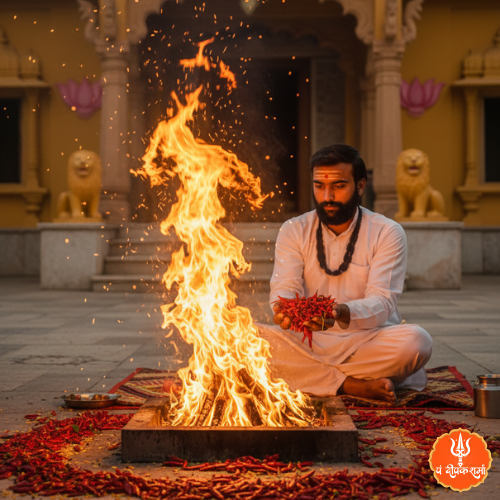
Once the invocation is complete, proceed to perform the havan (fire ceremony). Prepare the havan kund (fire pit) and place the sacred items within it. Offer ghee and other materials into the fire while chanting the Baglamukhi mantra. This act symbolizes the surrender of your worries and desires to the divine.
As the flames rise, visualize your intentions being fulfilled and the goddess’s blessings enveloping you. Conclude the havan by offering a final prayer, expressing gratitude for the divine support received during the ritual.
Mantra for This Ritual
The mantra associated with Baglamukhi Puja is a powerful invocation that encapsulates the essence of the goddess’s energy. The specific mantra for this ritual is:
ॐ ह्लीं बगलामुखि सर्वविघ्न नाशाय ह्लीं
Transliteration: Om Hleem Baglamukhi Sarvavighna Nashaya Hleem
This mantra translates to a plea for the removal of all obstacles and challenges. Each syllable resonates with divine energy, empowering the devotee to overcome adversities and achieve success. The repetition of this mantra during the puja serves to align one’s intentions with the goddess’s blessings, creating a powerful connection that can lead to transformative outcomes.
Chanting this mantra with devotion and focus can invoke the goddess’s protective energy, guiding devotees through their struggles and illuminating their paths. It is essential to recite the mantra with sincerity, allowing its vibrations to penetrate the mind and spirit, fostering a sense of peace and empowerment.
Do’s & Don’ts
Engaging in Baglamukhi Puja requires mindfulness and adherence to certain guidelines to ensure its effectiveness. Here are some essential do’s and don’ts to consider:
Do’s
- Perform the puja with a pure heart and sincere intentions.
- Use fresh flowers and fruits as offerings to the goddess.
- Maintain a clean and sacred space for the ritual.
- Chant the mantra with focus and devotion, allowing its energy to resonate within you.
- Express gratitude to Devi Baglamukhi after the puja, acknowledging her blessings.
Don’ts
- Avoid performing the puja in a cluttered or impure environment.
- Do not rush through the rituals; take your time to connect with the divine.
- Refrain from using stale or wilted offerings.
- Do not engage in negative thoughts or distractions during the puja.
- Avoid performing the ritual for selfish or harmful intentions.
When to Perform
Baglamukhi Puja can be performed on various auspicious occasions, but certain times are particularly favorable for invoking the goddess’s blessings. Mondays and the Shukla Paksha (waxing phase of the moon) are considered ideal for this ritual, as they align with the energies of growth and positivity.
Additionally, performing the puja during significant festivals dedicated to Devi Baglamukhi, such as Navratri, can amplify its effects. These times are imbued with heightened spiritual energy, making them conducive for invoking divine blessings.
It is also advisable to perform Baglamukhi Puja when facing challenges or adversities, especially in legal matters or conflicts. Engaging in this ritual during such times can provide the necessary support and guidance to navigate through difficulties.
Nalkheda Temple Connection
The Nalkheda Temple, dedicated to Devi Baglamukhi, is a sacred site where devotees gather to seek blessings and perform rituals. Located in the Agar Malwa district of Madhya Pradesh, this temple holds immense spiritual significance for followers of the goddess. The temple’s serene environment and divine ambiance create an ideal setting for engaging in Baglamukhi Puja.
Visiting the Nalkheda Temple allows devotees to connect with the goddess on a deeper level, enhancing the effectiveness of their rituals. The temple is known for its vibrant celebrations during festivals, attracting numerous devotees who come to seek the goddess’s blessings. Participating in the temple’s activities and rituals can further strengthen one’s spiritual journey.
For those unable to visit the temple, performing Baglamukhi Puja at home with devotion and sincerity can still yield positive results. However, the experience of being in the temple’s sacred space can provide a unique sense of connection and empowerment, making it a cherished pilgrimage for many.