Introduction
Baglamukhi Havan is a revered Vedic ritual dedicated to Devi Baglamukhi, one of the ten Mahavidyas, known for her power to bestow victory and remove obstacles. This sacred ceremony is particularly significant for those seeking relief from legal troubles, career challenges, or enemy-related issues. The Nalkheda Temple, located in Madhya Pradesh, is a prominent site for performing this havan, attracting devotees from far and wide. In this article, we will delve into the advanced concepts of Baglamukhi Havan, including its cost, significance, and the detailed procedures involved.
Meaning of This Ritual
The term ‘Havan’ refers to the act of making offerings into the sacred fire, which is believed to carry the prayers and intentions of the devotee to the divine. Baglamukhi Havan symbolizes the invocation of Devi Baglamukhi’s blessings, particularly for overcoming adversities and achieving success in various aspects of life. The ritual is steeped in rich symbolism, representing the purification of the mind and soul, the removal of negativity, and the establishment of a protective shield against adversaries.
How This Ritual Helps
Baglamukhi Havan serves multiple purposes, primarily focusing on the removal of obstacles and the attainment of victory. For individuals facing legal challenges, this havan is particularly potent, as it invokes the blessings of the goddess for favorable outcomes in court cases. Additionally, it aids in career advancement, helping devotees secure jobs or promotions. The ritual also provides spiritual protection, ensuring that the devotee is shielded from negative influences and adversaries.
Mythological Background
The mythology surrounding Baglamukhi is profound and intricate. According to ancient texts, she is depicted as a fierce goddess who wields immense power over speech and communication. It is said that she can paralyze the speech of enemies, rendering them powerless against her devotees. This aspect of her persona is particularly relevant for those seeking victory in legal matters, as it symbolizes the triumph of truth over falsehood.
In one popular legend, Devi Baglamukhi is believed to have emerged from the collective energy of the gods during a cosmic battle against demons. Her divine intervention led to the defeat of the demons, showcasing her role as a protector and a source of strength for her devotees. This narrative reinforces the belief that performing Baglamukhi Havan can invoke her blessings for overcoming formidable challenges.
Another story highlights her connection with the sacred syllable ‘Hleem,’ which is often chanted during the havan. This mantra is said to embody the essence of victory and protection, making it a crucial component of the ritual. The invocation of this mantra during the havan is believed to enhance its effectiveness, ensuring that the devotee’s prayers are heard and answered.
Furthermore, the goddess is often depicted seated on a tiger, symbolizing her fierce nature and ability to conquer fear. This imagery serves as a reminder for devotees to embrace courage and determination while facing their challenges, reinforcing the transformative power of the Baglamukhi Havan.
Who Should Perform This
Baglamukhi Havan is particularly beneficial for individuals facing legal issues, career obstacles, or conflicts with enemies. Those involved in court cases, seeking job promotions, or striving for success in competitive exams can greatly benefit from this ritual. Additionally, anyone feeling overwhelmed by negativity or adverse circumstances is encouraged to participate in this havan to seek the goddess’s blessings for relief and empowerment.
It is also advisable for individuals who are spiritually inclined and wish to deepen their connection with Devi Baglamukhi to perform this ritual. The havan not only serves practical purposes but also fosters a sense of spiritual growth and enlightenment, making it a holistic practice for devotees.
Step-by-Step Vidhi (Very Detailed)
Preparation for the Havan
Before commencing the Baglamukhi Havan, it is essential to prepare the sacred space. This involves cleaning the area where the havan will be performed and setting up an altar dedicated to Devi Baglamukhi. The altar should be adorned with flowers, fruits, and other offerings that are dear to the goddess. It is also important to gather all necessary materials, including ghee, samagri (a mixture of sacred offerings), and the sacred fire pit.
Devotees should take a bath and wear clean, preferably white or yellow clothes, which are considered auspicious for the ritual. It is also advisable to meditate and set a clear intention for the havan, focusing on the specific challenges one wishes to overcome. This mental preparation is crucial for aligning one’s energy with the divine.
Performing the Havan
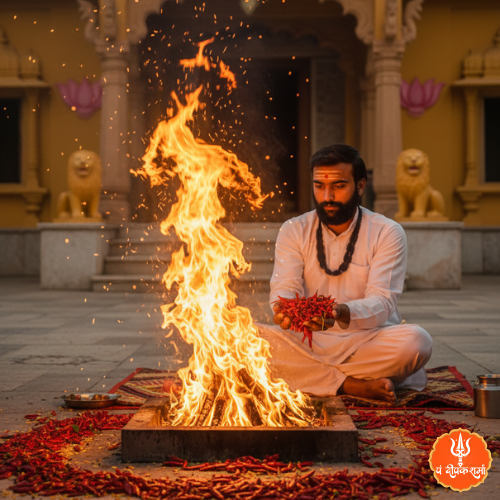
The actual performance of the havan begins with the invocation of the goddess. The priest, or pandit, will chant specific mantras to invite Devi Baglamukhi into the sacred space. This is followed by the offering of ghee and samagri into the fire while reciting the appropriate mantras. Each offering is made with devotion and a heartfelt prayer for the desired outcome.
As the havan progresses, devotees are encouraged to focus on their intentions and visualize the obstacles being removed. The chanting of the mantras creates a powerful energy that amplifies the prayers, making it essential to maintain a meditative state throughout the ritual. The priest will guide the devotees through each step, ensuring that the ritual is performed according to Vedic traditions.
Concluding the Havan
Once the offerings have been made, the havan concludes with a final prayer and the distribution of prasad (blessed food) to all participants. This prasad is considered a divine blessing from Devi Baglamukhi and is meant to be shared with family and friends. It is a symbol of the goddess’s grace and a reminder of the spiritual connection established during the ritual.
After the havan, devotees are encouraged to express gratitude to the goddess and reflect on the experience. This reflection can help solidify the intentions set during the ritual and foster a deeper connection with Devi Baglamukhi.
Mantra for This Ritual
The primary mantra associated with Baglamukhi Havan is:
ॐ ह्लीं बगलामुखि सर्वविघ्न नाशाय ह्लीं स्वाहा
**Transliteration:** Om Hleem Baglamukhi Sarvavighna Nashaya Hleem Swaha
This mantra is a powerful invocation for the removal of obstacles and the attainment of victory. The syllable ‘Hleem’ is considered a seed mantra that encapsulates the essence of the goddess’s energy. Chanting this mantra during the havan enhances its potency, ensuring that the devotee’s prayers are amplified and directed towards the divine.
The meaning of this mantra can be understood as follows: ‘Om’ represents the universal sound, ‘Hleem’ invokes the energy of Devi Baglamukhi, ‘Sarvavighna Nashaya’ signifies the removal of all obstacles, and ‘Swaha’ is an offering made to the fire. This mantra encapsulates the core purpose of the Baglamukhi Havan, which is to seek the goddess’s blessings for overcoming challenges and achieving success.
Do’s & Don’ts
Do’s
- Perform the havan with a pure heart and clear intentions.
- Use fresh flowers and fruits as offerings.
- Maintain a calm and focused mindset throughout the ritual.
- Seek the guidance of an experienced pandit for proper execution.
Don’ts
- Avoid using stale or impure materials for the havan.
- Do not engage in negative thoughts or distractions during the ritual.
- Refrain from consuming non-vegetarian food or alcohol on the day of the havan.
- Do not rush through the ritual; take your time to connect with the divine.
When to Perform
Baglamukhi Havan can be performed on any auspicious day, but certain periods are particularly favorable. The days of Navratri, especially during the worship of Devi Baglamukhi, are considered highly auspicious for this ritual. Additionally, performing the havan on a Tuesday or Saturday is believed to enhance its effectiveness, as these days are associated with strength and overcoming obstacles.
It is also advisable to perform the havan during the waxing phase of the moon, as this is a time of growth and positivity. Devotees should consult with their pandit to determine the most suitable time for their specific needs and intentions.
Nalkheda Temple Connection
The Nalkheda Temple, dedicated to Devi Baglamukhi, is a significant pilgrimage site for devotees seeking her blessings. The temple is renowned for its serene atmosphere and the spiritual energy that permeates the surroundings. Many devotees travel from various parts of India to perform Baglamukhi Havan under the guidance of experienced pandits, such as Pandit Deepak Sharma.
At the temple, devotees can participate in various rituals, including Baglamukhi Havan, Mirchi Havan, and other anushthans that cater to different needs. The temple’s management ensures that all rituals are performed according to Vedic traditions, providing devotees with an authentic spiritual experience.
FAQ
What is the significance of Baglamukhi Havan?
Baglamukhi Havan holds immense significance for those seeking victory over obstacles and adversaries. It is particularly beneficial for individuals facing legal challenges, as the goddess is believed to grant favor in court cases. The ritual not only serves practical purposes but also fosters spiritual growth and empowerment, making it a holistic practice for devotees.
How much does it cost to perform Baglamukhi Havan?
The cost of performing Baglamukhi Havan can vary based on several factors, including the materials used, the involvement of a pandit, and the specific rituals performed. It is advisable to consult with Pandit Deepak Sharma for a detailed understanding of the costs involved and to ensure that the havan is performed according to traditional Vedic practices.
Can anyone perform Baglamukhi Havan?
Yes, anyone can perform Baglamukhi Havan, regardless of their background or spiritual experience. However, it is recommended to seek the guidance of an experienced pandit to ensure that the ritual is conducted properly. This guidance can enhance the effectiveness of the havan and help devotees connect more deeply with Devi Baglamukhi.
What materials are needed for Baglamukhi Havan?
The materials required for Baglamukhi Havan typically include ghee, samagri (a mixture of sacred offerings), flowers, fruits, and a fire pit. These materials are essential for making offerings during the ritual. It is important to use fresh and pure items to ensure the sanctity of the havan.
When is the best time to perform Baglamukhi Havan?
The best time to perform Baglamukhi Havan is during auspicious periods such as Navratri or on Tuesdays and Saturdays. Additionally, performing the havan during the waxing phase of the moon is considered favorable, as it aligns with the energies of growth and positivity.
What are the benefits of performing Baglamukhi Havan?
Performing Baglamukhi Havan offers numerous benefits, including the removal of obstacles, protection from adversaries, and the attainment of victory in legal matters. It also fosters spiritual growth, enhances confidence, and provides a sense of empowerment to devotees, making it a transformative experience.