Meaning of This Ritual
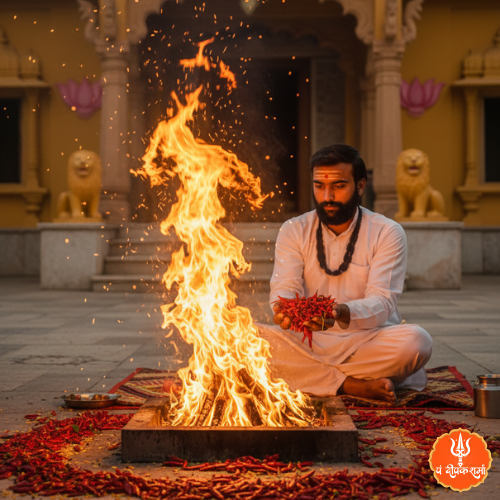
Baglamukhi havan, a sacred ritual dedicated to Devi Baglamukhi, is performed to invoke her divine blessings for various purposes, including enemy removal, career growth, and overcoming obstacles. This hallowed ceremony is steeped in Vedic traditions, where the essence of the ritual lies in the offerings made to the sacred fire, symbolizing the surrender of one’s troubles and the invocation of divine grace. The term ‘Havan’ refers to the act of making offerings into the fire, which is considered a purifying and transformative process.
In the context of Baglamukhi Havan, the ritual serves as a powerful means to seek protection and guidance from the goddess, who is revered as the embodiment of knowledge, wisdom, and strength. The ritual is not merely a ceremonial act but a profound spiritual experience that connects the devotee with the divine energies of Baglamukhi Mata. Through this hallowed practice, devotees express their devotion and seek the goddess’s intervention in their lives.
Understanding the meaning behind Baglamukhi Havan is essential for devotees, as it sets the intention for the ritual. It emphasizes the importance of faith and devotion in the process, allowing individuals to align their energies with the divine will. This alignment is crucial for the successful outcome of the Havan, as it fosters a deep connection with the goddess, inviting her blessings into the devotee’s life.
How This Ritual Helps
Baglamukhi Havan is renowned for its multifaceted benefits, particularly in overcoming adversities and achieving success in various endeavors. The ritual is especially effective for those facing legal challenges, career obstacles, or personal conflicts. By performing this Havan, devotees seek the goddess’s blessings to remove negative influences and empower themselves to face life’s challenges with courage and resilience.
One of the primary benefits of Baglamukhi Havan is its ability to provide protection against enemies and malevolent forces. The goddess Baglamukhi is known as the protector of her devotees, and through this ritual, individuals can invoke her strength to shield themselves from harm. This aspect of the Havan is particularly relevant for those dealing with court cases or conflicts, as it helps to neutralize adversarial energies and promote justice.
Moreover, the Havan serves as a catalyst for personal growth and transformation. Devotees often report experiencing clarity of thought, enhanced decision-making abilities, and a renewed sense of purpose following the ritual. By surrendering their worries and fears to the divine, individuals can cultivate a positive mindset, enabling them to pursue their goals with confidence and determination. The spiritual energy generated during the Havan acts as a guiding force, illuminating the path toward success and fulfillment.
Mythological Background
The mythology surrounding Baglamukhi Mata is rich and profound, deeply rooted in the ancient texts of Hinduism. She is one of the ten Mahavidyas, a group of powerful goddesses representing various aspects of the divine feminine. Baglamukhi is often depicted as a serene figure, holding a tongue of a demon, symbolizing her ability to control speech and silence negativity. This imagery reflects her role as a protector and a guide, helping her devotees navigate the complexities of life.
According to Hindu mythology, Baglamukhi Mata emerged during the churning of the ocean (Samudra Manthan), where she played a crucial role in restoring balance and harmony. Her divine intervention was sought by the gods to subdue the demons who threatened the cosmic order. This narrative highlights her strength and authority, establishing her as a formidable force against evil and chaos. Devotees believe that by invoking her blessings through rituals like the Havan, they can access her divine power and wisdom.
Furthermore, the stories of Baglamukhi Mata emphasize her compassionate nature. She is known to respond to the sincere prayers of her devotees, offering guidance and support in times of distress. This aspect of her mythology reinforces the belief that performing Baglamukhi Havan can lead to miraculous transformations in one’s life, as the goddess is always ready to assist those who seek her help with a pure heart.
Who Should Perform This
Baglamukhi Havan is suitable for anyone seeking spiritual growth, protection, and resolution of conflicts. Individuals facing legal issues, career challenges, or personal disputes can greatly benefit from this ritual. It is particularly recommended for those who feel overwhelmed by negative energies or adversarial forces in their lives. The Havan serves as a means to cleanse these energies and invite positive influences.
Moreover, this ritual is beneficial for individuals looking to enhance their decision-making abilities and gain clarity in their lives. Whether one is a student preparing for exams, a professional navigating career transitions, or someone seeking resolution in personal relationships, Baglamukhi Havan can provide the necessary support and guidance. The ritual empowers devotees to overcome obstacles and achieve their goals with confidence.
It is essential for devotees to approach the Havan with sincerity and devotion. Those who are committed to their spiritual journey and are willing to surrender their worries to the goddess will find the most profound benefits from this ritual. The intention behind the Havan plays a crucial role in its effectiveness, making it vital for participants to engage wholeheartedly in the process.
Step-by-Step Vidhi (Very Detailed)
The Vidhi for Baglamukhi Havan is a sacred process that requires careful preparation and adherence to Vedic traditions. To begin, the devotee should create a clean and sacred space for the Havan, ideally in a quiet area of the home or temple. It is recommended to set up a Havan Kund (fire pit) made of clay or metal, which serves as the focal point for the offerings.
Next, gather the necessary materials for the Havan, including sacred wood (such as mango or peepal), ghee (clarified butter), and specific offerings like grains, flowers, and herbs. Each of these items holds significance in the ritual, representing different aspects of devotion and surrender. It is essential to ensure that all materials are pure and free from any impurities, as this enhances the sanctity of the Havan.
Once the preparations are complete, the devotee should invoke the presence of Baglamukhi Mata by chanting her mantras and offering prayers. This step is crucial, as it establishes a connection with the divine and sets the intention for the ritual. As the fire is lit, offerings of ghee and other materials are made into the flames while chanting the specific mantras associated with Baglamukhi Havan. The devotee should focus on their intentions and visualize the goddess’s blessings enveloping them.
Throughout the Havan, it is important to maintain a calm and focused mindset. The devotee should engage in meditation and reflection, allowing the energies of the ritual to permeate their being. After the offerings are completed, conclude the Havan with a prayer of gratitude, thanking Baglamukhi Mata for her divine presence and blessings. This closing act reinforces the connection established during the ritual and helps to ground the energies generated.
Mantra for This Ritual
The primary mantra for Baglamukhi Havan is:
ॐ ह्लीं बगलामुखि सर्वविघ्न नाशाय ह्लीं
Transliteration: Om Hleem Baglamukhi Sarvavighna Nashaya Hleem
This mantra is a powerful invocation that seeks the blessings of Baglamukhi Mata for the removal of obstacles and challenges. Each syllable of the mantra resonates with divine energy, creating a vibrational frequency that aligns the devotee with the goddess’s protective aura. The repetition of the mantra during the Havan serves to amplify its effects, allowing the devotee to connect deeply with the divine.
The meaning of the mantra can be broken down as follows: ‘ॐ’ represents the primordial sound of the universe, symbolizing creation and divine presence. ‘ह्लीं’ is a seed mantra (Bija Mantra) associated with Baglamukhi, invoking her energy and power. ‘बगलामुखि’ refers to the goddess herself, while ‘सर्वविघ्न नाशाय’ translates to the removal of all obstacles. Thus, the mantra as a whole calls upon Baglamukhi Mata to eliminate hurdles and grant the devotee the strength to overcome challenges.
Chanting this mantra with devotion during the Havan creates a sacred atmosphere, enhancing the ritual’s effectiveness. It is recommended to recite the mantra a specific number of times, often 108, to maximize its spiritual potency. This practice not only deepens the connection with the goddess but also instills a sense of peace and assurance in the devotee’s heart.
Do’s & Don’ts
When performing Baglamukhi Havan, certain guidelines should be followed to ensure the ritual’s sanctity and effectiveness. Among the do’s, it is essential to maintain a clean and pure environment, free from any distractions or impurities. Devotees should wear clean, preferably white or yellow clothing, as these colors are associated with purity and devotion. It is also advisable to approach the Havan with a calm and focused mind, free from negative thoughts or doubts.
Another important aspect is the intention behind the ritual. Devotees should be clear about their desires and goals while performing the Havan, as this clarity enhances the connection with the goddess. Offering genuine prayers and expressing heartfelt gratitude during the ritual is crucial, as it fosters a deeper bond with Baglamukhi Mata. Additionally, it is beneficial to involve family members or close friends in the Havan, as collective energy amplifies the ritual’s effects.
On the other hand, there are certain don’ts to be mindful of during the Havan. Avoid using impure or contaminated materials for the offerings, as this can diminish the sanctity of the ritual. It is also important not to engage in any negative or harmful thoughts while performing the Havan, as these can counteract the positive energies being invoked. Lastly, refrain from discussing mundane matters or engaging in distractions during the ritual, as maintaining focus is vital for a successful outcome.
When to Perform
Baglamukhi Havan can be performed at any time, but certain auspicious occasions are particularly favorable for this sacred ritual. Many devotees choose to conduct the Havan on specific days dedicated to Baglamukhi Mata, such as Tuesdays and Fridays, which are considered highly auspicious. Additionally, performing the Havan during the waxing phase of the moon (Shukla Paksha) is believed to enhance its effectiveness.
Moreover, significant personal events such as starting a new job, entering a new phase in life, or facing legal challenges are ideal times to perform the Havan. By aligning the ritual with these pivotal moments, devotees can harness the goddess’s blessings to navigate transitions smoothly and successfully. It is also advisable to consult with a knowledgeable priest or Pandit to determine the most auspicious timing based on individual circumstances.
Ultimately, the best time to perform Baglamukhi Havan is when the devotee feels a deep calling or need for divine intervention. Trusting one’s intuition and spiritual guidance is essential, as this connection will enhance the ritual’s potency and effectiveness.
How Pandit Deepak Sharma can help
Pandit Deepak Sharma, an experienced Vedic practitioner, offers his services for performing Baglamukhi Havan with utmost devotion and adherence to traditional rituals. His profound understanding of Vedic scriptures and rituals ensures that each Havan is conducted with precision, allowing devotees to experience the full benefits of this sacred practice. By engaging Pandit Deepak Sharma, devotees can rest assured that their prayers and intentions will be conveyed to Baglamukhi Mata with sincerity and reverence.
With over 25 years of experience, Pandit Deepak Sharma provides personalized guidance to each devotee, helping them understand the significance of the Havan and its impact on their lives. He emphasizes the importance of intention and devotion, ensuring that each participant is aligned with the ritual’s purpose. His compassionate approach fosters a nurturing environment, allowing devotees to connect deeply with the divine energies during the Havan.
Additionally, Pandit Deepak Sharma can assist in selecting the most auspicious timing for the Havan, considering the individual circumstances and needs of the devotee. His expertise in Vedic astrology and rituals enhances the overall experience, making the Havan a transformative spiritual journey. By choosing to perform Baglamukhi Havan under his guidance, devotees can cultivate a profound connection with Baglamukhi Mata and invite her blessings into their lives.
Nalkheda Temple Connection
The Nalkheda Temple, dedicated to Devi Baglamukhi, is a significant pilgrimage site for devotees seeking her blessings. Located in the Agar Malwa district of Madhya Pradesh, this temple is renowned for its spiritual ambiance and the powerful energies associated with Baglamukhi Mata. The temple attracts countless devotees who come to seek divine intervention through various rituals, including Baglamukhi Havan.
Visiting the Nalkheda Temple enhances the experience of performing Baglamukhi Havan, as the temple’s sanctity amplifies the ritual’s effects. Devotees often report feeling a heightened sense of connection with the goddess while in the temple premises, making it an ideal location for conducting the Havan. The temple’s serene environment fosters a deep sense of peace and devotion, allowing individuals to immerse themselves fully in the spiritual experience.
Moreover, the Nalkheda Temple serves as a hub for various religious activities, including community gatherings and spiritual discourses. Engaging with fellow devotees and participating in temple events can further enrich one’s spiritual journey. The temple’s vibrant atmosphere, combined with the powerful energies of Baglamukhi Mata, creates a conducive environment for personal transformation and growth.
FAQ
What is the significance of Baglamukhi Havan?
Baglamukhi Havan holds immense significance in Hindu spirituality, particularly for those seeking protection and resolution of conflicts. The ritual is performed to invoke the blessings of Devi Baglamukhi, who is revered for her ability to remove obstacles and empower her devotees. By engaging in this sacred practice, individuals can experience a profound transformation in their lives, gaining clarity, strength, and resilience in the face of challenges.
The significance of the Havan extends beyond mere ritualistic practice; it serves as a means of connecting with the divine energies of the goddess. The offerings made during the Havan symbolize the surrender of one’s worries and fears, allowing devotees to align themselves with Baglamukhi’s protective aura. This alignment fosters a sense of peace and assurance, enabling individuals to navigate their lives with confidence and purpose.
Can anyone perform Baglamukhi Havan?
Yes, Baglamukhi Havan can be performed by anyone seeking spiritual growth, protection, and resolution of conflicts. It is particularly beneficial for individuals facing legal issues, career challenges, or personal disputes. However, it is essential for participants to approach the Havan with sincerity and devotion, as the intention behind the ritual plays a crucial role in its effectiveness.
While anyone can perform the Havan, it is advisable to engage a knowledgeable priest or Pandit, such as Pandit Deepak Sharma, to ensure that the ritual is conducted according to Vedic traditions. His guidance can enhance the experience, allowing devotees to connect deeply with the divine energies of Baglamukhi Mata and maximize the benefits of the ritual.
What materials are needed for Baglamukhi Havan?
The materials required for Baglamukhi Havan include sacred wood (such as mango or peepal), ghee (clarified butter), grains, flowers, and herbs. Each of these items holds significance in the ritual, representing different aspects of devotion and surrender. It is crucial to ensure that all materials are pure and free from impurities, as this enhances the sanctity of the Havan.
In addition to the offerings, a Havan Kund (fire pit) made of clay or metal is necessary for conducting the ritual. The Kund serves as the focal point for the offerings, symbolizing the connection between the earthly and divine realms. Preparing these materials with care and devotion is essential for creating a conducive environment for the Havan.
How long does the Baglamukhi Havan take?
The duration of Baglamukhi Havan can vary depending on the specific rituals and offerings involved. Typically, the Havan may last anywhere from one to two hours. However, the focus should not solely be on the time taken but rather on the depth of devotion and intention behind the ritual.
Engaging in the Havan with a sincere heart and a focused mind is what truly matters. The energies generated during the ritual are influenced by the devotee’s commitment and connection with the divine. Therefore, it is advisable to allocate sufficient time for the Havan, allowing for a meaningful and immersive spiritual experience.
What should I do after performing Baglamukhi Havan?
After performing Baglamukhi Havan, it is essential to express gratitude to Devi Baglamukhi for her divine presence and blessings. This can be done through a closing prayer or meditation, reinforcing the connection established during the ritual. It is also beneficial to reflect on the intentions set during the Havan and remain open to receiving the goddess’s guidance in daily life.
Additionally, devotees may choose to share the experience with family members or friends, fostering a sense of community and collective energy. Engaging in acts of kindness and service following the Havan can further amplify the positive energies generated during the ritual, allowing the devotee to embody the blessings of Baglamukhi Mata in their interactions with others.